

The last decade or so has seen an explosion in television shows and internet properties that blend culinary exploration and travelogue. Inspired, certainly, by Anthony Bourdain (and perhaps Guy Fieri), we’ve seen Taste the Nation, Somebody Feed Phil, Ugly Delicious, Searching for Soul Food, and many more.
By watching and listening to the host interact with cooks, chefs, bakers, pitmasters, farmers, foragers, fishermen—whatever—we’re meant to better understand not just the food, but ourselves.
Some of these focus on the United States, some go global, but the idea is the same: Watch a charismatic presenter put mud on the tires as they rumble from fancy restaurant to rustic food shack to mushroom farm to fishery, finding, supposedly, the “best,” or the “original,” or the “undiscovered” dishes. By watching and listening to the host interact with cooks, chefs, bakers, pitmasters, farmers, foragers, fishermen—whatever—we’re meant to better understand not just the food, but ourselves.
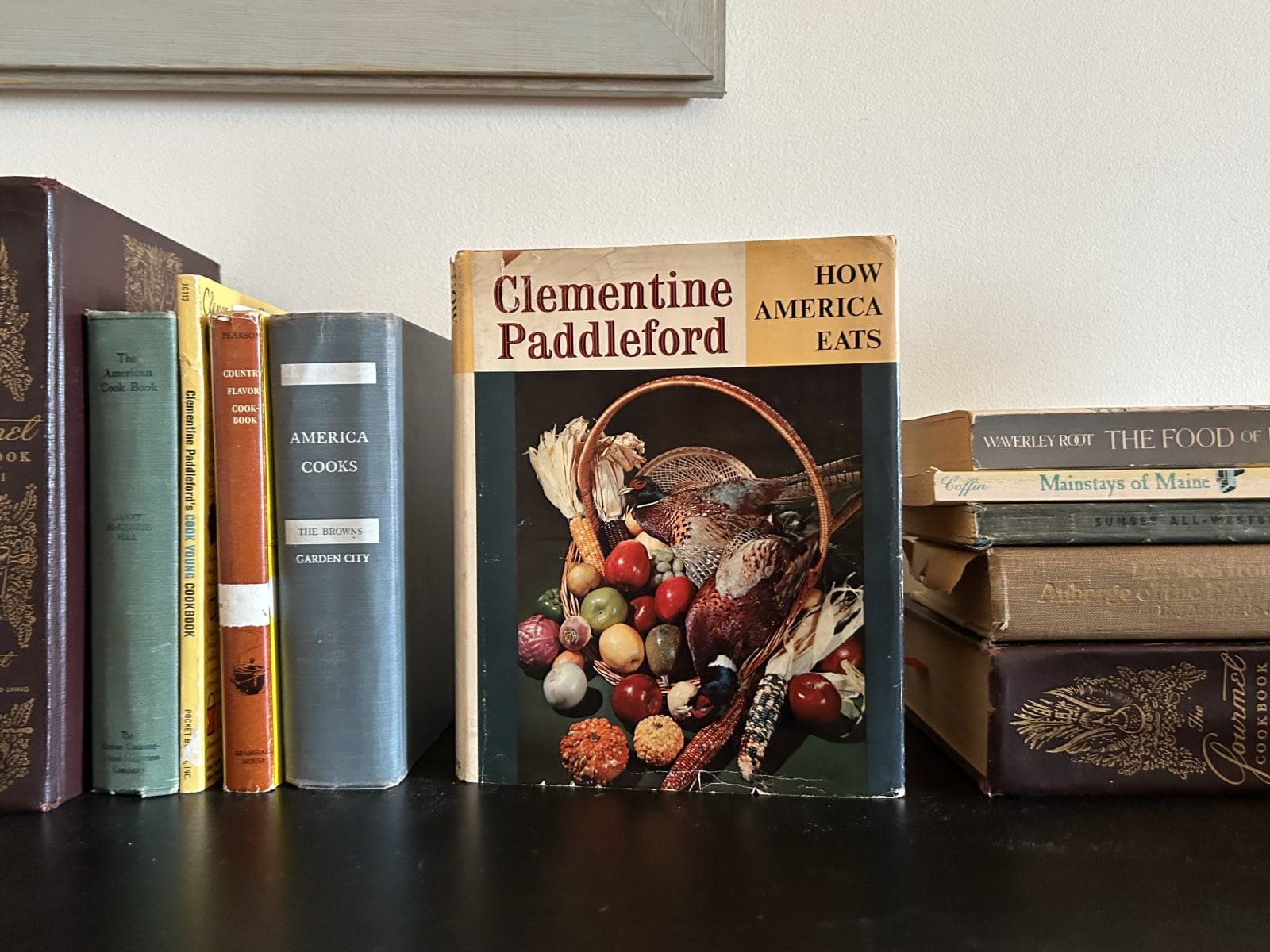
There’s nothing new about this kind of mass-market culinary anthropology. Fanny Trollope (mother to novelists Anthony and Thomas) wrote extensively (and dismissively) about food in the U.S. in her 1832 blockbuster Domestic Manners of the Americans. Charles Dickens followed suit a decade later with his brutal 1842 assessment, American Notes. Mark Twain often turned his pen to dining, wittily, as did Oscar Wilde, sharply, and Isabella Bird, coolly.
A more optimistic tone emerged in the 1930s, when Cora, Rose, and Robert Brown fanned out across the continent for their omnibus, America Cooks. And of course the midcentury years saw a proliferation of car-culture guidebooks as the growing interstate highway system made road trips a national pastime, most notably 1977’s Roadfood by Jane and Michael Stern.
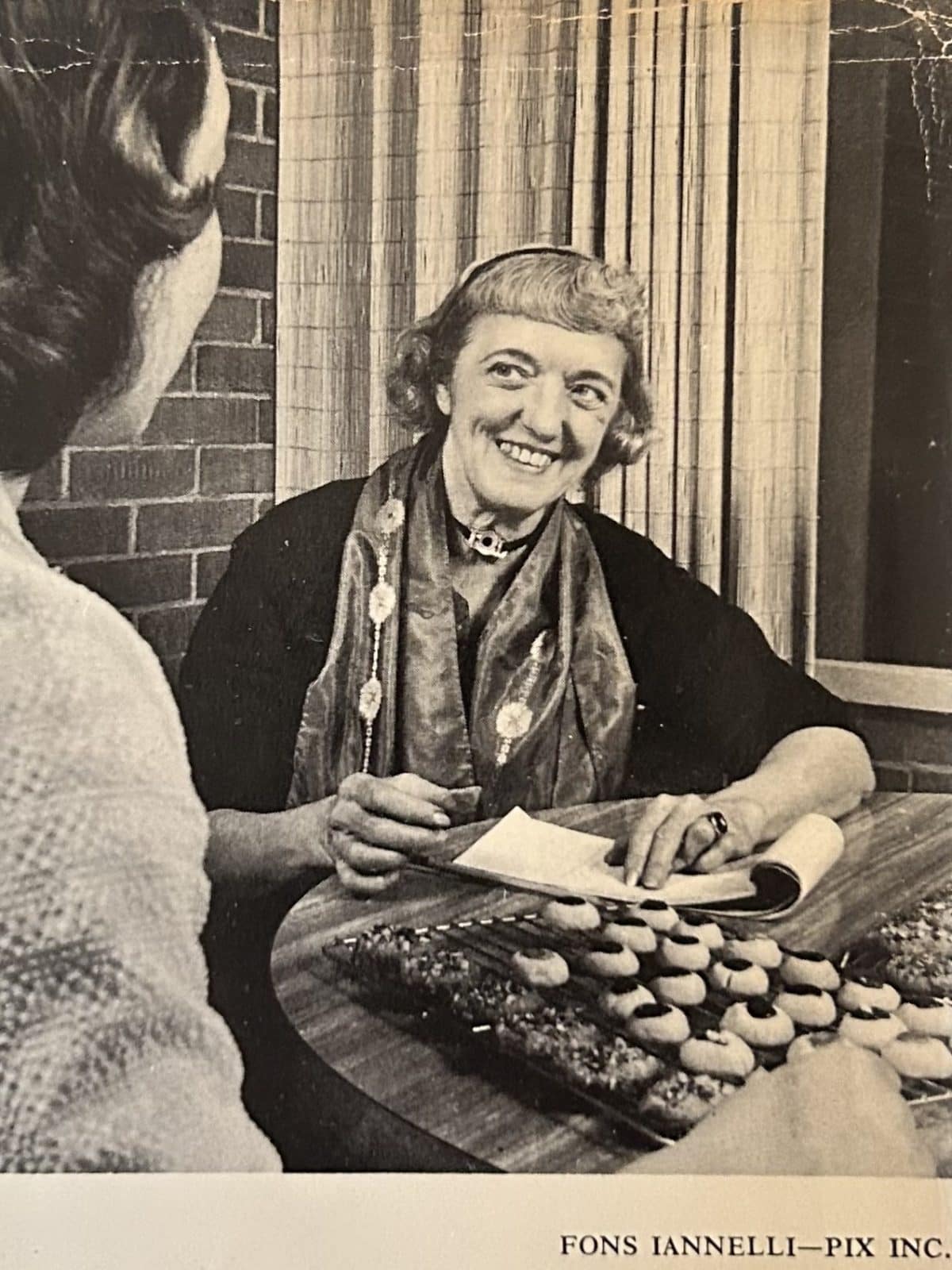
But perhaps no author celebrated quotidian American food customs with quite the same vigor as journalist Clementine Paddleford. Born in Kansas in 1898, Paddleford relocated to New York in the 1930s to embark on a journalism career. After stints at the New York Herald Tribune and the New York Sun, Paddleford joined This Week magazine in 1948. Her assignment? Find out what Americans are eating, and why. Over the next decade and a half, she traveled incessantly through post-war America (“from the lobster pots of Maine to the vineyards of California”) to taste local specialties and cajole local cooks into relinquishing their recipes.
The material fueled her popular weekly column for This Week, staple fare at kitchen tables in every state. In 1960 Scribners, building on her fame, published How America Eats, an audacious, 500-page passion project—equal parts travelogue, cookbook, and doorstopper.
Don’t be hoodwinked by the perplexing cover image, a static Kodachrome cornucopia of pheasants and fruits that does nothing to tease the treasures inside—anecdotes, observations, and most importantly recipes collected from, as Paddleford writes in the forward, “a wide variety of kitchens: farm kitchens, apartment kitchens, governors’ mansions, hamburger diners, tea rooms… I have eaten with crews on fishing boats and enjoyed slum gullion at the Hobo Convention.”
Here is Paddleford, with her Bette Davis eyes and ever-present reporters’ notebook, conversing with lobsterman Walter Stanley of Rockland, Maine, about the paucity of the season’s catch, before dropping a recipe for Lobster Stew (just lobster, butter, milk, salt, pepper) from local hostess Mildred Richardson. Here she is disembarking “local freight No. 41” in Pacific, Missouri, to extract a recipe for Black Walnut Fudge from C.R. “Chick” Sally. Here she is on the breezy Key West verandah of Annette Otto, discussing Mrs. Otto’s famed Dried Lima Bean Soup.
The cooks she interviewed required wooing. “Many of these recipes were salvaged from batter-splashed, hand-written notebooks,” she writes. “They are word-of-mouth hand-downs from mother to daughter. To get such recipes takes everlasting patience, and a dash of effrontery, too.”
Pocket full of effrontery, Paddleford persisted for years. She drove, rode, and flew (she was a licensed pilot) over a half-million miles by her own account to conduct her research. She sat with the Magyar Women’s Guild in Elyria, Ohio, to learn about their Stuffed Cabbage and Dumplings Nokedli. She tracked down Carl Jean Byma, then a sophomore at South High School in Denver, for her 4-H blue ribbon Banana Bread recipe. She attended the Taylor family’s “kinfolk revival” in Brownsville, Tennessee, where Averil Taylor shared a prized recipe for Butterscotch Pie. She trekked to Idaho Falls, Idaho for, naturally, Donna Hansen‘s Potato Salad, flecked with pickles.
A contemporary reader will surely suspect misattribution here and there—did this genteel Southern socialite really invent or perfect this dish? Or is credit due to the domestic staff toiling in the back, unrepresented in these words? Paddleford’s lens was emphatically white.
Shortcomings to the book’s scope are, sadly, glaring. Only three pages are dedicated to New Mexico, surely one of the nation’s most interesting food regions. She gave short shrift also to California, then as now an extraordinarily diverse culinary state. You’ll find almost no Asian food in the book, nor any real acknowledgement of indigenous Americans’ cuisine or ingredients. And a contemporary reader will surely suspect misattribution here and there—did this genteel Southern socialite really invent or perfect this dish? Or is credit due to the domestic staff toiling in the back, unrepresented in these words? Paddleford’s lens was emphatically white.
When Paddleford died in 1967, she left behind an extraordinary document—and a jumping-off point for the intrepid souls who cut new paths in her wake.
And yet, the hundreds on hundreds of voices and traditions represented in “How America Eats,” dizzies in its scope. When Paddleford died in 1967, she left behind an extraordinary document—and a jumping-off point for the intrepid souls who cut new paths in her wake.
It’s not the easiest book to find these days, but if your local library or used bookshop has a copy, it’s worth perusing. You’ll find dishes that feel outdated, sure (Mildred Rutherford‘s Vermont-style Cheese Muff, anyone?) but others that seem strikingly contemporary, like the savory Skillet Cabbage from Clara McCracken of Manhattan, Kansas, which wouldn’t be out of place at any trendy dinner party in cabbage-obsessed 2025.
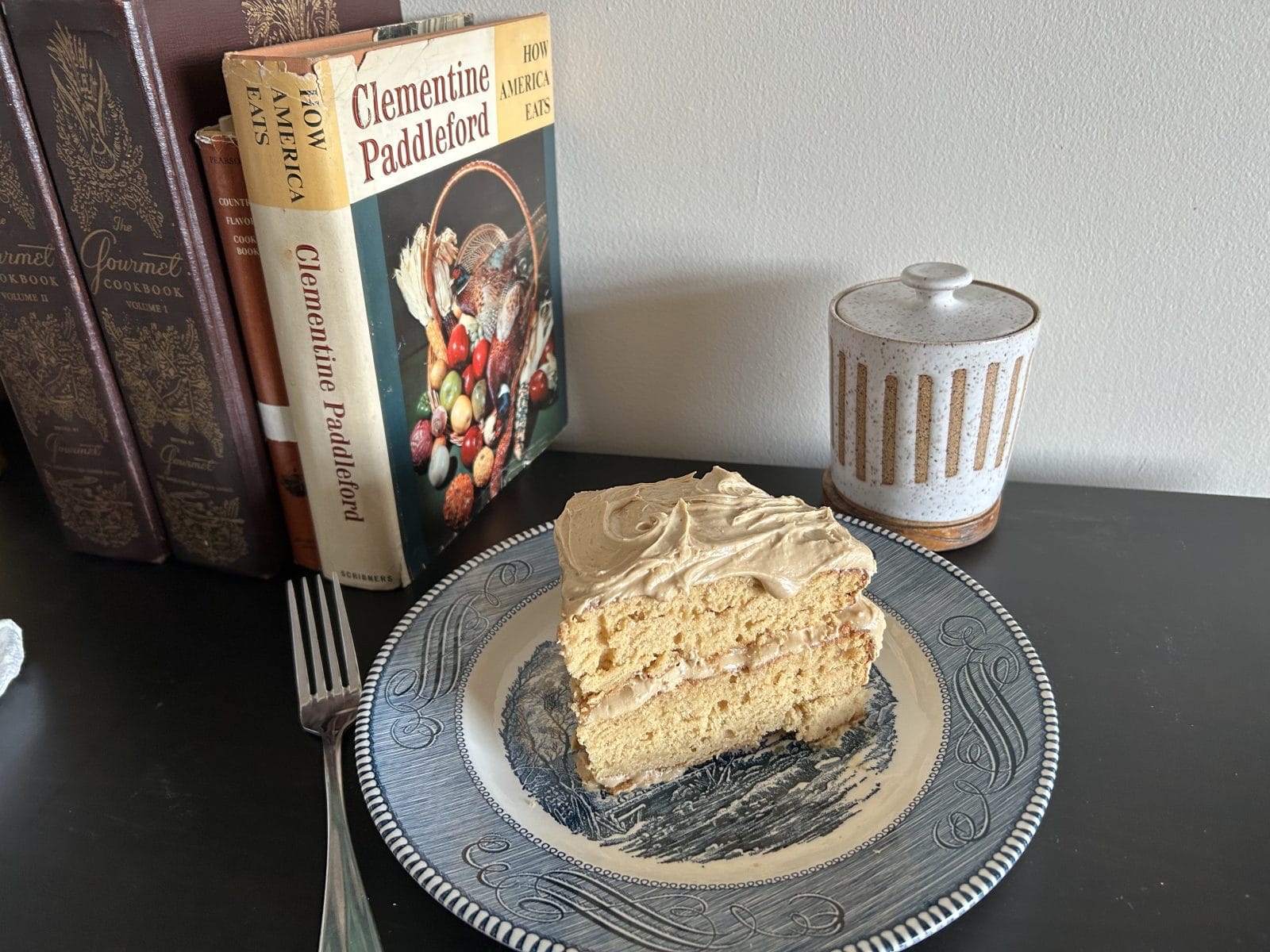
My advice: Don’t ignore the Burnt Sugar Cake, from a recipe by Mrs. W.H. Caldwell of Dallas, Texas. It’s a sneakily complex caramel layer cake that trips the line between sweet and bitter—striking, sophisticated, satisfying, and one of the best desserts I know.
Mildred Rutherford’s Cheese Muff
Mrs. Rutherford suggests pairing this with a green salad for a light luncheon. I say good luck.
Clara McCracken’s Skillet Cabbage
Both green and red cabbage will work here. With apologies to Mrs. McCracken, I prefer this without the tomatoes, and I recommend cooking an additional 5-10 minutes, uncovered, for deeper color on the cabbage.
Mrs. Caldwell’s Burnt Sugar Cake
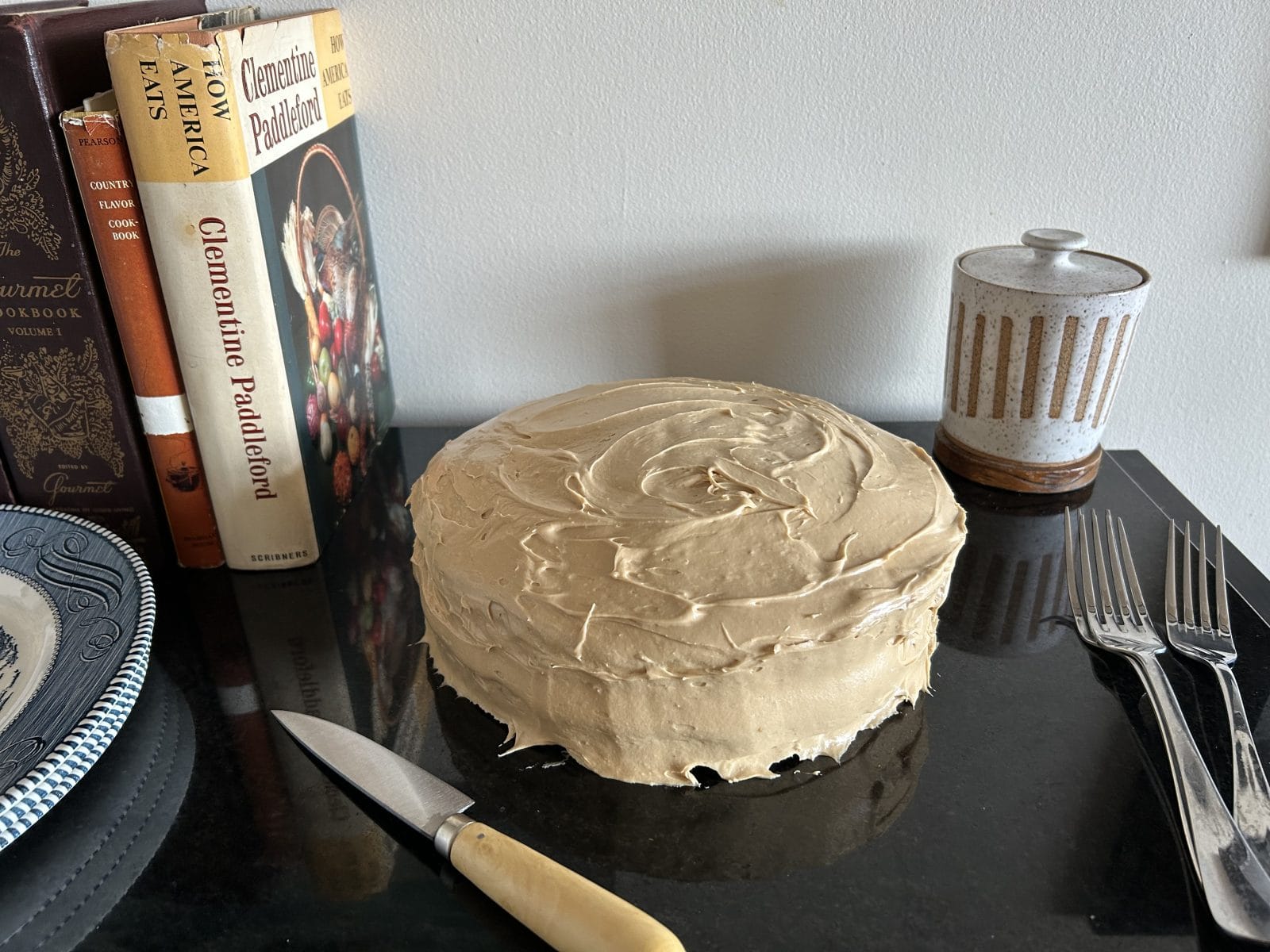
This cake is a project, so book a couple of hours. Do yourself a favor and prepare the cake pans with butter and flour before you start. I use a medium saucepan to cook the sugar. It takes about 12-15 minutes or so to cook—(and do go just a moment or two longer than you think you should, to ensure those bitter notes come through in the end)—but watch it carefully and take it off the heat as soon as it reaches a deep caramel-brown color. And be prepared to beat the frosting for longer than you ever imagined you’d have to—it takes time to reach its optimal creamy state. This cake is delicious with a cup of coffee.
1 Comment