

More than a year ago now, we were contacted by Robert Jensen, Emeritus Professor at the School of Journalism and Media, University of Texas at Austin, who is also a volunteer editor in a prison writing program. He pitched us a piece written by Ron Guier, who is incarcerated in Washington State, that wasn’t quite right for us, but we urged him to please send us more ideas. The below piece is a result of that, and Mark and I are thrilled to be publishing it.
We hope you find this piece as interesting and moving as we do. Today’s piece is free for all subscribers. If you enjoy it, please consider supporting our work as a paid subscriber. – Kate
I woke up to the whir of my fan as it tried in vain to keep up with the relentless heat that wouldn’t break even at night. The sun was already creeping in through the window when I sat up on my bunk, feet touching down on the griddle-warm cement floor. I immediately started thinking about the yard and the relief promised by the mister hose on the fence.
And I thought about ice cream. Today definitely would be a day to make ice cream.
Spraying water and homemade ice cream take me back to childhood’s warm days running through the sprinkler, water fights with my brother, catching grasshoppers, and sitting in the shade of the willow tree with a book. Back then, we used grandma’s Folgers Coffee cans for “tin-can ice cream,” made without electricity using ice and rock salt.
Forty years later, I use the same tin-can process in prison.
Staying infraction-free for 90 days earns a pint of creamy deliciousness.
The way you enjoy ice cream in prison depends on the institution. Some prisons dangle it as an incentive, while others have ice cream shacks offering it for sale on weekends, and others don’t allow it at all. I’m at Washington Corrections Center (WCC) in Shelton, Washington, where the ice cream shack closed years ago and only in the past year has it been available as a reward for good behavior. Staying infraction-free for 90 days earns a pint of creamy deliciousness.
Men who have served longer sentences remember when ice cream was readily available from the yard canteen any day of the week and also was made by inmates in the kitchen. A lifer told me, “It was our city,” meaning inmates had more responsibilities and more control than today. “We ran everything, so we just ordered what we wanted and made it up in five-gallon buckets, froze it, then took it back to the unit and shared it with all our buddies,” he said.
In today’s prison culture, though, that is no longer possible, so for the past decade men have been making bootleg ice cream here at WCC. Thomas, who has been incarcerated here for 13 years, said it started when the prison commissary began offering items such as health shakes, frosting, and instant cheesecake. With more than a little ingenuity, prison culinarians have been working on this creamy treat, each professing their recipe to be the best.
I use a recipe developed by a felonious foodie named Scotty, who found a way to make the most balanced texture that also uses the simplest ingredients.
Each recipe is essentially the same: milk or powdered milk; thickeners such as health shakes, peanut butter, frosting, marshmallows, or instant cheesecake filling powder; and a variety of fillings for flavoring. Some are icier than others (the ones made with powdered milk), some are a tad chalky (the ones made with health shakes), and some have a chew to them (the ones made with peanut butter and marshmallows). I use a recipe developed by a felonious foodie named Scotty, who found a way to make the most balanced texture that also uses the simplest ingredients: milk, frosting, and cheesecake filling powder. The texture is the closest to real ice cream that I have tried in my eight years of incarceration, something like a Jell-O frozen pudding pop, not bad for bootleg ice cream.
Without access to a kitchen, the production process is not much different than my childhood efforts.
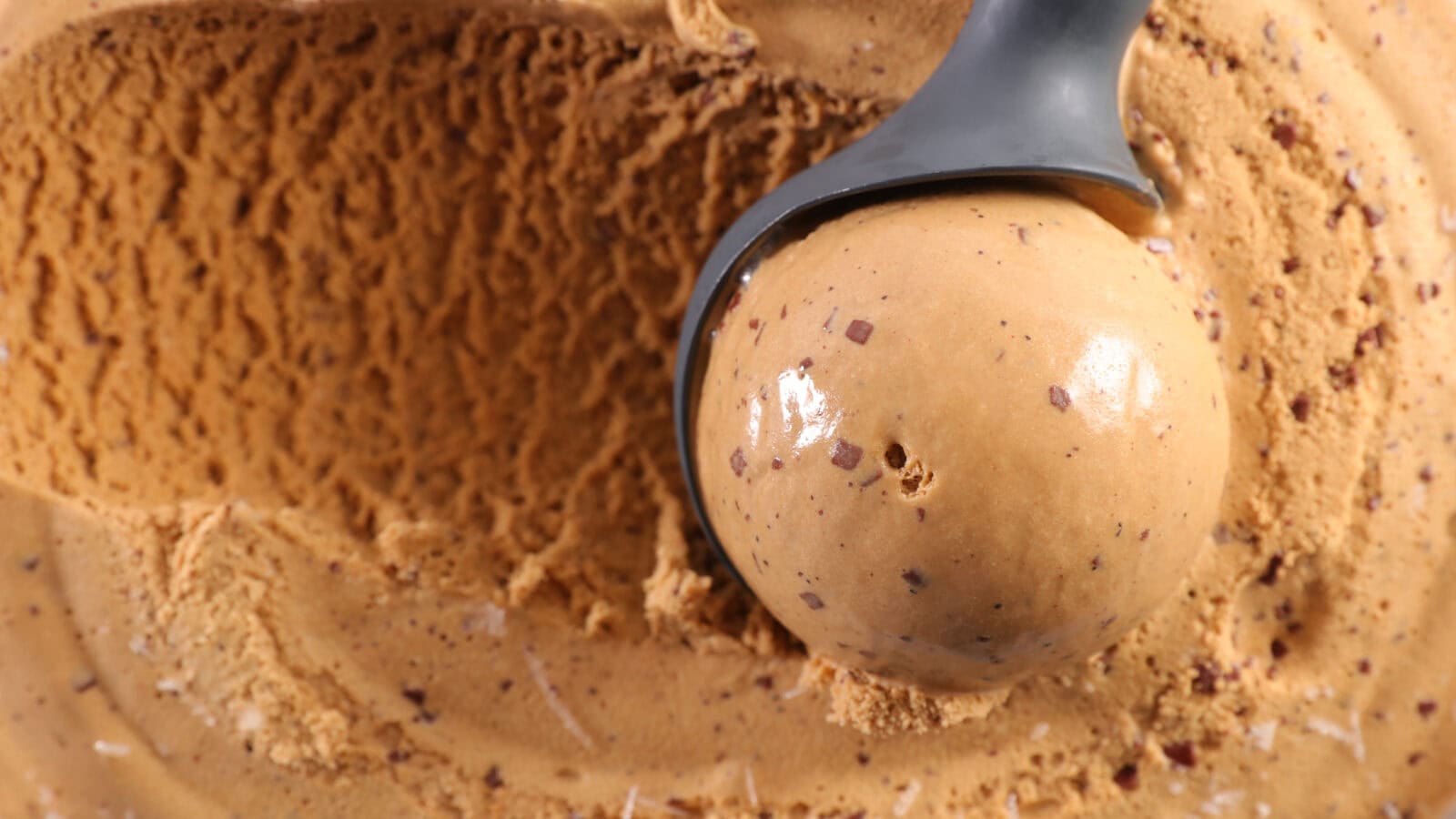
Flavors and fillings are limited only by a creator’s imagination and the commissary inventory. People add cookies, bits of candy bars, Chic-O-Sticks, and even jam. I’ve made, and enjoyed, countless varieties, but mocha chunk might be my favorite.
Without access to a kitchen, the production process is not much different than my childhood efforts. Details vary a bit from chef to chef, but everyone works essentially the same way. The ice cream custard goes into containers, such as peanut butter jars, rice or powdered milk bags, or Ziploc bags, which is what I use. That’s buried in ice, either in the cell garbage can or a hobby box (a 14-liter Sterilite tote we can purchase to hold our hobby craft items), and then covered with salt or rock salt and wrapped in a blanket for insulation. In about four hours, it’s ready to eat.
One of my favorite parts about ice cream-making in prison is the excitement it generates.
When we made tin-can ice cream as kids, I remember the sense of wonder in putting wet ingredients into a container of ice and magically getting ice cream. Today, one of my favorite parts about ice cream-making in prison is the excitement it generates. Men will ask all day, “Is it done yet?” When it is finally ready, eyes light up and smiles extend ear to ear. Some hunker down to eat right away, while others go to the cells of friends to share and compare.
Bootleg ice cream takes us back to simpler days of sprinklers and water fights, but it also creates new memories with friends we make here.
Mocha Chip Ice Cream
Drawing on memories of the tin-can ice cream we used to make in grandma’s Folders Coffee cans, I devised this method of making ice cream using what you can get your hands on in prison.
Comment