
2 Ways To Cook The Quintessential Winter Comort Food

Published January 17, 2020

As a rabid football fan, I feel some sort of obligation around this time of year (playoff time) to swoop in with a few ideas for what to cook for the big game. Due to a general lack of winning, my team (the Giants) is not participating in the postseason, which means that an extra portion of my enjoyment will have to come from the food. So, let’s not overthink it. When I dream of the cold-weather-couch-potato glory of sitting in my running pants watching playoff football and eating something warm and delicious, there’s one food that leaps to mind first: chili.

As you know, chili is more of a philosophy than a single, definable dish. Everyone has their own idea of what it is or should (or shouldn’t) be: Beans, no beans, ground meat, cubed meat, no meat, dried chiles, powdered chiles, smooth sauce, chunky sauce—you get the idea. The permutations are endless, and I would never dare try to cover them all.

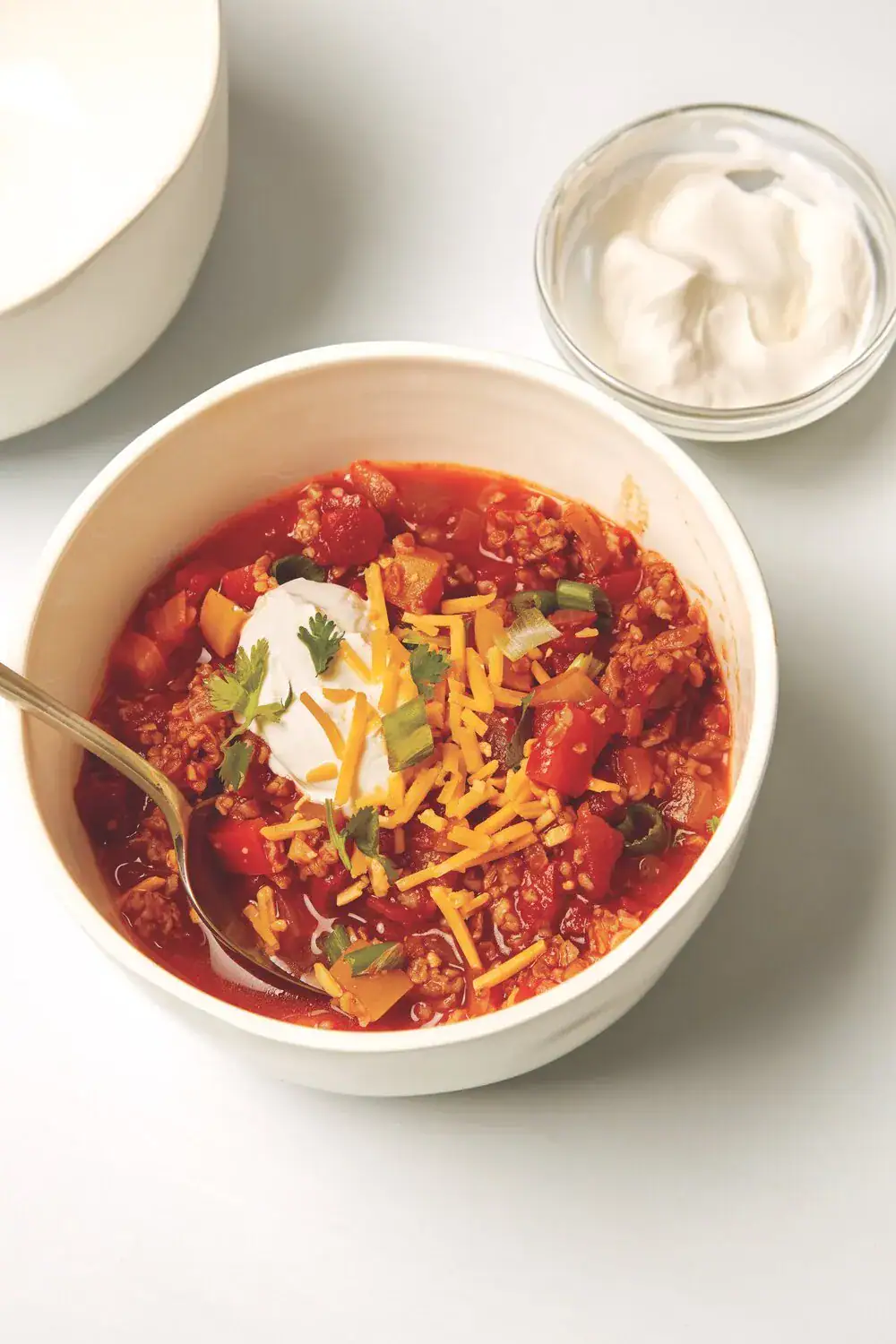
So here’s what I’ve got instead: Two versions of chili that I absolutely love, and that offer something for both meat-eaters and vegans/vegetarians. One is slow-simmered with cubes of beef chuck and dried pinto beans; the other is a meat-free chili where bulgur takes the place of ground beef and provides really great texture, body, and thickening power. You can incorporate all sorts of beans and vegetables if you like, and if you skip the cheese/sour cream garnish, it’s totally vegan.

Both of these are incredibly comforting, and, needless to say, they’re just as effective when eaten in front of your favorite Netflix show, movie, or nothing at all. The playoff football part is optional (obviously, that’s how the Giants feel, too). Have a wonderful weekend.

—Mark


Here, bulgur takes the place of ground meat, providing body and thickening power. The preparation and cooking are relatively fast and, like most stews, this will taste better the next day. All sorts of vegetables can be incorporated: corn kernels; chopped zucchini, squash, carrots, and/or celery; and more. Add them in Step 1. Beans are not essential, though they can easily be added (see the first variation).


Log in, or become a member today.

Join in: enjoy 7 days free, plus 40% off your first year with access to 1,000+ highly vetted recipes from the How To Cook Everything series and beyond, essays from Mark, and original pieces from our contributors.

GetBetterFasterHealthierSmarterTastier

in the Kitchen

Through our (more than a thousand, and growing) highly vetted recipes from the How to Cook Everything series, original food essays and reporting, thoughtful podcast conversations and introductions to new and responsible food products, we aim to showcase what’s possible, from farm to fork, and power a growing movement that encourages people to think about food not as a commodity, but as central to our health and happiness.

We hope you join us on this journey. We’d love to have you as a part of the Bittman community. As a member, you'll have access to:

  • New recipes every week
  • 1000s of recipes from How to Cook Everything and beyond
  • First access to in-person events with Mark and Kate
  • Exclusive discounts from our favorite brands
  • Q&As with Mark and the team


Subscribe to our free newsletter

Join over 105,000 passionate individuals who receive our weekly emails. It’s 100% free and you can unsubscribe anytime. Plus, we’ll email you a sampling of what premium members receive on a weekly basis.