


Last month, Kate and I had a great conversation with Wolfgang Maier, Executive Culinary Director of Regent Seven Seas Cruises (you can listen here) and it got me thinking about this piece I wrote before we were even partnering with Regent. So here’s a throwback — I hope you’ll enjoy reading it as much as I enjoyed writing it. And we wanna know – have you been on a cruise, and if so, what was your eating strategy (or was it nonexistent)? Let us know in the comments. –mb
I.
Perhaps you’ve read David Foster Wallace’s A Supposedly Fun Thing I’ll Never Do Again (originally published in Harpers in 1996 as Shipping Out), his amusing account of his experiences on a cruise ship. It kind of doesn’t matter if you’ve actually read it, though: All you have to do is imagine a hipster’s wry account of a floating hotel full of non-hipster, mostly white, mostly older, mostly wealthier, on the surface less interesting (but really?) people. Got it? OK, don’t bother to read the piece if you haven’t. (His piece about Roger Federer, however … that’s worth your while.)
I have gone on cruise ships eight times, the first with my parents, my sister, and our families, for the folks’ fiftieth wedding anniversary. That was a long time ago, an anomaly, and another story. Since then I have cruised to Antarctica (twice), across the Atlantic, around the Mediterranean (twice), around the Caribbean and, in June, to Alaska on a Regent Seven Seas ship, the Explorer.
One of the parts of me thinks that cruising is a total gas: Like being on a slow train, with a posh private compartment, watching glorious scenery go by, with the gentle or not-so-gentle roll of the ship making you drowsy.
I like to think of myself as cool, hip, with it, and so on. But I know that I’m also an old white guy, a geezer, a boomer, a dork, and all of that. Labels don’t work very well on most people, and I could flash credentials that, in isolation, demonstrate that I’m many different kinds of person, which only goes to show that I’m complex, like almost everyone else. (There are simpletons, yes. Not anyone reading this, of course.)
One of the parts of me thinks that cruising is a total gas: Like being on a slow train, with a posh private compartment, watching glorious scenery go by, with the gentle or not-so-gentle roll of the ship making you drowsy (or sick, depending on your tolerance), and the ability to go wander around in the floating hotel, to play shuffleboard or ping-pong (I don’t actually do these things, but I could have), or to go off and have a glass of wine (this I do), or find a perfectly lovely nook in which to sit and work or read, or get massage or take a dip. Or, most importantly, not go anywhere and take a nap. And so on.
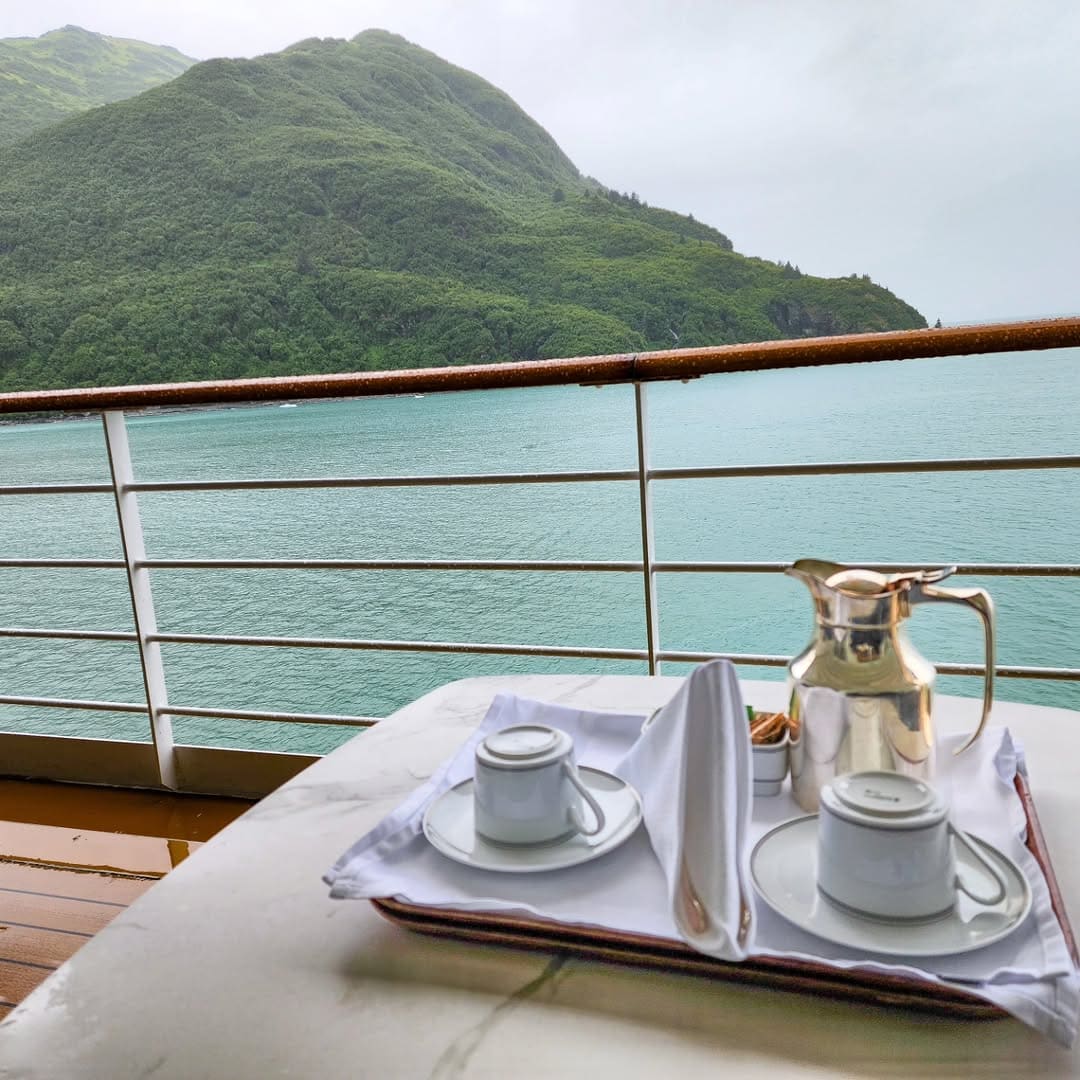
There is so much food available so much of the time and so much of it is tasty and appealing, and in such variety that there is sure to be something every time you consider eating that is pretty much irresistible.
The worst part is that on any short cruise — let’s say ten days or less — you are virtually guaranteed to gain a pound a day. Perhaps there are people for whom the weight gain thing is not true, but for most of us (including me because, although I have done VB6 in one form or another on and off since 2007 and have taken my diets seriously for many years and written literally hundreds of thousands of words on the subject, I am hardly the world’s most disciplined person), there is so much food available so much of the time and so much of it is tasty and appealing, and in such variety that there is sure to be something every time you consider eating that is pretty much irresistible. (On longer cruises I believe you have a better chance of developing and following a discipline, because the eating everything in sight thing can lead to a little self-revulsion.)
II.
But let me refrain from generalizing about the onboard all-you-can-eat experience and just take the particular example of Me. I had originally planned to skip breakfast and lunch on the cruise, but guess what? The ship greeted embarking passengers with a “light” afternoon “snack,” a buffet that was indeed on the relatively light side, although among those light options was a cheeseburger and fries, and really, it had been a long day with no breakfast, so what the hell.
That’s how quickly your mind switches into “how to eat anything” mode.
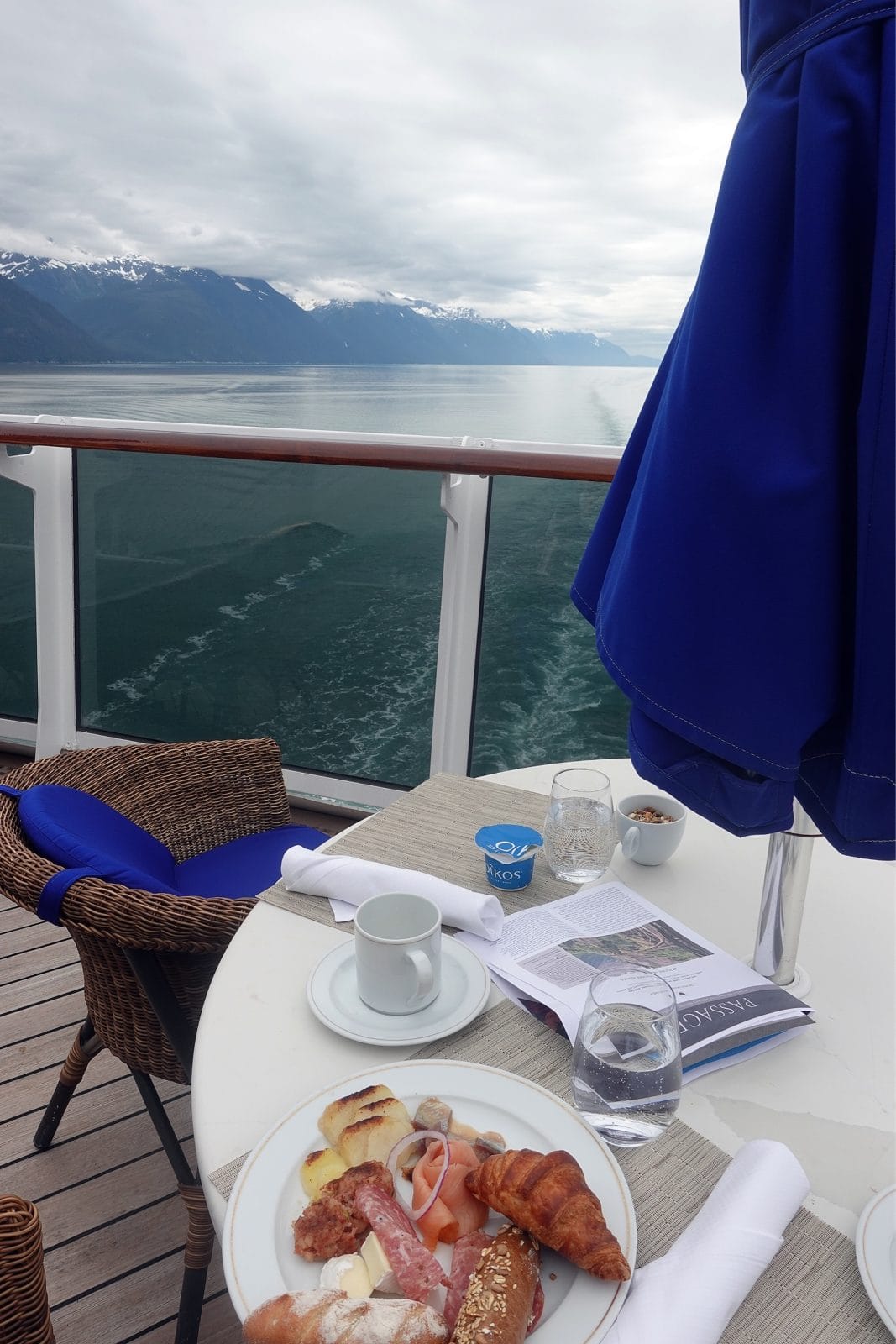
So after an abundant dinner I decide to move into VB6 mode for the rest of the cruise. The next morning, I leave my cabin in a jaunty mood, thinking of the all-fruit meal I’m about to consume: There’s an amazing array of fruit — of course not local since we’re in Alaska and the cloudberry or whatever season hasn’t begun yet or is already over and besides cruises aren’t about local food — and I intend to partake of it heartily.
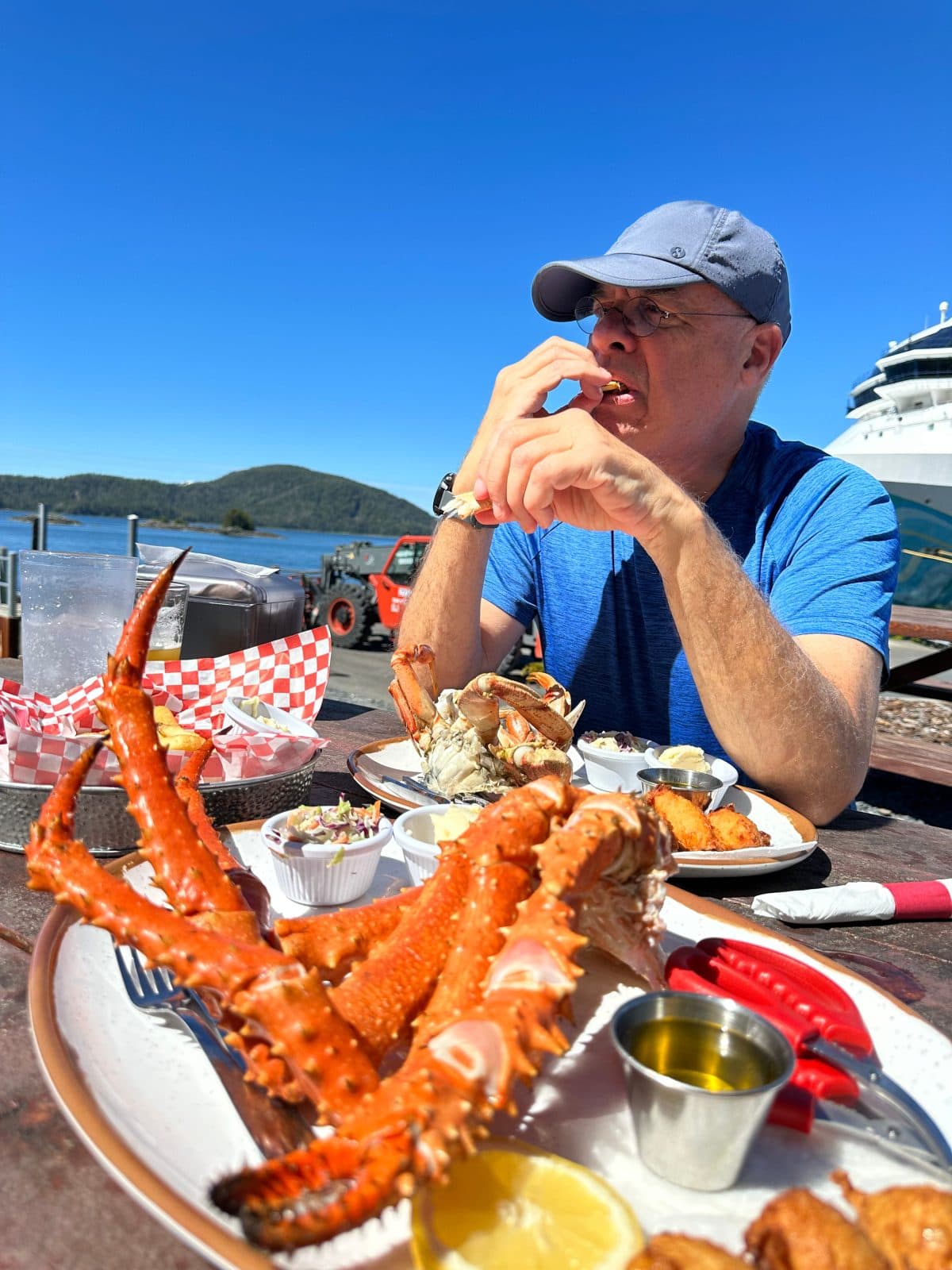
On the way to the beautiful, open, round refrigerated serving station of prepared fruit, however, I encounter an attractive, open, square, refrigerated serving station featuring three kinds of herring: with cream sauce (my father’s favorite), a schmaltz-style with onions, and a very plain pickled version with nothing.
I pause. Not fruit, for sure. Not even vegan. But herring: It’s good for you. And it’s so yummy. I take a few little pieces of the plain one, but I want some onions, too, so I take some of that one also, and then just a teeny bit of the one in cream sauce, because it reminds me of the fifties and my father’s family and how lovely is that?
Even though the salmon is farm-raised and I disapprove, it looks really good and besides there are capers and, besides, creamed herring with lox? I could practically cry at my memories of that.
On this same station, not far away, are slices of smoked salmon, attractively rolled up to hide their true size, which is large. I only take one, because after all I’m barely eating, but even though it’s farm-raised and I disapprove, it looks really good and besides there are capers and, besides, creamed herring with lox? I could practically cry at my memories of that.
Then, just a hand’s-length away, I spy a variety of cheeses, and they look Manchego-esque and Camembert-esque and even Stilton-esque, so I smoothly help myself to just two or three pieces each of two or three of them.
By now the “I may not be eating vegan but I’m eating healthy” pledge, all of five minutes old, has — along with the “skipping breakfast and lunch” pledge — flown out the open nearby window, it’s dived over the handrail, and it’s plunged into the Inland Passage of southeastern Alaska. It’s drowning in six hundred feet of water. It will never be seen again until I return home seven days later.
Because all of this cheese and brined and smoked fish needs bread, and here, right behind me, is some multigrain (“oh, that’s healthy”) and not-bad-looking (and in fact pretty damned good, as it turns out) croissants, so I help myself. (I am too much of a snob to eat the way-too-poofy bagels. One must have standards.)
Still, on this first morning, just past the bread — but across the way from where I will get a fried egg on the next and several subsequent mornings, telling myself I’m being “good,” because I’m only having one fried egg, but after all as everyone knows there is nothing as perfect as an egg nicely fried in butter and eaten with a croissant — across the way from that bread, is what could be called The Downfall of Half of Humanity or The Place Where Sane Eating Goes to Die.
Bacon.
Vegans and vegetarians don’t eat bacon (they claim; who knows, really?), but many of them cop to eating bacon substitutes, because everyone knows bacon is essentially irresistible, and the only reason we don’t all eat it every single morning is that it’s unsustainable, unprincipled, hypocritical, and bad for you. (Some people can’t afford it, but that’s not funny.)
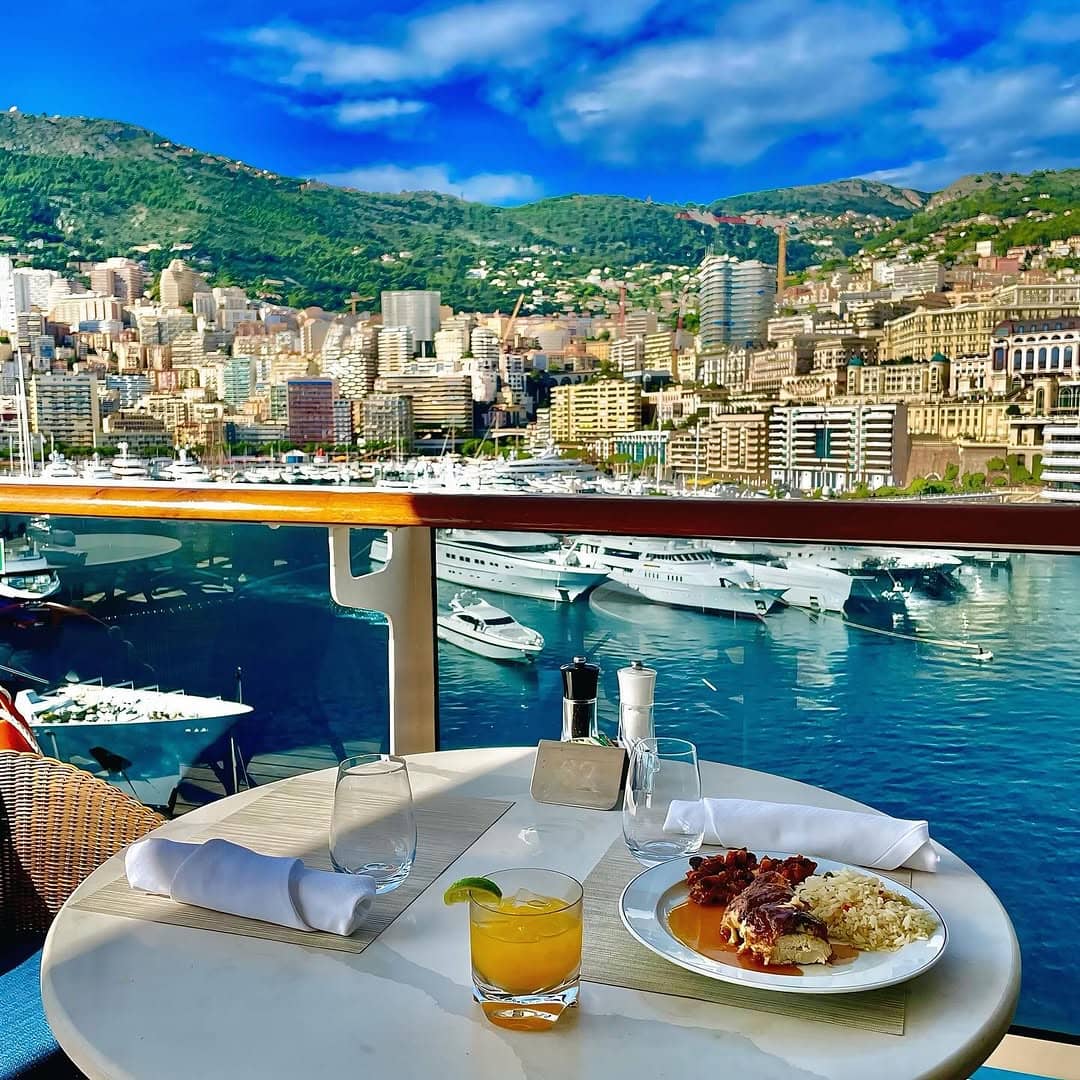
Once you’re having four slices (or whatever; who’s counting?) of bacon, you might as well have a sausage or two, for variety. And one of those little fried hash brown patties that are not that much different from the ones at McDonalds. But only one. And some mushrooms, which are very good with all this other stuff, and after all a vegetable. And then a little fruit, because that was the original goal, after all.
But no more than that. THAT’S IT.
I guarantee whatever food memories float your boat, you encounter them at the supermarket, on the nearest four-lane road to where you live, at the airport, and, should you choose to board one, on a cruise ship.
III.
David Kessler, who was FDA commissioner under both George H.W. Bush and Bill Clinton, and also Covid “czar” for a couple of years under President Biden, and a very smart and wonderful person, a genuine prince, once said that we live in a “food carnival,” which is as good a term as any for our daily environment: You probably couldn’t care less about the combination of creamed herring and smoked salmon, but I guarantee whatever food memories float your boat, you encounter them at the supermarket, on the nearest four-lane road to where you live, at the airport, and, should you choose to board one, on a cruise ship.
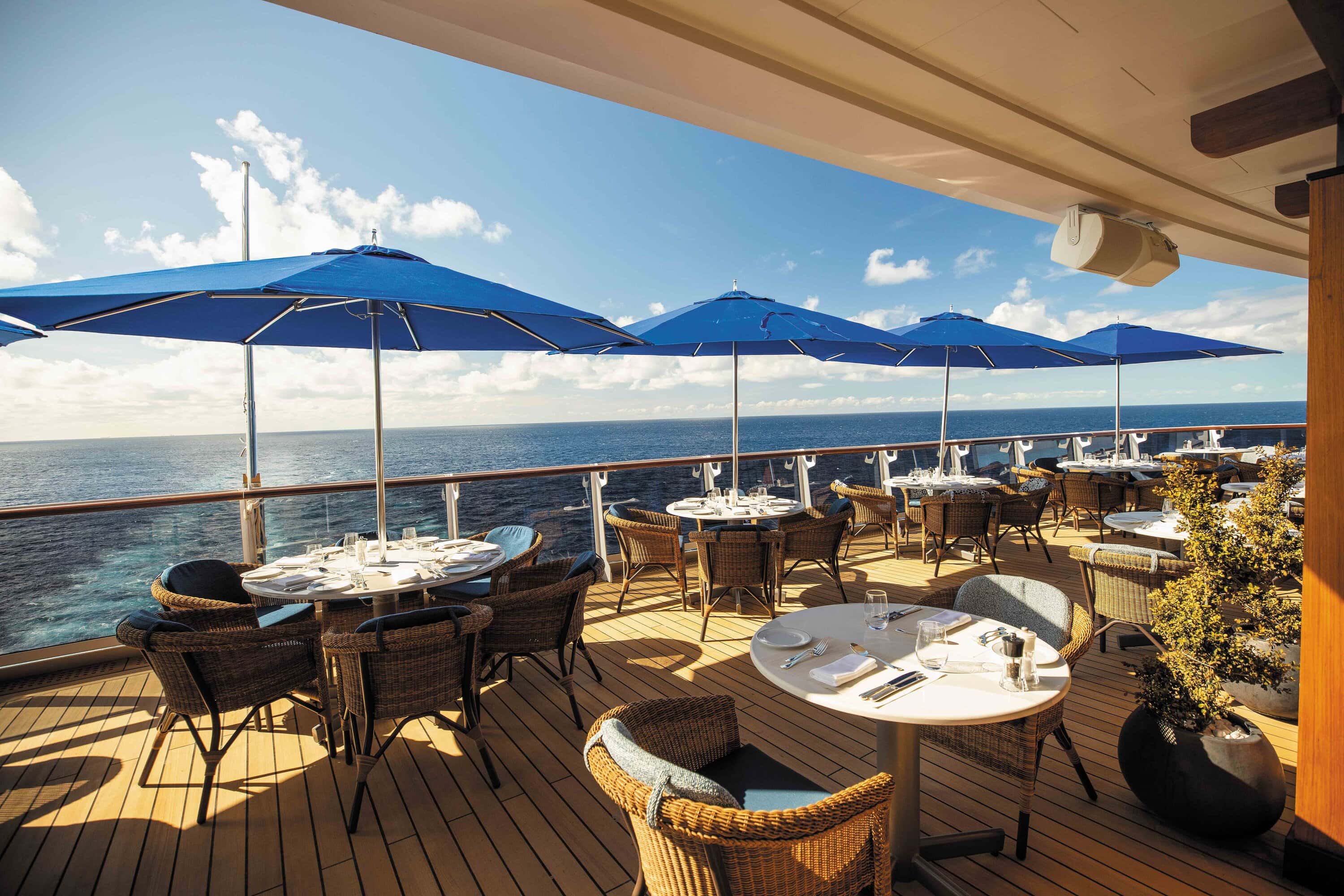
It’s amazing enough that almost all of us live within five minutes of a banana; equally amazing is that almost all of us live within five minutes of a Slushie (which is essentially frozen Kool-Aid with added sugar) or McDonalds hash browns. (From Mickey D’s website: “Potatoes, Vegetable Oil (canola Oil, Soybean Oil, Hydrogenated Soybean Oil, Natural Beef Flavor [wheat And Milk Derivatives]*), Salt, Corn Flour, Dehydrated Potato, Dextrose, Sodium Acid Pyrophosphate (maintain Color), Extractives Of Black Pepper. *natural Beef Flavor Contains Hydrolyzed Wheat And Hydrolyzed Milk As Starting Ingredients.” [Weird language and punctuation in original.]) Or almost any other food you crave. Food carnival is right.
If you put food in front of people like me, food that we like to eat, the chances are very good that we will eat it. We’re hard-wired that way.
Just like I’m neither a cute hipster or a dumb boomer, I’m not an exemplar of either good or bad or normal or abnormal or smart or dumb behavior; just pretty much your basic human behavior. If you put food in front of people like me, food that we like to eat, the chances are very good that we will eat it. We’re hard-wired that way.
Diet is about hunger and opportunity: Even if we eat more than we should, we get hungry, and if there is opportunity, it takes a great deal of ongoing and/or repeated exercise of will to spurn that opportunity. If you bring it, we will eat it.
The easiest way to have your diet be “good” is to remove the opportunity for you to eat “bad.” I do not know what the future of eating will be, but I do know that eating increasing amounts of ultraprocessed food (whether plant-based or otherwise; junk food is junk food, and Oreos are vegan) is not in our individual or group interest. Yet if I open a cabinet and there are Cheez-Its inside, I will eat at least a few; I may finish the box. Same with about 12,000 other things.
IV.
Kerri Conan and I wrote a book a few years ago called Cooking Solves Everything. We were enthusiastic and optimistic, but really it doesn’t, and that’s an overly simplistic statement, along the lines of “All you need is love,” or “Workers of the world unite,” or “If everyone voted…”
Sure. All of these things are theoretical panaceas, with difficult if not impossible execution. But the idea behind Cooking Solves Everything was that if you take as much control as possible over what you eat — if you only bring the food that you think you should be eating into the house, and you only prepare and eat that food … you can affect not only your personal health (greatly) but the food system (in your own small way).
We live in the world, in the food carnival, and in that world we are exposed to food that is not on our tidy little list of things we “should” be eating.
But almost no one does that. (Kerri comes closer than I do, but it’s not really a competition is it?) We live in our homes, yes, but we also live in the world, in the food carnival, and in that world we are exposed to food that is not on our tidy little list of things we “should” be eating. And exercising discipline day and night is for most people very difficult, and for many people downright impossible. I have a friend who eats two cheeseburgers (McDonalds; and by the way I’m not picking on McDonalds, it just happens that there are 14,000 of them in the country, and if that doesn’t sound like so many, think about the last time you were in your car and didn’t see one) almost every time he does a long-ish drive at lunchtime, and he knows how bad they are, he knows they don’t taste that great, and he knows they make him feel lousy afterwards. None of that matters much: He considers them a treat, a part of a routine that’s easy and somehow fun, and maybe even more attractive because it’s forbidden in a way.
Who doesn’t have a story like that one?
Few people will argue that our diets — which, I’ll simply note, are largely responsible for our soaring rates of diabetes and other chronic diseases, among other problems — are not in need of improvement.
Those diets are largely a function of our agricultural system. (Again, this isn’t the place for a great deal of detail, but we can only eat what we harvest, and our leading crops are corn and soybeans, which produce primarily junk food and food for industrially-raised animals.) Yet there remain those — and perhaps they’re in the majority — who argue that only “behavior change” can make our diets better. “If only that poor single mother understood that feeding her kids chips and dip or McDonalds for dinner knew the harm she was doing,” is something I’ve heard more times than I can count.
Guess what? That hypothetical woman probably does know better, just as I “know better” than to forego my breakfast of sliced fruit in favor of one of herring, salmon, cheese, croissants, bacon, sausage, fried potatoes, and whatever I’ve left out. We all know what we should be eating, and, for those of us who can afford it at least, the system allows us to eat a sane (if still environmentally damaging and unfair in many ways) diet. But it doesn’t encourage that diet, and it doesn’t feature that diet, and it doesn’t make that diet available to everyone, and it — the system, the system that wants us to eat McDonalds — is stronger and more ubiquitous than our individual willpower.
V.
On the ship, my lunch pattern was similar. If there was a buffet, I would go in thinking “light salad” and wind up eating, for example, schnitzel, potato salad, some number of vegetables, maybe a salad even, and perhaps a couple of random meatballs or pieces of fried chicken, or whatever; much of it was very good. If I ate in one of the restaurants, I would go in thinking “light salad,” and then have a glass of wine and order soup and a salad and a steak, or a cheeseburger, or whatever else; also very good.
My most “disciplined” meals tended to be dinners, probably because by the time I got there I’d eaten and drank 4000 calories.
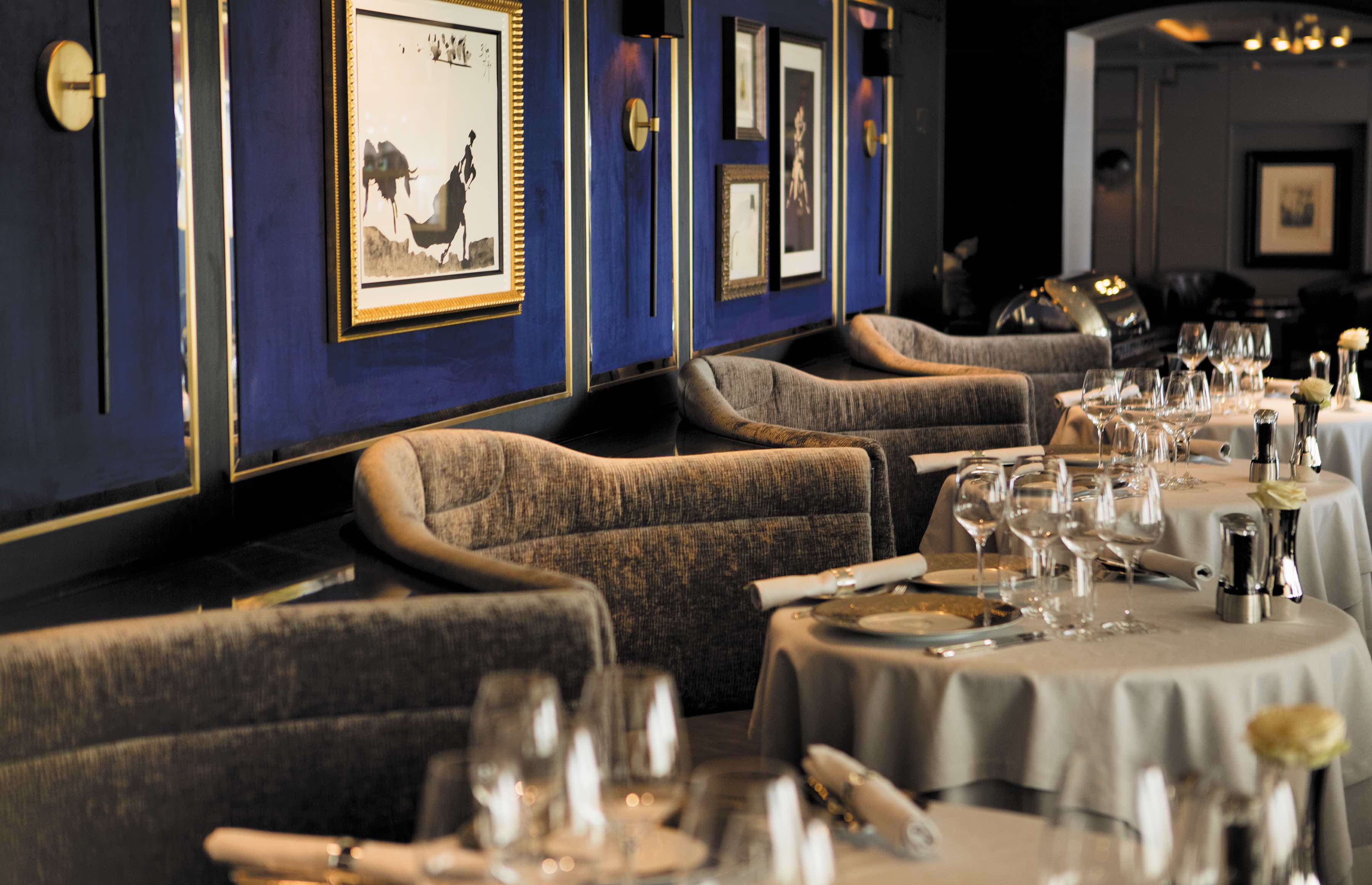
What’s clear is that I gave myself permission to ignore all of my own rules. In fact my most “disciplined” meals tended to be dinners, probably because by the time I got there I’d eaten and drank 4000 calories.
I gained the predicted ten pounds. (By the way, for those of you who now think I’m a self-indulgent, lazy so-and-so, I ran every day we were in port, which was five out of seven.) For a stronger person than I, that might not have been true. But …
Not every day is cruise ship day, obviously. And perhaps if we only indulged on cruise ships or in like environments, the situation wouldn’t be so dire. But how about this: Go for a drive (or, if you live in a big city, a walk) and – be honest, now – report back to me on how often your brain tells you, “I wouldn’t mind putting some of that inside of me.”
For what it’s worth, and indeed this is an individual choice (assuming adequate income, which is a bold assumption), I love cruising. I wish I could figure out the eating thing, but I’m eager to try again, despite the issues.
VI.
I was a huge David Foster Wallace fan, back in the day. I was more envious of “Consider the Lobster” than of any other piece I might have written; I loved “Shipping Out” (later “A Supposedly Fun Thing…”) when it first appeared: the hilarious takedown of cruise ships, which were among my parents’ most beloved places to be. (He no longer appeals to me, and I doubt I’ll ever wade through Infinite Jest again, but it’s always fun to read what people are saying about him.)
But for what it’s worth, and indeed this is an individual choice (assuming adequate income, which is a bold assumption), I love cruising, for the reasons I mentioned above. I wish I could figure out the eating thing, but I’m eager to try again, despite the issues. Besides, I enjoyed myself.

Comment