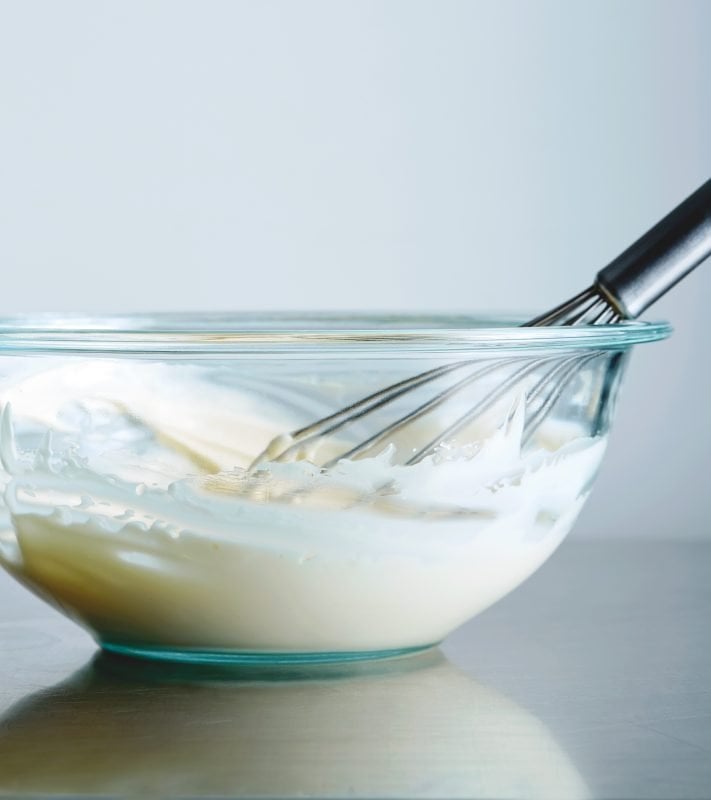
Homemade Mayonnaise

Photo: Aya Brackett

PUBLISHED February 14, 2024

For new cooks, reading that mayonnaise is easy to make at home can feel like a lie. But the first time you get it right—maybe even on your first attempt—you’ll see it’s not all smoke and mirrors. And then you’ll have a sauce to work with that’s infinitely better and more impressive than what the supermarket has to offer.

Some notes:
Do some experimenting and find the method—whisk, blender, food processor—that works for you. If you’re adding something like chile paste or spices, you’ll get a smooth, even sauce no matter which method you use. If you want to make a chunkier sauce, like tartar, whisk in the additions by hand.

If you’re worried about eating raw eggs—and I’m not going to argue with you—you can make mayonnaise with pasteurized eggs (though it’s not my first choice), or try the sauce variation after the recipe.

Mayonnaise is an emulsion, in which oil is dispersed in the water in eggs and vinegar or lemon juice through vigorous stirring, to produce a thick, pale yellow cream. A few basic seasonings balance the flavors. That’s really all there is to it.

Homemade mayos go south when you add the oil too quickly or (less often) you add too much oil. To help you add the oil in a slow steady stream, you could put it in a squeeze bottle or a liquid measuring cup with a spout. Or use a teaspoon to add a few drops at a time. If you’re using a food processor, note that many have a small hole in the feed tube, put there specifically for this purpose; you put the oil in the tube and it drips out. (I have drilled holes in feed tubes without them, which also works.)

For general purposes, I like grapeseed oil best because of its neutral flavor, especially if I’m planning on adding other flavorings. Use olive oil if you want a particularly Mediterranean taste, which is often the case, especially with the aioli variation. But note that mayonnaise made with 100 percent olive oil tends to break more easily; go for a mix of grapeseed and olive. Asian ingredients go better with a mayonnaise made from grapeseed, corn, or—for a more pronounced flavor—peanut oil. For vinegar, I like sherry vinegar or white wine vinegar, but try lemon or even lime juice for a brighter flavor. All of these decisions should be based on how you plan to use the mayo.

If you’re cautious, make sure your eggs and oil are roughly the same temperature, because fluctuations can cause some instability, though this is a really minor point. And despite what you may have heard, the direction in which you whisk does not matter.

If your mayonnaise doesn’t emulsify on the first attempt, transfer the egg-oil mixture to a measuring cup with a spout and put a fresh egg yolk and more mustard in the bowl or machine. Begin again, adding the broken mayonnaise a few drops at a time, as you would the oil. Once all of that mixture has been added, you can begin to incorporate any remaining plain oil.


The following may contain affiliate links for which we earn a small commission. Thank you for supporting us in this way!
Print

Homemade Mayonnaise

Prevent your screen from going dark

Makes 1 cup 1x

Time 10 minutes

Units Scale

Ingredients

  • 1 egg yolk
  • 2 teaspoons Dijon mustard
  • 1 cup good-quality vegetable oil or olive oil
  • Salt and pepper
  • 1 tablespoon sherry vinegar, white wine vinegar, or fresh lemon juice

Instructions

  1. To make by hand: Put the yolk and mustard in a medium bowl. Beat together with a whisk. Begin to add the oil in dribbles as you beat, adding more as each amount is incorporated. You’ll notice when a thick emulsion forms. Then you can add the remaining oil a little faster. Depending on how fast you beat, the whole process will take about 5 minutes. To make by machine: Put the yolk and mustard in a blender or food processor and turn the machine on. While it’s running, add the oil in a slow, steady stream. When an emulsion forms, you can add it a little faster (and scrape down the sides as necessary), until all the oil is incorporated.
  2. Add salt and pepper, then stir in the vinegar. Taste and adjust the seasoning. Use immediately. Or refrigerate for about a week (less if adding fresh herbs or aromatics).

— Recipe from How to Cook Everything: Completely Revised Twentieth Anniversary Edition 

Recipe variations

Eggless Mayonnaise Sauce
A tad thinner than homemade mayo, but rich, creamy, and raw egg–free. It’s perfect in salads or alongside simply cooked meat and fish; or drizzle judiciously on sandwiches. Replace the egg yolk with 2 tablespoons of the best mayo you can find. Halve the amount of oil and proceed by hand or machine as described above. The sauce will appear to separate a bit as you add oil; keep going and it will come together fine.

Log in, or become a member today.

Join in: enjoy 7 days free, plus 40% off your first year with access to 1,000+ highly vetted recipes from the How To Cook Everything series and beyond, essays from Mark, and original pieces from our contributors.

GetBetterFasterHealthierSmarterTastier

in the Kitchen

Through our (more than a thousand, and growing) highly vetted recipes from the How to Cook Everything series, original food essays and reporting, thoughtful podcast conversations and introductions to new and responsible food products, we aim to showcase what’s possible, from farm to fork, and power a growing movement that encourages people to think about food not as a commodity, but as central to our health and happiness.

We hope you join us on this journey. We’d love to have you as a part of the Bittman community. As a member, you'll have access to:

  • New recipes every week
  • 1000s of recipes from How to Cook Everything and beyond
  • First access to in-person events with Mark and Kate
  • Exclusive discounts from our favorite brands
  • Q&As with Mark and the team


Subscribe to our free newsletter

Join over 105,000 passionate individuals who receive our weekly emails. It’s 100% free and you can unsubscribe anytime. Plus, we’ll email you a sampling of what premium members receive on a weekly basis.