
From mussels to kelp, our oceans are telling us what to grow

Fish is among the most challenging subjects in food; roughly a billion people rely on seafood for their primary protein source. Yet many fish populations are ten percent of what they were a hundred years ago, and the oceans (which comprise around 95 percent of the “habitable” space on earth), largely because they’re international, remain little understood, minimally managed and regulated, and badly policed. One solution is to farm fish, and yet most recent aquaculture “solutions” have simply replicated the mistakes of land agriculture. Still, there are newer ways of raising fish that make sense, and this piece, which we originally published a couple years back and remains relevant, explores that subject. — Mark
Fish farming has earned a negative reputation, and not without valid concerns. The practice operates within systems that diverge from the natural order, striving to rear fish in conditions that, if not carefully managed, can potentially jeopardize both ecosystems and the health of consumers.
The farming of bivalves and sea greens is quite literally doing the opposite: Bivalves, such as mussels, oysters, clams, and scallops, along with seaweed, require zero feed, fertilizer, or antibiotics. That they generally stay put is better for ecosystems.
“Farming bivalves and seaweed is possibly the most sustainable harvest we have from the sea,” said Ryan Bigelow, project director at Conservation Alliance for Seafood Solutions.

Both bivalves and seaweed filter out contaminants from the waters they consume, breathing life back into our oceans. A single oyster can filter upward of 50 gallons of water a day, which adds up exponentially when accompanied by an entire reef.

In recent years we have seen breakthroughs in fish-feed alternatives, typically composed of plant proteins, which can drive genetic manipulation and behaviors, even converting certain species from carnivores to omnivores. While this trade might seem efficient compared to land animals, like cattle, the question remains: Why aren’t we emphasizing foods with zero inputs?
“Looking back, the big mistake made was that no one looked out at the ocean and asked what’s unique about it as an agricultural space. Instead, it was driven by markets,” says Bren Smith, founder of GreenWave and author of the James Beard Award-winning book, Eat Like a Fish: My Adventures Farming the Ocean to Fight Climate Change.
“The thought was, ‘people eat salmon and tuna, so let’s grow salmon and tuna.’ But that’s a wild palate. When you actually ask the ocean what to grow, it says, ‘why don’t you grow things that don’t swim away and things that you don’t have to feed?’ That’s what’s unique about the ocean as an agricultural space. It’s pretty simple.”

Smith’s passion for regenerative ocean farming, or what he often refers to as “3D ocean farming,” wasn’t where the Newfoundland native started — as a young commercial fisherman in the icy waters of the Bering Sea. When Smith was still in his early 20s, he began noticing that fish populations were steadily disappearing. It was time to look elsewhere.
“My journey is the journey of multiple ecological collapses in the ocean,” says Smith.
Newfoundland was on the front lines of climate catastrophe related to overfishing with the 1992 moratorium on fishing Atlantic cod, resulting in approximately 30,000 fishermen and fish plant workers losing their jobs.
“Seeing my people walking around like hungry ghosts, just no sense of meaning — sure, the government was doing buyouts and trying to create jobs, but people wanted to fish,” said Smith, reflecting on the largest industrial closure in Canadian history. “That was the real wake-up call. That was my shift to aquaculture. I was like, ‘OK, what’s a way to stay on the ocean? What’s a way to die on my boat one day?’”
Smith took a stab at aquaculture but wasn’t impressed with his results. Many farmed species are the ones that thrive in the wild: When these species are jammed together in confined pens, things generally go awry.
The content below was originally paywalled.
The unnatural and often unsanitary conditions of fish farming often lead to an uptick in diseases. It’s not uncommon for farmed fish to be ravaged by sea lice infestations, among other bacterial diseases and viruses that rapidly spread through entire schools. The result can be an economic hit to the producer or a dangerous product for consumers — or both.
Worse yet, viruses, parasites, pesticides, and untreated fecal matter will leach into surrounding waters and ultimately spread through neighboring wild populations. When farmed offshore, wild populations can remain unscathed from potential cesspools.
The other, and potentially more dangerous risk, is when farmed fish escape and mingle with wild populations. Farmed fish are often bred with more aggressive tendencies; their presence often cuts off wild populations from essential resources and natural mating practices, threatening their health and abundance of wild populations.
In 2017, a net pen off Cypress Island in Washington’s northern Puget Sound collapsed, resulting in the escape of an estimated 260,000 farmed Atlantic salmon into Pacific waterways where the species is not native. Cooke Aquaculture was responsible for the catastrophe — and did their best to cover up the severity of the incident with a string of public lies, excuses, and measures to prevent and restrict access to journalists.
But it didn’t take long for the consequences to surface. A study by Wild Fish Conservancy showed that 100 percent of the escaped Atlantic salmon that were tested carried Piscine Orthoreovirus (PRV), a highly contagious, exotic virus of Norwegian origin.

The catastrophe gained attention with Patagonia’s Artifishal, a 2019 film that explains the drawbacks of farming salmon and its effects on the Pacific Northwest. The outdoor clothing company partnered with Wild Fish Conservancy and has championed efforts to eliminate net pens from Pacific Northwest waters, reclaim Cooke’s leased waters, and assist native populations in reclaiming the Puget Sound.
Patagonia’s strategy extends beyond activism and sustainably-made clothing: The brand also produces sustainable food options under Patagonia Provisions. Perhaps the most sustainable product on its roster? Farmed mussels.
“Mussel cultivation dates back to as early as the 13th century, and it’s so special because it has such a low footprint,” said Birgit Cameron, global director of Patagonia Provisions. “It requires pretty much zero inputs. No feeds. No fertilizers. It’s really making the most of an important food source in a way that doesn’t cause harm.”
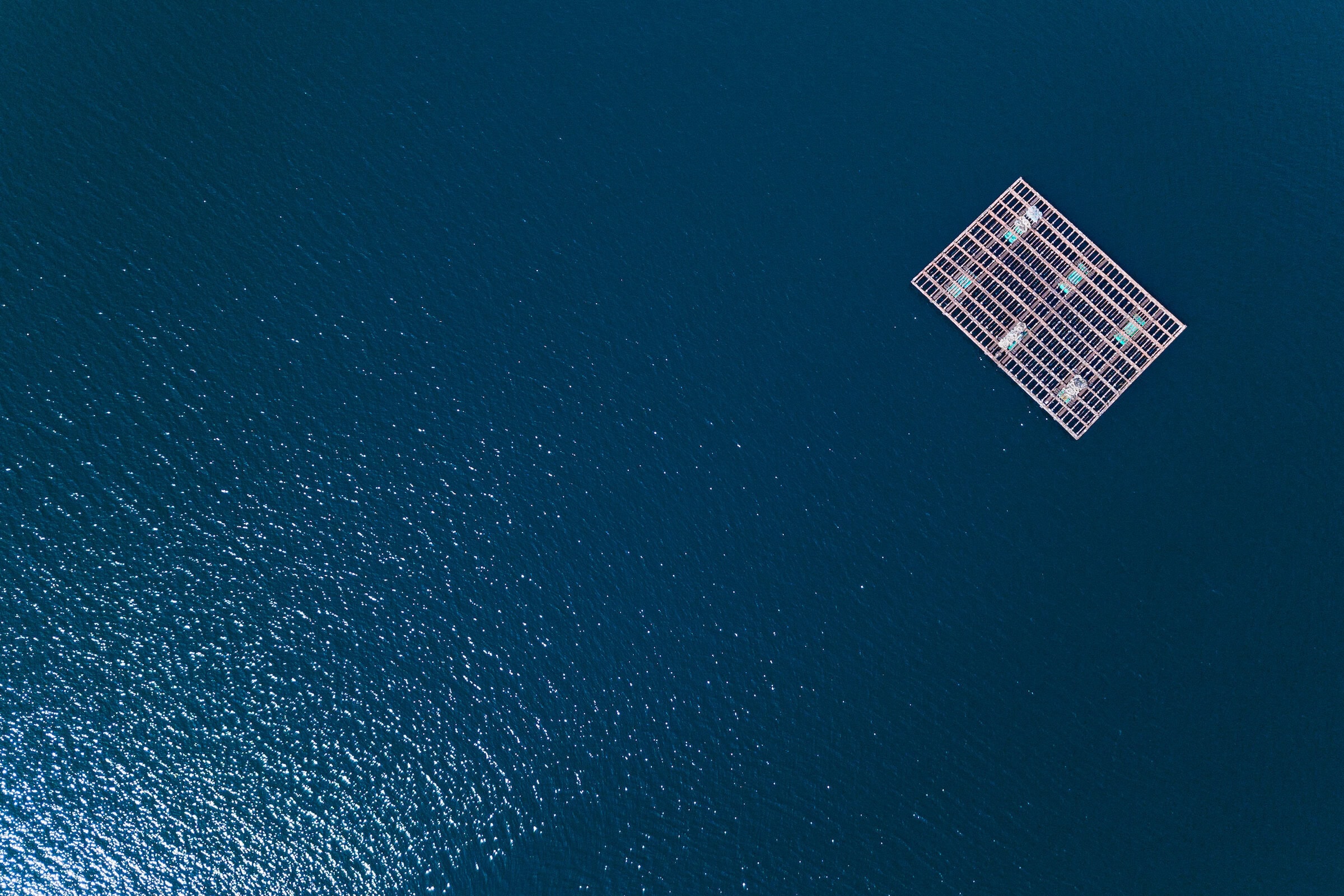
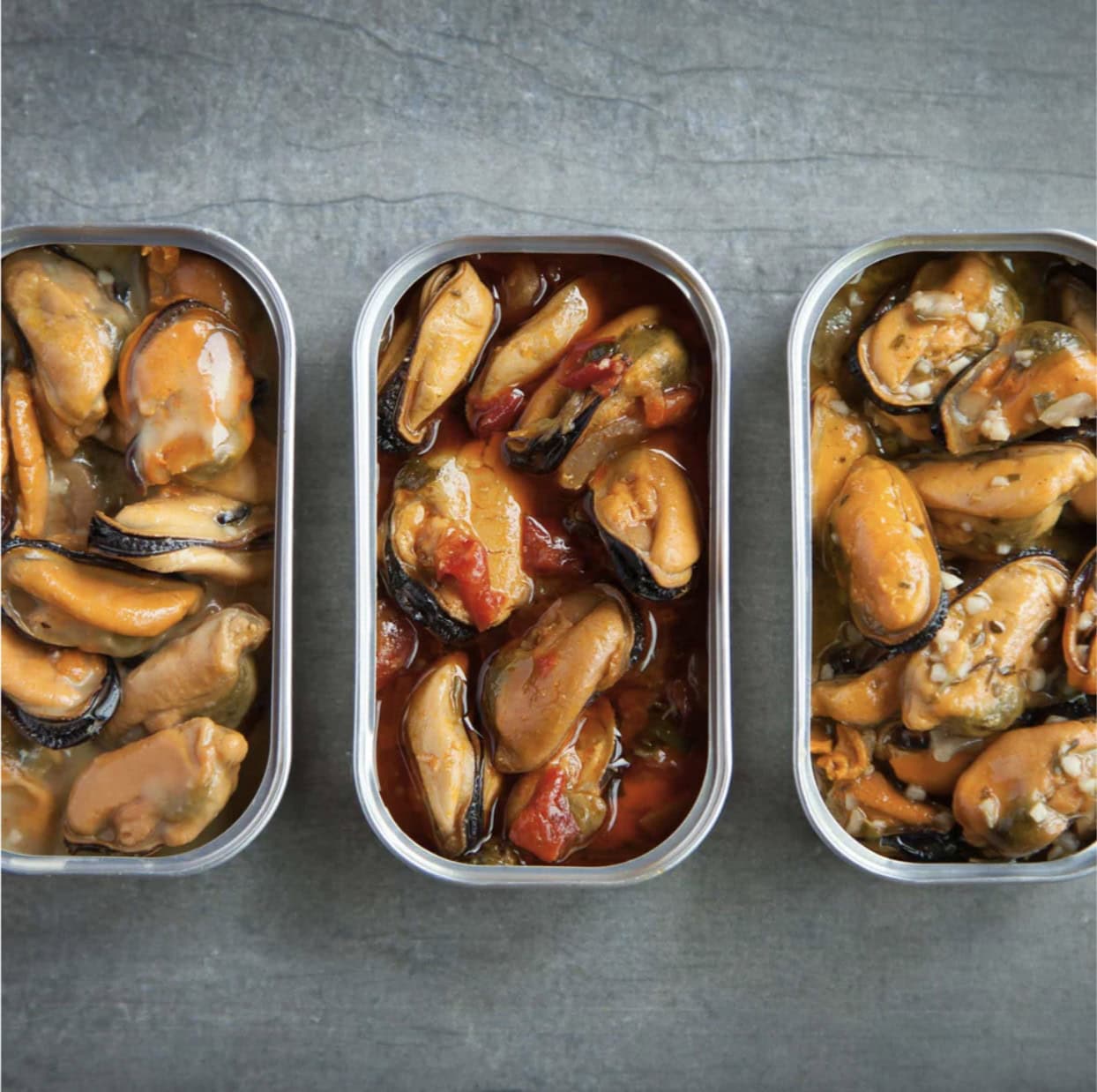
Working with a team of scientists and regional activist groups, Patagonia identified a region in Galicia, Spain known for growing healthy mussels. The partnership between Spanish fishermen and canneries has allowed Patagonia Provisions to produce a roster of tinned mussels, preserved and smoked in an array of olive oils and spices. That they are a tinned variety makes them incredibly sustainable due to their long shelf life and recyclable packaging.
When Smith first embraced regenerative ocean farming, he quickly learned that being a skilled fisherman doesn’t make for a skilled farmer. But past the steep of his learning curve, he saw the huge, mostly untapped opportunities in this line of work, while also realizing that there were few resources for those wanting to learn; GreenWave was born.
“With GreenWave we’re trying to train the next generation of ocean farmers,” said Smith. “Our focus is on two primary communities. One is Indigenous populations, and the other is fishermen impacted by climate change.”
Their goal is to train 10,000 farmers and hatchery technicians within the next 10 years. It’s reaching that goal by assisting the next generation of ocean farmers with anything from landing permits to finding markets for crops. Currently, there’s a waiting list of over 6,000 people in the U.S.
GreenWave has also launched an online platform that provides tools for the next generation: Users can input their acreage, ocean bottom type, local species — and from there the program will spit out a farm design, budget, and permitting documents that can be modified.
The farm designs are simple. The idea is to create a plan that is nonobstructive, fluid, and, the most crucial factor, biodiversified.
“The ocean has poor monoculture, and she’ll attack you when you pack species together,” said Smith. “This is about a conversation with the ocean and learning what makes sense to grow. It’s not driven by external markets and demand.”
Smith learned that the most biodiversified and sustainable farms were those which included bivalves and seaweed. By growing mussels, oysters, clams, scallops, and various species of seaweed, these farms are mimicking the water column and breathing life back into our oceans and waterways. But convincing people to incorporate kelp into their diet wasn’t easy at first.
Smith naively began trying to sell his seaweed products to people who bought fish retail, but consumers wanted nothing to do with it; he needed to find an audience. Through a unique series of events, a collection of famous chefs — René Redzepi, David Chang, and Eric Ripert — answered the call. From there, interest in kelp has trickled down.
“What was really interesting is I remember when René Redzepi came out and tasted our kelp,” Smith said. “He was shocked that it didn’t taste like any seaweed he ever tasted before because our waters are just different from others. Our waters aren’t necessarily better, but you just get different flavors. Just like terroir in wine, you get different merroirs.”
If done right, regenerative ocean farming poses no clear risks — and solely benefits. But like many for-profit sectors, there is a concern that this industry could be taken over by large corporate entities.
“There are folks coming out of Wall Street and see the ocean as a new frontier for commodity crops. I think there is a bit of a gold-rush mentality around this sector,” said Smith.
“As the sea rises — this is kind of coldhearted — but that’s more farmland for ocean farmers,” he said. “Those of us who want to do it right see that, but the sharks of the economy are also seeing the same thing. We don’t have any social power to dictate that. All we can do at GreenWave is build out the industry in a way that we see as regenerative and community-led. It’s up to the food movement to curtail that.”
Sen. Elizabeth Warren has worked with Bren Smith to push forward a Blue New Deal to address the dangers that our oceans are currently facing. The proposal is solution-driven and focused around regenerative ocean farming.
The plan addresses both the economic and ecological benefits of regenerative ocean farming. Oceans support millions of jobs and contribute $304 billion to our national GDP, while 3 billion people worldwide depend on wild-caught and farmed seafood as a major source of protein. The problem is that more than 90 percent of global fish stocks are overfished, which is what led to aquaculture in the first place.
“Fish aquaculture is trying to do the right thing,” said Smith. “It’s on this journey of sustainability of lowering impact. The trouble is, with climate change, lowering impact isn’t enough.”
“Sustainability isn’t making a bad thing better,” he said. “What we need to do is breathe life back into the ocean and our ecosystem — and there are crops that do that.”
Comment