

Got even the hint of an inclination to cook plus a pantry that’s not totally bare? You can cook for just yourself and enjoy every minute. Here’s how.
Many people who live or spend time alone don’t cook for themselves. They hate it, or they think it isn’t worth it, or they don’t know how. (Yes, there are many other reasons, from illness to poverty, but I can’t address those here.)
I don’t live alone, but I often eat alone. And, much as I love cooking with and for Kathleen, and of course for the occasional small or large crowd that shows up, I do like cooking for me. It is absolutely worth it. It’s not that I never have frozen pizza, but that route is far from the norm.
But I am not trying to guilt-trip routine-frozen-pizza-eaters, or those who consume ramen daily, or people who rely on grilled cheese (or, for that matter, cheese and crackers) or tuna fish and a glass of milk. I respect those choices; my job is to expand them.
Not absurdly, however: I could say, “You can cook almost anything for one that you’d cook for four,” but that defeats the purpose. Generally, when you cook for one, you want to streamline things even more than usual; my goal here is to explain how to do that.
So, if you have the opportunity to cook for yourself, you only need two other things – the inclination and the pantry. Note that I do NOT include “time,” for two reasons: One, we assume that I’m not going to convince you to try cooking for yourself by listing a bunch of project recipes and insisting that they’re more fun than whatever else you might be doing, because if you felt that way, you’d be doing this already. More to this point is this: although it’s true that there’s some kind of time-saving in microwaving store-bought food, it’s kind of marginal if you can cook for yourself in 20 minutes. (Frozen pizza takes half an hour, unless you microwave it, in which case you might as well eat the box, too.) Either way, you’re going to spend a few minutes eating and tidying. So unless you’re as busy as an astronaut, I go back to: “Do you want to do it?” Great. “Do you have a few things lying around?” Perfect.
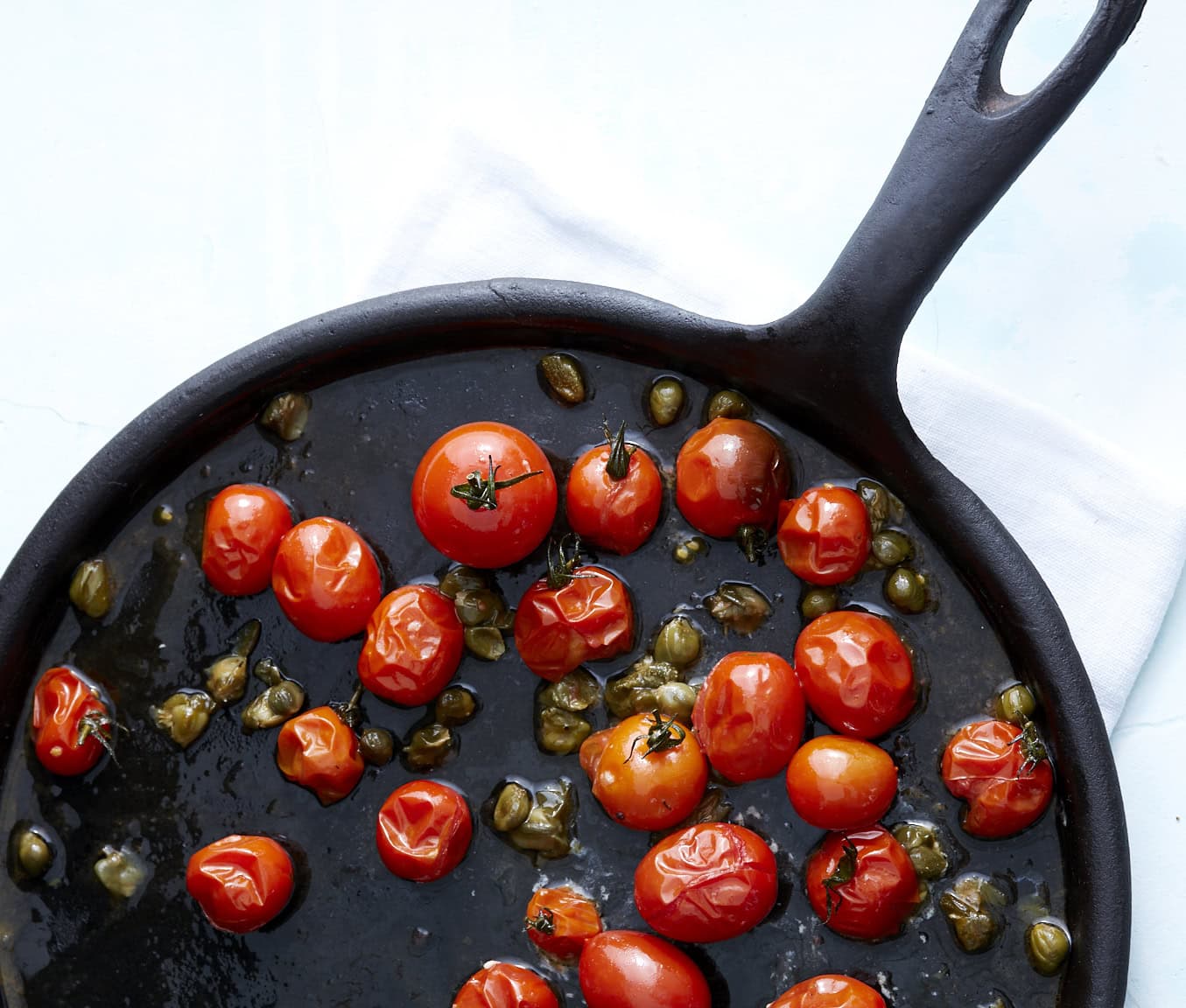
As it happens, the things you need to have lying around are the same as those you need for cooking in general—the usual pantry items, from the absolute basics like olive oil and vinegar and soy sauce to more personalized preferences like coconut milk, dried shrimp, or seaweed.
The list is nearly infinite, and while you’ll never have everything, you’ll quickly learn, if you haven’t already, that there are things you never use (I’ve had some dried lily buds in the pantry for at least five years, and they’re not going anywhere) to things you run out of and want to replenish frequently (I go through capers pretty quickly, and now buy huge jars.)
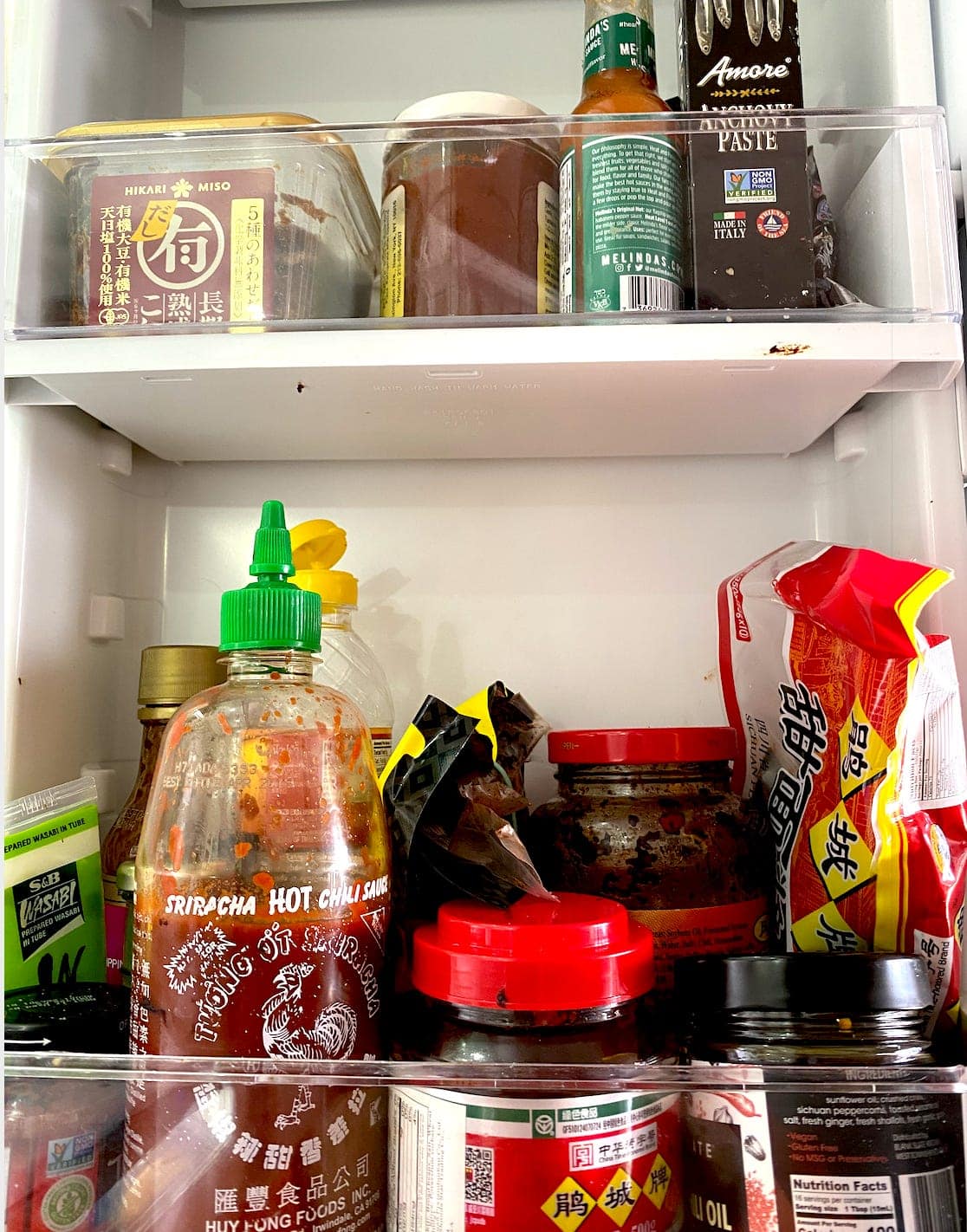
(Here’s a list of reader-suggested pantry items, organized not-so-elegantly into four rough categories: condiments, spices, fridge/freezer, and pantry.)
Fresh things are a little easier, because you don’t have as many of them: You already know that it pays not only to buy seasonally, but to buy only as much as you’re going to use in a few days. So you have what you have, and know you like it. And you know, as well (or I hope you do), that you can always substitute freely: Almost every food, whether grain, veg, fish, or meat can be swapped for something else in its class.
Mostly, cooking for yourself involves thinking on a different scale and making sure that the minimal number of ingredients you start pulling out is going to combine to produce something satisfying. (You can, of course, cook recipes for four and eat them over the course of a couple of days, but this is about being nimble.) I might say, “Poach an egg and put it over spinach,” but that dish is way more enjoyable if you chop the spinach first, simmer it in butter, and add a little minced garlic or a grating of nutmeg or Parmesan. That, and bread, is a fine meal, whereas poached egg on steamed spinach is, to me, depressing.
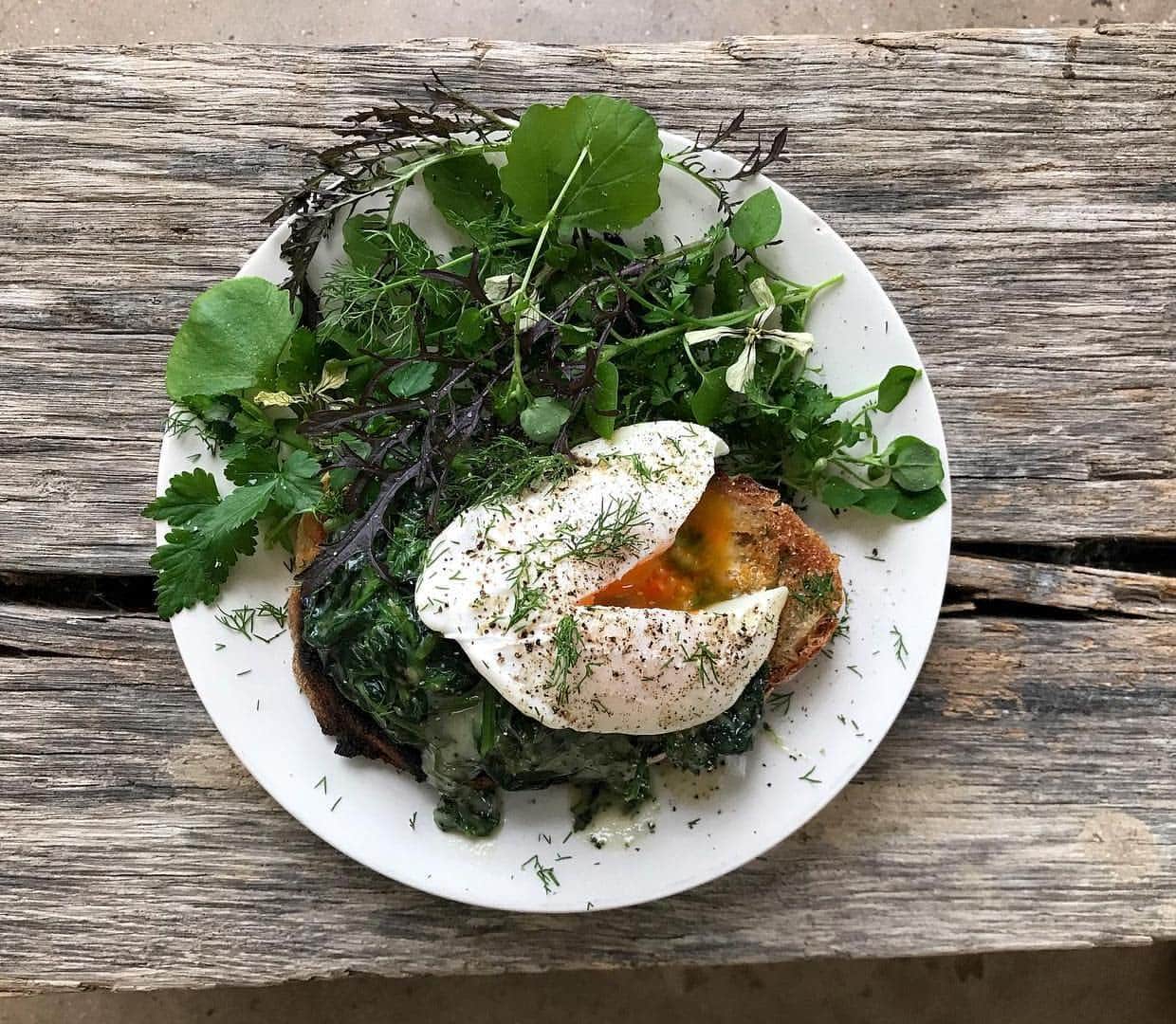
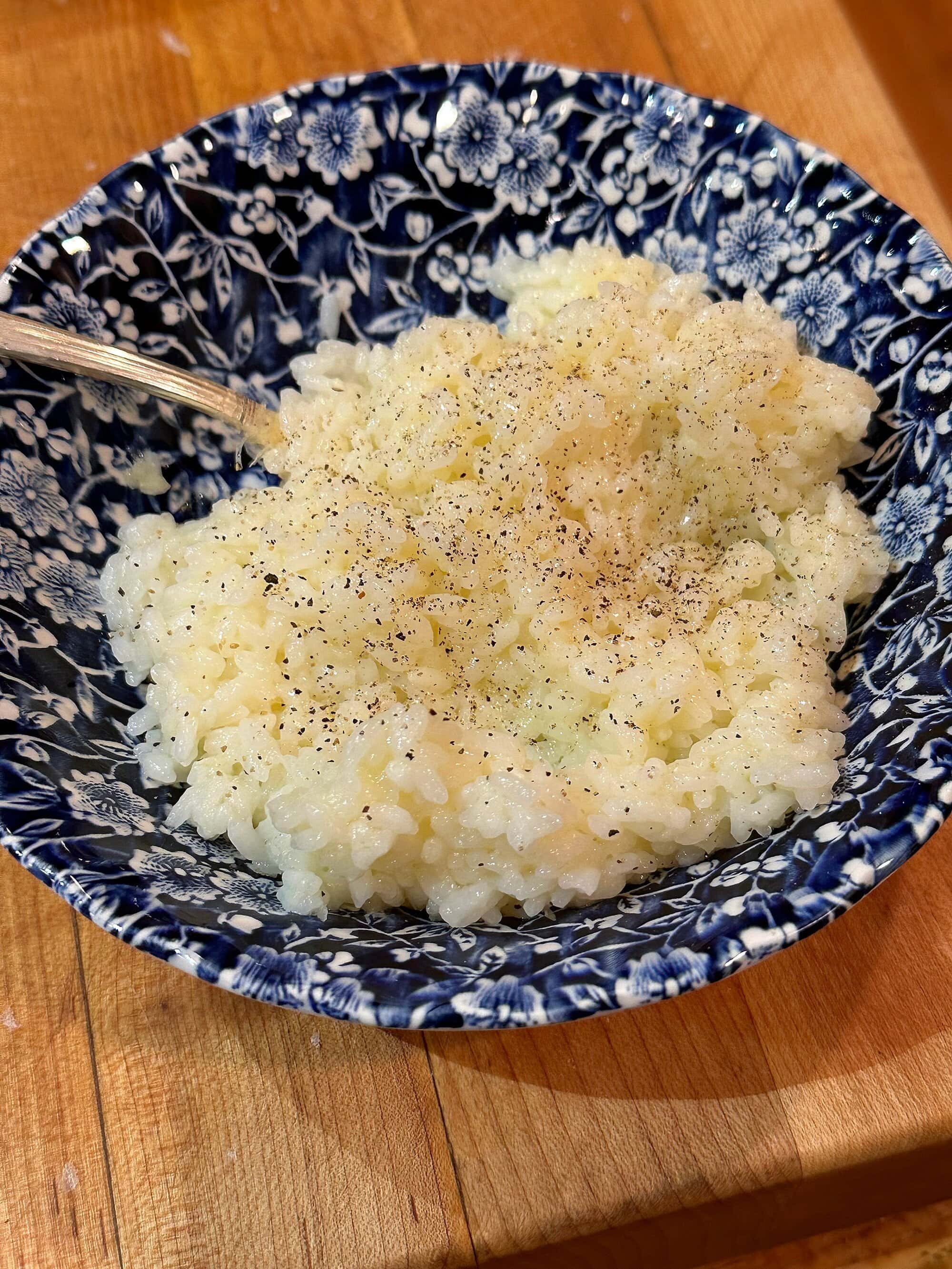
This example illustrates another principle of cooking for one: fat is key. Eating alone does not need to be an ascetic experience. (I suppose anyone who routinely eats frozen pizza already knows this.) If the goals are to have fun, minimize time, and produce something really delicious and enjoyable, then you need fat in sufficient quantities, and generally that means butter or olive oil. Thus, my beautiful rice/butter/Parmesan, which I made the other night when arriving home at eleven after being fed an inedible “meal” at an event, contained 1/2 cup raw (white, short grain) rice, cooked in water, with something between one and two tablespoons of butter, and a half cup of grated Parmesan stirred in. And salt, and lots of black pepper.
Grains, or grain-based foods, or carbohydrate-rich vegetables either form the basis of or a complement to most of my one-person dishes. I wouldn’t serve that spinach-egg thing, or anything resembling it, without some toast. (Or, you could serve it on rice. Or, you could toss it with noodles, with almost any flavor profile that appeals to you. Remember what I said about swaps.) Even if you decide to go a straight animal route, you’re going to want something from the high-carbohydrate family: A small steak (if you thought ahead and bought or defrosted one) is way better with even a microwaved potato.
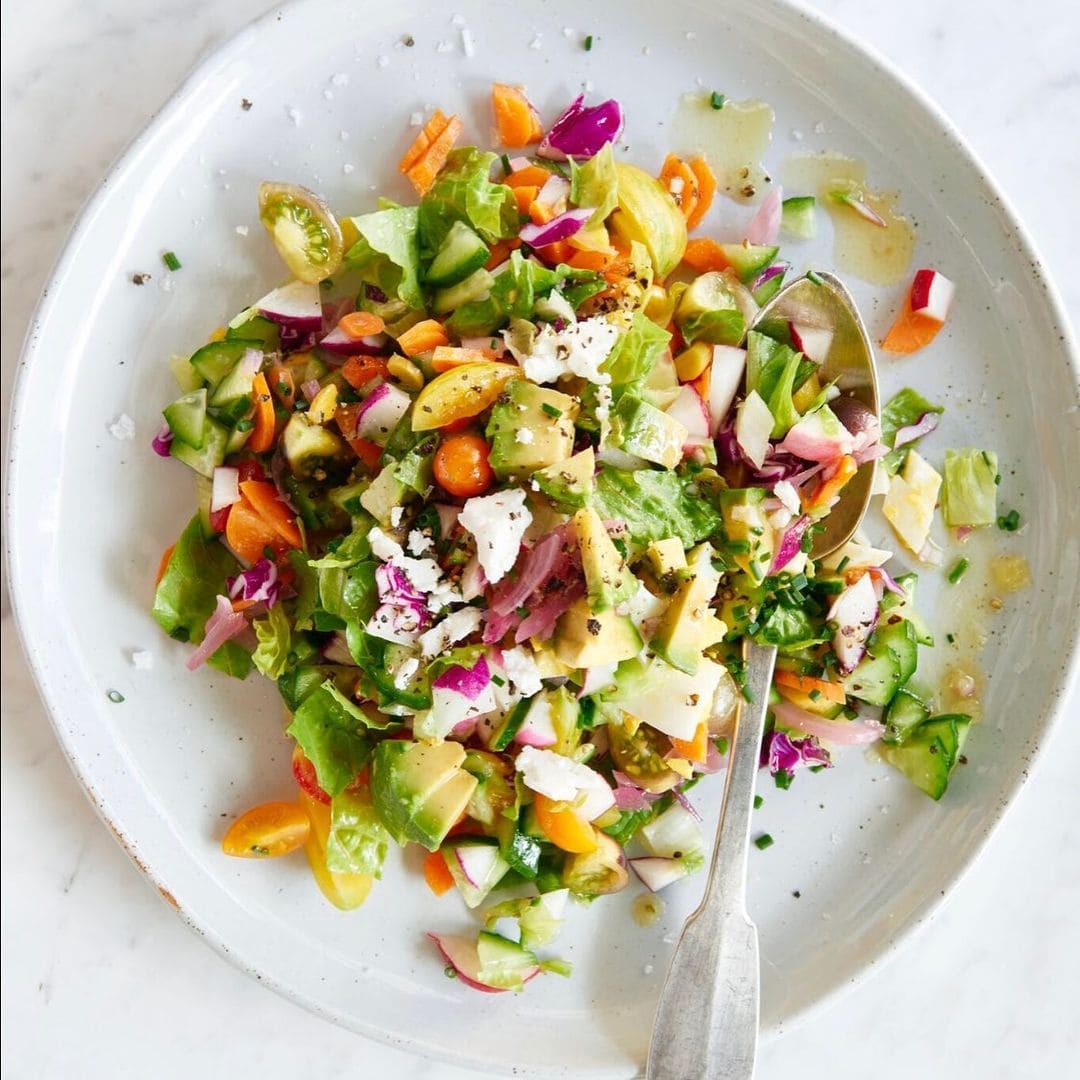
Finally – although I expect and hope all of you to have and add your own thoughts here – there is The Chopped Salad, one of the world’s three most important “recipes.” (We’ll do that story soon.) If you have a well-stocked fridge, and a couple of things in the pantry (artichoke hearts, cooked beans, the ubiquitous – in this piece at least – anchovies), this involves ten minutes’ worth of peeling and chopping, and two minutes’ worth of making dressing. Remember that you’re cooking for one, which makes a chopped salad just about a quarter as much work as when you’re making one for four.
So there you have it, all the things you need to start cooking for just you and liking it: The inclination to do it, which I hope I’ve helped create here; a not-bare pantry; a basic understanding of what kind of combinations of ingredients you’ll find satisfying; an openness to cooking with fat and carbohydrates; and, whenever you need it, The Infallible Chopped Salad.
3 Comments