

Last week we introduced you to my newest cooking “course,” Mark Bittman’s Holiday Recipes You Should Know. Through this Friday, you can get it for 30% off — just use code BLACKFRI at checkout. Here’s the link.
The nineteenth and early twentieth century French food writer (and radio broadcaster) Édouard de Pomiane, who wrote French Cooking in 10 Minutes (it doesn’t quite deliver on that promise, but it’s a swell little primer) said (and I’m paraphrasing here), “When you go into the kitchen, first put a pot of water to boil. I don’t know what you’ll use it for, but you’ll use it for something.” It’s kind of true. (And made even easier if you start with an electric kettle — I like this one.)
But the point, which we’ve made in practically every cookbook we’ve produced, is that if you start vegetables by poaching them (or parboiling, or simmering, or whatever you want to call it), you can skillfully control their level of doneness and, if you like, set them aside to use later in the day or (with the help of the fridge) later in the week.
What all of these dishes shown here have in common is pre-cooking.
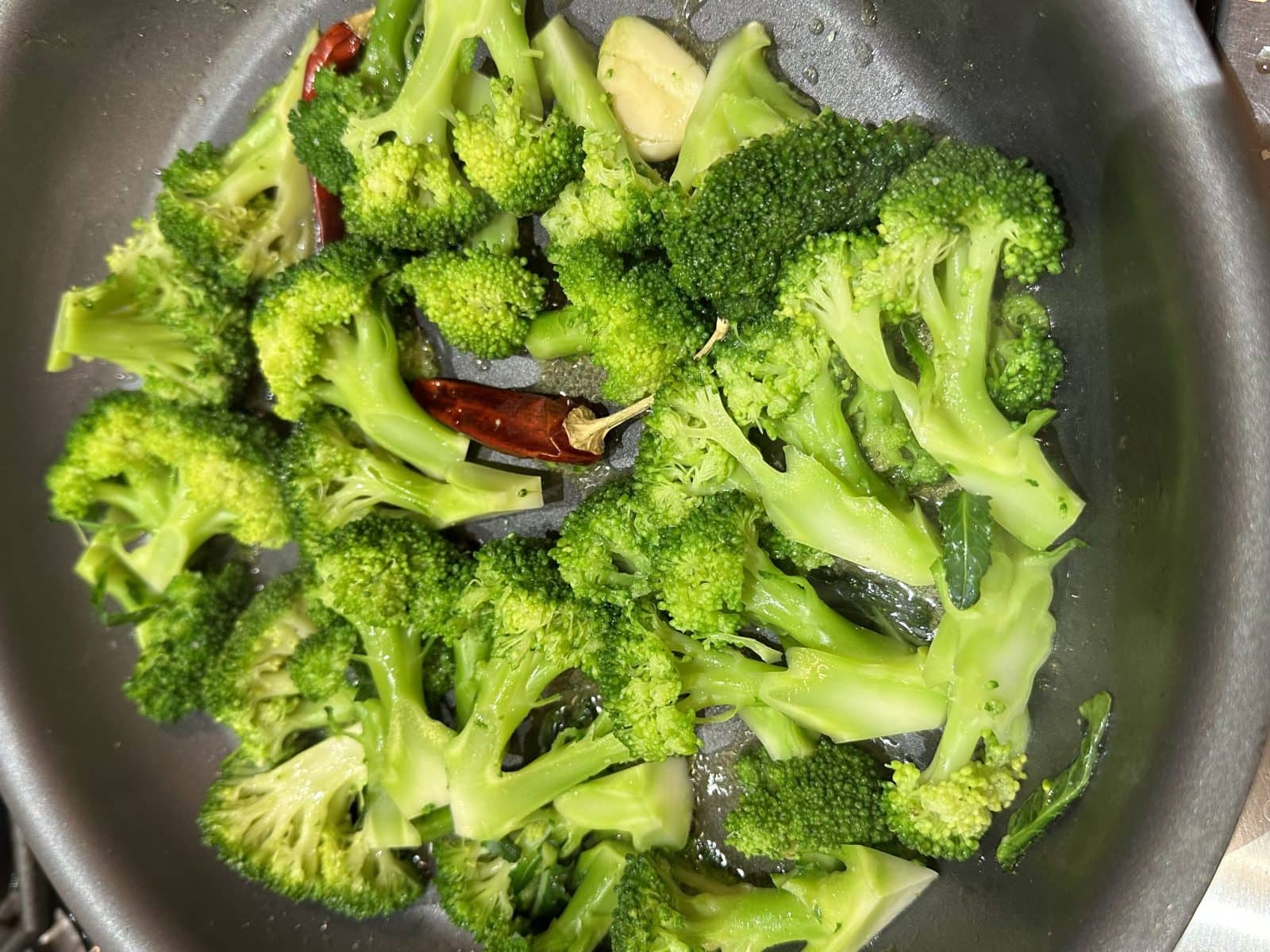
The broccoli was cooked for a few minutes in salted (always) water, just until done, then plunged into an ice bath; later, I warmed it in olive oil with garlic and chiles.
Next you have dandelion greens, simply simmered, then drained and dressed with oil and lemon, served at room temperature.
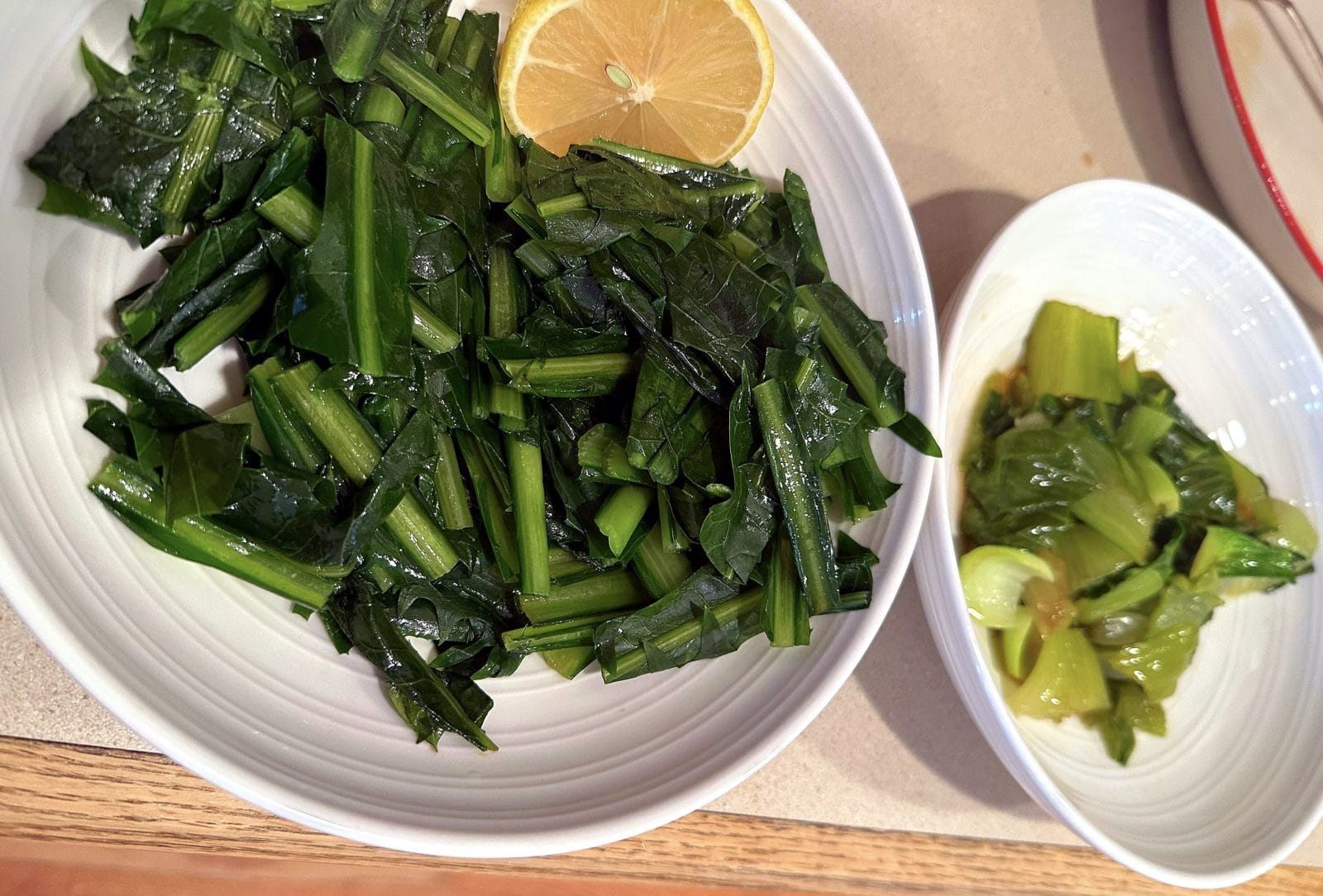
There’s bok choy, poached for a couple of minutes, then lightly browned in a combination of peanut and sesame oils, finished with soy sauce, sesame oil, and a few drops of vinegar.
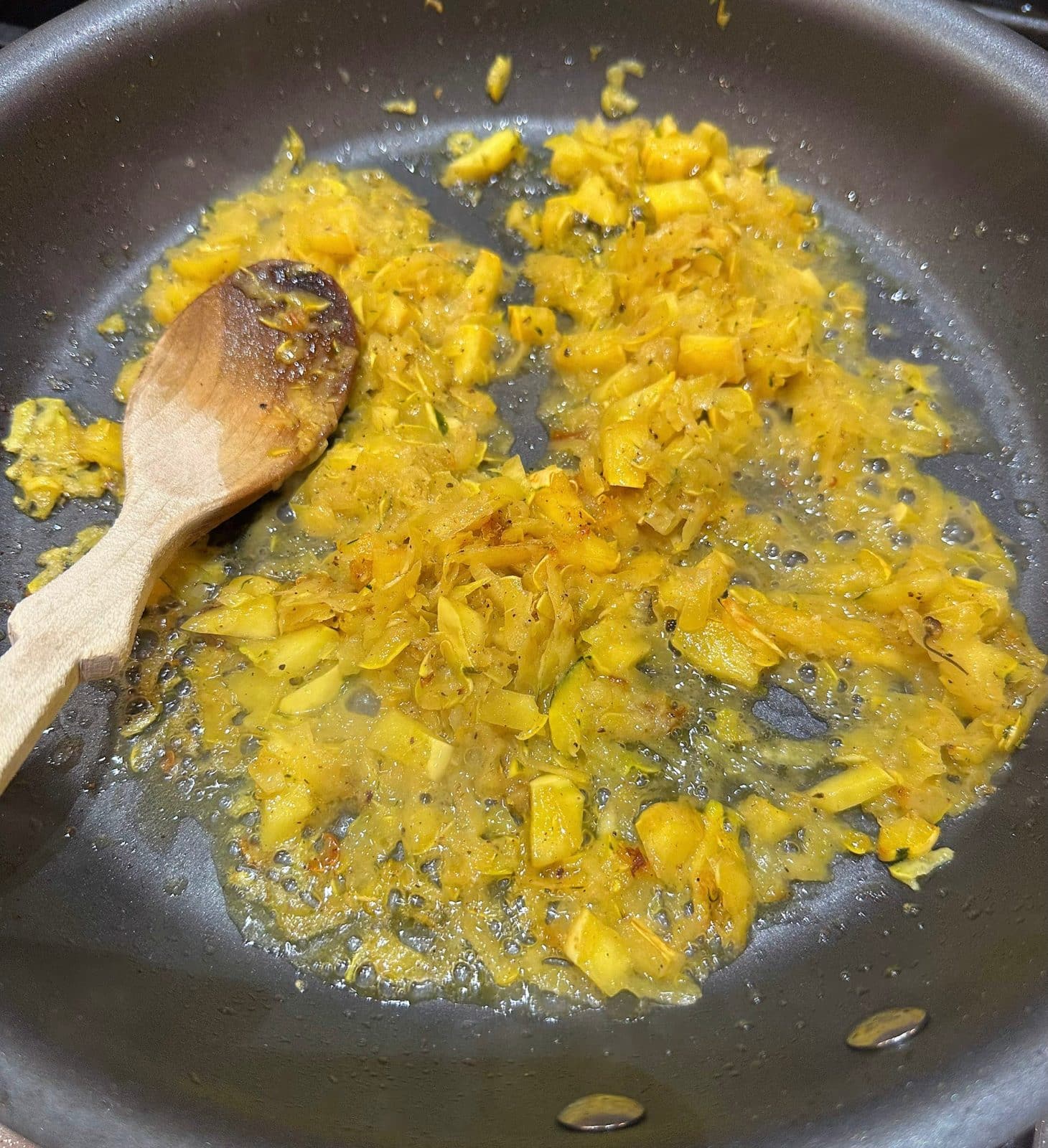
The last one is the trickiest, but that barely qualifies it as tricky.
There is a famous northern Italian stuffed pasta using zucca (winter squash), but it really tastes the same if the squash is used as sauce rather than filling. Here, I grate it (in this instance it’s delicata), then cook it in water until it’s tender. Meanwhile, I’m getting water ready for pasta, and then cooking the pasta. I add butter to the squash; sage is good here, too. When the squash and pasta are both tender, I toss them together with lots of black pepper, more butter, and some Parmesan or, in this instance, with some pesto (no sage in this case) – because it was there. Even with this “tricky” dish, the longest step in the process is waiting for the water to boil and cooking the pasta.

Comment