

Print
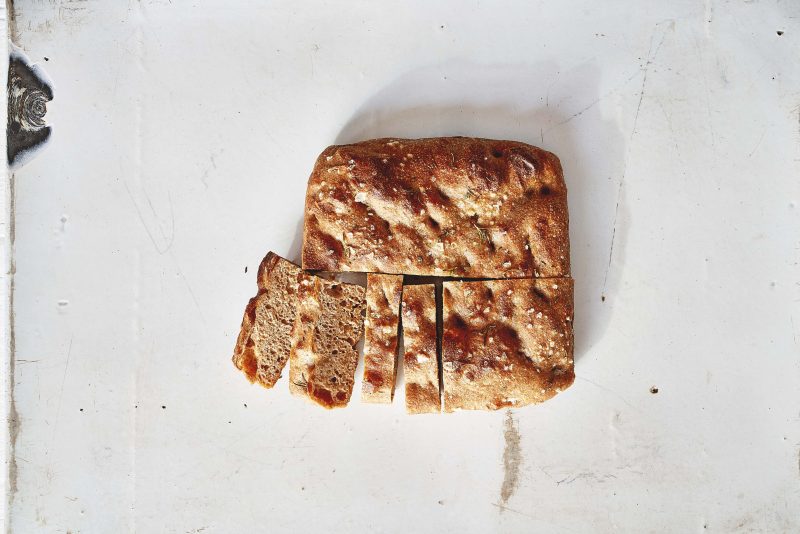
Bittman Bread Focaccia
Prevent your screen from going dark
Makes 1 square or round focaccia 1x
Time 8 to 12 hours for the jumpstarter; about 3 hours intermittent activity to mix and fold the dough; about 90 minutes to shape, rest, and bake the focaccia
Units
Scale
Ingredients
- 100 grams whole wheat starter
- 300 grams whole wheat flour, plus 50 grams for feeding the starter
- 210 grams water, plus 50 grams for feeding the starter, plus more as needed for folding
- 7 grams salt, or to taste
- 30 grams (about 2 tablespoons) good-quality olive oil, plus more for rubbing the rosemary and for drizzling
- 1 sprig fresh rosemary
- Large pinch coarse (or flaky) salt
Instructions
- Combine the starter, 100 grams of whole wheat flour, and 100 grams of water in a large bowl to make the jumpstarter. Stir, scraping the sides and bottom as necessary, until all the flour is absorbed. Cover with plastic or a damp kitchen towel and let it sit at room temperature for 8 to 12 hours. The jumpstarter will bubble and become quite fragrant. Meanwhile, feed the remaining starter: Add 50 grams each whole wheat flour and water and stir or shake. Cover and return it to the refrigerator.
- When you are ready to make the dough, add the remaining 200 grams flour and 110 grams water to the jumpstarter. Stir with a rubber spatula or your wet hands until a dough forms and looks springy, 1 to 2 minutes. If there’s still flour not incorporated around the bottom or edges of the bowl, stir in more water 5 grams at a time as you work. The dough should be wet and shaggy but will form a loose ball. Cover again and let sit for about 1 hour.
- With wet hands, fold the salt and 1 tablespoon of the oil into the dough, adding enough water to create a sheen on the surface without the dough losing its ability to hold a loose shape. Cover and let sit for about 30 minutes.
- Proceed with the four folds as described in step four, at 30 or so minute intervals. As you work, wet your hands and the dough with enough water so that the dough becomes smooth while still holding some shape. Sometime over the course of the folds, strip the leaves from the rosemary and chop them. Line an 8- or 9-inch square baking pan or 10-inch ovenproof skillet with two overlapping sheets of parchment paper. Press them into the bottom and crease them over the lip to keep them in place. Spread the bottom and sides of the parchment with 1 tablespoon of the oil.
- After the 4th fold, wet your hands one final time. Put the dough in the prepared pan. Put a few drops of oil in your hand and rub the rosemary leaves in your palms to coat them. Scatter them on top of the dough then dimple the dough lightly with your fingertips. Be gentle, resist the urge to stretch and pull the dough. Drizzle the top with another 1 tablespoon or so of oil. Cover with plastic or a damp kitchen towel and let it sit until the dough puffs a bit and an indent made with your finger springs back slowly, 15 to 30 minutes. Just before baking, sprinkle the top with sea salt if you like.
- Cover the pan tightly with foil, put it in a cold oven, and set the heat to 425°F. After 15 minutes, carefully remove the foil. Continue baking until the top and sides are golden crisp and an instant-read thermometer inserted into the center registers 200° to 205°F, 20 to 30 minutes. Transfer the bread to a wire rack and peel off the parchment. Let it cool a bit. Serve warm or at room temperature.
—Recipe from Bittman Bread: No-Knead, Whole-Grain Baking for Every Day