

PSA from Mark: Before we get to Emily Baron Cadloff’s terrific piece today, I wanted to let you know that the annual auction and benefit for the Glynwood Center for Regional Food and Farming is on September 14th. Excellent food, a fun live auction with unique prizes, and a dance party. I am one of the culinary designers of the evening, along with some of the best chefs in the region – Abi Balingit, Mavis-Jay Sanders, Michael Anthony, and many more. The food alone is not to be missed!
I’m offering two things for the live auction. The first is a one-hour coffee date with me; we can meet up in person or on Zoom and you can ask me all your food questions (or about your personal life, for all I care). The second is this: You gather a party of up to 10 people and I’ll come cook for you at your Hudson Valley or NYC home – we can collaborate on a fun menu. I’ve done this before and it’s a really good time. You have to be at the auction, in Cold Spring NY, to win – no off-site bidding!
Proceeds from ticket sales and auction winnings support Glynwood’s impactful programs. Get your auction tickets now, and see you there! Here’s my personal plea! Love, mb
We – The Bittman Project – are committed to bringing you the best and most comprehensive food coverage we possibly can. Recognizing that we can’t possibly generate everything that we find interesting or worthwhile, we’ve begun to establish a series of partnerships with like-minded sites and publications. This is the third piece in our alliance with Modern Farmer, a non-profit that seeks to engage its readers in taking real world action – donating, volunteering, organizing – at the intersection of food, agriculture, and society in North America. Please read this piece, check out Modern Farmer, and support them as you would us. –mb
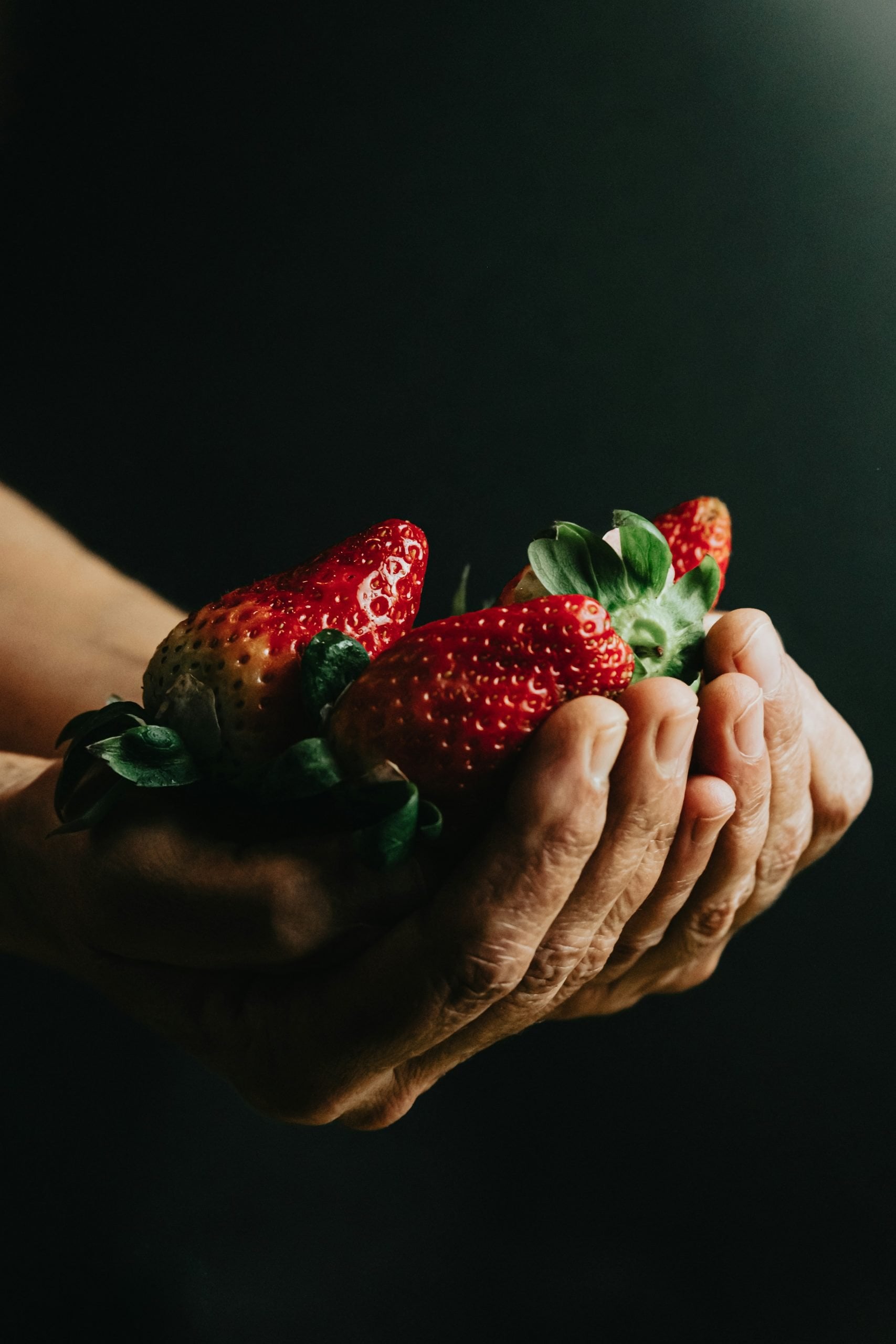
Think about a strawberry. How big is it? What color is it? It’s March—are you able to find a strawberry easily in your local grocery store?
Chances are, yes, you could find strawberries at the store for sale. They’d be about the size of a golf ball, probably bright red and cost a lot of money. It’s likely not surprising that the strawberries your grandparents and great-grandparents were eating just a few generations ago were quite different. They were smaller, probably closer to the size of a quarter, a deeper red hue and they most likely weren’t around at the tail end of winter.
Certainly, the change in availability is in part due to ease of imports and prevalence of greenhouses today. And some of the other changes are due to breeding and genetic engineering that creates berries that are hardier and more robust for that very shipping.
When it comes to how climate change is impacting our food, there are the short-, medium-, and long-term impacts.
But some of the changes, especially the ones we can’t readily see, are due to climate change.
When it comes to how climate change is impacting our food, there are the short-, medium-, and long-term impacts. In the short term, food security is a huge concern whenever an extreme weather event happens in an area. If there’s a fire or drought, crops can die off and yields go down. Floods or storms, along with rising temperatures, can lead to the perfect conditions for bacteria and fungi to thrive.
In the medium term, though, things get more intense. Since the majority of plants evolved at a time when there was much more carbon dioxide in the air, they’re primed to hoard carbon from the air when it’s available. Greenhouse gases in our atmosphere mean there’s an excess of carbon dioxide now, which stimulates photosynthesis and growth in those plants while also changing their chemistry. While those plants are taking in more carbon dioxide, they’re still taking in the regular amounts of all the other nutrients they’re getting from the air and soil, such as nitrogen, phosphorus, magnesium and the rest. All of those other elements are staying the same, leaving us with a plant that has more carbon than before and an imbalance in its nutrition, impacting how our immune systems function.
The very earth in which we grow our food is less equipped for the job than it was less century.
And that leads to the long-term effect: what the plant leaves behind in the soil for the next harvest. As these new, nutritionally imbalanced plants decompose back into the soil, the composition of the soil itself changes. This is a long process, as it takes hundreds of years to make soil, but it’s already underway. The very earth in which we grow our food is less equipped for the job than it was last century. “It’s not just humans that are going to be affected, all life is going to be affected,” says Lewis Ziska, an associate professor in the environmental health sciences department at Columbia University.
There are other factors that can influence the dilution of a plant’s nutrients. Declines in nutrients can come from using certain fertilizers or through selective breeding where the goal is high yield. Importantly, nutrient declines are also difficult to measure. There are arguments that it’s not a side-by-side comparison to measure plants today against plants from the past, because the very measuring tools we use vary widely in terms of their sophistication and accuracy. But Ziska says there is research that shows that an increase in carbon dioxide will reduce protein and other macronutrient levels in plants, regardless of the level at which it started.

“We [looked at wheat] and went back 150 years. We looked at the nitrogen, which is a proxy for protein, and saw that it’s been declining in a steady state,” says Ziska. “And the question, at least for bees and other pollinators, is, at what point does it stop?”
“In Bangladesh, where rice makes up 70 percent of your daily calories, what happens if rice changes?”
As Ziska notes, plants are far more than just a source of food. They’re a source of medicine and narcotics, all sorts of things that interact with human’s well-being, from alcohol to opium. And all of those things will be impacted by a rise in carbon dioxide levels. Take the birth control pill, which was derived from diosgenin, which is in yams. As the macronutrients in our yams change, so, too, could the medicine we make from them. And it’s not hitting all parts of the world equally.
“In Bangladesh, where rice makes up 70 percent of your daily calories, what happens if rice changes?” asks Ziska. As rising carbon dioxide levels lower the nutritional profile of rice, “it’s going to have a much greater effect on a country that relies primarily on rice.” (Read more about the future of rice here.)
If climate-induced nutrient changes hit countries such as Bangladesh and Laos the hardest, countries such as the US, which gets more of its calories from corn rather than rice, may be spared the worst of it. Corn, Ziska says, has a different photosynthetic metabolism than other cereals, which means it can withstand higher levels of carbon much better than rice, wheat, barley, lettuce or potatoes.
As our atmosphere gets more carbon-rich, all is not lost.
Along with corn, legumes are in a good position as well. “These are plants that have a very important symbiotic relationship with bacteria, where the bacteria will actually fix additional nitrogen. And when you give them more carbon dioxide, those carbs go to feed the bacteria, which, in turn, increase the amount of nitrogen that sticks,” explains Ziska. Researchers could look at gene editing or gene splicing to bring in elements from corn and legumes into other plants. They might find those helpful bacteria could also work well with another set of crops or there could be other lessons to learn from these plants that we can’t see yet. But as our atmosphere gets more carbon-rich, all is not lost.
“If there’s a silver lining in this, [corn and legumes] may be the answer to future food security — or at least future nutritional security.”
To learn more about how you can link your diet to climate action, check out this article from the United Nations. You can also look to incorporate more legumes into your diet, or ask your representative to make nutrition science a priority.
This story was originally published by Modern Farmer, a nonprofit initiative dedicated to raising awareness and catalyzing action at the intersection of food, agriculture, and society. Read more at Modern Farmer.
Comment