

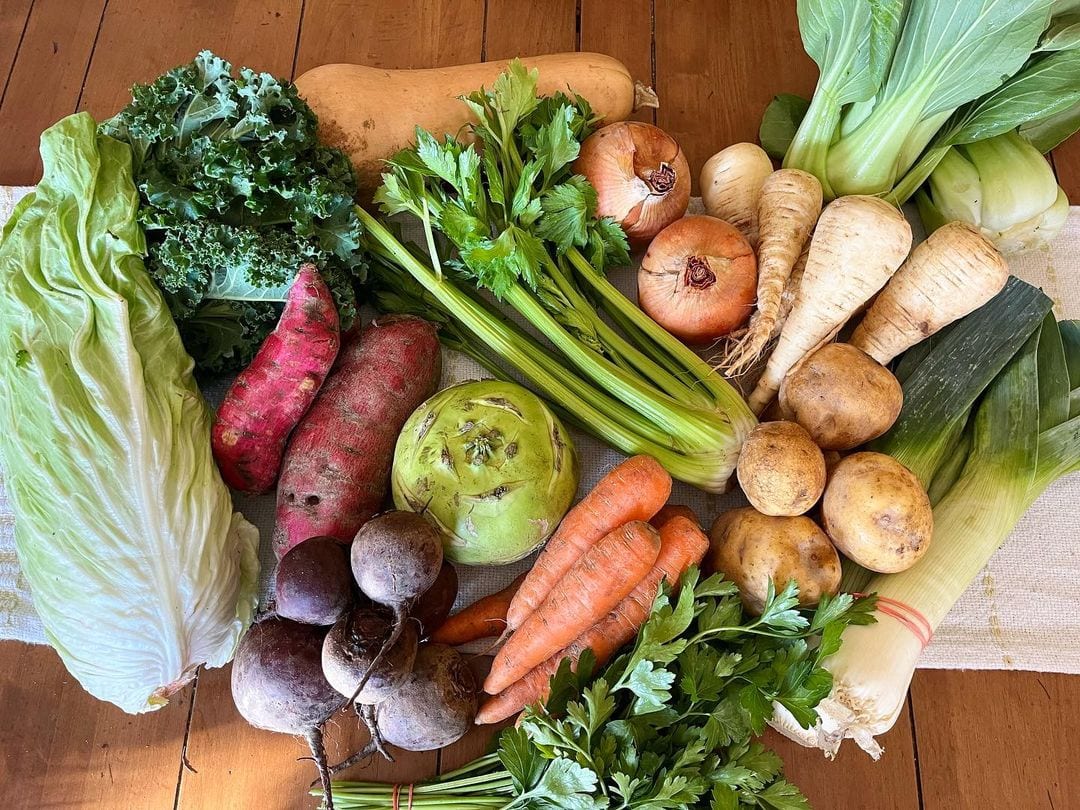
Most cooks tapping into community supported agriculture (CSA) buy summer farm subscriptions, which yield diverse installments of just-off-the-vine freshness. Winter CSA subscriptions are less popular, mainly because of their preponderance of storage vegetables like potatoes and cabbage.
After appreciating a summer share, doesn’t it seem odd buying megamart potatoes for your holiday dinner?
But if you value getting the freshest vegetables and helping local family farms stay in business, a winter share is well worth considering. After appreciating a summer share, doesn’t it seem odd buying megamart potatoes for your holiday dinner?
Properly exploiting a winter share requires paying attention to storage details, and learning new recipes for unfamiliar vegetables, or diverse ones for vegetables that could use a new look. In ye olden times, before the industrial agricultural complex gave us strawberries 365 days a year, cooks needed a repertoire for all seasons. When life gave Scots rutabagas, for example, they made neeps and tatties, or clapshot, if a Sunday roast provided drippings.
For expert advice on these issues, we turned to two New York State farmers with 41 years of experience in coaching winter share customers. Deb Ritchie of Little Valley’s Native Offerings Farm has 27 years in CSAs; fifth-generation Kent Miller, of Arcade’s Plato Dale Farm, has 14.
Today’s houses are too warm to properly store vegetables like potatoes, onions, and squash.
One of the most important lessons customers needed to learn, explained Miller, was that “Today’s houses are too warm to properly store vegetables like potatoes, onions, and squash. A modern basement is just too warm. They need to be at 50 degrees or less.” Unheated garages are not an option, either, since frozen vegetables get unpleasantly mushy.
For many customers, that made refrigerator storage “really sort of critical,” he said. “They don’t need a fancy one,” with many customers opting for a used refrigerator in their garage or basement, or even a dormitory-sized cube unit for apartments. Plus, you’ll want some plastic bags, added Miller. “The best storage is in the 35–40-degree range, high humidity. That means stored inside of a plastic bag, so that the humidity is retained, and they don’t dry out.”
If you store them properly, most winter CSA vegetables can keep for months.
In this way, you can create a root-cellar-style atmosphere in an apartment. “If you store them properly,” said Miller, “most winter CSA vegetables can keep for months.” That said, some winter shares include vegetables that you should definitely use first. “Anything that’s got a leaf on it should get used first,” he said. That means vegetables like greens, bok choy, broccoli, and celery. Any greens that aren’t going on your table shortly can be blanched and frozen.
To use all of your share, flexibility is key, said Ritchie. If a vegetable gets boring, change up your approach.
“People have to be pretty creative about daikon, for instance,” she said. “Grate them, chop them, slice them, sauté them, put them in a soup. We encourage people to use the thing multiple ways. Sometimes it’s just cutting it a different way—make it into sticks and dip it.”
Keeping a jar of refrigerator pickles is an excellent habit to start.
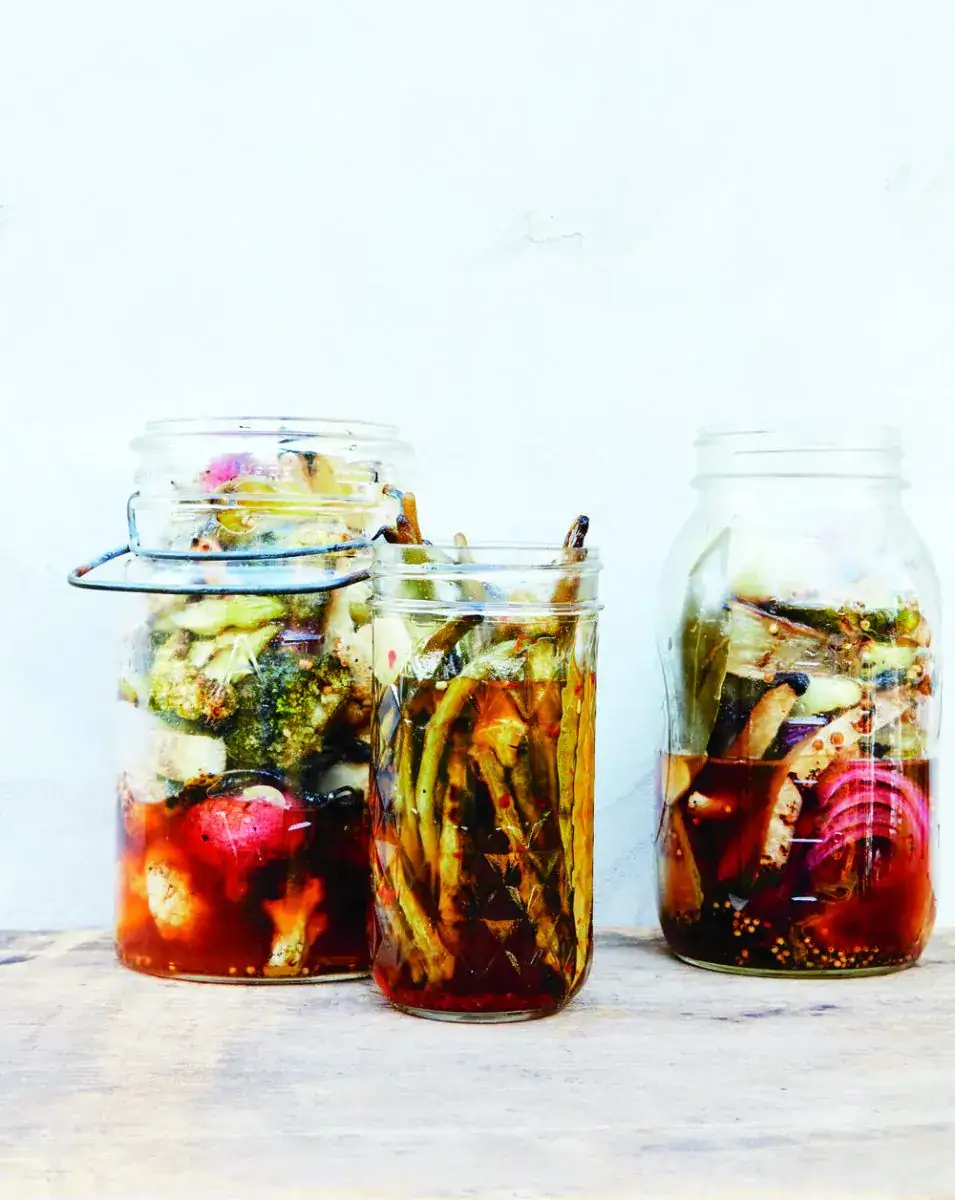
Keeping a jar of refrigerator pickles is an excellent habit to start, said Ritchie. Fill a gallon jar with brine and it solves a few winter CSA dilemmas. (Basic brine: 4 cups white vinegar, 2 cups water, 1/2 cup salt, 1/4 cup sugar, pickling spice, garlic, chiles to taste.) Don’t know what to do with turnips? Cut them into batons, and into the brine they go. In a couple weeks, they’ll be fine eating, and if you’ve added a beet to the jar, they’ll be pink, Levantine style.
The pickle jar becomes a default option for almost anything a share might offer, except potatoes, Ritchie said.
So … too many potatoes? Try the Sichuan stir-fried potatoes below, but also remember that baked casserole-type dishes freeze well. There is something magical about putting a notoriously labor-intensive potato gratin on the table in 20 minutes because you had frozen backups ready to pop into the microwave.
Sichuan Stir-Fried Potatoes

Crunchy potatoes are a novel sensation to eaters raised on mashed and fried spuds. Zingy with vinegar and your choice of chile heat, smoky with wok hay, plus the optional numbing tingle of Sichuan peppercorn, this simple Chinese stir-fry will add another dimension to your potato canon.
Caramelized Roast Cabbage
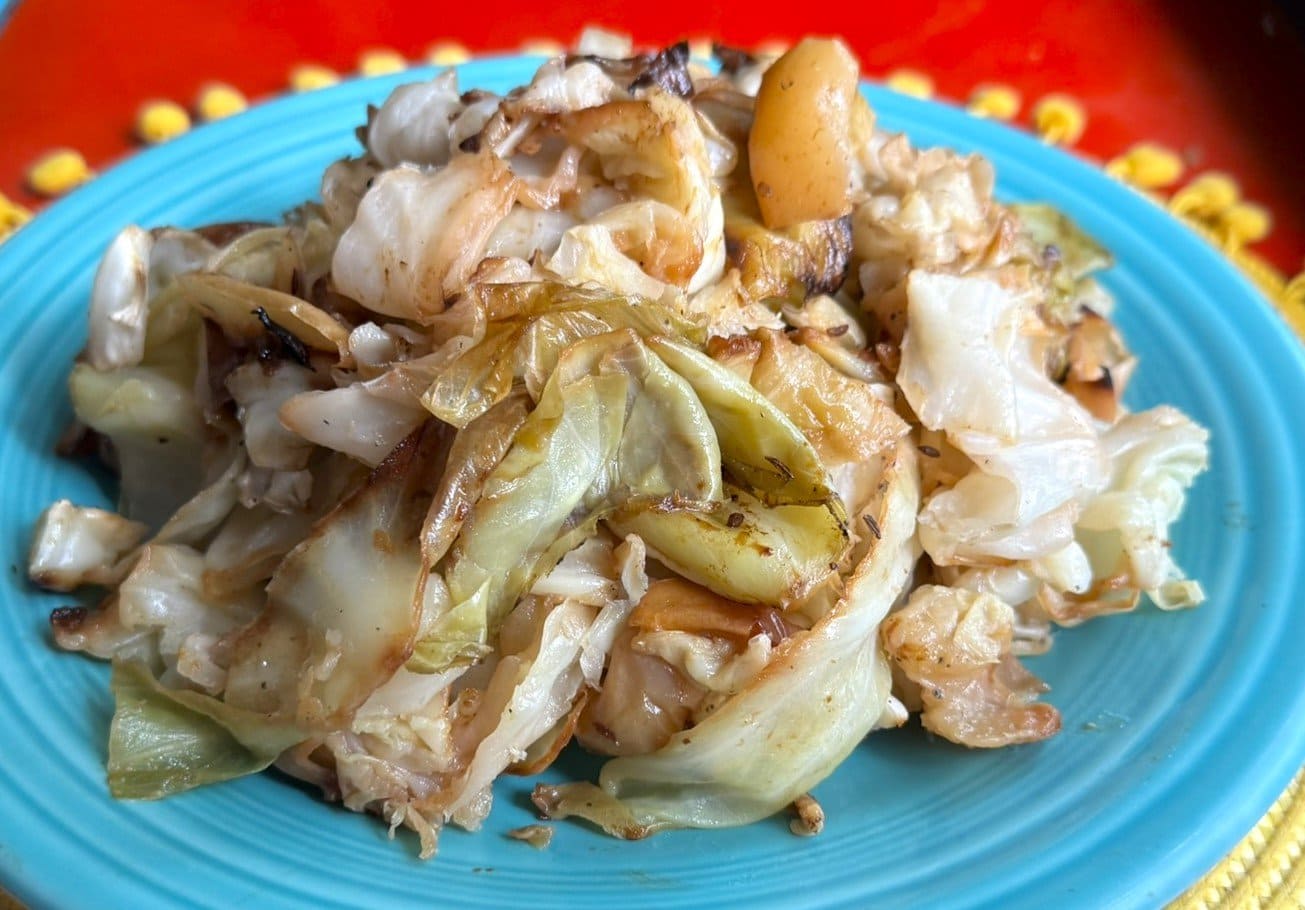
This simple winter dinner exploits the fact that cabbage gets sweeter as it roasts in a humid environment. The cabbage-apple-garlic trio satisfies on its own, but pork can enhance the dish for carnivores. Fennel seeds add aroma, but can be left out or exchanged for another, like anise, caraway, or cumin seeds.
Celeriac “Lasagna” (from Deb Ritchie)
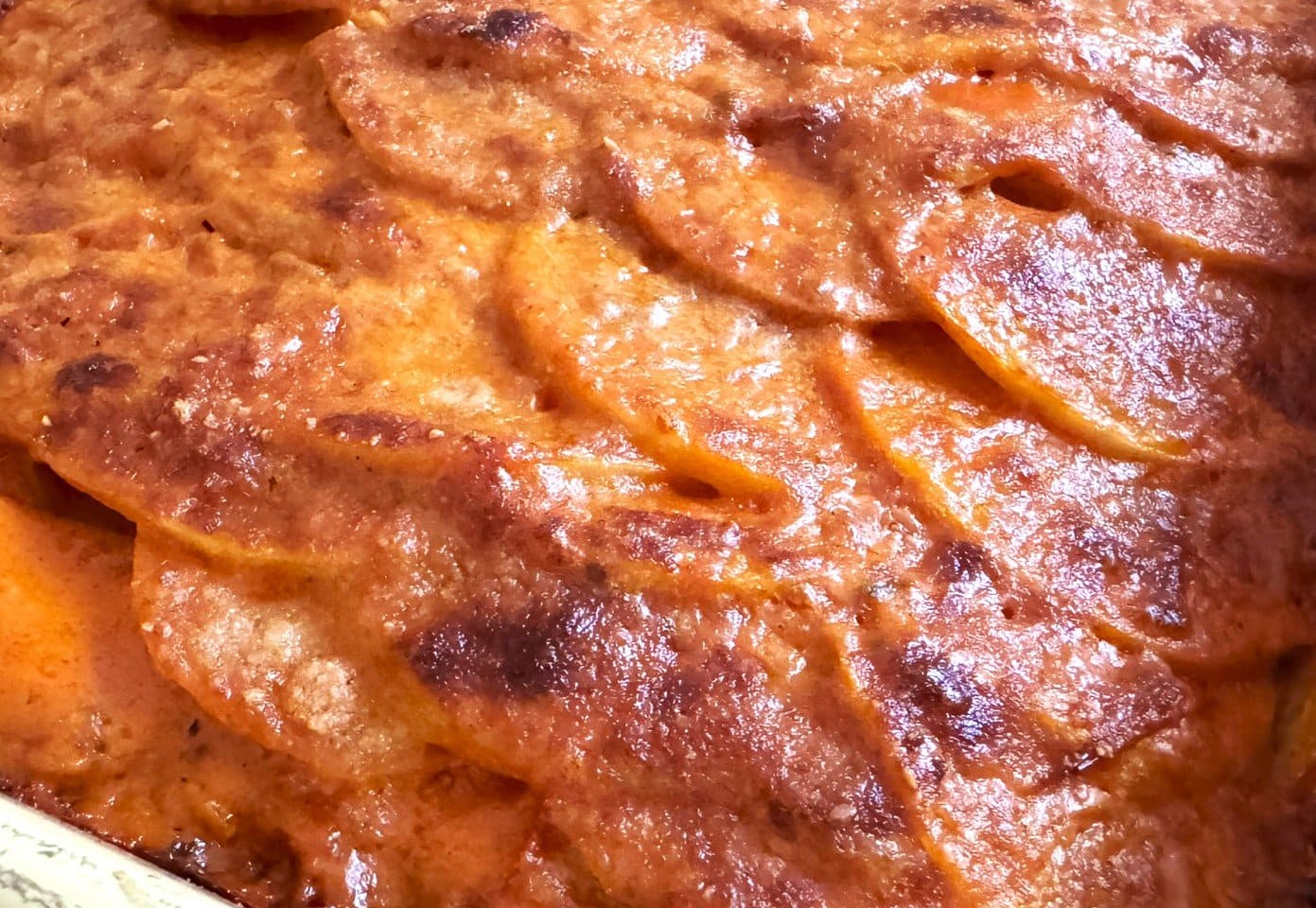
Knobby, alien-looking celery roots are welcome after they’re transformed into this family-friendly hybrid of lasagna and vegetable gratin. Put on your cut-proof glove and use a mandolin, and you’ll have thin, uniform slices in a jiffy. Or put your knife skills to the test.
Comment