

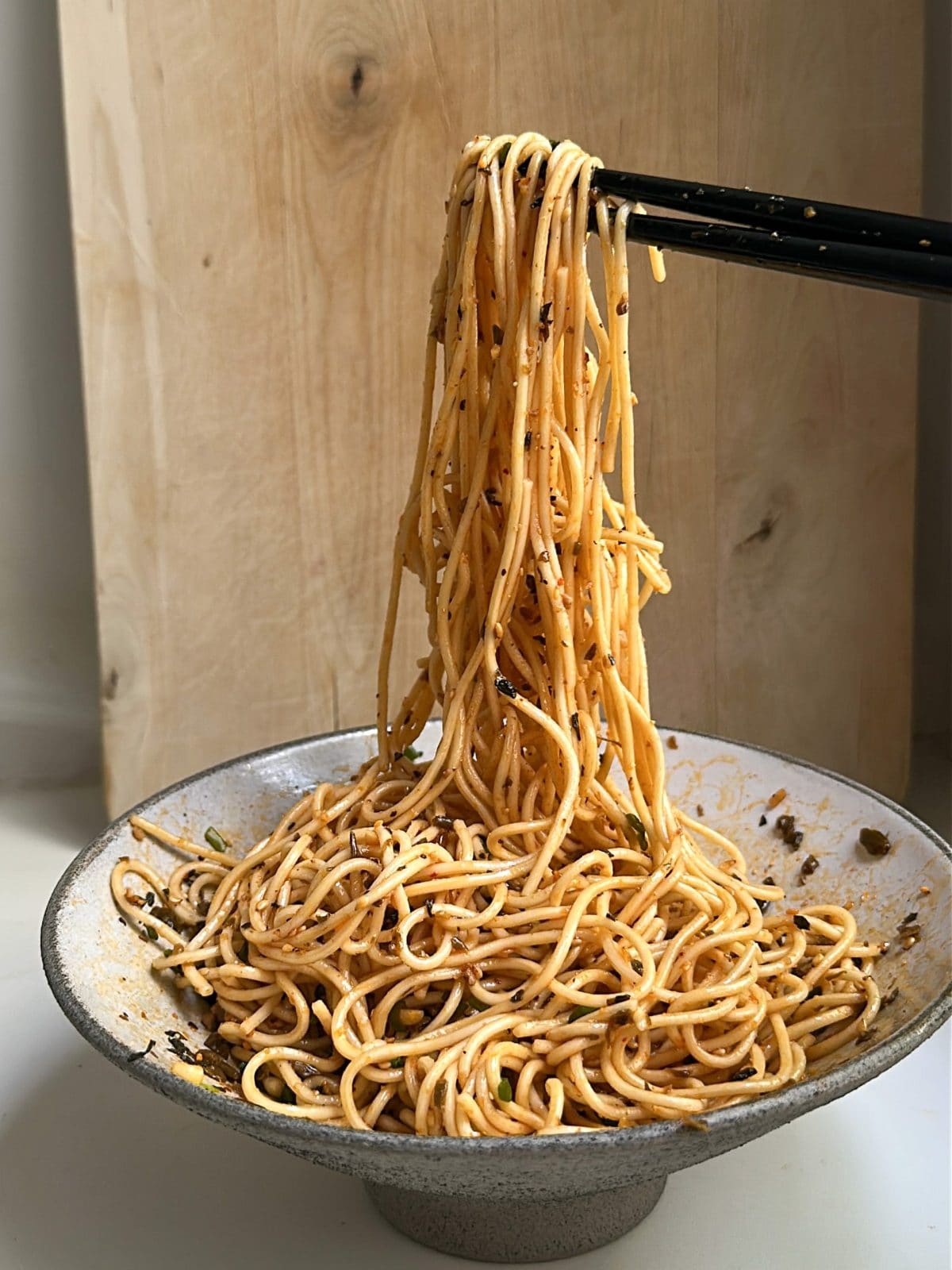
This recipe is a glimpse into how I research traditional Chinese dishes: through memory, firsthand tasting at the source, and flipping through old, often-out-of-print cookbooks. Most dishes don’t give me the luxury of all three, but with this one, I was lucky.
While dandan noodles have become the global icon of Sichuan noodle culture, they only scratch the surface. Ask a local in Sichuan about their favorite noodle dish, and you’ll get a dozen different answers—every city has its specialty, some of which remain unfamiliar even to Sichuanese from other parts of the province.
Yibin Burning Noodles, or Yíbīn Ránmiàn (宜宾燃面), are one of the dishes closest to my heart. Back in the early 2010s, when I was a college student in Chengdu, the city was (and still is) filled with small noodle shops serving ranmian. These were the places I turned to whenever I craved something cheap, quick, and flavorful. Most shops offered small portions—yi liang (一两), about 50g of noodles—and the norm was to order two bowls, mixing and matching spicy and mild, soup and dry, wontons and noodles. When I felt indulgent, I’d also add a rice cake dessert, draped in brown sugar syrup (lianggao, 凉糕).
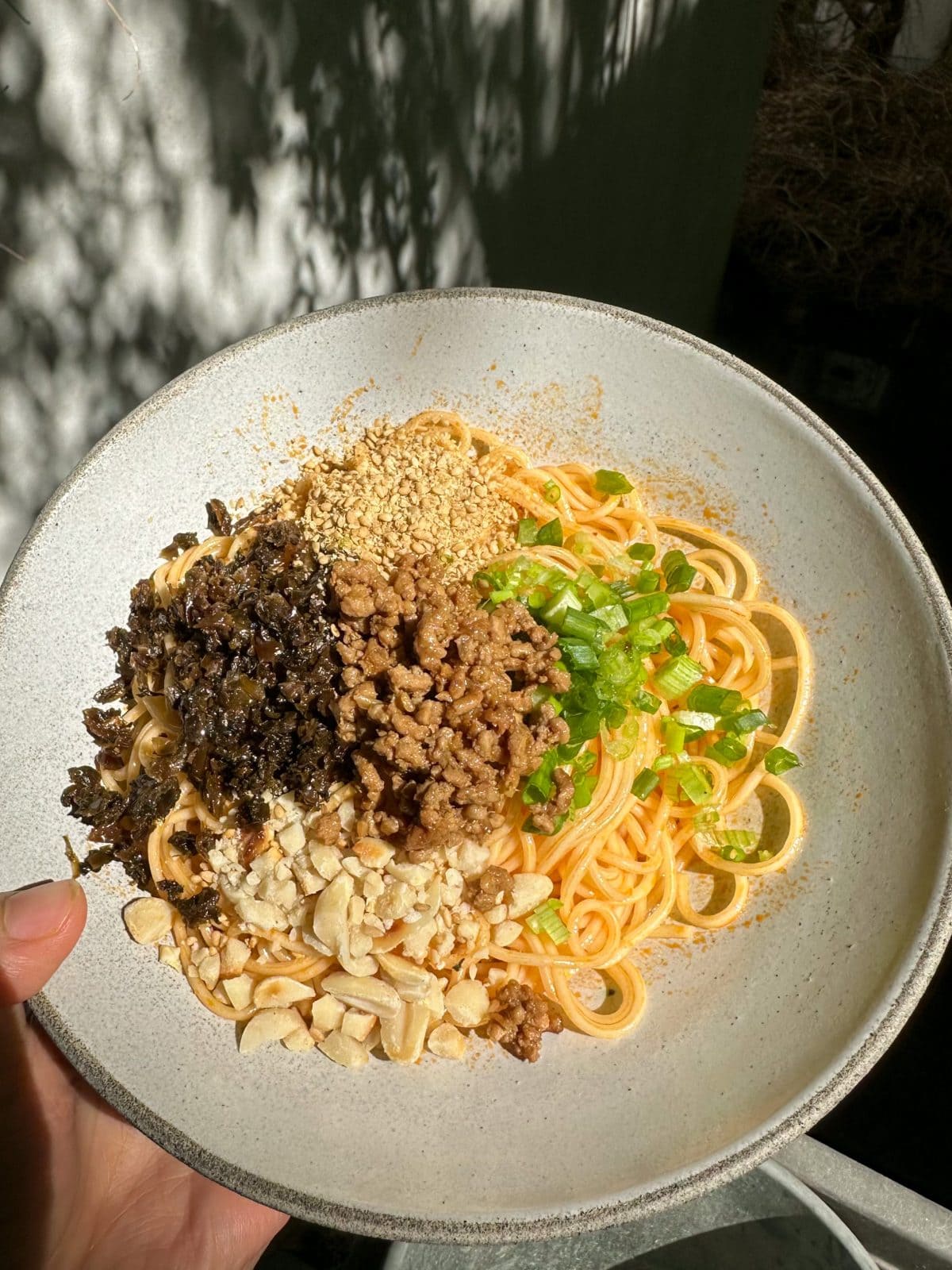
Thanks to its punchy, umami-rich toppings, ranmian is just as satisfying in its vegetarian form.
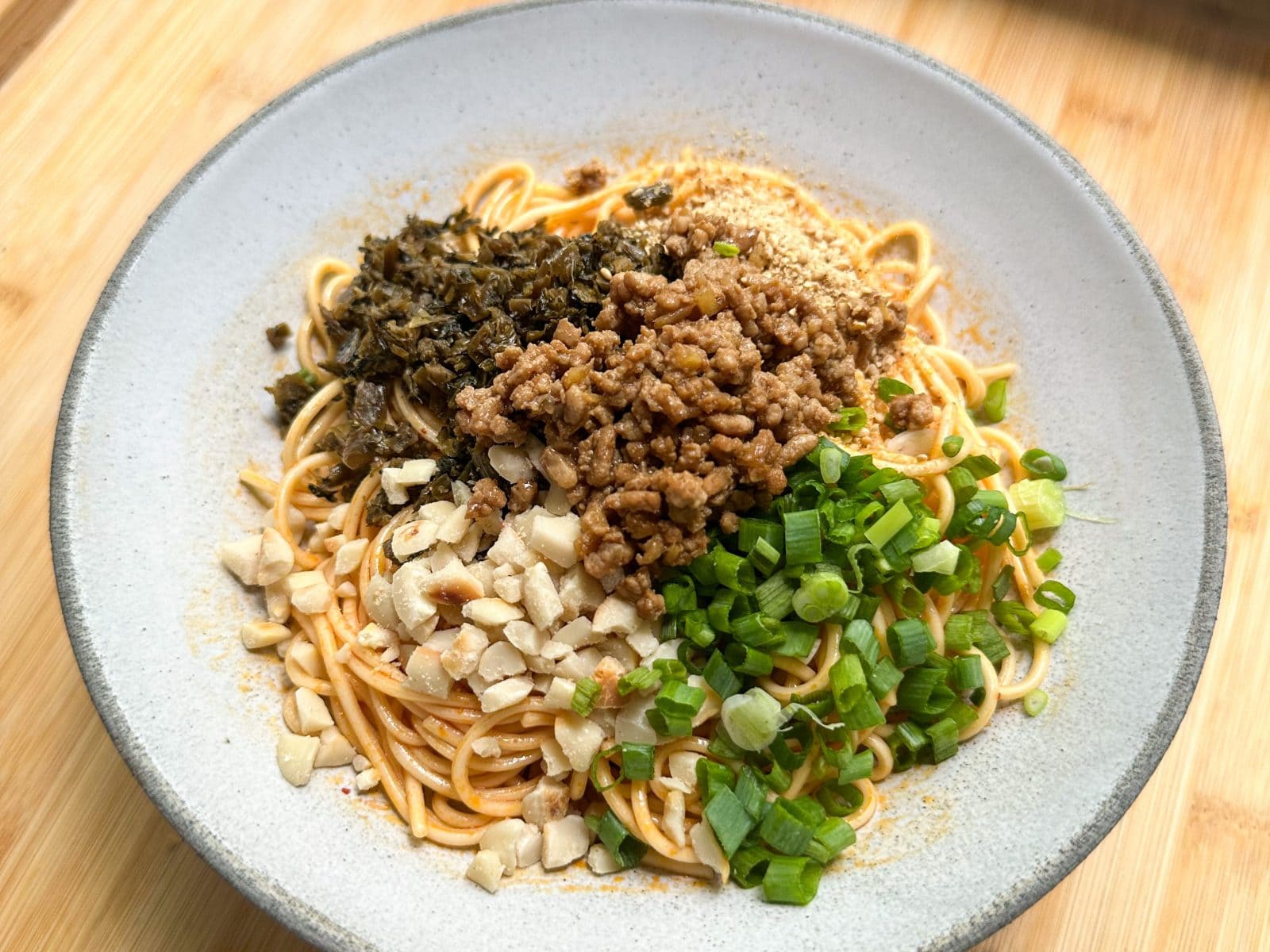
Yibin Ranmian is a bolder and louder cousin of Dandan noodles. It’s a dry noodle dish tossed in chili oil and loaded with toppings: yacai (a Sichuan preserved mustard stem), toasted peanuts, ground sesame seeds, and scallion greens. Every strand is slicked with heat and fragrance, crunchy with texture. The most common version today is hongyou ranmian (红油燃面), or red burning noodles—but historically, there were other styles too: tangran (糖燃), made with lard and sugar, and baiyou ranmian (白油燃面), using just sesame oil and lard. Ranmian can be made with lard, and/or meat (hun ran, 荤燃) or without (su ran, 素燃), and thanks to its punchy, umami-rich toppings, it’s just as satisfying in its vegetarian form.
Yibin, the dish’s birthplace, is a city in southern Sichuan located at the confluence of the Min and Yangtze Rivers, known as “the first city on the Yangtze River” (万里长江第一城), historically a thriving hub for river transport. Like many iconic Sichuan dishes—hot pot included—Ranmian began as a meal to feed labor workers on the dock. The word “ran” (燃) means ignite or burn, and the name itself has several origin stories. Some say the noodles are so oily they could be set on fire (I tried; didn’t work). Others think the “burning” refers to the fiery heat in your mouth. Another theory: “ran” refers to the vigorous tossing of noodles with oil and toppings (from the book «大师的菜: 地道川菜». A fun fact: ran—燃—also means “mingle” in the northeastern Sichuan dialect I grew up with). According to The Encyclopedia of Sichuan Cuisine, ran might even originally refer to the sizzling sound when hot oil hits the seasonings—similar to you po mian—though that technique is rarely used now.

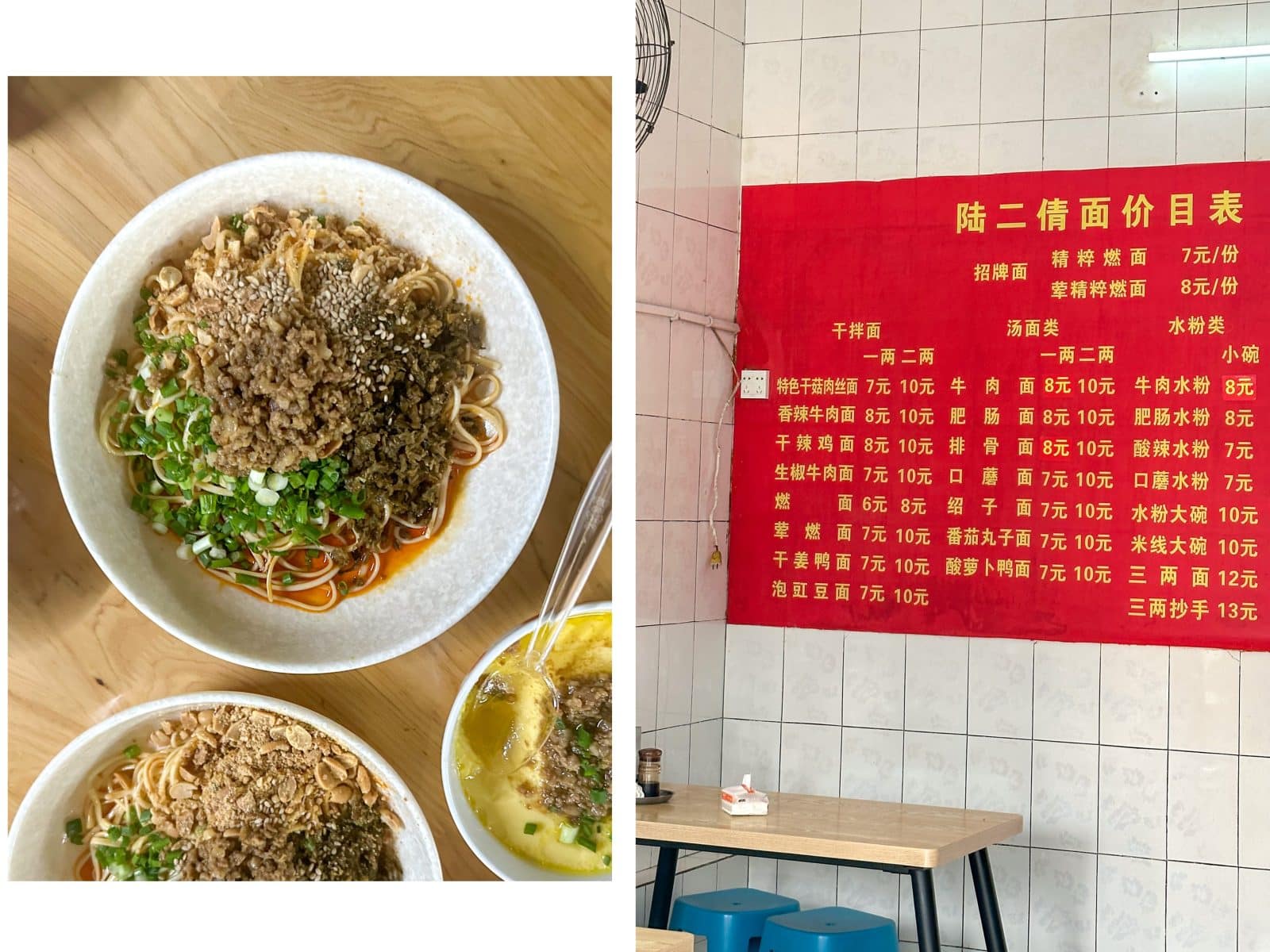
As a long-time fan, I finally made the pilgrimage to Yibin in winter 2023 with my parents. At Luerqian Ranmian, a humble roadside shop open since the 1980s, the owner told me they’ve upgraded their recipe over the decades and now serve something they call Jingcui Ranmian (精粹燃面), or “Quintessential Ranmian.” It cost about one euro. He shared their tips for making great ranmian: shake the noodles well, use high-quality yacai and alkaline noodles.
Later, I uncovered a version of the dish in a vintage cookbook, Chinese Snacks: Sichuan Cuisine (《中国小吃 四川风味》), from the 1980s—the same one that led me to the Zhong dumpling recipe. I translated the ranmian recipe(you can download the PDF below to see the original recipe and translation), tweaked it slightly for the modern home kitchen, and it worked beautifully.
Yibin Burning Noodles (Yibin Ranmian, 宜宾燃面)Yibin Burning Noodles (Yibin Ranmian, 宜宾燃面)
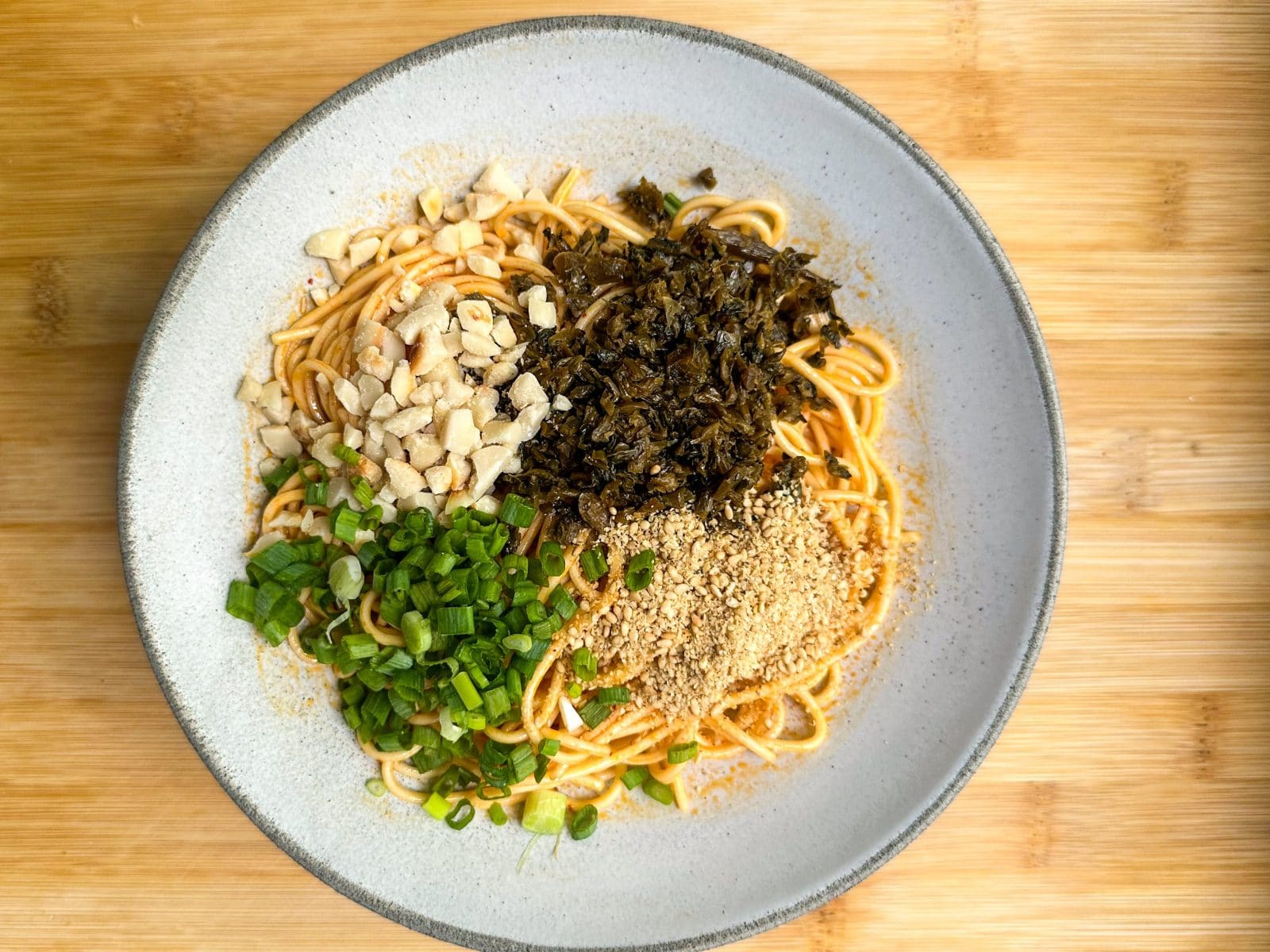
Tips for the best ranmian at home
Noodles
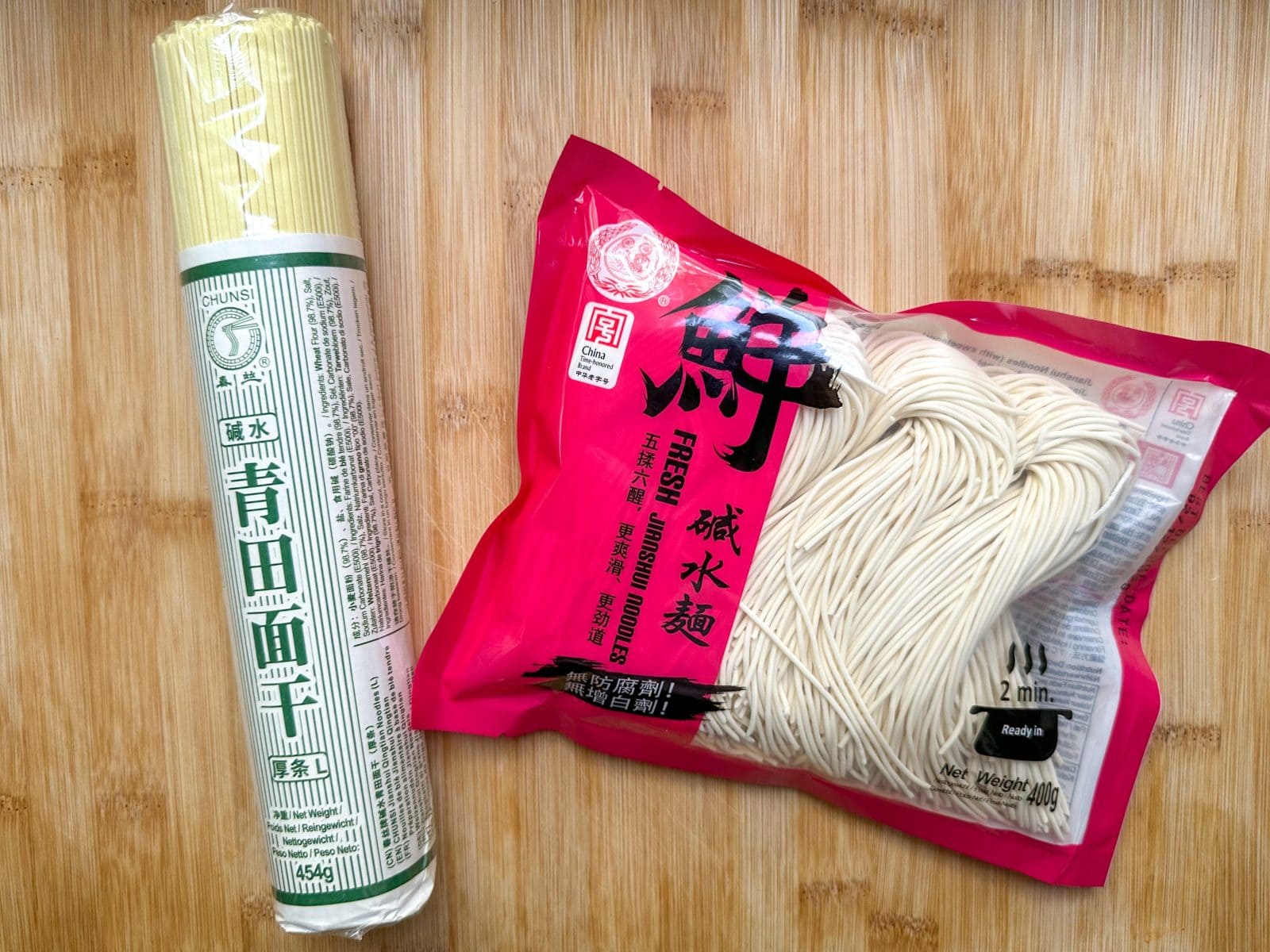
In Yibin, thin alkaline wheat noodles are used for a bouncy texture. The key is to shake off water after boiling and toss right away with oil. Overcooked or wet noodles will stick and clump.
I tested a range of noodles from my local Asian grocery store and landed on two favorites that are close to what I had in Yibin. Normally, I’d look for noodles that have “jianshui”(碱水) on the label, which means with added alkaline (the same I used for Sichuan cold noodles). Sometimes they’re labeled as 青田面干 (make sure to get the light yellow ones) or 热干面. If those aren’t available, any thin, chewy wheat noodles will work.
Chili Oil
This version uses walnuts for a nutty twist—something I hadn’t tried before but loved. Pork lard adds body and stickiness, and sesame oil adds aroma. You can also snack on the fried walnuts or chop them and add them to the toppings. The original recipe calls for caiziyou, roasted rapeseed oil that has an intense aroma. But you can also use neutral vegetable oil as a substitute.
In Sichuan, pork lard (rendered pork fat) is a staple in dumpling and noodle sauces. I used the cooking lard (Schweineschmalz) from a local supermarket in Germany, and reduced the amount slightly from the original vintage recipe so it doesn’t solidify too much when cooled.
Of course, you can also use your homemade Sichuan chili oil if you already have it on hand.
Toppings and Seasonings
To keep the noodles satisfyingly dry, use watery ingredients like soy sauce sparingly—just a splash is enough. The dish is also easy to make vegetarian: simply skip the lard and meat sauce.
Toasted peanuts and sesame seeds can be prepared ahead of time, or use store-bought versions to save time (look for unsalted roasted peanuts and pre-toasted sesame seeds). Either way, I recommend crushing them into smaller pieces. The finer texture helps them cling to the noodles more evenly, mingling beautifully with the chopped yacai in every bite.
Xueci Cheng is the author of Chill Crisp, on Substack. Visit her there!
Comment