

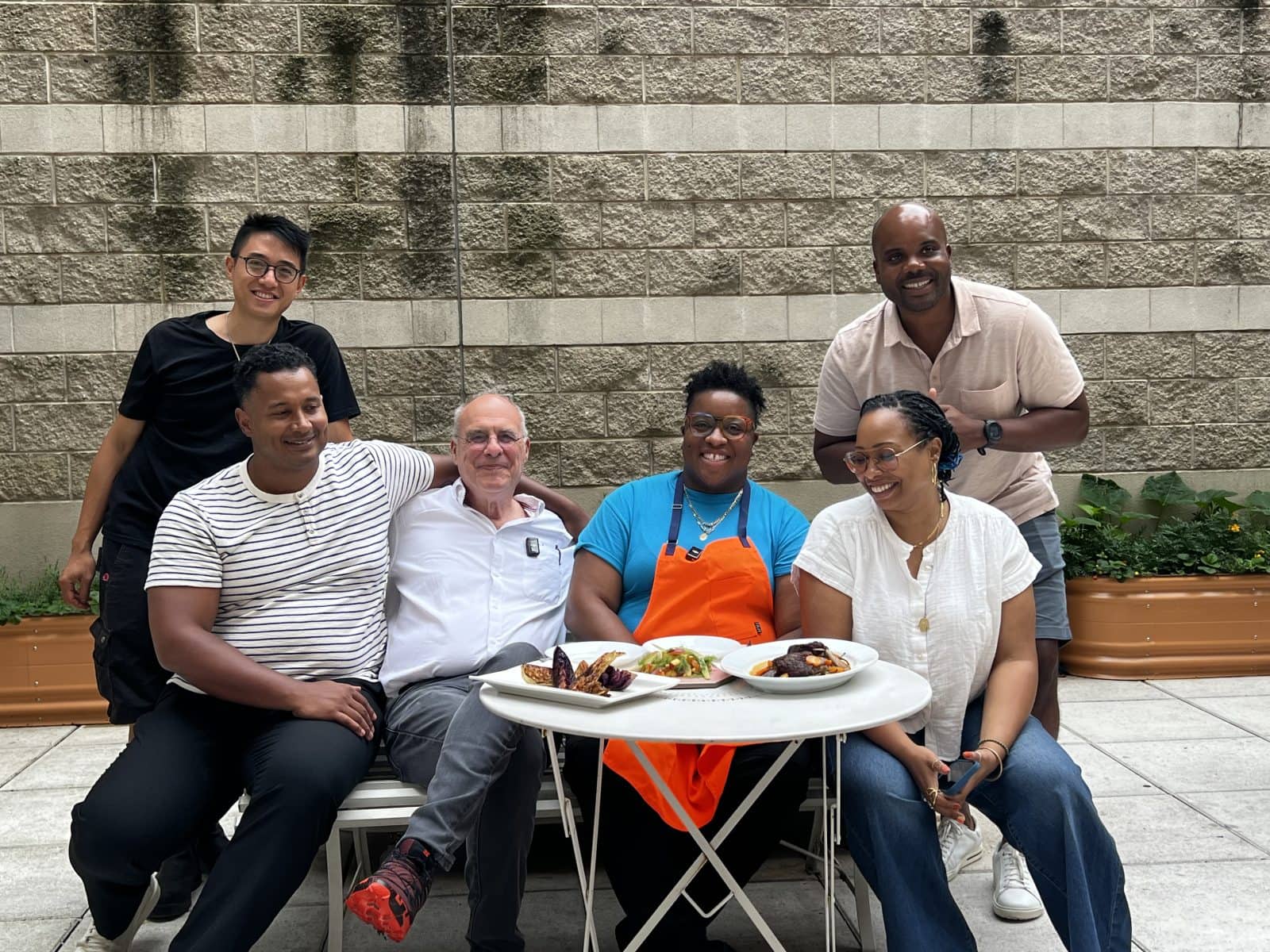
Could the opening of the Community Kitchen pilot be the most exciting restaurant news in New York this year? This decade? Modesty aside, it must be considered that because—succeed or fail—it’s uniquely ambitious in its modeling of what a restaurant might look like if profit were taken out of the picture. And that idea points the way to a just food system that could be run for our mutual benefit rather than one that lines the pockets of already rich and uncommonly lucky people.
I realized that for the first time in fifteen years none of my projects had a deep emotional hold on me.
How did this come about? In the middle of COVID, I published my book about the history and future of the American food system—Animal, Vegetable, Junk. As I was doing publicity and press for it, I realized that for the first time in fifteen years none of my projects had a deep emotional hold on me. A meaningful phase of my work life had ended and, though I was past 70, so much of that work had inspired me— both in the injustices that I wrote about and in the opportunities for making things better—that there was nothing appealing about “retiring.” (Besides, I don’t play golf, fishing bores me, and I read and cook enough already.)
How, I wondered, could I best promote the definition of “good” food?
But I was tired of writing, at least as my main thing; I wanted to do something. How, I wondered, could I best promote the definition of “good” food? It was satisfying to be able to finally articulate what is meant by that: Food that is sourced from local, small-scale, principled farmers employing agroecological principles; a system that treats workers well, with respect and living wages; cooking that promotes wellness, not sickness; and universal accessibility, building not only health but community. Serve great food on a sliding scale: If you have less money, you pay less. If you have more money, you pay more.
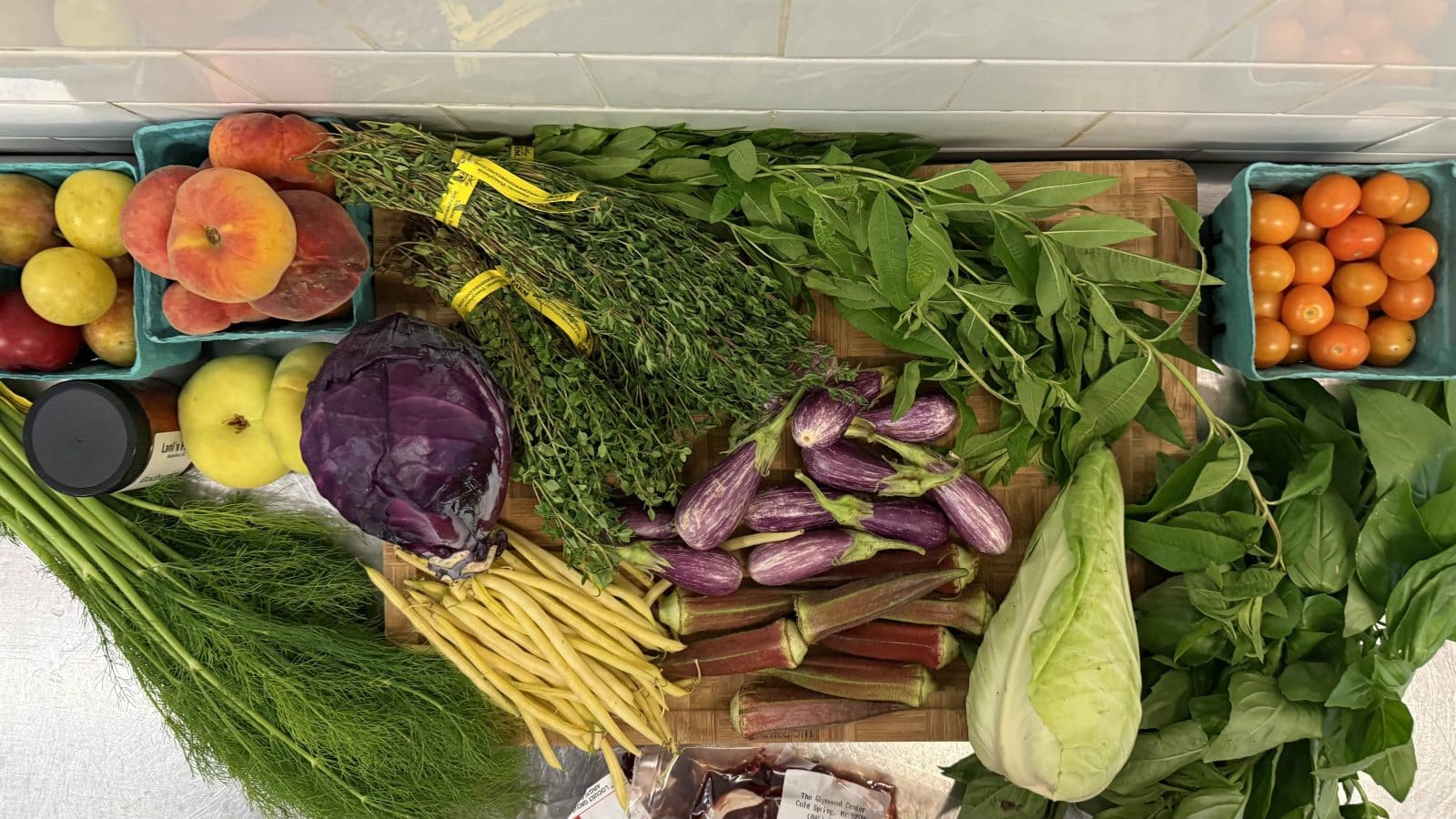
But how to manifest that?
There have been—and are—places operating like this, but not in this country. The primary example has been in Belo Horizonte (and to some extent elsewhere in Brazil), where farmers have been paid to “go” organic and sell their vegetables at subsidized prices to schools and individual eaters, and where Restaurantes Populares cook and sell that same food at prices affordable to everyone. All of this has been supported by the State, as should be the case.
I found myself wondering, “Why can’t that happen here?” And there was an easy answer, even in 2021, when Joe Biden was president: You could not get the State to fund such a thing until you could demonstrate that it could function. (With Trump as president, it becomes even less likely, i.e. impossible.) And you can’t expect a restaurant like this to make money, because it costs more to produce truly good food than most people (not just some—most) can afford to pay.
And so, the notion of Community Kitchen was born: a nonprofit restaurant that strives to do everything right, and loses money on purpose.
But what could happen is a model of such a restaurant, supported by philanthropy—by wealthy individuals or foundations who saw this as a good thing. A non-profit that would lose money by design, not by accident, but which would look like what such a thing would look like if the Federal government took food as seriously as it does the military (or, god help us, prisons).
And so, the notion of Community Kitchen was born: a nonprofit restaurant that strives to do everything right, and loses money on purpose. (Most restaurants do few things right, and many lose money unintentionally.) I started writing some things down; I talked to my mentors and friends; I was encouraged. No one said, “What a dumb idea.” Their reaction was all I needed and, before too long, I had a couple of teams of students, and then an assistant. I began talking to funders, which included some rude awakenings; but even I’m not dumb enough to have thought this was going to happen overnight.
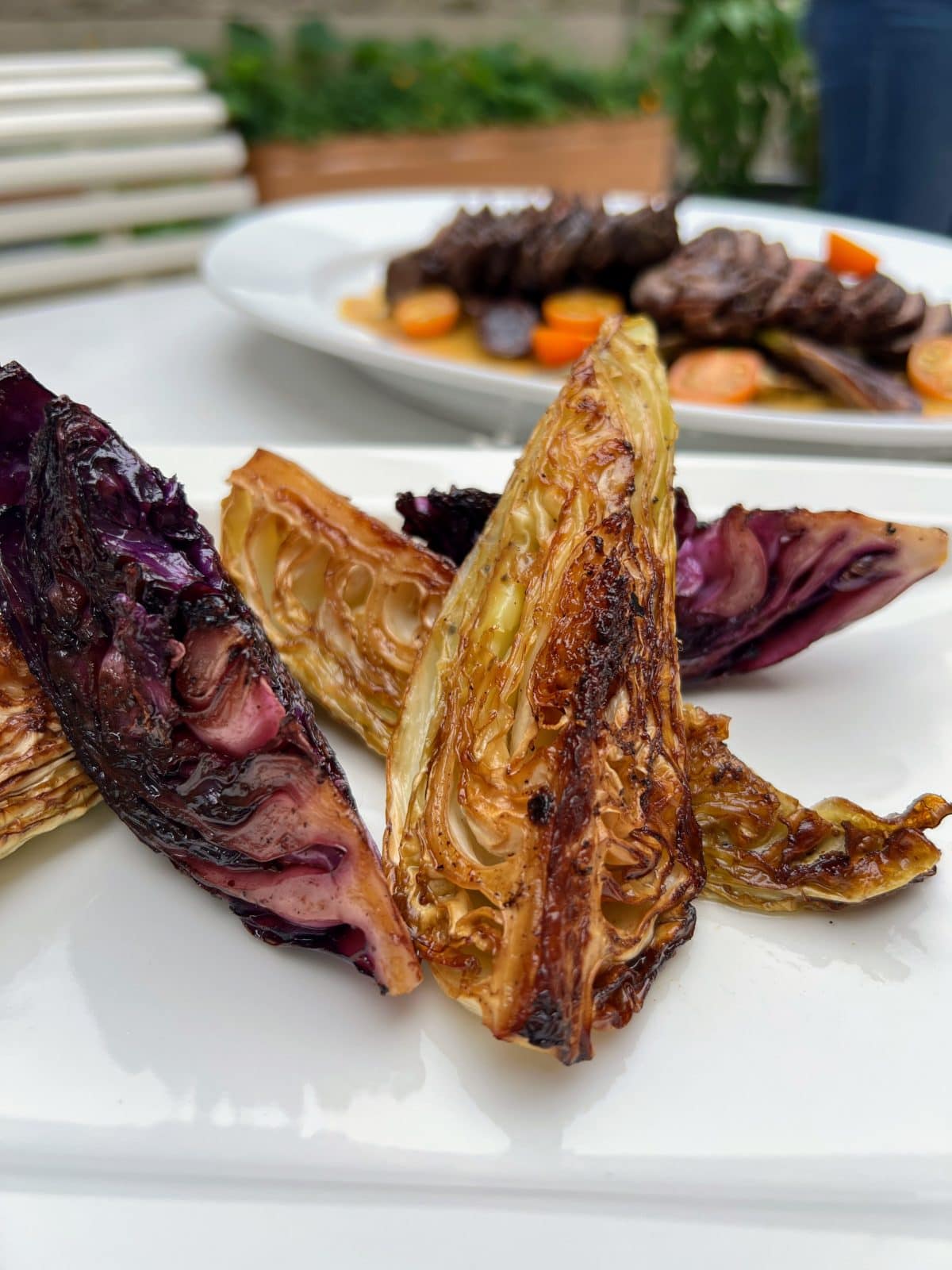
Four things became clear: I needed an organization, a team, to make this real; I needed to have a long timeline, because the team would form the backbone of a non-profit organization, not just a restaurant; I needed to be serious about raising money; and I needed to find the right community.
I went to people I knew, and I could mention Chris Buck and Matt Davidson and Bradley Tusk as being amazingly generous given that I barely knew what I was doing. I think they were inspired by the idea more than by my work on it, but they did trust that I would continue to work on it, and I did.
Another year went by. I drove all around the Northeast, thinking about where this should be (always thinking, in the back of my mind, “Really, this should be in Manhattan”). I went to Worcester and Newark and ten or maybe more cities in between: New Haven, Newburgh, White Plains, Yonkers, Poughkeepsie, Peekskill, Albany, Northampton … and others.
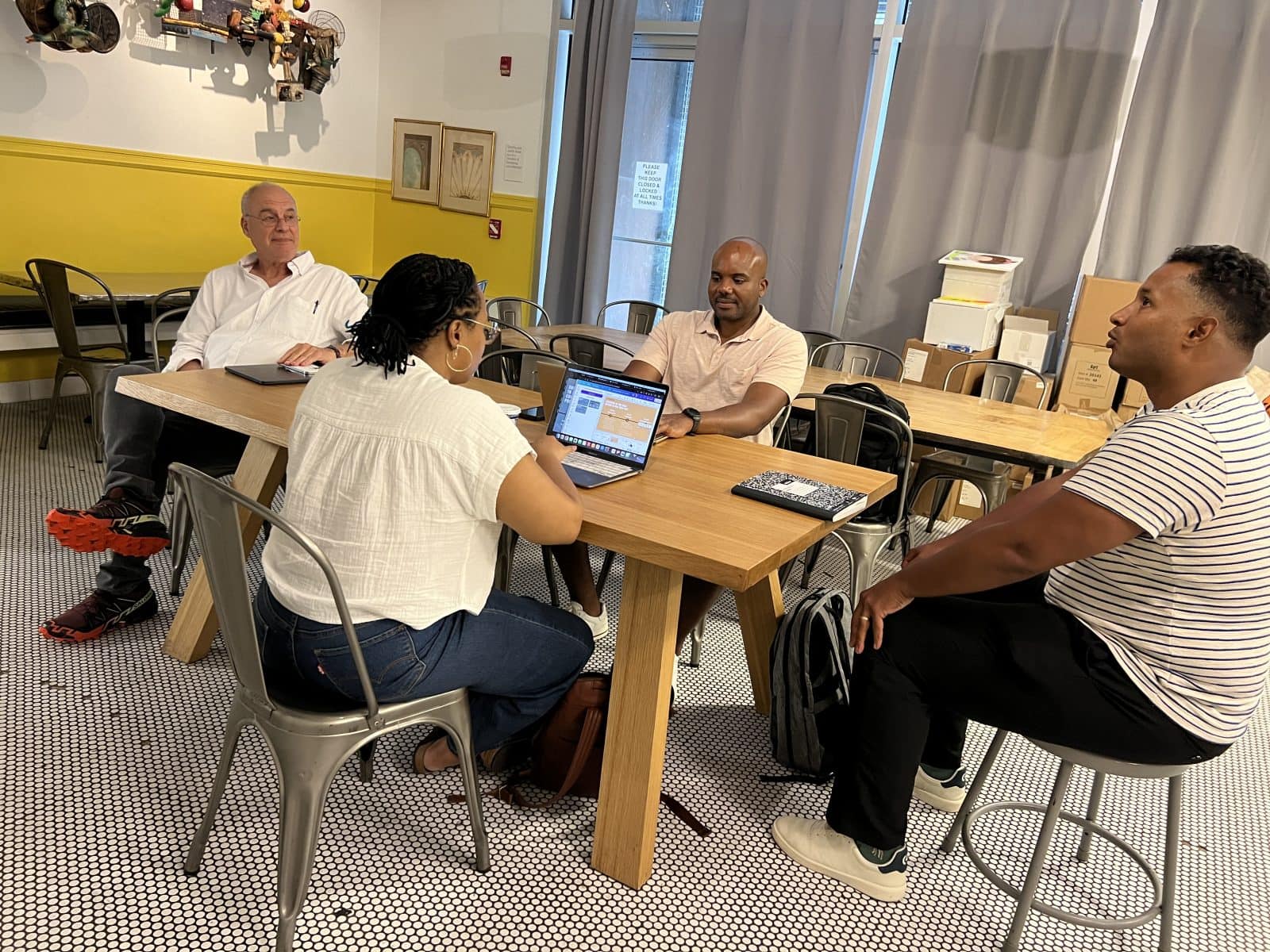
I raised a little more money, and I started talking to some bigger funders, including at some point the people at Bloomberg Philanthropies. The team building began: I was lucky enough to meet Qiana McKie, who introduced me to David DeVaughan; I brought in Tadesh Inagaki, and an energetic young woman named Nora Peachin. (The core team now comprises me, Nora, David, and Rae Gomes, who was interested in Community Kitchen from the start and is now our executive director.)
Last October, David and I went to a meeting at Bloomberg Philanthropies. The people there said, “You wouldn’t be here if we weren’t serious about funding you.” After much discussion, we thought we had enough evidence and funding to decide to launch a three-month pilot in September of this year. By this time, we’d centered on the city—because it’s The City. (There are many, many more details, of course.)
Christmas ‘24 came and went. We kept working to develop our team and our budget, and talking to people in neighborhoods while looking at spaces: We needed, we believed, a partner, so that we didn’t appear to drop out of the sky. And we (Rae, really) found one, in the form of the Lower East Side Girls Club, which has a magnificent space on the corner of 8th Street and Avenue D and a wonderful organization firmly founded in that classic neighborhood of immigrants and their descendants. (My grandparents lived in that neighborhood, and I lived the first seventeen years of my life just north of it.)
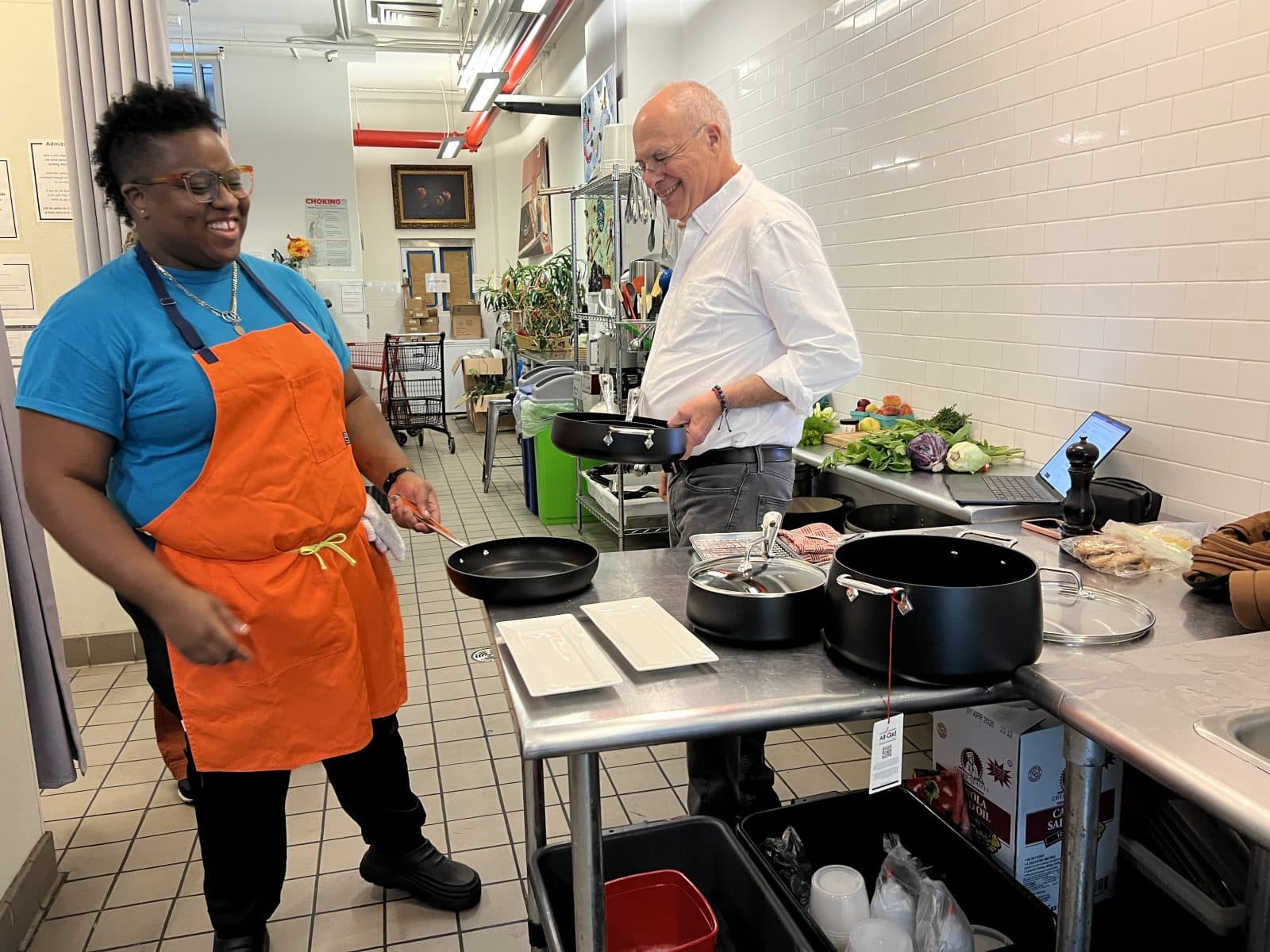
We hammered out details with the Girls Club and began to get down to making our pilot happen. We hired Abdullah Elias, who recently ran the Flatbush Central Caribbean Market, and has already done terrific work for us (we call him the Swiss Army Knife), and began looking for a chef. Not coincidentally, three years ago I’d met (at the suggestion of my partner, Kathleen Finlay) with Mavis-Jay Sanders—young, energetic, creative, brilliant, fun—and said to her, “You might want to be our chef when we get this going.” Mavis-Jay said, “Call me when you’re ready.”
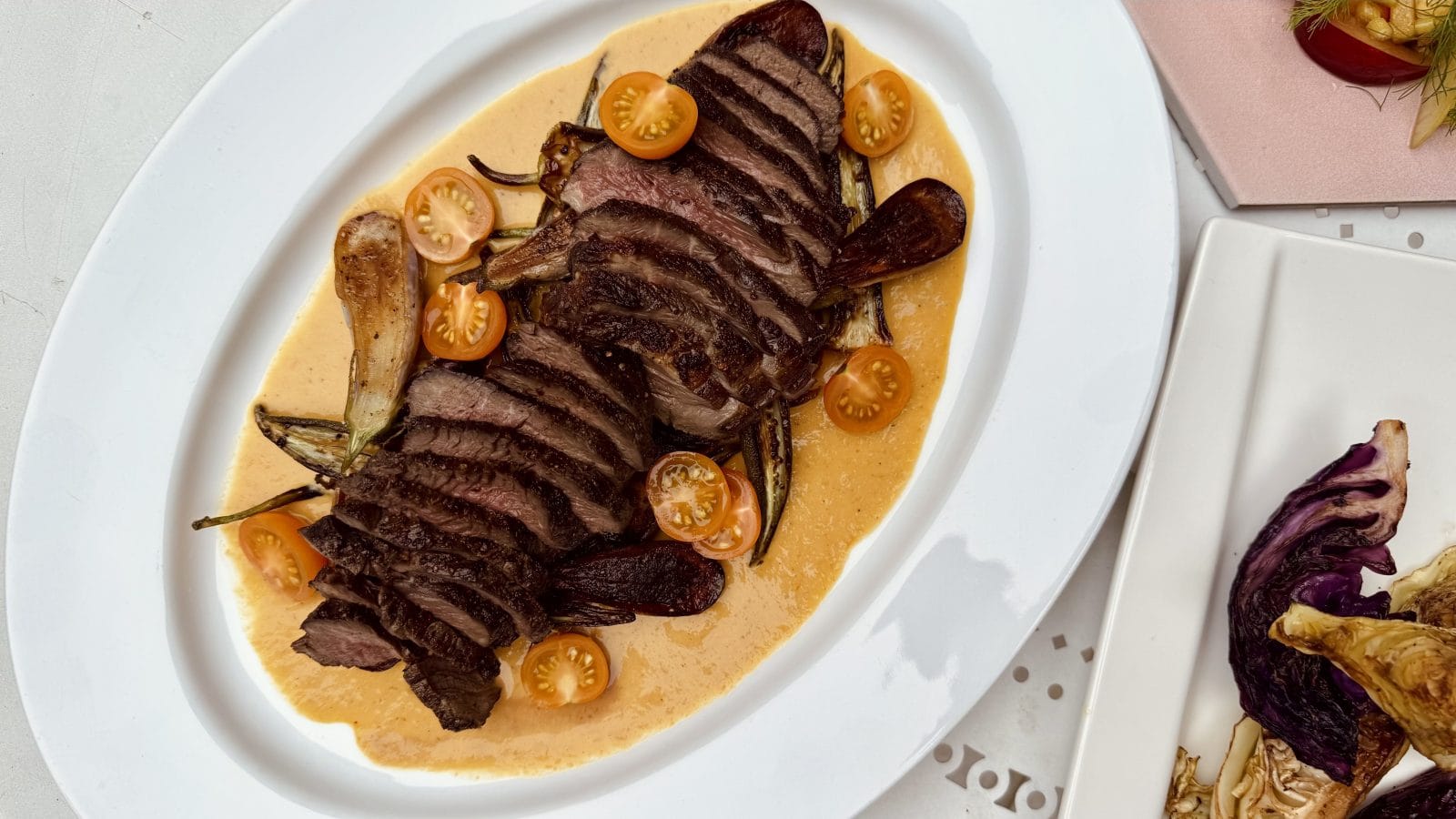
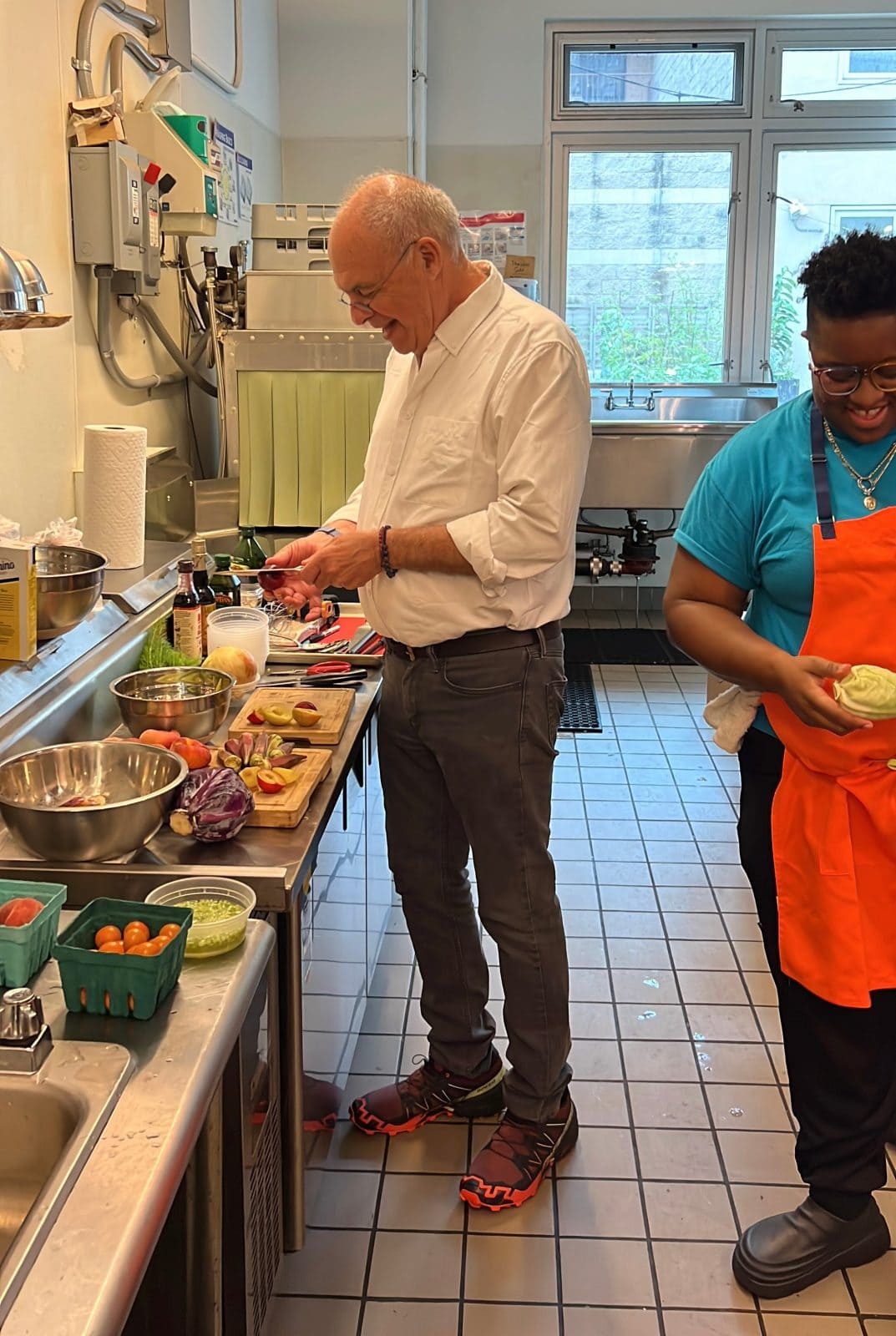
And here we are. Mavis-Jay is our chef. We’re hiring a manager. We’re developing a menu. We’re looking at plates. We have a realistic budget. (Of course we need more money, and we’re going to find it.) We plan to open in a couple weeks (check our site and Instagram for updates). Neighborhood people will have priority access, but we’ll be selling seats online also. I couldn’t be more excited and I’m thinking others will feel the same way.
Where do you come in? If you’re in New York, or want to make the trip, you can come in for a meal. (Follow us on Instagram for updates on hours and reservations.) If you believe in the project from anywhere, we’d be grateful for a donation. And please spread the word as we bring Community Kitchen to life in just a couple of weeks.
2 Comments