

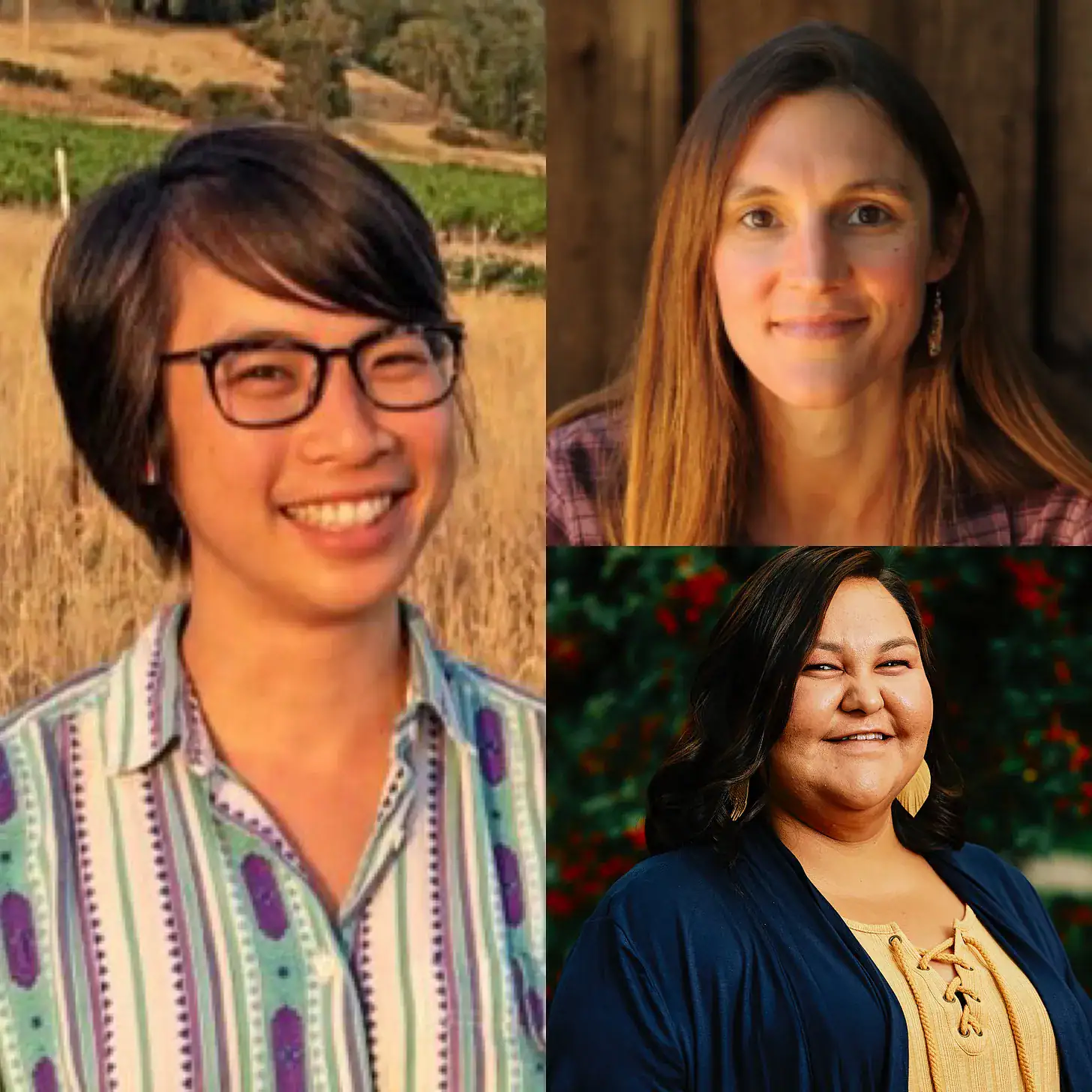
Regenerative farming “is the hot term, and I’ve been in so many conversations where there’s a great deal of gatekeeping, and grandstanding, people who say ‘I wrote the book on regenerative, there’s no other definition’ — but also looking at regenerative, there are different definitions as espoused by different groups of people, and overall what I see in terms of the ones that have really risen to the top in popularity, the practices kind of have this dim-sum approach to kind of taking practices that have already existed in other parts of the world and other cultures.” — Mai Nguyen
“I’ve been really excited about the idea that we could shift agriculture from a climate problem to a climate solution.” — Liz Carlisle
“As humans, we tend to take ourselves out of the equation that we’re equal to animals and that we’re all a part of these ecological processes, and when we do that, that’s when we get into trouble in mismanaging resources. In our stories, in our cultures, we always learned from the animals; the animals took pity on us and showed us how to live on the land.” — Latrice Tatsey
Wow. You’re about to listen to a Food with Mark Bittman interview that made me absolutely giddy with excitement. If you’re into farming, social justice, and land reform, this is a no-brainer for you, but I can’t imagine anyone not finding the awesome people I talked to here anything short of fascinating.
You may know my friend Liz Carlisle, who is an Assistant Professor in the Environmental Studies Program at UC Santa Barbara, where she teaches courses on food and farming; her recent book is Healing Grounds: Climate, Justice, and the Deep Roots of Regenerative Farming. In this book, she shares the stories of five people of color who are reviving their ancestors’ methods of growing food, reclaiming their communities’ ancestral knowledge and relationship to land, and sequestering carbon in the soil to address climate change. Two of these inspiring people are Mai Nguyen and Latrice Tatsey.
Nguyen, who is known as Farmer Mai, is a true social justice activist, and part of their work includes applying their background in climate research and Buddhist farming to cultivate regionally-adapted, heritage grains and Vietnamese seed crops. Tatsey is an ecologist and advocate for tribally-directed bison restoration; she remains active in her family’s cattle ranching operation at Blackfeet Nation in northwest Montana. That’s enough intro — let’s get to know these amazing people.
Please listen, subscribe, and review. And we’d love to hear your food-related questions, as we’d like to start doing live Q&A: Email us: food@markbittman.com. The recipe featured on the episode, Wheat Berry Salad with Cabbage and Mustard, is here.
Thank you, as always — and thank you to my wonderful guests. — Mark
Follow on: Apple Podcasts | Spotify | Overcast | Pocket Casts | Amazon Music
Comment