


As the years have gone by, I’ve come to appreciate Bob’s Red Mill more and more for many reasons, but especially these two: One, they’re getting what were once difficult-to-find whole grains, legumes, and other ingredients (unsweetened coconut, for example), into mainstream American markets. The other has been their willingness to respond to trends in food and to create or find new and innovative products, like well-performing gluten-free flour, or fava and chickpea flours.
Because we’re committed to transparency, we wanted to let you know that we’re getting compensated to promote Bob’s. We try to be thoughtful about how we make money, and so we only partner with brands and organizations that we know well and believe in. Bob’s is one of those, and we’re glad to have reasons to promote them. — mb

You’d think that with all our nattering on about socca—the iconic skillet pancake of southern France and Italy, where it’s called farinata—chickpea flour would be on pantry speed dial for all sorts of dishes. Yet somehow it hasn’t been. This is particularly unfortunate because ground whole chickpeas—also known as garbanzo bean flour, and besan and gram flour in Indian cooking—are actually the ultimate convenience food. Effective immediately, we’re making room in our socca-sopped hearts for more chickpea flour recipes.
Let’s start with what’s familiar: a panzanella-style bread salad made with torn socca, perfect for end of summer tomatoes and basil, with a wintertime work-around since you’ll want to make this all year long. Then there’s a rich and deeply flavored gravy that’s truly golden in every way: gloriously easy, happily veganizable, and spectacularly versatile. And because we don’t fry often enough, the last recipe walks you through how to batter and fry virtually anything with a delicious chickpea crust.
Consider these recipes a tiny taste of all there is to love about chickpea flour. We recently posted a recipe for Chickpea Fries (Panelle) and can’t wait to use the flour for instant hummus, vegan chowder, and something-other-than-socca baking. Where shall we go next?
The Bob’s Red Mill products we feature on The Bittman Project are usually available in everyday supermarkets and natural food stores. In case you can’t find something, we recommend purchasing online at Bob’s Red Mill store on Amazon or Vitacost.
Soccanella (aka Socca Salad)

Panzanella—the rustic Italian dish, beloved for turning stale bread into a stuffing-like cold salad—is the inspiration for this recipe. Only we base our version on a crisp and custardy skillet chickpea pancake called socca, Mark’s professed obsession. The batter bakes up quickly while you prepare the other ingredients; or you can make the socca up to a day ahead. Either way, be sure to check out the variation for how to make this satisfying salad in winter, too.
Golden Gravy (or Fondue)
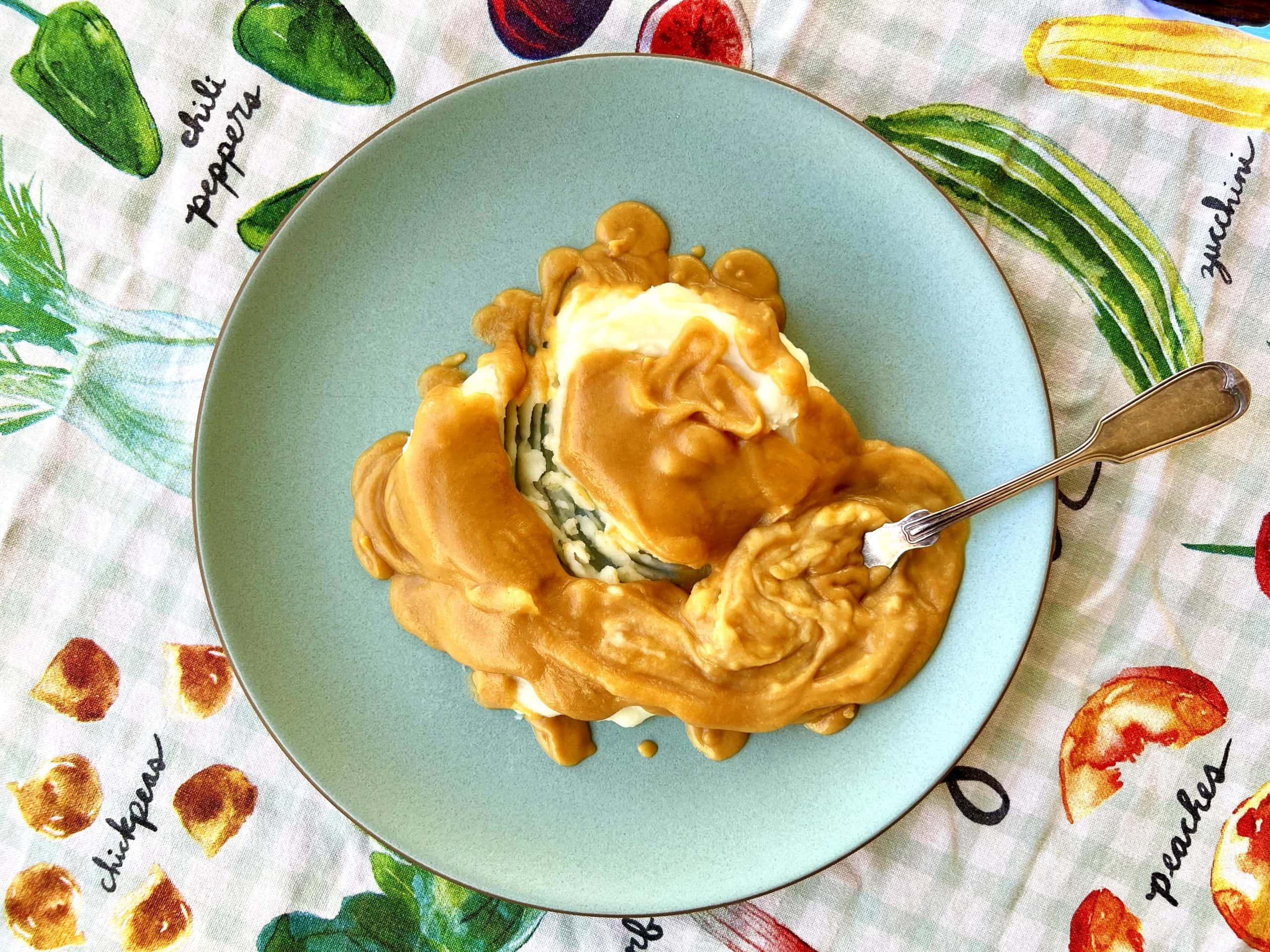
Imagine a rich, creamy, and versatile gravy that requires no pan drippings and doubles as fondue sauce. It can even be dairy-free if that’s your thing. All this is possible with chickpea flour. The technique is to cook the flour slowly with oil as a thickener (roux). For a creamy gravy, choose either plant-based or cow’s milk; use stock or water for a lighter sauce. Then the possibilities: Pour the butterscotch-colored, toasty-tasting gravy over mashed potatoes, thickly sliced toast, plain noodles or rice, chicken, or meatloaf; use it as a simmer sauce for pork chops or root vegetables; or keep it warm in a chafing dish for dipping cubes of bread and cheese, fondue-style.
Besan-Battered Vegetables (or Chicken or Seafood) with Two Dipping Sauces
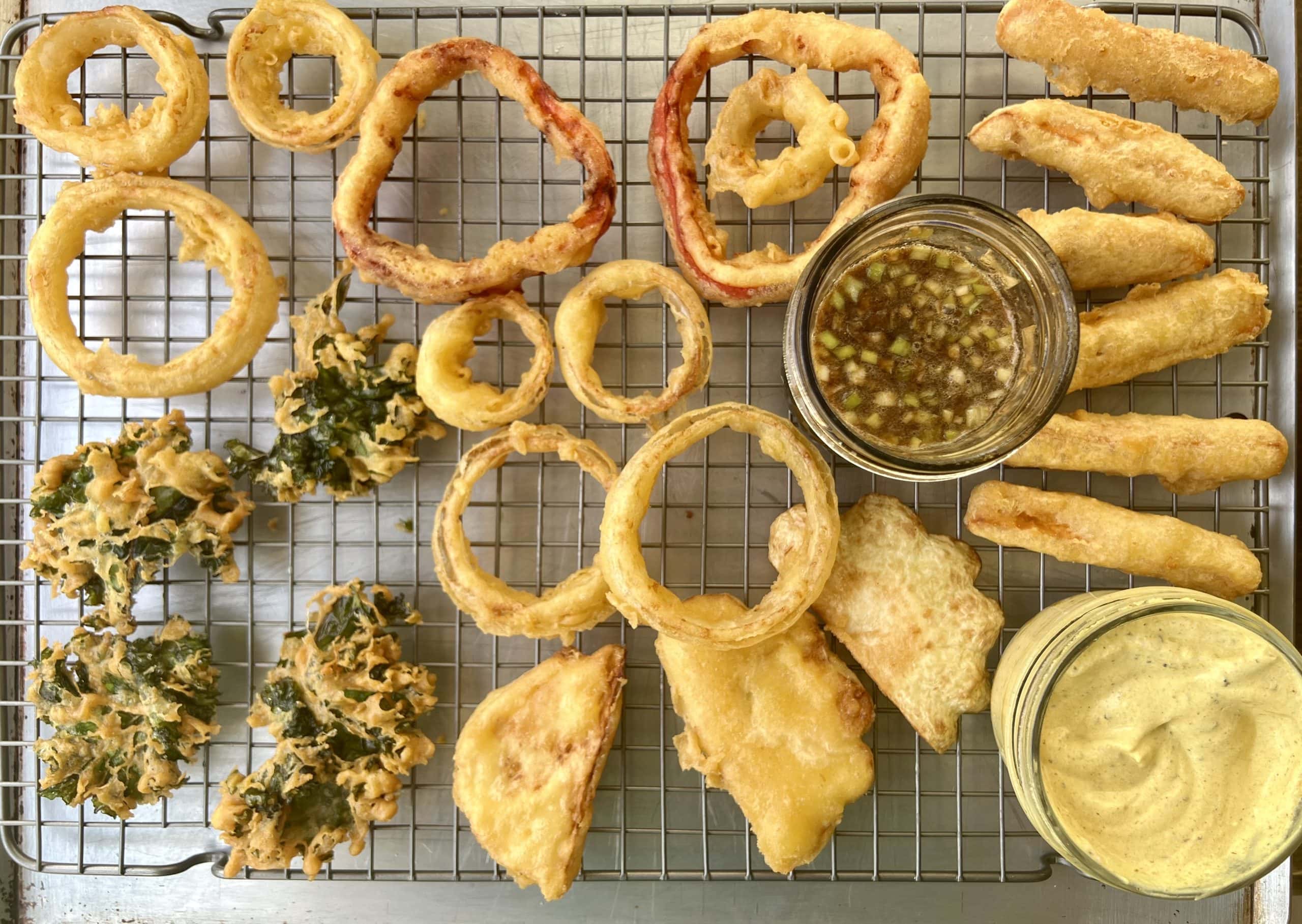
Besan and gram are other names for chickpea or garbanzo bean flour, a common ingredient for Indian fritters and frying batters. With good reason. When used for a relatively thin coating on vegetables (or chicken or seafood), the results are crisp and crunchy long after they come out of the oil, with a slightly sweet and nutty flavor. You don’t need eggs, either. The carbonation in seltzer brings a light crackle to the crust but water in the batter is fine, too. The key to successful (and safe) deep-frying is an instant-read thermometer; here’s one we recommend. And this story by Mark will help you allay any fears. For a big fry fest – the kind where you stand at the stove while everyone gathers around to snack as soon as the food cools – simply double or triple the recipe.
Comment