Needless to say, this is not an elegant time that we’re in. Sure, when it comes to cooking, there are plenty of people who are admirably seizing this as an opportunity to take on all sorts of full-blown projects (baguettes, soufflés, cassoulet, etc), but plenty of others are just trying to hold it together from one meal to the next.
This can mean a lot of super simple dishes, leftovers, canned food combos, and messy hodgepodges (we call them, very lovingly, “bowls of crap”). I have long argued that cooking regularly, from the realest ingredients you have access to, is something worth celebrating. “Fancy” has never been the goal.
Still, I won’t deny that in these days of endless beans and sweatpants, it can be nice to throw together something that feels a little special. That’s where brown butter comes in.
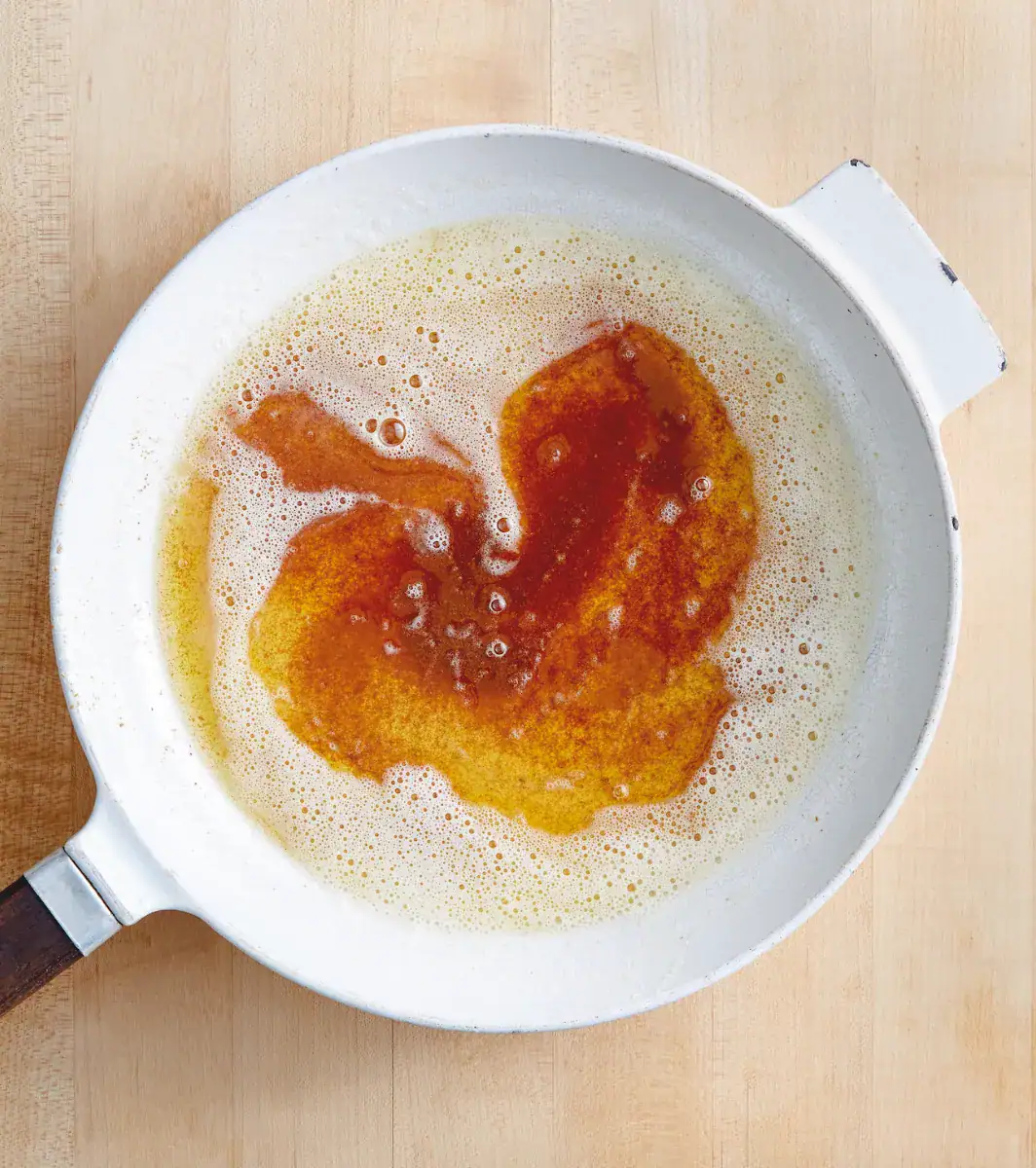
Under “normal” circumstances, we’d probably think of brown butter (made by, well, cooking butter until it’s brown) as an elevated sauce for elevated occasions. Now, however, I’d like to make the case for it as a really easy way to turn the simplest possible dishes into pretty extraordinary ones.
No joke, spoon brown butter over pretty much anything and it automatically feels special: simply cooked fish or chicken, literally any steamed or roasted vegetable, tossed with noodles and Parmesan for a quick pasta (add a little chopped sage in there if you like), even stirred into some plain cooked or canned white beans with garlic. Or try this: cut some carrots in half lengthwise and roast them with salt and pepper and a little olive oil in a 400 degree oven until browned and cooked through. Find a big plate or platter and spread some thick yogurt (Greek or whatever) on the bottom. Pile the carrots on top and drizzle brown butter all over them. Throw some chopped parsley on there if you want. People go nuts for these. Why? The brown butter.
The recipe is below, and it’s pretty simple. The one thing you’re trying to avoid is burning it, which you can do by watching, and, even better, smelling (the smell of brown butter is one of the best in all of cooking, perhaps second only to garlic cooking in olive oil). You can also flavor it in the last minute or so of cooking, with things like chopped fresh herbs, nuts, anchovies, or mustard. And the recipe is also easy to double if you’ve got more ground to cover.
If you come up with any brilliant uses for this stuff, I’d love to hear about it. I have a feeling we might be at this for a little while, so new ideas are very much welcome.
Log in, or become a member today.
Join in: enjoy 7 days free, plus 40% off your first year with access to 1,000+ highly vetted recipes from the How To Cook Everything series and beyond, essays from Mark, and original pieces from our contributors.
Through our (more than a thousand, and growing) highly vetted recipes from the How to Cook Everything series, original food essays and reporting, thoughtful podcast conversations and introductions to new and responsible food products, we aim to showcase what’s possible, from farm to fork, and power a growing movement that encourages people to think about food not as a commodity, but as central to our health and happiness.
We hope you join us on this journey. We’d love to have you as a part of the Bittman community. As a member, you'll have access to:
New recipes every week
1000s of recipes from How to Cook Everything and beyond
First access to in-person events with Mark and Kate
Exclusive discounts from our favorite brands
Q&As with Mark and the team
Subscribe to our free newsletter
Join over 105,000 passionate individuals who receive our weekly emails. It’s 100% free and you can unsubscribe anytime. Plus, we’ll email you a sampling of what premium members receive on a weekly basis.


Comment