

Consider the barely identifiable action shot below as an invitation — rather, my imploration — to try your rubber-gloved hand at making hot sauce. And even though it’s not peak chile season, there are plenty of varieties available year round and nothing will pick up winter cooking like a fresh batch.
I’ve been making hot sauce every year since before I first wrote about it for The New York Times in 2008. Besides the glove, all you need is a blender, a pound or so of fresh chiles, sea salt, and a quart of cider vinegar. And, oh yeah, a glass jar for when you’re done; play your cards right, and the vinegar bottle works perfectly.
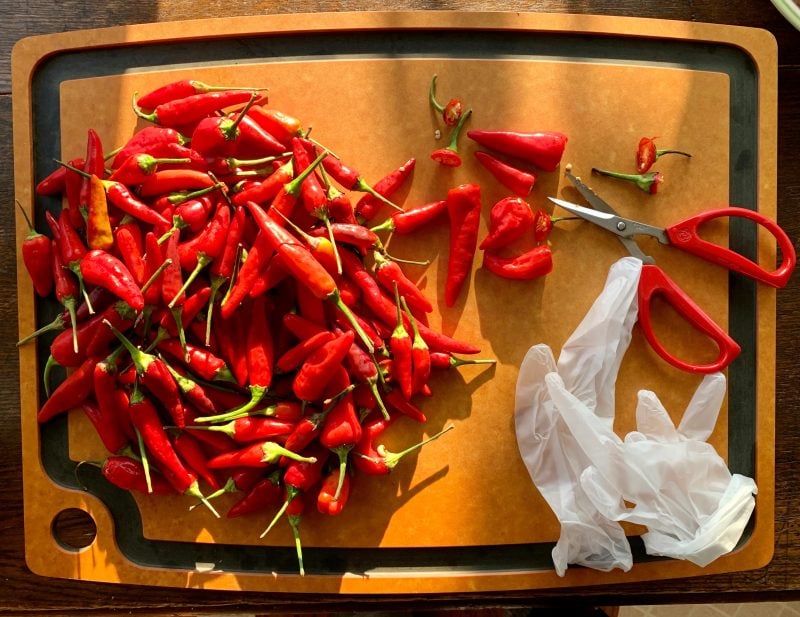
My method — taught by my uncle-in-law, who settled near San Sebastian, Mexico, in the early 1960s — works for all varieties of chiles in any stage of ripeness. These are fully ripe cayennes, so pretty hot with a little fruity sweetness. I also love the grassiness of green sauce. Using whatever you like to eat is always a safe bet. It’s a pain to seed them; just trim the stem ends with scissors. (Scissor recommendations here.)

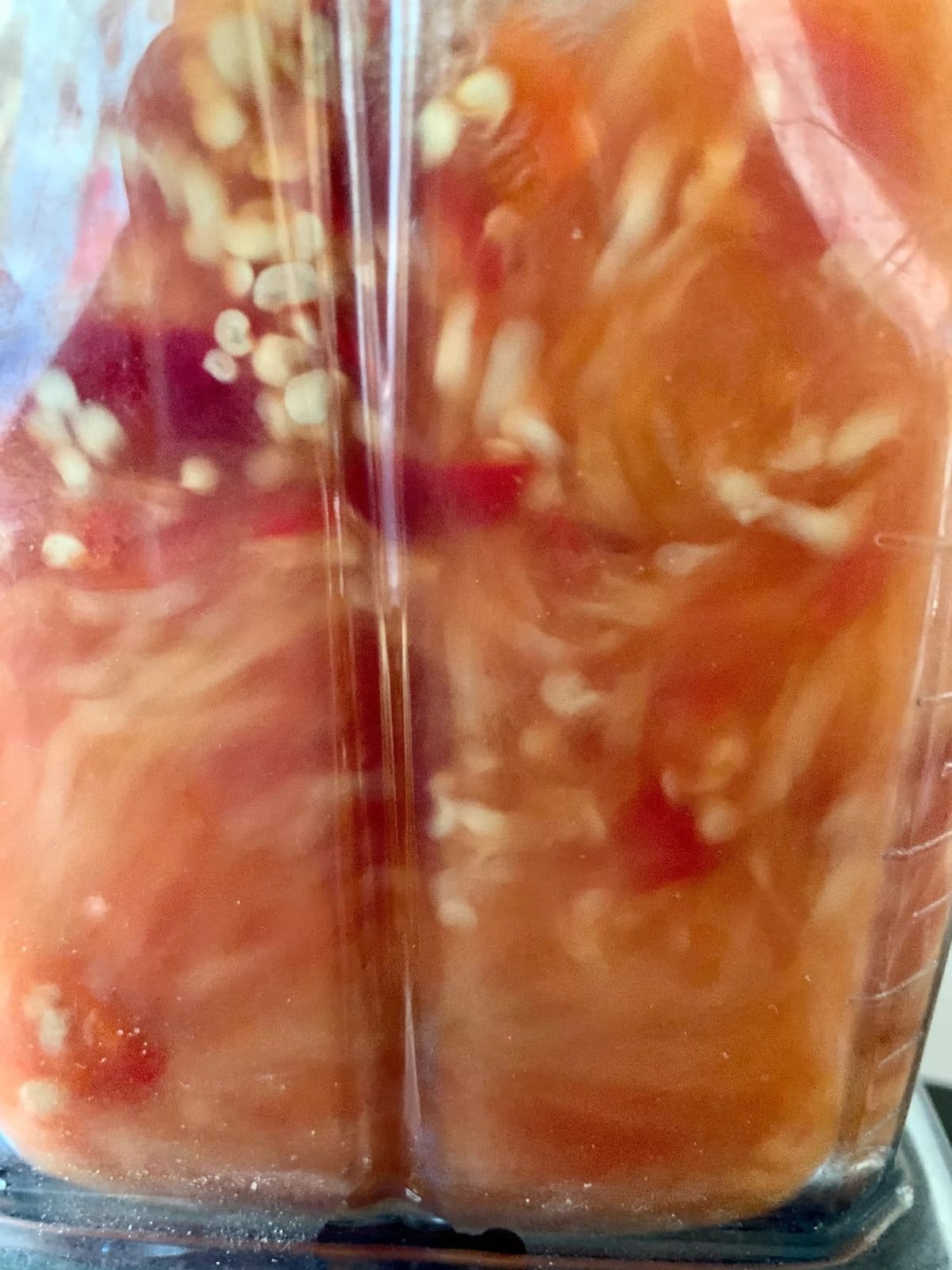
For a thick sauce, don’t quite submerge the chiles in the vinegar. For a thinner sauce — or one you might want to strain into a more Tabasco-like condiment — cover the fruit by a couple of inches. A few years ago, I switched from white distilled to unfiltered apple cider vinegar. The flavor is less sharp, with hints of caramel. Add just a sprinkle of salt to the blender; you can always add more later. Let the machine whirl at high speed until the sauce is as smooth as it’s going to get.
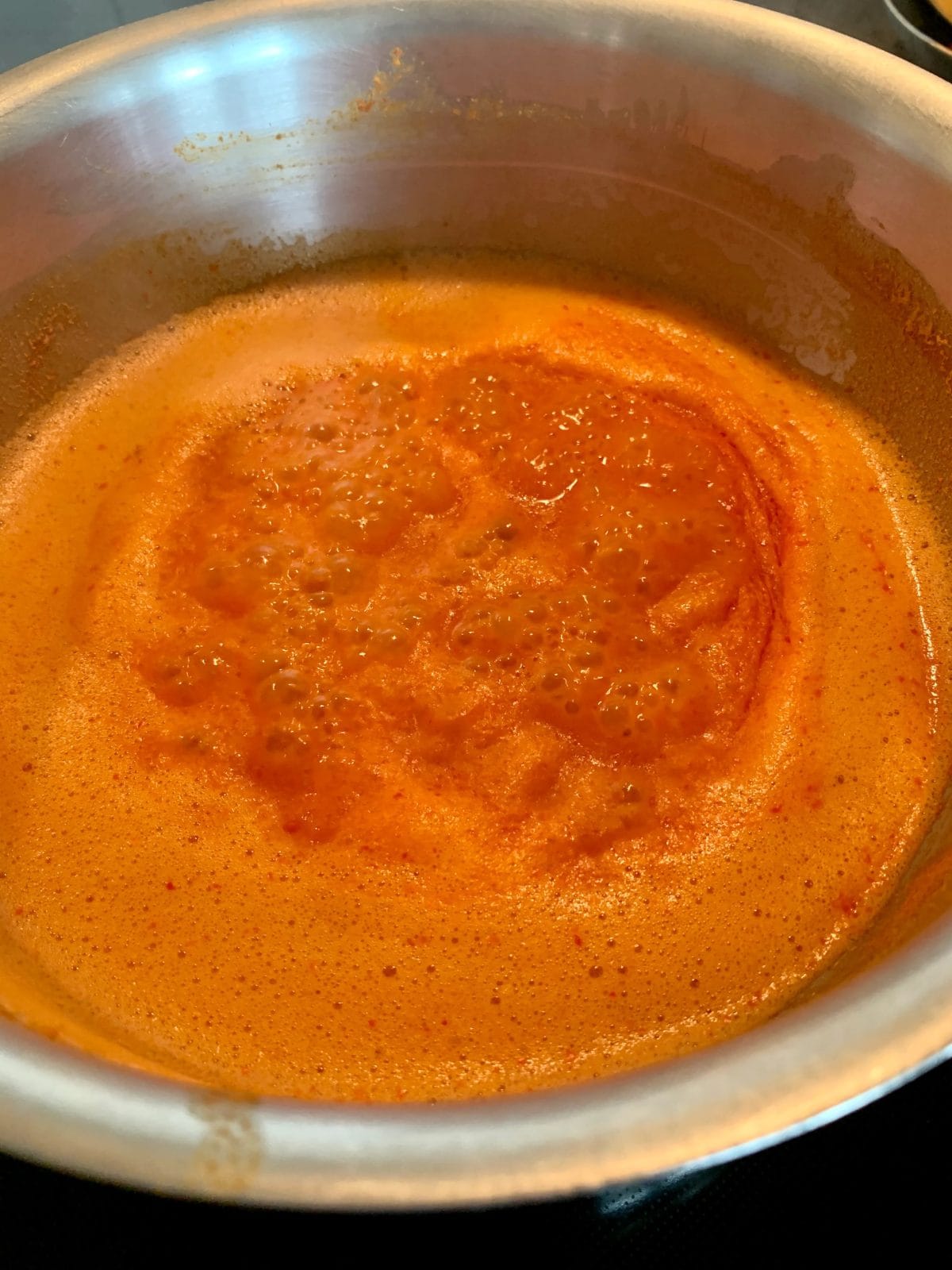
Bring the sauce to a boil then adjust the heat so it bubbles steadily. At first, the sauce will foam. Resist the urge to stick your face in there and inhale. Instead, keep busy by stirring once in a while.

After a few minutes, the sauce settles down, thickens, and darkens just slightly. If you’re going for the chile-vinegar sauce option, you’ll have a lot more liquid than this.

Let the sauce cool completely in the pot before funneling into a clean jar (or straining and funneling, again for that variation). I recommend letting it sit for a week or two before diving in to give it a chance to develop some personality. The sauce will keep for months in the fridge and might even begin to ferment on you, which adds another dimension to the experience. The unlikely negative outcomes to signal it’s gone off: mold, chalkiness, or the aroma of ammonia. Otherwise, this sauce only gets better with time.
5 Comments