
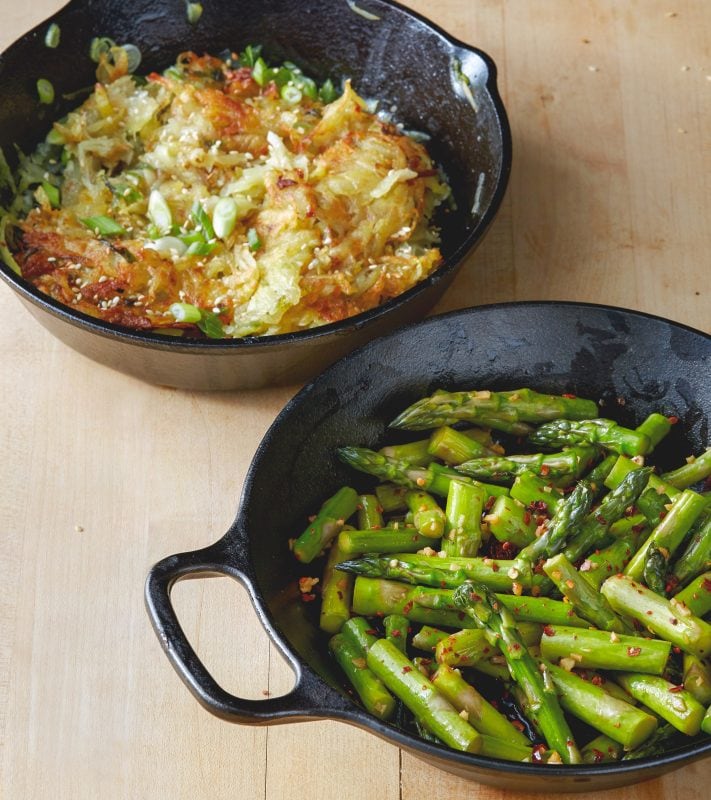
Stir-Fried Asparagus
Prevent your screen from going dark
Makes 4 servings 1x
Time 15 minutes
Ingredients
- 1 1/2 pounds asparagus, cut into 2-inch lengths (parboiled if thick; see below)
- 2 tablespoons good-quality vegetable oil
- 1 tablespoons minced garlic
- Salt and pepper
- 2 small dried chiles, optional
- 1 tablespoon soy sauce
- 1 teaspoon sesame oil (optional)
Instructions
- Trim the asparagus and cut into 2-inch lengths. Put a large skillet over medium-high heat for about 3 minutes to get hot. Add the oil, quickly followed by the garlic and dried chiles, if using. Cook, stirring constantly, for about 15 seconds, then add the asparagus and adjust the heat so they sizzle. Sprinkle with a little salt and pepper.
- Cook, stirring frequently, until the asparagus are brightly colored but not quite as tender as you want them, 3 to 7 minutes, depending on their thickness. Add 2 tablespoons water, the soy sauce, and sesame oil, if using; stir and turn off the heat. Taste and adjust the seasoning. Serve or store covered in the refrigerator for up to a day to eat cold or at room temperature.
Recipe variations
Boiling, Parboiling, and Blanching Vegetables
Simple and straightforward: Bring a large pot of water to a boil, salt it generously, and toss in whole or cut vegetables. Check them frequently and when they’re just about as tender as you’d like, drain them—either by fishing them out with a strainer or slotted spoon or by pouring the vegetables and water into a colander to drain. As with steamed vegetables, shocking after boiling immediately stops the cooking, whether they’re at crisp-tender or more well done for puréeing. And the term parboiling really means “partial boiling,” in which vegetables are intentionally left underdone so they can finish cooking by another method.
Boiling or parboiling is also handy if you have different vegetables and each requires a different cooking time; you simply keep the water rolling and work in batches. If you’re parboiling before cooking with another method—on the grill or in a stir-fry, for example—your goal is for all of them to finish cooking at the same time, so try to parboil each to the point where it is barely getting tender.