


As the years have gone by, I’ve come to appreciate Bob’s Red Mill more and more for many reasons, but especially these two: One, they’re getting what were once difficult-to-find whole grains, legumes, and other ingredients (unsweetened coconut, for example), into mainstream American markets. The other has been their willingness to respond to trends in food and to create or find new and innovative products, like well-performing gluten-free flour, or fava and chickpea flours.
Because we’re committed to transparency, we wanted to let you know that we’re getting compensated to promote Bob’s. We try to be thoughtful about how we make money, and so we only partner with brands and organizations that we know well and believe in.Bob’s is one of those, and we’re glad to have reasons to promote them. — mb
Once you discover the easy impact of flavoring cooking water with simple additions, whole grains can stir up some real mealtime excitement. It only makes sense: If dried foods absorb liquid as they cook, isn’t that another seasoning opportunity? We put this technique to the test with a summertime favorite, farro salad.
Farro is an ancient wheat, eaten by the Romans for centuries and still a favorite ingredient in Italian cooking. The most common version is called emmer. Like barley, farro is available in its whole grain state as well as “pearled” (and even “semi-pearled,” both with the outer layer milled away). Whole has the most fiber and other nutrients and cooks in about 30 minutes so that’s what we use in all our recipes.
You can always use stock for cooking farro and other grains. But there are easier, more interesting ways to push flavor into grains. Here are some ideas:
6 Ways to Flavor Grains While They Cook
Balsamic vinegar: Depth and sweetness with just the right amount of tang. Use the inexpensive kind. A good starting ratio is 1/4 cup per each cup of water. Add a little salt, too.
Soy (or fish) sauce: Salt with benefits. Try 2 tablespoons per cup of water and wait to add salt; depending on how you’re finishing the grains you might not need any.
Juice: Freshly-squeezed orange juice and sugar-free apple cider or pomegranate juice all add tartness. Make sure there’s no added sugar. Start with a ratio of half juice and half water. Add a little salt, too.
Tea: Whether blended or single-ingredient, they’re convenient botanical seasonings. (Decaffeinated green tea is our favorite.) Use bags or loose teas in a ball and let them simmer with the grains to your desired intensity.
Parmesan cheese (or rinds): Flavor and richness (from the fat). You’ll be amazed how little it takes. (For vegans, a chunk of tempeh is a remarkable stand-in.)
Fresh herb sprigs and whole leaves: Bay and rosemary, we’re looking at you. Because you’re flavoring water rather than food, you’ll need more than you’d typically use for seasoning.
Here are more grain recipes where the cooking water is seasoned:
- P.B. & J. Couscous
- Spiced Bulgur Pilaf
- Almond Quinoa
- Double-Quinoa Casserole with Asparagus and Dill
- Quinoa Cooked with Salsa
Before we wade into the first pot of bubbling farro, two things: In two of these salad recipes, we drain and briefly rinse the grains to capture ideal doneness and keep the kernels separate. Don’t worry about losing the flavor you just built in; it’s in there for good. And finally, Kerri says it’s okay to eat farro salads out of a bowl.
Creamy Farro Salad with Zucchini and Parmesan
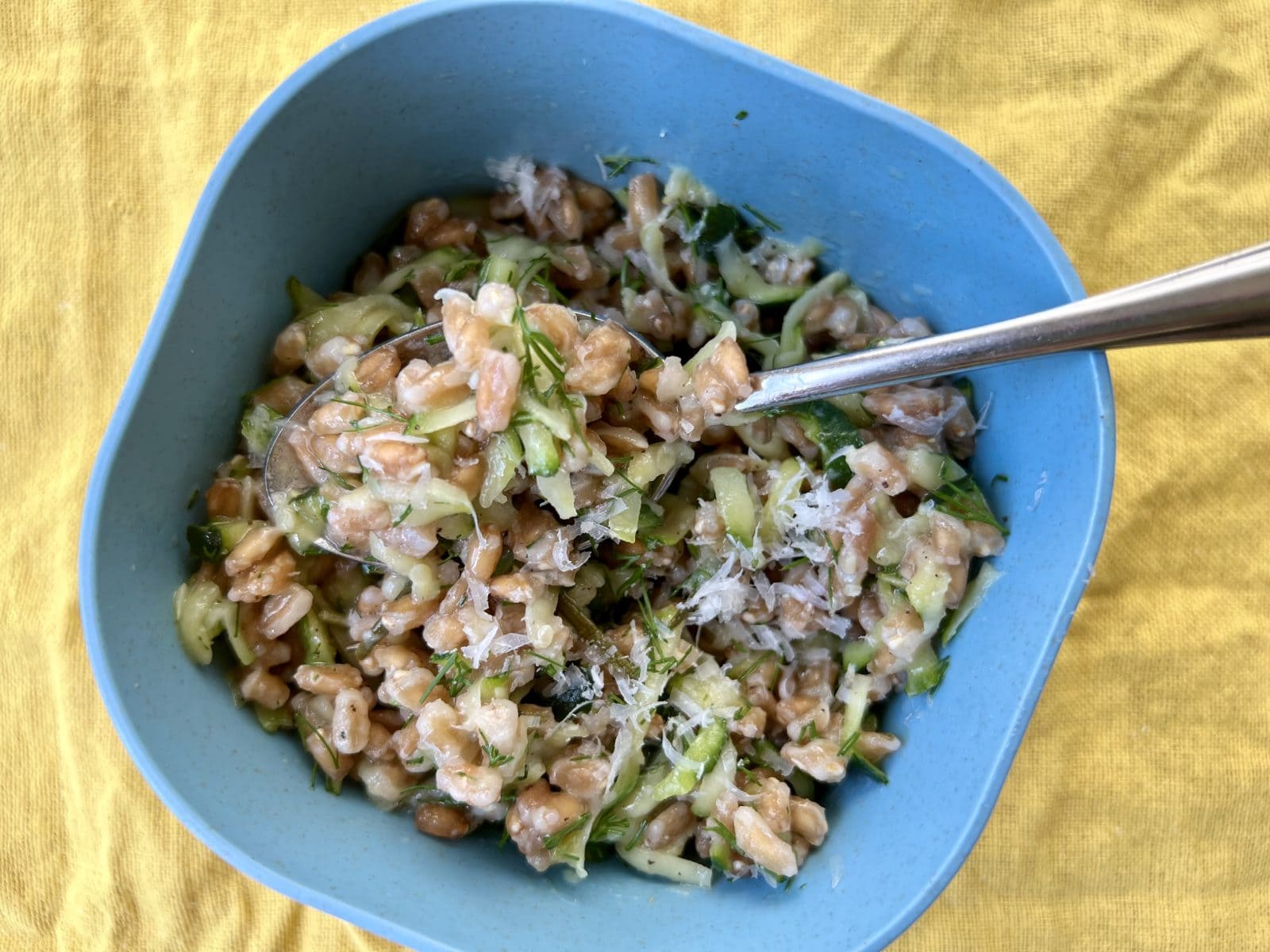
The richness of macaroni salad plus everything we love about risotto, together in one bowl. You can serve this at room temperature or chilled, so you can make it up to several hours ahead if you’d like; just wait to add the dill until just before serving.
Farro Salad Bowl with Vietnamese Flavors
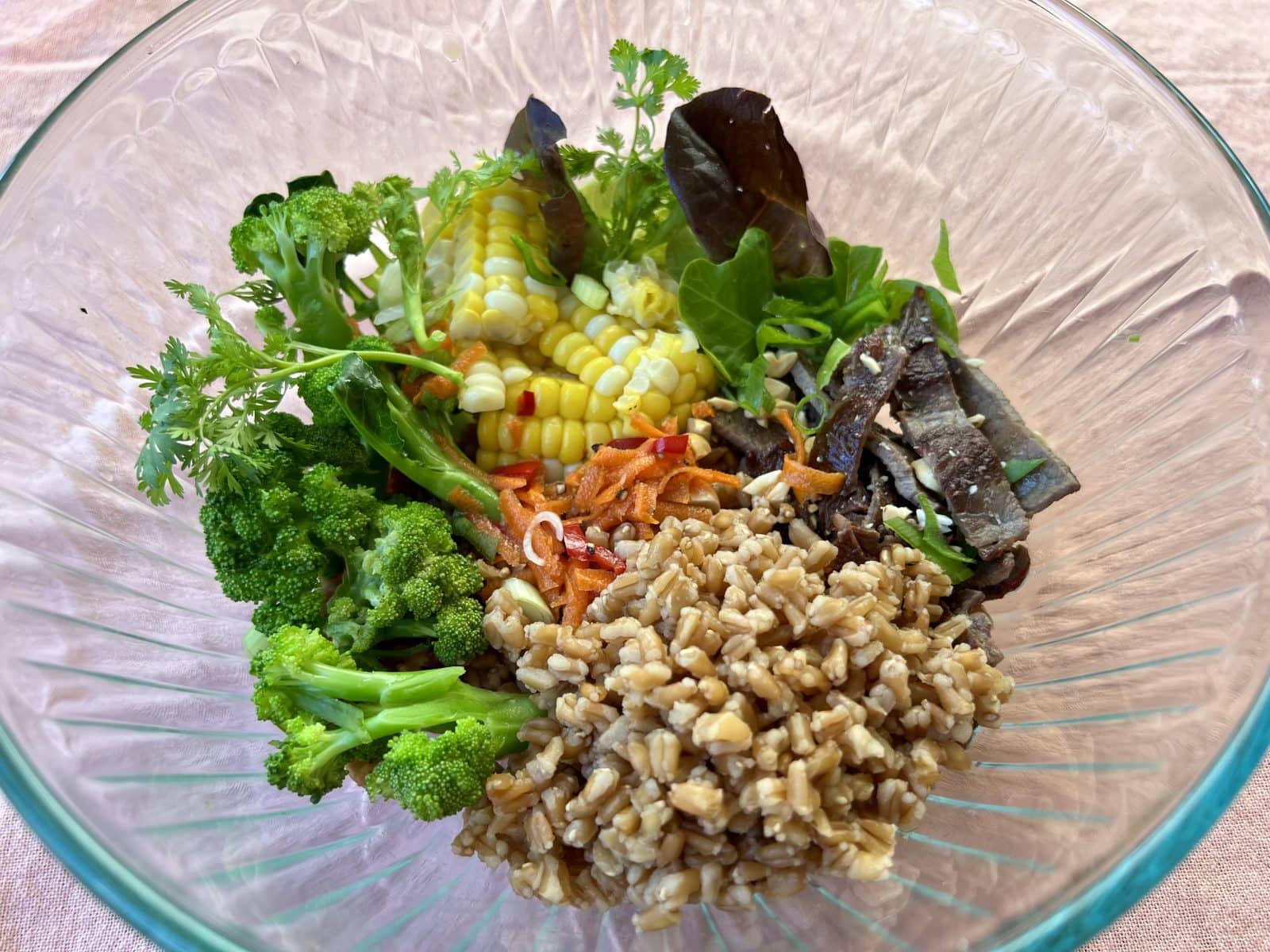
Here’s a spin on a meal-size Vietnamese bun bo hue – the bowl of dry noodles often served with nuoc cham sauce for saucing or dipping. Only instead of rice vermicelli we use whole grain farro, cooked with a splash of soy sauce in the water, then double down on the flavor with a piquant vinaigrette. The biggest part of the prep time is getting the vegetables and protein in shape. So if you have leftover grilled, roasted, or steamed vegetables you’ll save some time for sure.
Farro Wedge, Vegan or Otherwise
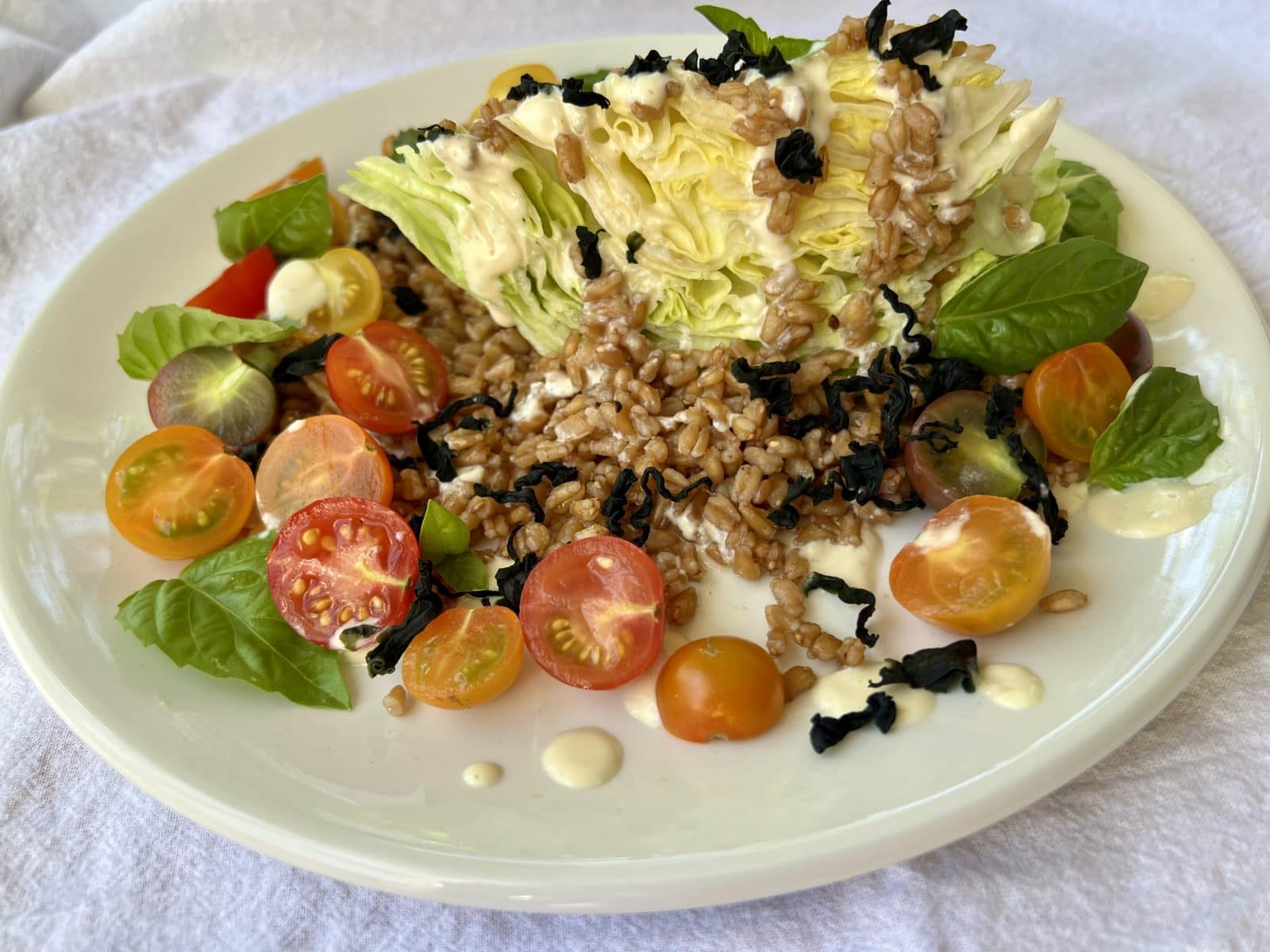
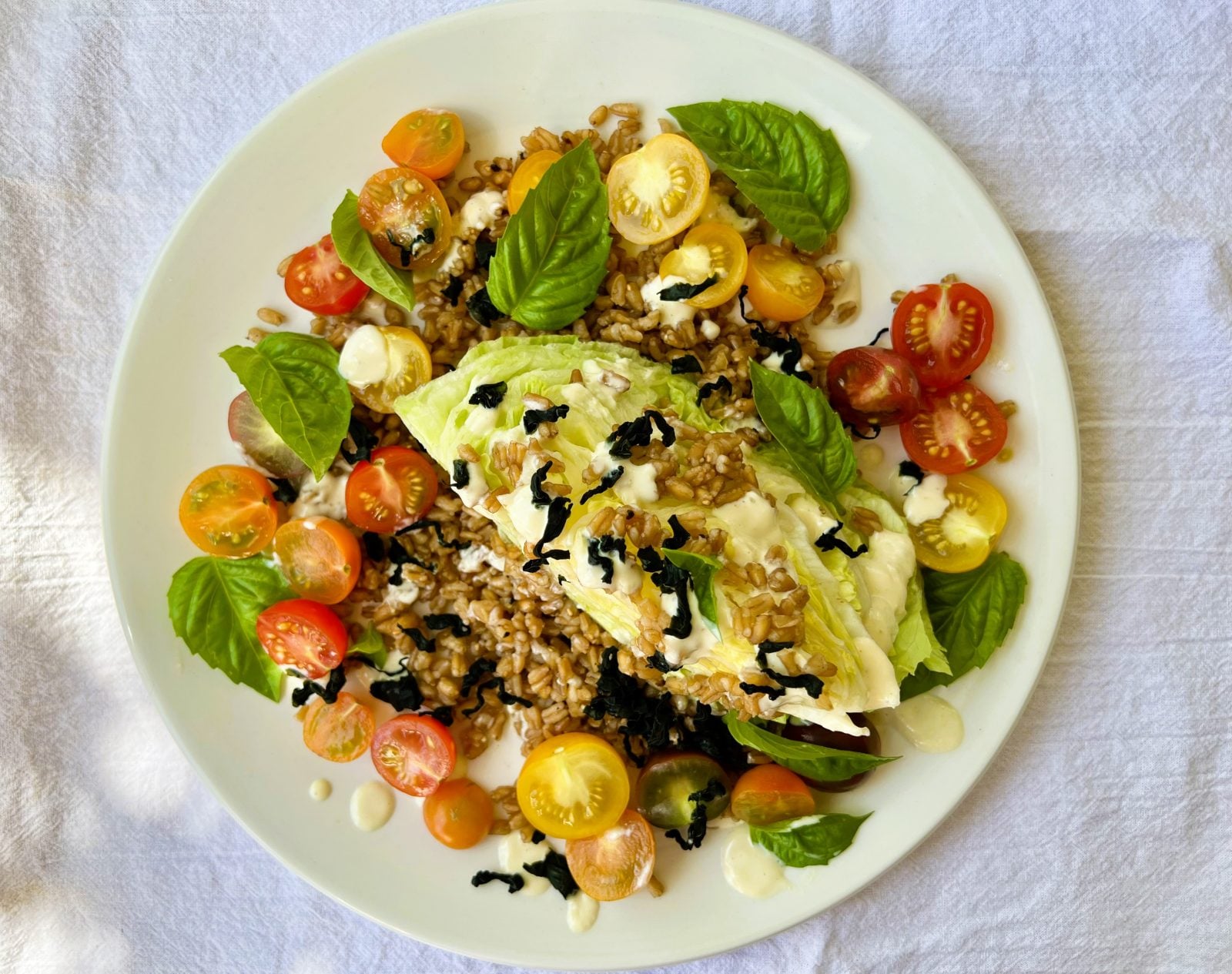
The classic American knife-and-fork salad is always game for spinning, especially if you make the wedge more satisfying with a scoop of farro. Spike the cooking liquid with balsamic vinegar and black pepper, which add a sweet-savory heat to the grains. Then drizzle the salad with a creamy dressing – based on plant- or egg-based mayonnaise.
1 Comment