


You know when you meet someone and like them almost before you even start talking to each other? That was my experience with Amanda David.
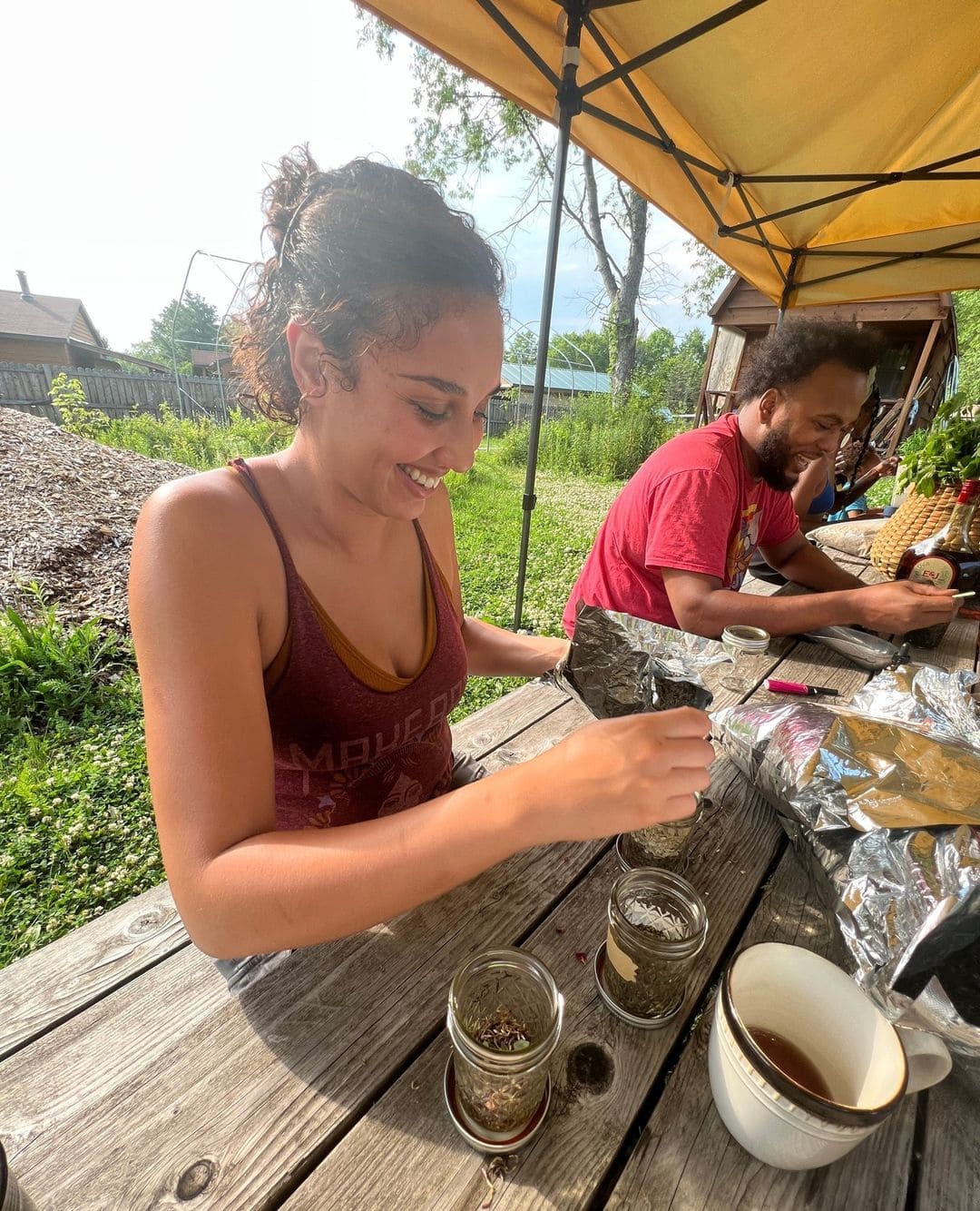
A gardener and community herbalist in Ithaca, New York, Amanda is the creator of Rootwork Herbals and part of Black Farmer Fund‘s first cohort of fundees. She sees herbalism as a means to support life and resist oppressive systems, which, of course, undermine health. She has a deep love for plants and a deep love for people—having had an extended conversation with her, I can attest to that personally, because weeks later, I’m still thinking about her warmth and kind spirit—and is passionate about bringing the two together to promote healing. Amanda is also laser focused on creating places where BIPOC communities can reconnect with the land, plants, and themselves. Awesome, right?
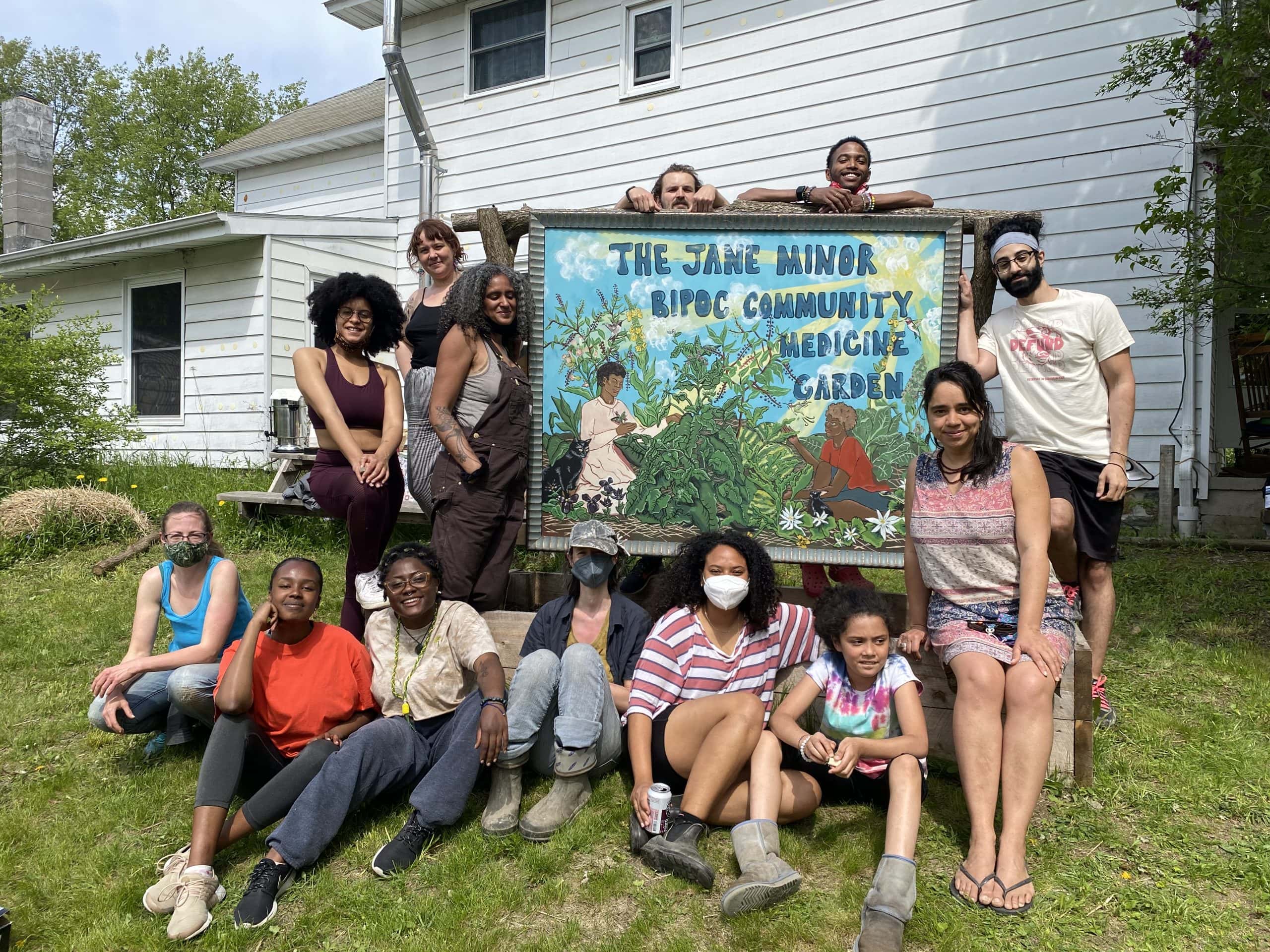
I’m not going to go on about my obsession with all things Amanda; you can read up about her online. I want to tell you about what she’s been going through lately, why she doesn’t feel comfortable in her own home, and why it should matter to all of us.
Over the last five years, according to the USDA Census, the US lost seven percent of all farms, while Black people lost nearly 13 percent—the highest decline among all racial groups. Melanie Allen and Olivia Watkins, Co-Executive Directors of the Black Farmer Fund, say that this is a direct result of the systemic racism Black farmers have faced for generations, encompassing everything from discriminatory lending practices to community violence and intimidation.
Sadly, Amanda has become an unwilling poster child for exactly this type of abuse, having endured horrible racist and sexist discrimination and harassment on her farm, from no other than her next door neighbor. What’s been going on is best told by Amanda, and our Q&A with her is below.
We should all be mindful that Amanda’s story is not unique; rather, we should see it as the reality of what many Black farmers face in rural parts of America. She’s been extraordinarily brave to come forward, and I hope that her choice to do so can help pave the way for real change.
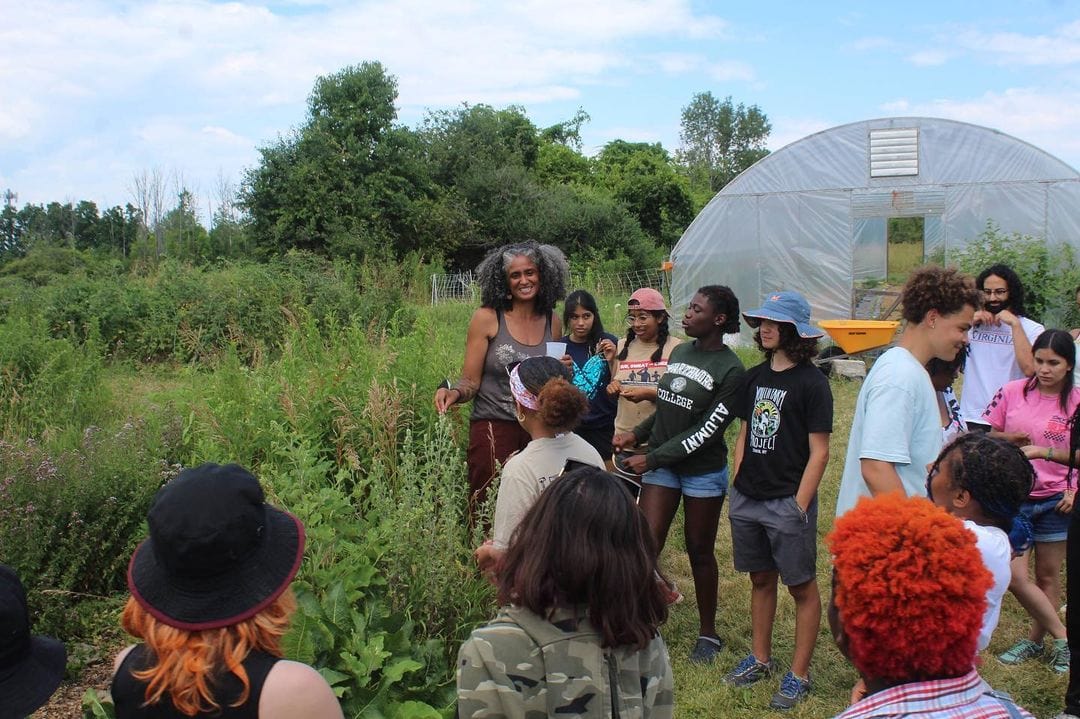
KB: Let’s talk about what’s been going on with you. You can be as descriptive or comprehensive as you’d like.
Our interactions with [our next door neighbor] were inappropriate from the beginning.
AD: For the past three and a half years, my family and I have unfortunately been victims of racialized harassment from our neighbor [Robert Whittaker, Junior]. We moved into this home and property in 2020, seeking a place to live and to build community, create community gardens, host classes and workshops, and continue building and sharing our community around herbal medicine and land stewardship, which I’ve been dedicated to creating for many years. Our interactions with Whittaker were inappropriate from the beginning. He would frequently come onto our property unannounced and uninvited, making strange and unwelcome comments about how we could afford to live here. He insinuated that as a Black single mother, I couldn’t afford to be here, suggesting I must have a rich ex-husband or receive a lot of child support.
Despite trying to be neighborly for as long as I could, the harassment escalated, as did the trespassing and unwarranted comments. To address the situation, we decided to put up a fence around our property, as we thought that boundary would help to protect us and stop the unwarranted interactions, but unfortunately, this only worsened things. Whittaker started using racial slurs—including the N word—more frequently, built steps to look over the fence to yell at us, and began vandalizing the fence by removing sections and adding to it. In 2021, we started having interactions with the police because Whittaker was continuously trespassing and damaging our property.
In 2022, my 16-year-old son was outside tending to the animals and I’m not sure what set Whittaker off but he threatened my son with a stick, repeatedly using racial slurs and berating us. The incident was so loud that my daughter and I were in the house and heard it. When we came outside, Whittaker continued his verbal abuse for quite some time. My daughter was quite young at the time, and the verbal abuse was very intense.
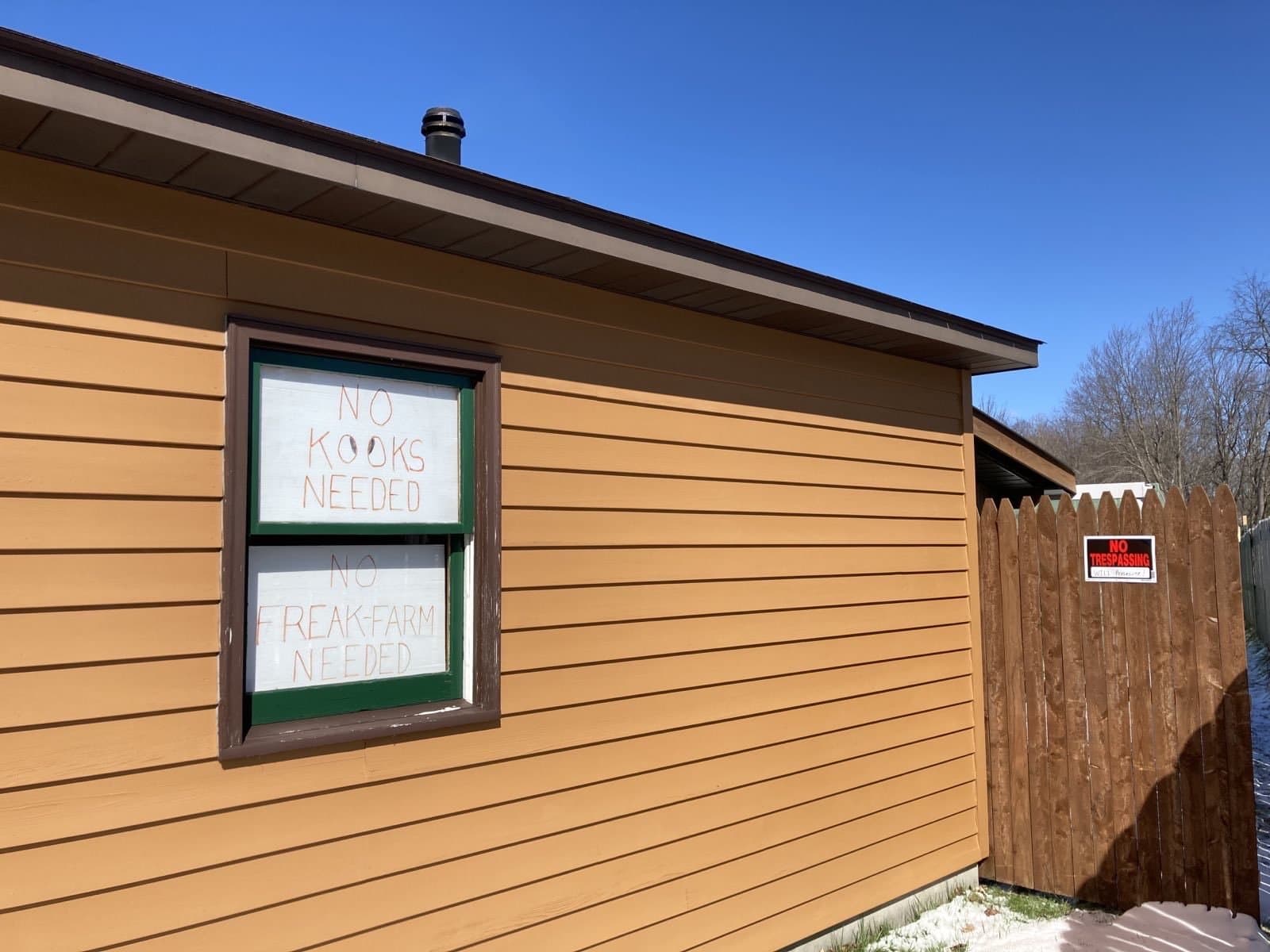
That was the first time Whittaker had to appear in court, but there were no consequences for his threats to a minor and the ongoing verbal harassment. He’s continued to take down sections of the fence; the police have been called for that. He’s put up signs directly facing our yard saying horrible things about us, and he’s shot off live rounds while small children have been here and yelled racial slurs at them. Our vehicles were vandalized and damaged so they were unsafe to drive. At this point he’s been arrested four times, with the most recent arrest just this past weekend where he was charged with stalking as a hate crime and violation of the five year order of protection we have. He’ll be going to court again to face those charges.
KB: Over the course of the last decade or so, we’ve heard a lot more about the very real trials—and, quite frankly, pain and suffering—that Black farmers go through in order to purchase and steward land (big thanks to Black Farmer Fund for all their work in raising awareness.) But, as you recently learned, getting a grant is not the end of it, and you’re basically being driven off your property— property that’s been a dream for you for a long time—by the worst kind of bully. What are some of the things you’ve done to protect yourself?
AD: Over the years, we’ve implemented as many safety measures as we could. Something we ran into was needing evidence to be able to hold Whittaker accountable for his actions, so we spent thousands of dollars installing a comprehensive security camera system with about ten cameras around the property as well as security lights in various locations, which we hoped would deter his behavior, but they didn’t.
People would show up to bear witness and be there as physical people to support us … this support has been life-changing.
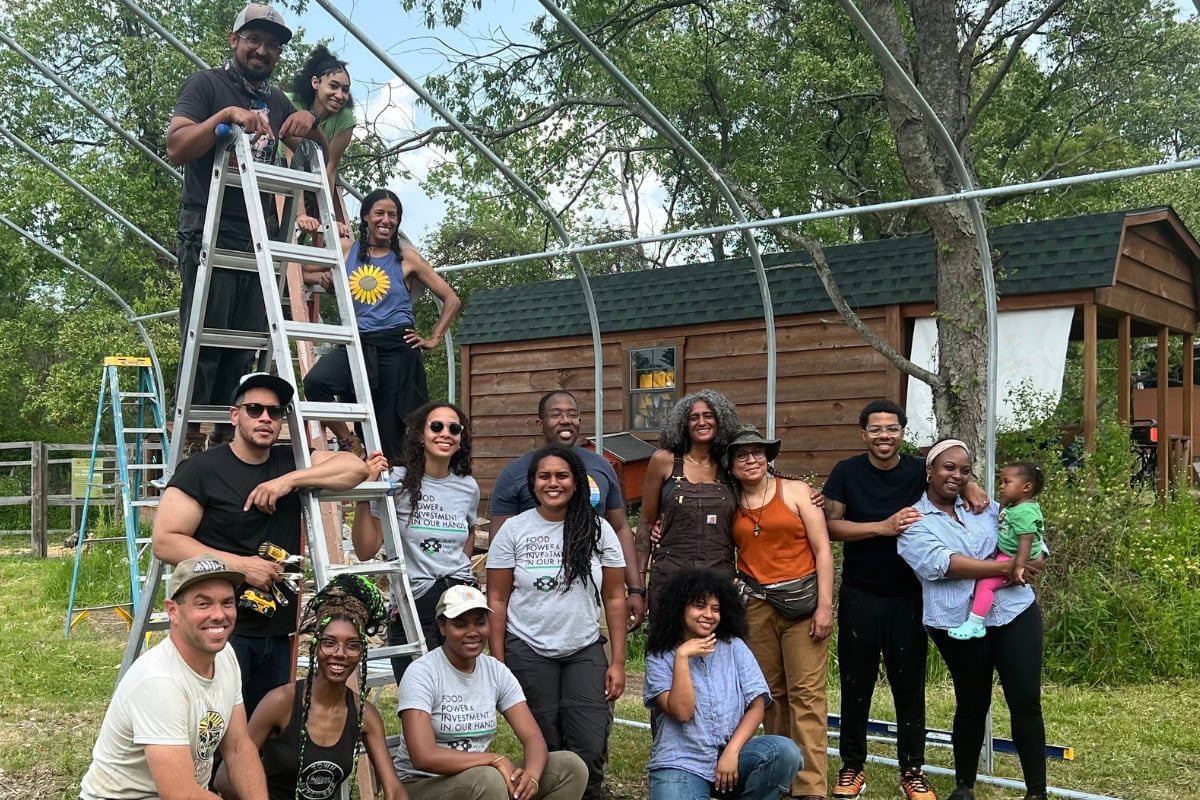
One of the most helpful things we did was create a rapid response team consisting of local folks who are relatively close by. We set up a group chat so that whenever something happened, like Whittaker yelling at us or trespassing, we could call out for support. People would show up to bear witness and be there as physical people to support us, which has been amazing. We were feeling really unsafe and that group has evolved to fill other support gaps, such as organizing court support by taking notes during court dates and keeping us all informed about the outcomes. They’ve also helped with fundraising and planning events. This support has been life-changing and has made it possible for us to endure these challenges.
KB: Were you surprised by the lack of support systems available for people in your situation?
It was heartbreaking to find that nothing was set up to help us, whether as neighbors or in other roles. This lack of support was particularly difficult because the system isn’t built to serve or support victims like us.
AD: Absolutely. Going through something like this is one thing, but seeing firsthand how there aren’t many built-in supports for people facing harassment like ours was really disappointing and shocking. As long as Black people have owned and stewarded land in this country, these kinds of scenarios have continually happened, yet there aren’t established support systems. It was heartbreaking to find that nothing was set up to help us, whether as neighbors or in other roles. This lack of support was particularly difficult because the system isn’t built to serve or support victims like us. I was grateful for the community connections I had before this. I’m thankful I was connected with Black Farmer Fund, which provided amazing resources and support and had local community connections.
KB: Were you able to glean knowledge by asking around? How many others do you know who have been in these sorts of situations?
In my area, there are only a handful of Black farmers, and they’ve all experienced a portion of what I’ve experienced.
AD: Talking to other Black farmers who had experienced similar issues locally was invaluable. Reaching out to people, asking questions, and doing my research have been crucial. My background in organizing helped me transfer those skills into navigating this situation. In my area, there are only a handful of Black farmers, and they’ve all experienced a portion of what I’ve experienced. I understand the history of this country, and I was still surprised at every turn when we very clearly had evidence of illegal activity, and then we would go to court, and there would be zero consequences. Even the nonprofits in my town said they would be able to help if it was abuse by a landlord but unable to support in a neighbor-to-neighbor dispute.
KB: In spite of what you’ve had to deal with, you’ve laid the groundwork to help countless others in similar situations. What have you learned from the last few years—and how do you plan on using this knowledge?
I plan to create systems and networks to support other people in similar situations.
AD: Throughout the process, I’ve learned the importance of extensive documentation of incidents, making spreadsheets and tracking systems, having basic understanding of security, an understanding of the court and legal system and terms within that space. Nobody within the system provided an understanding of these specific terms. I plan to create systems and networks to support other people in similar situations. This includes sharing knowledge about security measures, helping people document harassment, understanding court terms, and setting up rapid response networks. Additionally, I want to assist others in tapping into grants or funding sources. Building networks with others who have been through similar experiences is also essential because it has made all the difference.
KB: It’s easy to see the parallels between someone in your shoes not talking and someone who’s been physically assaulted not talking—when our systems aren’t set up to protect us, we tend to not see the point in doing so. What got you to talk—what was the turning point?
AD: It took a long time to feel ready and safe enough to go public, but doing so has been meaningful. When people hear our story, it helps others who are going through similar experiences feel safer to share their own stories. For example, someone on the local Ithaca Reddit shared an article about our situation and said that they had been terrorized by the same man’s family, leading them to leave Caroline [a town near Ithaca]. They expressed gratitude that I went public, as it validated their own experiences and made them feel less isolated and that was so touching and a reminder that if we do have the capacity and support to bring these things to light, it’s crucial because it validates others who are experiencing the same thing.
The slow building of foundational support, knowing that people were behind me, and having a reliable support network made it possible to go public.
It was a gradual progression rather than a single turning point. Living next to someone who continuously retaliated made it difficult to escape the situation. The slow building of foundational support, knowing that people were behind me, and having a reliable support network made it possible to go public. The support from the Black Farmer Fund and others helped me navigate the process of dealing with the press and interviews. It was a collective effort that allowed me to take that step. Knowing that I could send a message and someone would show up and sit with me if I was feeling uncomfortable, I don’t think I could’ve gone public without that support. And then once deciding to go public, having the support of Black Farmer Fund and people to navigate that process, dealing with press, articles, there’s a lot to it.
KB: Is there anything else you’d like to add?
AD: We are still dealing with daily harassment and abuse, and we are urgently trying to relocate for our safety and to continue our work of building community, growing food, and making medicine. Our GoFundMe is live and has been doing well, with over 1,400 people donating and over 70% of our goal reached. We are making a final push to reach our goal so that we can relocate as soon as possible. If you’re interested in learning more about our work, you can follow us on Instagram at @rootworkherbals or check out our website at rootworkherbals.com.
Editor’s note: Robert Whittaker, Jr. was arrested on August 30 and has been charged with stalking as a hate crime and criminal contempt, for which he pleaded not guilty. Upon his arrival at the courthouse this week, almost 100 people gathered in support of Amanda. The Ithaca Voice has more details, here.
We urge you to contribute what you can to Amanda’s relocation fund; you can do that here.
Comment