

By Mark Bittman with FoodPrint, a website dedicated to helping people understand the full impact of the food we eat on animals, planet, and people.
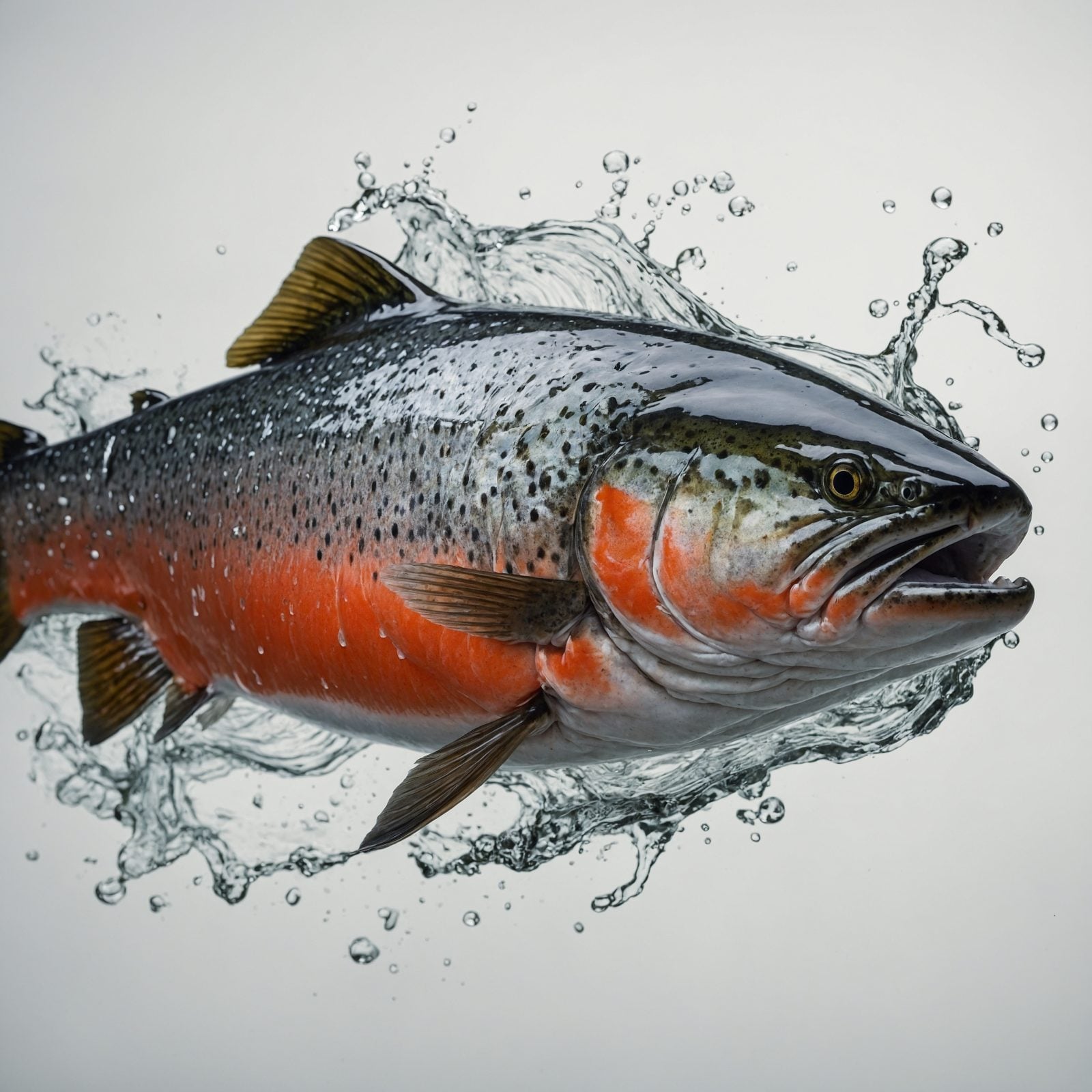
More than 70 percent of the salmon we eat is farm-raised, and that percentage increases if you consider fresh salmon only. Yet this is a relatively new phenomenon. When I was young, and all salmon was wild, my father would go to the “appetizing” store and order “a half of a quarter” of a pound – that is, an eighth – of lox. That stuff was expensive. Now it’s routinely sold in one-pound packages for twelve or fifteen bucks. The question isn’t so much whether, or even how, farm-raised salmon has taken over: It’s whether this is a beneficial thing. Because, although the nutritional profile of farmed fish can be quite appealing, getting it to that state is another matter entirely.
The question isn’t so much whether, or even how, farm-raised salmon has taken over: It’s whether this is a beneficial thing.
In the late twentieth century, thanks to poor fisheries management and the introduction of new, more efficient fishing methods, the world’s fishing stocks began to be depleted. To the rescue, it seemed, came a kind of agriculture of the sea, a way to raise large numbers of fish in captivity, called “aquaculture.” Unfortunately, like many other supposed panaceas in the world of food – the “green revolution” and genetically improved foods come to mind – the modern version of aquaculture turned out to be as much a curse as a blessing once it (inevitably) became industrialized.
What’s the problem with aquaculture?
New forms of aquaculture have suffered from many of the same pitfalls as land-based animal production.
It’s not that the farming of fish must be, by definition, bad. Community aquaculture has been practiced sustainably for centuries, from the traditional fishponds of Hawai’i, to the oyster beds of the Romans, to the fish and rice rotations still practiced in parts of Asia. But new forms of aquaculture have suffered from many of the same pitfalls as land-based animal production: a small number of powerful corporations, seeking to dominate the market, have built highly intensive, vertically integrated systems, that focus on scale of production and maximizing profits, with little care for the environment or animal welfare. Today, aquaculture typically means that, in the open ocean, open-net pens or submerged cages are used to raise carnivorous finfish, especially salmon, but increasingly a variety of other species. These high-input/high-impact adaptations have little in common with the ancient form of food production and are concerning because of their environmental, social, and ecological impacts.

Norwegian salmon farms alone consume fish feed that otherwise would feed some 2.5 to 4 million people in West Africa.
The floating feedlots of industrial aquaculture pollute waters with antibiotics and fish waste; endanger marine mammals that interact with the cages; and compromise local coastal economies that depend on tourism and small-scale fishing. In addition, these aquaculture facilities rely on a vast number of small so-called “bait fish” to make fishmeal and fish oil for feed. Fisheries for bait fish reduce food availability for countless other fish, birds, and mammals. This includes humans: this fishing diverts millions of tons of fish that is a dietary staple for countless fishers in the global South. A recent study confirms this, finding that Norwegian salmon farms alone consume fish feed that otherwise would feed some 2.5 to 4 million people in West Africa. Another study has recently shown that the “conversion ratio” — how much bait fish needs to be killed to feed larger farmed fish — is even worse than previously thought. Furthermore, fish feed mixes increasingly include genetically modified soybeans, corn, and canola, contributing to a wide range of land-based environmental and social problems that come from these intensively raised crops.
There are also economic and political considerations. These large-scale farms are situated in public waters that are leased to large companies who are essentially privatizing (and polluting) what was historically “the commons,” a shared public resource. In addition, although industrial aquaculture operations claim to generate jobs and provide economic benefits for communities, they are subject to volatile levels of demand, which can cripple local economies reliant on the industry. These large-scale operations also put small fisheries out of business through market competition, privatization of access to resources, and degradation of the marine environment and wild fish populations. There is also growing concern around worker health and safety in the industry.
Not surprisingly, the same entities who brought concentrated animal feeding operations (CAFOs or factory farms) to the land are behind the big push for industrial aquaculture.
Finally, outsized corporate power can influence policies that disadvantage community-based aquaculture in other ways, such as ocean grabbing and expediting the permitting of new aquaculture facilities, both of which disrupt responsible fishing and community-scaled, low-impact aquaculture practices, including raising bivalves and seaweed. Not surprisingly, the same entities who brought concentrated animal feeding operations (CAFOs or factory farms) to the land are behind the big push for industrial aquaculture: Cargill, Merck Animal Health, and Sysco are just a few of the corporations behind Stronger America Through Seafood, the industry block wielding their political might in Congress and through federal agencies.
The current state of industrial fish farming
Industrial finfish farming exists at varying levels across the world. Some countries are embracing it, others have banned it, while others are slowly realizing its negative impacts on animal welfare, worker safety, and the overall health of the marine ecosystems.
In Norway, the country with one of the most prolific and technologically-advanced fish farming industries in the world, the government recently implemented a 25 percent tax hike on farmed salmon companies operating in Norwegian waters. These taxes are meant to ensure that coastal communities, which bear the brunt of the damage caused by offshore fish farms, are compensated for those damages.
Iceland is also taking steps to disincentivize the industry. In October, 2023 Icelandic Food, Fisheries, and Agriculture Minister Svandís Svavarsdóttir proposed new regulations for offshore aquaculture after a farmed salmon escape from a Norwegian-owned farm. Since these escapes, farmed salmon, many with sea lice, have been found in 32 rivers throughout Northwestern Iceland, prompting activists to call for stricter regulations. Fish escapes are problematic because when escaped species are not native to an area, they can outcompete native species for food, breeding grounds, and other resources. This reduces biodiversity and alters food webs in the surrounding environment, which can drive vulnerable species to near-extinction.
In British Columbia, Canada, First Nations communities have been spreading the message that offshore fish farming can only exist at the expense of the wild fish populations that they, and other Canadians, have relied on for centuries. The recent limits to offshore fish farming include the commitment from Member of Parliament Joyce Murray to ban open net-pens around the Discovery Islands and the announcement from the ‘Namgis, Kwikwasut’inuxw Haxwa’mis, and Mamalilikulla First Nations that the seven salmon farms operating in their territory must close down. Prime Minister Trudeau committed to removing open net-pen farming in coastal British Columbia waters by 2025.
Some nations, unfortunately, have gone the opposite direction, to deleterious effect. In Chile, a 10-year moratorium on salmon farming ended in 2020. Chileans were reminded of how important their fight is when in May 2023 industrial salmon farming resulted in a red tide off the coast of Patagonia; this harmful algae bloom carried dangerous neurotoxins and shut down the area’s fishery.
Aquaculture in the United States

The United States has been cautious to enter the industrial finfish scene. However, in 2020, then-President Trump signed Executive Order 13921, directing the National Oceanic and Atmospheric Administration (NOAA) to be the lead on promoting offshore finfish aquaculture in U.S federal waters. NOAA was tasked with identifying fish farm sites, called Aquaculture Opportunity Areas (AOAs), and fast tracking a regulatory process in coordination with the Army Corps of Engineers. Currently, there are five proposed sites in federal waters off the coast of the United States. All of them are at varying points within the permitting process and none of them are up and running.
States have their own rules and regulations when it comes to aquaculture in state water (defined as zero to three miles offshore, except in the Gulf of Mexico, where state water is defined as zero to nine miles offshore). States can regulate activities through state legislation, state orders, and Coastal Zone Management Plans, which could impact activities in federal waters abutting state waters.
Some states have been taking steps to prohibit finfish farms in their waters. Alaska, for example, was the first state to ban finfish farms in state waters in 1990. And citizen opposition has prevented a number of companies from Norway and Canada from obtaining permits to develop salmon farms in Maine, which does not yet have a state-wide position on aquaculture in state waters.
Since the mid 1990s, California has been shaping and amending regulations regarding finfish farms. Currently, California prohibits the farming of fish in the salmon family, transgenic fish species, or any exotic finfish in state waters.
In Washington State on Aug. 19, 2017, a Cooke Aquaculture-owned salmon farm pen near Cypress Island collapsed, spilling about 263,000 nonnative Atlantic salmon into the Salish Sea, creating an immediate ecological threat. This triggered a ban on salmon farming (Cooke switched to growing steelhead trout), and then paved the way for the Commissioner of Public Lands, Hillary Franz, to issue an executive order in 2022 to prohibit all forms of finfish aquaculture, calling for the removal and ban of all net pens in state waters.
Sustainability in aquaculture
Low-input aquaculture, such as farming of seaweed and shellfish, has always been more ecologically sustainable and culturally important to many coastal communities; it continues to show promise as the means to expand farmed seafood production and keep control in communities through local ownership, processing, and distribution mechanisms.

Seaweed has been found to sequester carbon, while providing economic resilience to local communities. Oysters are fast becoming a sustainable seafood source that builds local economies and provides nutritious protein to local people.
Recirculating farms, which use clean recycled water as a basis to grow food, also have the potential to empower communities while growing culturally appropriate food. These farms can grow plants (hydroponics), fish (aquaculture), or both plants and fish together (aquaponics).
How to shape the future of sustainable aquaculture
To shape a future that may inevitably be more dependent on aquaculture, there are several measures people can support to ensure we preserve healthy oceans, have reliable access to seafood, and protect community level, values-based seafood systems:
- Industrial offshore fish farming should be banned outright.
- Aquaculture facilities should raise species that do not rely on chemicals and antibiotics, and have minimal impact on marine life.
- Community-based farming of low-trophic species that minimize environmental impact – such as oysters, mussels, and seaweed – should be prioritized and protected.
- Policies should be put in place to protect oceans from profit-driven initiatives that deprive coastal fishing operations of opportunity and financial security.
- Aquaculture systems must be scaled to methods that do not damage marine ecosystems nor harm wild fish species and water quality, and that will not displace responsible fishing.
- Working waterfronts and values-based aquaculture should be supported through investments, policies, and market access.
We cannot afford to make the same mistakes in aquaculture that we have repeatedly made in agriculture.
So the big picture should look something like this: All wild fish – even so-called “less valuable” ones – should be protected from overfishing, and their stocks well-managed. Even if we do this, there is no doubt going to be a need for aquaculture to supply enough seafood for the world. That means that the environment must be protected from all forms of aquaculture whose impact is largely negative, for whatever reason. We cannot afford to make the same mistakes in aquaculture that we have repeatedly made in agriculture.
We should probably shift our perspective as eaters, no longer expecting such an abundance of the most popular two or three kinds of seafood, the farming of which does so much damage.
But what about today, what should our eating practices be? We should probably shift our perspective as eaters, no longer expecting such an abundance of the most popular two or three kinds of seafood, the farming of which does so much damage. As for me, for example, I don’t eat salmon in restaurants (unless I’m in the Pacific Northwest, where it’s likely to be wild or at least, when claimed to be wild, believable), and I far prefer frozen Pacific (wild) salmon to farmed fresh salmon at home. That’s my not-badly-informed recommendation for everyone.
2 Comments