


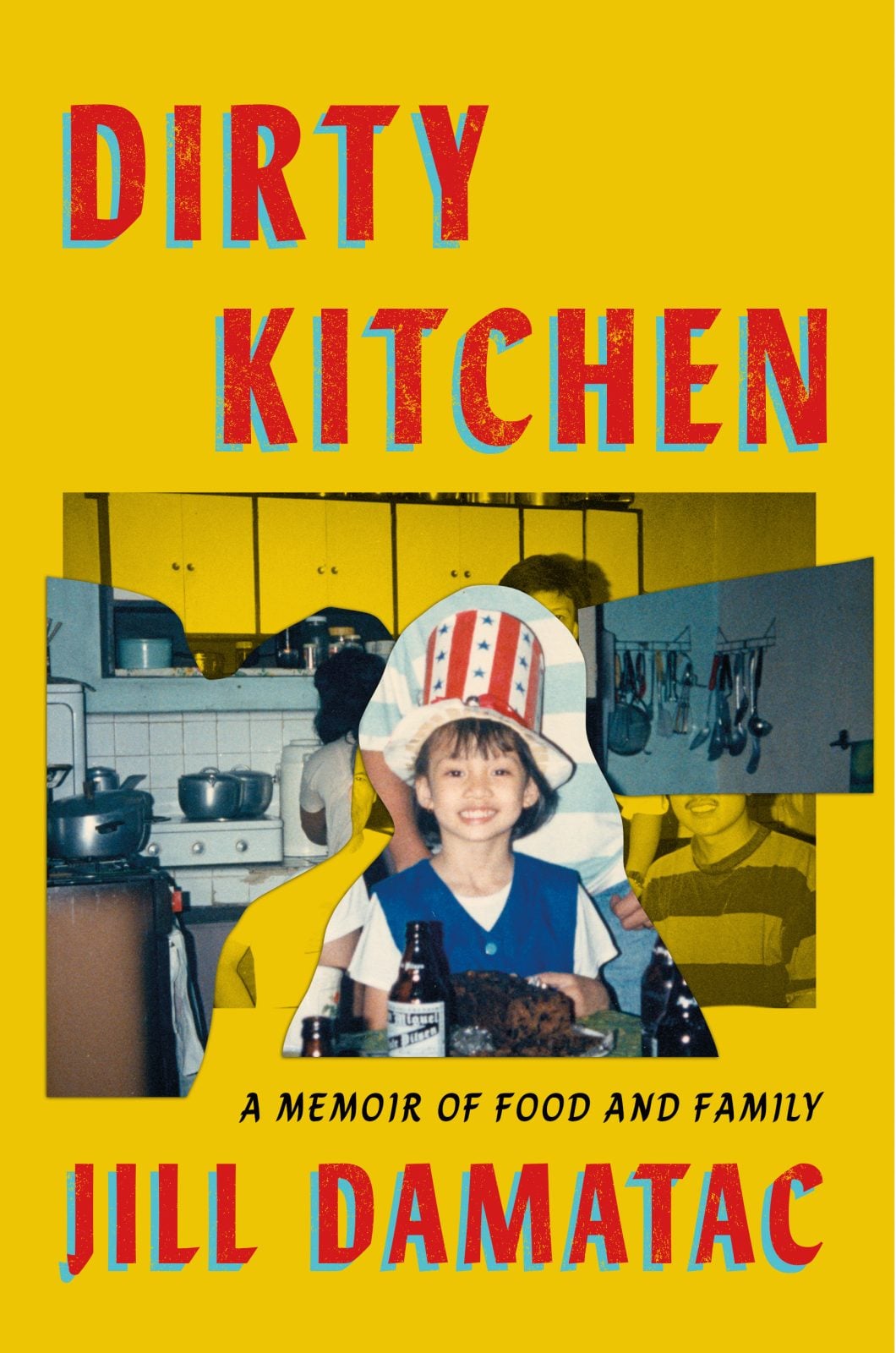
The following excerpt is from Dirty Kitchen: A Memoir of Food and Family, by Jill Damatac.
Sisig is a dish of making do. Of eating what must be eaten in order to survive. It is a reminder of what has been taken from our islands, of the unwanted we have been forced to swallow. Of what remains, and how we have adapted. It reminds you, as it sizzles in its cast-iron pan, of transformation brought only by hunger, fire, and acid. It reminds you, as your teeth gnash on the crispy, chewy, and tender pig flesh, of all that it is made of. It reminds you, as its citrus-sour, chilied heat endures on your tongue, of how to swallow undesirable truths. Of how to take the unwanted, the discarded, and turn it into something desirable.
Sisig is what Filipinos eat when all the best parts are taken by occupying American forces.
“When you’re drunk, this is exactly what you want,” Anthony Bourdain said of sisig during one of his show’s episodes in Manila. In truth, sisig is what is wanted when one’s country is leveled by centuries of occupation. When the land of one’s birth is a case study of US military-occupied necroeconomy. When its natural riches are pillaged by empires and multinationals. When one’s family is dispersed around the world for remittance purposes, sisig is a source of comfort, fatty and crisp. Sisig is what Filipinos eat when all the best parts are taken by occupying American forces.
And besides, sisig is excellent for brunch.
Green mango, garlic, salt, chilies, vinegar: sisig in its original form did not contain meat. It was fresh, vegetal, and raw. It was a side dish, its acid balancing the main ulam’s salt and fat. It comes from my mother’s people, the Kapampangan. Descended from Indonesian tribes, they settled in our central lowlands alongside our true aborigines, the umber-skinned Aeta. Born on lava-fertile soil, in the unpredictable volcanic shadows of Arayat, Pinatubo, and Negron, the Kapampangans understand the inevitability of fiery, life-giving destruction, whether it be from the gods or from bible-bearing mis- sionaries. Unlike other, less wise people, my mother’s people knew that the world came to be by accident. They understood our place in the universe, that we were never its center or its intent. And that like all living beings on this earth, we come from survival, not creation.
The Spaniards descended upon our land in the 1500s. My mother’s ancestors, feet planted on unpredictable volcanic soil, understood the fickleness of life and the futile, deadly cost of war. They did not fight and retreat into unconquerable mountains, as my father’s Cordilleran ancestors did. No, the Kapampangans chose to stay and survive. Their survival among the Spanish lasted centuries, became instinct. This instinct has carried my mother’s family, my mother, and our family through generations. Through empires, dictators, migrations, and other ruptures.
Kapampangan survival was not without cost or pain. As the collective stomachache of Spanish colonization took hold, sisig underwent its own holy transfiguration, going from occasional animist remedy to a daily part of the Jesus-blessed family meal. With scooped fingers and a thumb, elbow resting on a raised knee, Kapampangans would gather a pat of rice, some ulam, and a green hunk of sisig on the side. The chili-hot, acidic corrosion hardened their stomachs, balancing the bitterness blooming, silent and unspoken, in their blood.
In 1952, the Philippines was young and thought it had found a savior in the United States. The Americans, having relinquished its colonial grip on our islands six years before, in 1946, were an immovable stain on our soil. They were comfortable on their 147,000 acres of military-reserved land, which they took from the Kapampangans. On that land, the cooks at Clark Air Base fed the American soldiers only the best cuts of pig. They had bacon and sausages for breakfast, ham and cheese sandwiches for lunch, and pork chops with imported applesauce and mashed potatoes for dinner, all the better to flex their military-industrial might on our soil. Kapampangans, hungry outside the reservation’s walls, watched the unwanted pig parts as they were thrown away. Trotters and heads piled high, rotting in the Filipino sun, year after starving year.
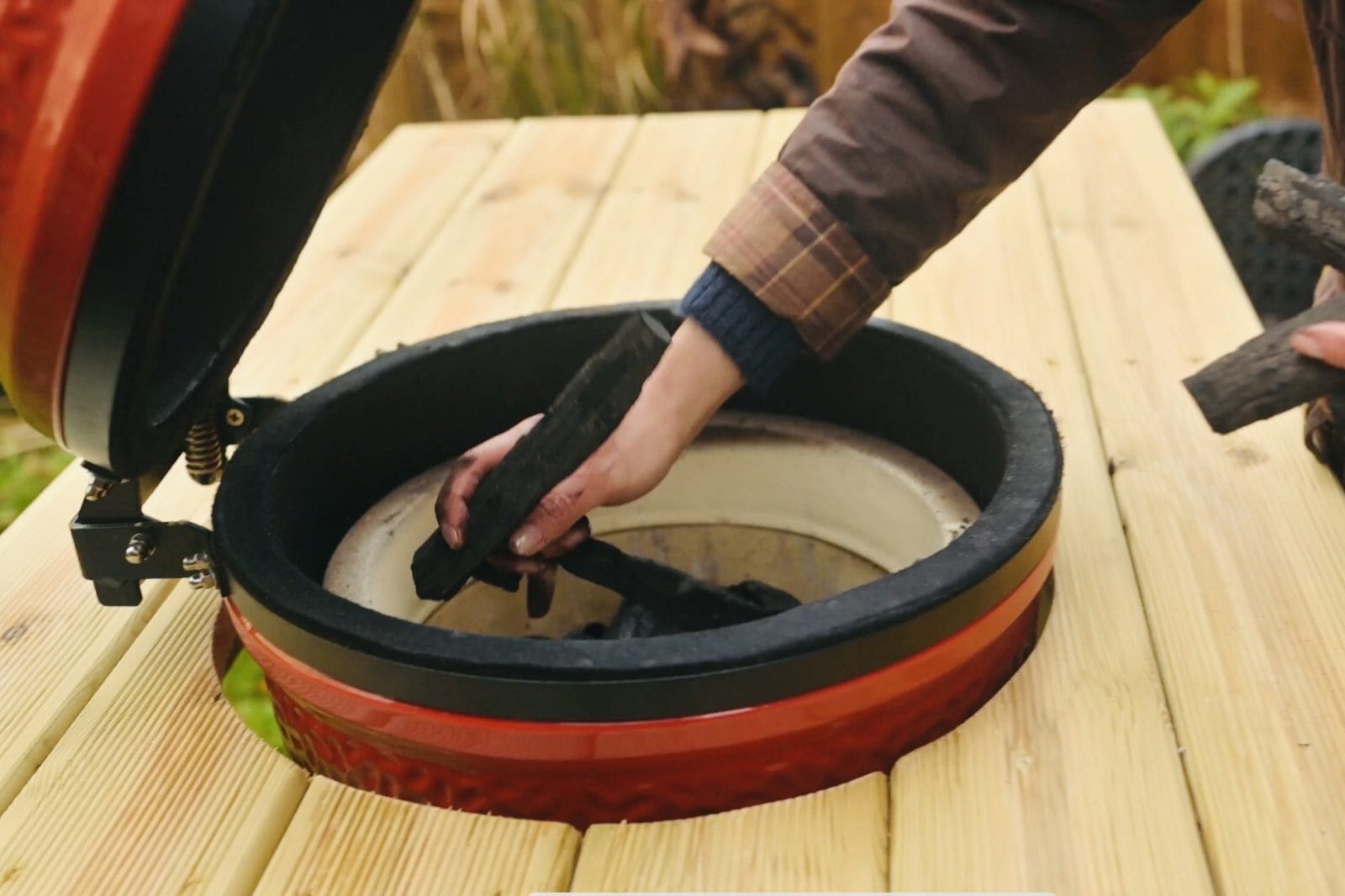
In Pampanga, my mother’s family’s homeland in the center of the Philippines, the addition of pork to vegetable sisig was just beginning, though we do not know exactly when. Perhaps it began in 1969, as the nation descended into the debt crisis. Perhaps it began in 1972, with the declaration of martial law, ginned up by Marcos as an anticommunism strategy, while people starved and rioted in the streets. During those years, the Kapampangans bargained with the Clark Air Base commissaries. They offered to buy, on the cheap, the discarded cuts of slaughtered pigs. All the bits the Americans refused to eat. They took these pig parts home—snouts, cheeks, feet, ears, livers, hearts, intestines—and cleaned them. Boiled them so that the embedded dirt would rise, like scum, to the water’s surface, skimmed off with a bamboo spoon. Roasted them over open flame or seething charcoal, so that the pig skin went golden brown, like ours. And then, the Kapampangans took these boiled, roasted pig parts and chopped them finely, into bits small enough to stir in with their green mango sisig. Slowly, the discarded offcuts of meat took over the dish.
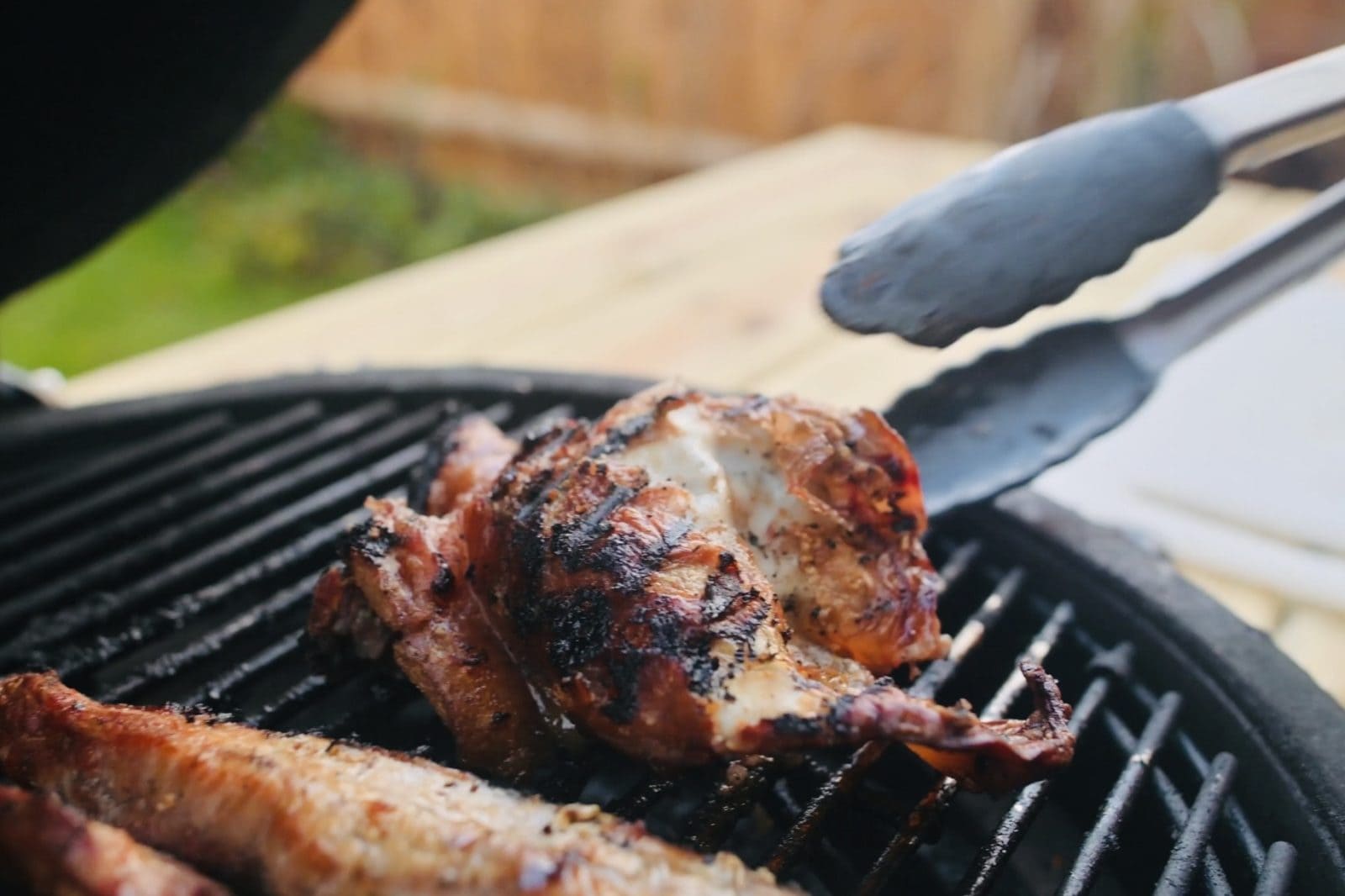
In those martial law years, joy was hard to find. Aling Lucing’s pork sisig made each day somewhat bearable.
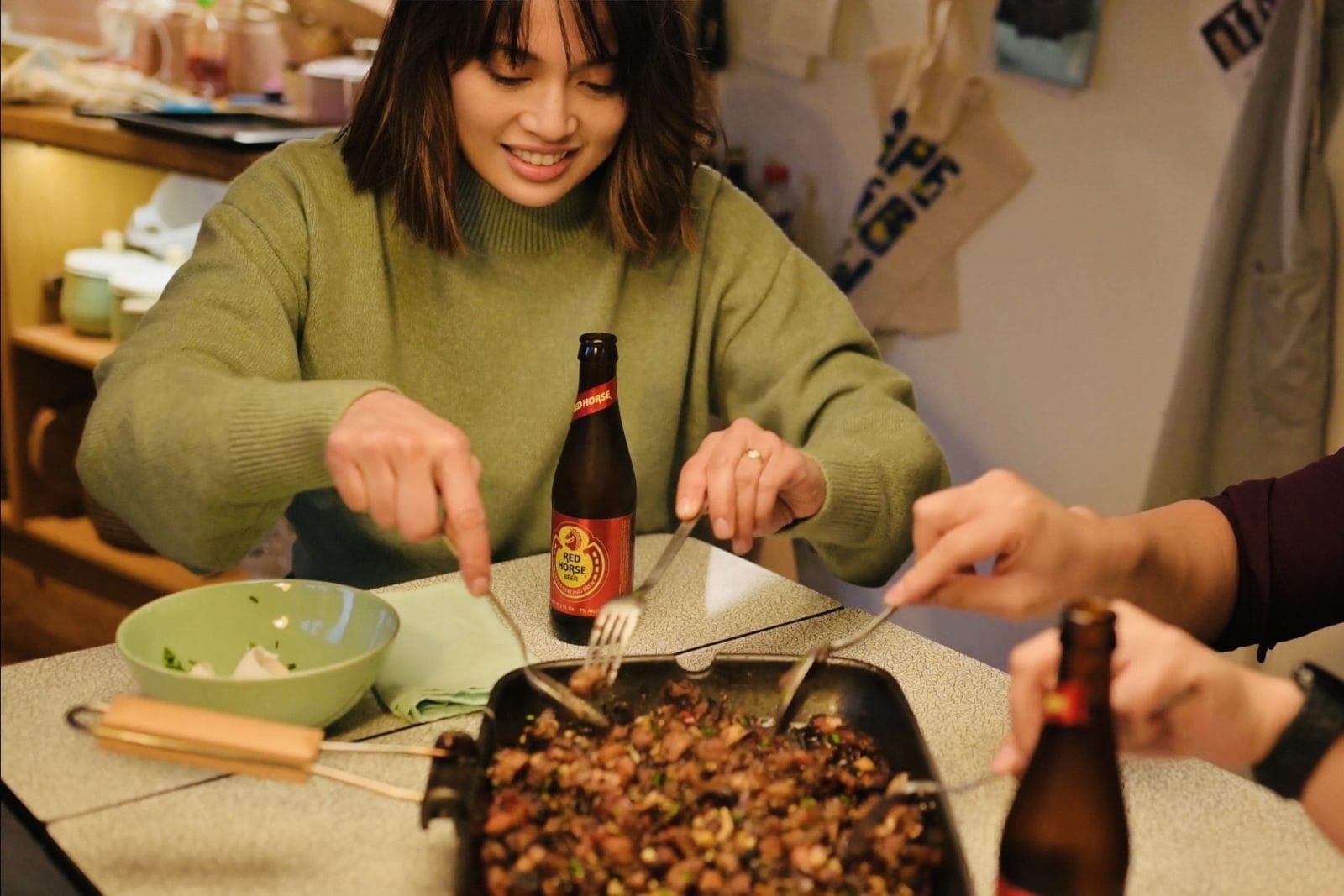
Modern sisig was born in 1974. That year, a woman named Lucia Cunanan began to sell her version of sisig at her food stand in Angeles City, just outside Clark Air Base. Aling Lucing, as she was called, did modest business before she created pork sisig as we know it. Made only of salvaged pork cheek and ear, her thrice-cooked sisig, seasoned with chilies and garlic and finished with Maggi seasoning, became an instant hit. Tatays, Titos, and Lolos came to Aling Lucing’s. They sat in groups, drank San Miguel beer, sang Frank Sinatra and Elvis Presley to someone’s guitar, ate pork sisig as pulutan into the night, until curfew, when Marcos’s patrols made them go home. In those martial law years, joy was hard to find. Aling Lucing’s pork sisig made each day somewhat bearable. Made it possible to get up the next day to make do and survive.
Jill Damatac is an ex-undocumented Filipino American-raised British writer, photographer, and filmmaker. Read more about her here.
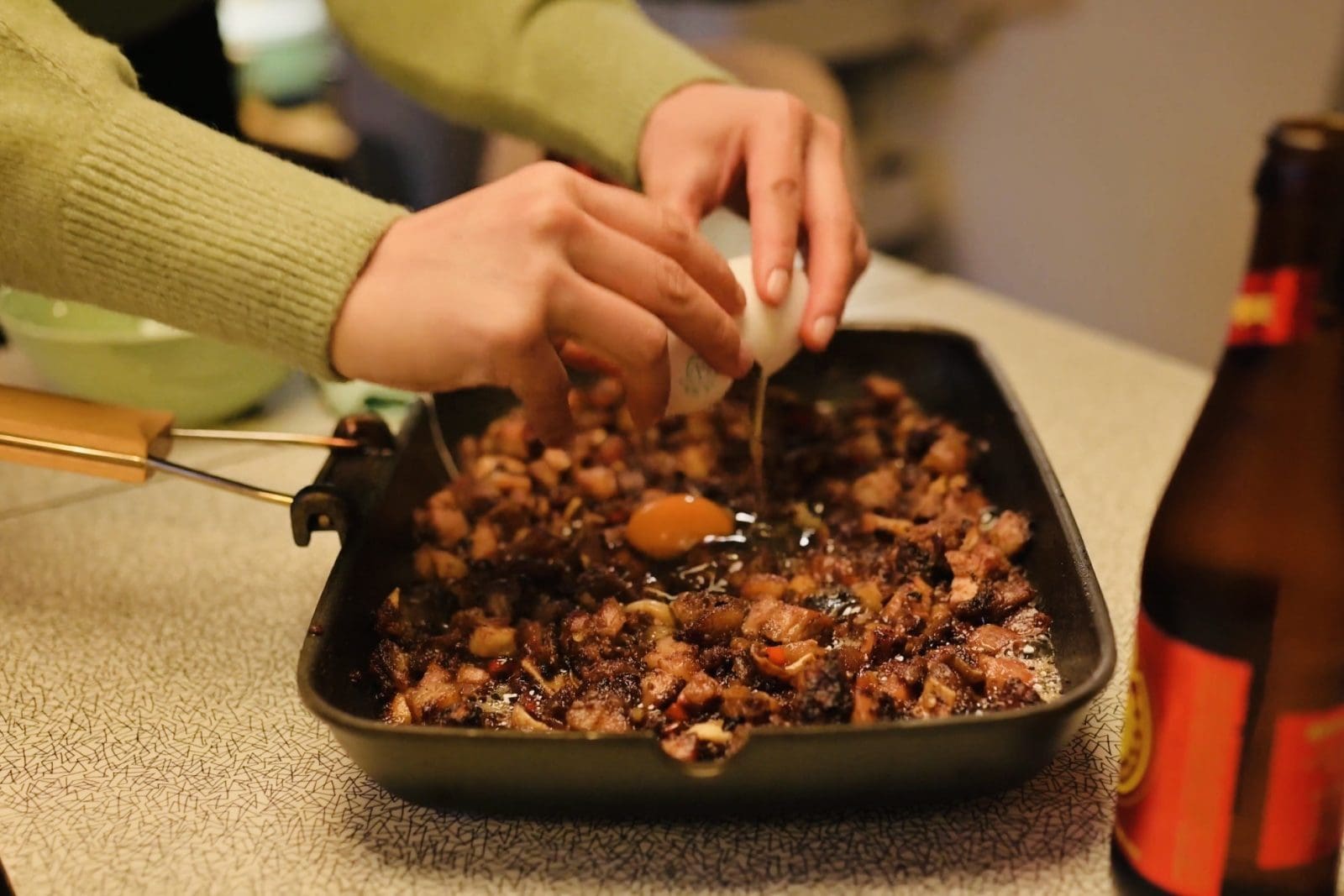
Sisig na Baboy (Pork Cooked Three Ways)
Comment