

You asked, and we answered. We love hearing from our community, and there’s nothing better than sparking real conversations around your questions. Got something on your mind? Send it our way. You might just be featured in an upcoming “Question Mark” email. Let’s keep the dialogue going—we’re listening.
Q: I do want to make turkey on Thanksgiving; I don’t want the traditional whole roasted turkey. What are some less cumbersome, delicious, Bittman-esque ways to go about this? – Michele
A: Glad to hear it, as I rarely do a whole turkey myself. That being said: You may remember a New York Times piece I wrote in 2002 about spatchcocking your Thanksgiving turkey; the Times subsequently called it a “revolutionary approach,” which—allow me to be immodest for a minute—I agree with. Spatchcocking, if you’re not familiar, is cutting out the backbone of the bird and spreading the bird out flat before roasting; it’s commonly used with chickens. You can do it yourself or have your butcher do it for you. Either way, it’ll cut the cooking time of the average turkey by about 75 percent (and it looks beautiful). Roasted at 450°F, a 10-pound turkey will be done in about 45 minutes, and it will be more evenly browned (all the skin is exposed to the heat), more evenly cooked, and moister than birds cooked the traditional way.
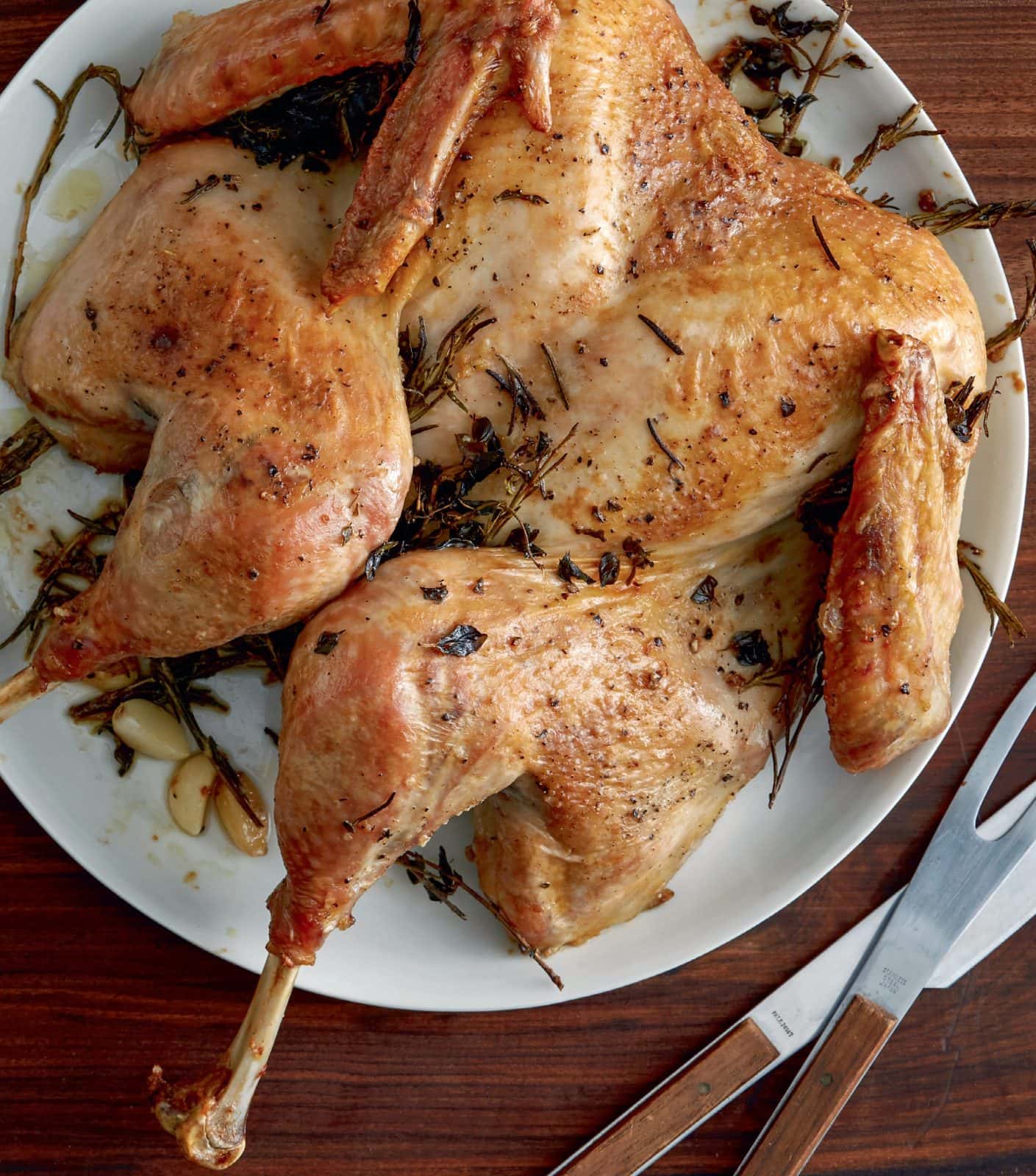
Okay, but that’s still a whole turkey. Here are a few ‘Bittman-esque’ ways to do turkey parts:
- Turkey with Mole Sauce: This is dark meat turkey only (the best, in my opinion), and uses an extremely simplified version of a dark, rich mole that, not atypically, includes a bit of chocolate, for both flavor and color, a practice that does not, as some people believe, make the mixture sweet or even chocolaty. In fact, the presence of the chocolate should go undetected. (The main recipe here is for chicken; there are instructions for subbing in turkey within.)
- Mushroom and Cranberry Turkey: Here, the turkey parts are braised, with a not-so-standard tart fruit sauce whose acidity cuts through the richness of the meat. (The recipe here is for chicken; you can sub in turkey seamlessly.)
- Caveman-Style Turkey Legs: A grilled option, because I firmly believe that grilling has a home in every season. This is state fair food at its finest, and I get why: First is the smoky flavor and pleasant chewiness of the darkest, richest part of the bird; it’s also fun to indulge in your primal appetites and gnaw on a supersized drumstick. Wonderful hot of the grill, at room temperature, or even cold.
- Boneless Turkey in Packages with Orange: This method—traditionally called cooking en papillote—is simple and foolproof, using either parchment paper or aluminum foil to wrap the chicken and its seasonings. It’s also impressive to serve the packages at the table and is basically work-free, so you can focus on your sides. (Again, the recipe here is for chicken; you can sub in turkey seamlessly.)
Let us know what you end up doing! – Mark
Q: Oh my gosh! The photo of the Oatmeal Cherry Pecan Cookies looks AMAZING! Looking through the recipe, I think I can veganize it but wanted to get your opinion. Here’s my thinking:
– vegan “butter” (margarine) for the butter, though browning may be out. Maybe just go with two sticks of softened butter?
– egg replacer or flax egg for the whole egg + yolk
I think the rest should be straightforward. Sound like a reasonable plan? – Chris

A: We haven’t tested this recipe with vegan butter or eggs; we find doing a 1-to-1 substitute of dairy butter with vegan butter doesn’t always work, and the results can be heavy and stodgy depending on the vegan butter, because they vary so widely. In fact, when Mark develops vegan recipes, he chooses whole, minimally processed foods rather than plant-based substitutes for meat and dairy. The non-virgin coconut and avocado oils—and even liquid vegetable oils—are more predictable in baked foods especially. For eggs…though we like the easy flax/chia mixtures for converting other recipes to vegan, when we develop originals sometimes we used silken tofu, sometimes chickpea flour and oil or water, sometimes nothing was needed. Tofu and chickpea flour blends more closely deliver the protein and moisture of eggs. Whatever you choose to try, please keep us posted and send photos if you can. – Kerri
Q: In trying to move to a more plant-based diet, I have begun to appreciate the many virtues of beans, and I’ve found that I like them with different textures for different uses: sometimes I like them creamy, sometimes I want them to keep their shape for use in salads or grain bowls, etc. Can you give me some guidance on cooking methods to achieve different textures? – Jack
A: We are huge fans of beans ourselves, as much for their flavors and textures as for their nutritional value. So welcome to the tribe, and here’s a bit of cooking advice.
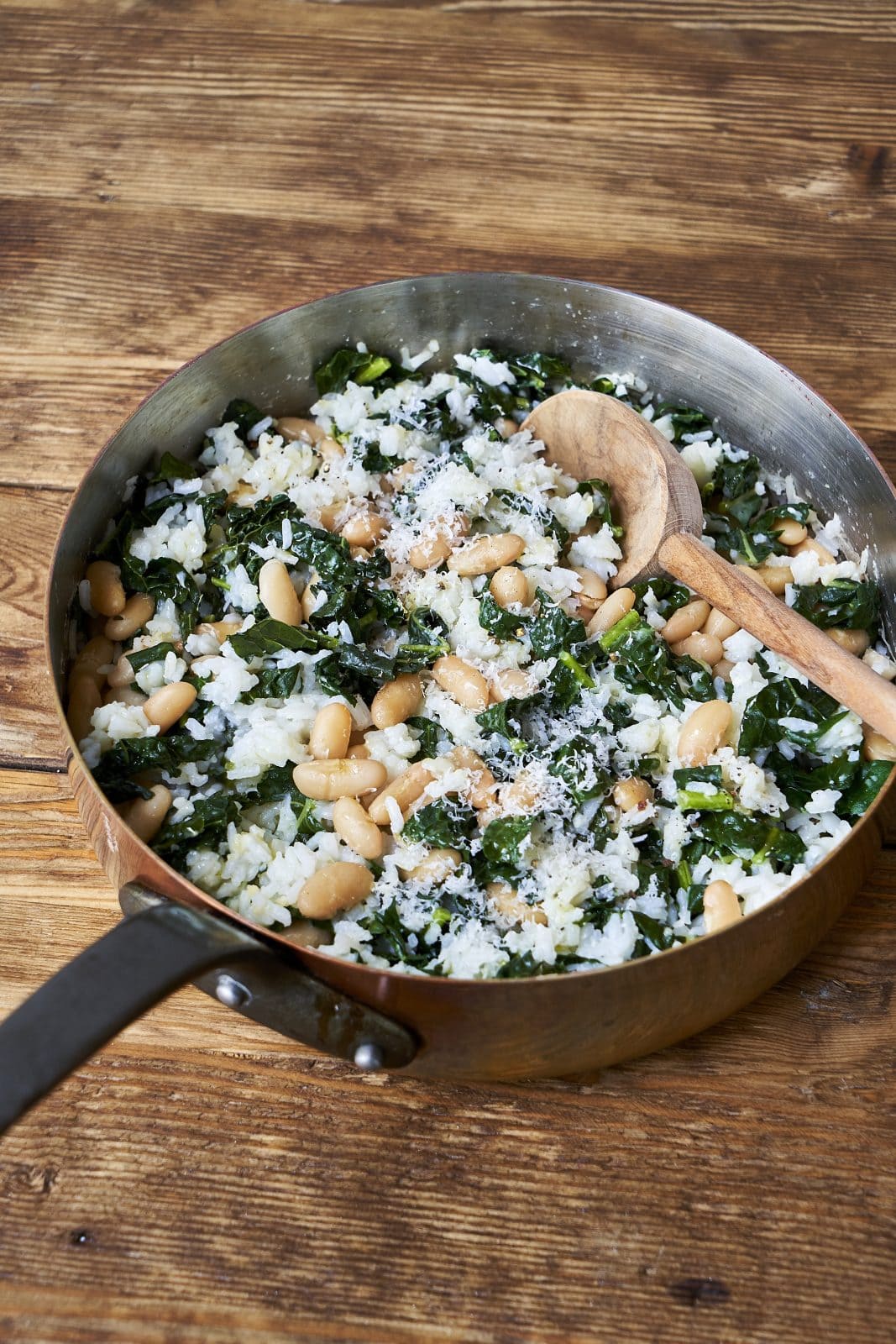
For Creamy Beans
- Don’t add salt until the beans are tender. Adding salt to the water at the beginning will help the beans maintain their shape.
- Cook the beans at a more vigorous simmer, or cook them longer, until they start to break apart.
- When the beans are done, remove up to 1 cup, mash them, and return them to the pot. Or put an immersion blender in the pot and whirl it around once or twice.
For Creamy and Rich Beans
- Add 1 to 2 cups any milk to the beans toward the end of cooking. Dairy and nondairy are both fine; coconut is a lovely mix of rich and sweet. Butter or a flavorful oil like olive or a nut oil will have the same effect; add up to ¼ cup anytime during cooking. The same amount of lard or bacon fat puts the beans over the top.
For Beans That Keep Their Shape for Salads or Grain Bowls
- Add salt to the cooking water when you start.
- Don’t cook the beans at more than a gentle simmer. If they boil, they’ll bang against each other and break apart.
- Don’t stir the beans any more than is necessary to keep them from burning on the bottom.
- Reverse- soak: Cook until they’re not quite edible, then turn off the heat and let them soak in the hot liquid for up to an hour to finish cooking.
- Drain the beans (reserve the liquid for another use) and run them under cool water to stop cooking; shake the colander gently without stirring.
– Mark
Comment