

This piece comes to us from David L. Katz, Founding Director, Yale University Prevention Research Center; Past President, American College of Lifestyle Medicine; and co-author, with Mark, of How to Eat. Follow him at David L. Katz, MD, MPH.
Some quite venerable institutions, the AMA noteworthy among them, are celebrating the release of the new Dietary Guidelines. I can, up to a point, understand the impulse. In accord with every set of such guidelines since the first in 1980, these guidelines encourage consumption of real food, not Frankenfood (once known as junk food, now generally known as ultraprocessed food). These guidelines include, if not emphasize, vegetables, fruits, legumes, nuts, and seeds. They allow for—albeit very begrudgingly—whole grains. They further advise against eating too much, though providing no particular guidance about how to do this.
There is a bit of wholesome baby in the mix here, but it’s floating in a sea of sullied bathwater.
So, one could be forgiven for thinking that of Michael Pollan’s famous, tripartite insight, these guidelines encompass two of three, and flirt with the third. That, however, is an extravagantly generous assessment. There is a bit of wholesome baby in the mix here, but it’s floating in a sea of sullied bathwater.
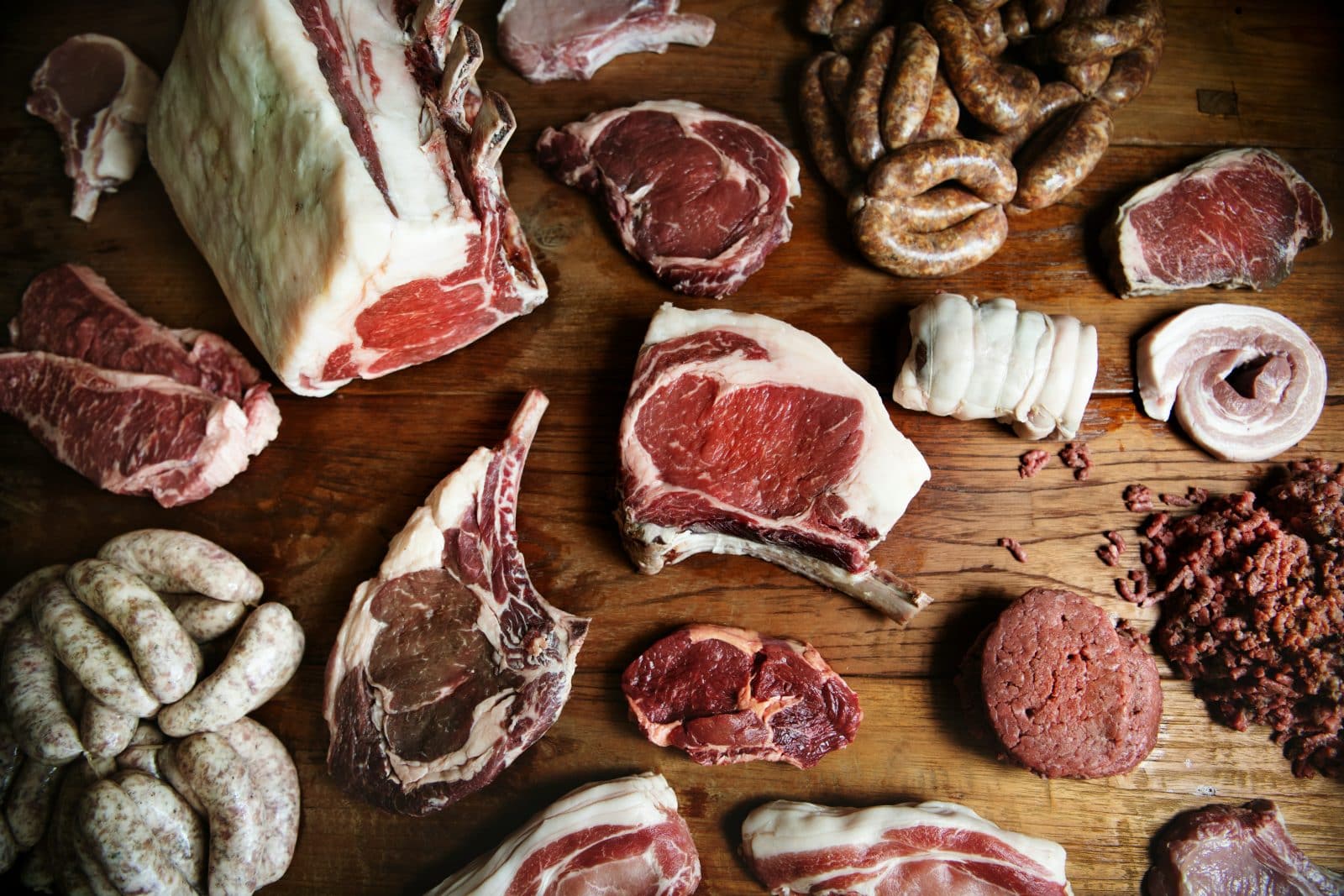
For starters, these guidelines encourage meat and (full fat) dairy intake for all, every day. Yet even these guidelines acknowledge, in passing, the importance of dietary fiber, consumed well below recommended levels. The problem, of course, is that, unless total eating—and thus calories—increase, eating more of X means eating less of Y, a simple point of logic to which these guidelines are willfully blind. Accordingly, these guidelines potentially lead the population to getting even less of what is already deficient.
The guidelines lead, as well, to consuming more of what is already in excess in the American diet. A discussion of saturated fat should be more extensive, and nuanced, than this platform allows. All saturated fatty acids are not created equal—another point to which these guidelines are inattentive. In general, though, the typical American diet provides far more saturated fat than is optimal for healthy metabolism. The excess is bad not because saturated fat is evil, but because too much of what is already excessive is at best useless (i.e., coals to Newcastle), and in this case, it is overtly harmful. (Among the factors responsible for a population-wide decrease of over 80% in heart disease and premature death in North Karelia, Finland, was a switch from saturated animal fats to unsaturated canola oil.)
While prior Dietary Guidelines for Americans have suffered many important shortcomings, I can recall no prior instance in which they were factually wrong.
These guidelines conflate all varieties of dietary fat, ignoring the massively differential health effects. They conflate omega-6 and omega-3 essential fatty acids, while the typical American diet provides, if anything, too much of the former and too little of the latter. They identify olive oil as a source of essential fatty acid, when in fact the fatty acid that predominates in olive oil, oleic acid, is a monounsaturated fat, not an essential fatty acid. Essential fatty acid levels in olive oil are generally branded as “trivial.” While prior Dietary Guidelines for Americans have suffered many important shortcomings, I can recall no prior instance in which they were factually wrong.
Nor can I recall a prior instance in which the guidelines were inconsistent with themselves; these are. These guidelines retain a recommendation to limit total daily saturated fat intake, but they also recommend foods incompatible with that target. The three daily servings of full-fat dairy advised provide over 13 grams of saturated fat, and one serving of beef provides 5 to 8 grams more—leaving, rather unrealistically, no room in the diet for any more. If the diet in question includes cheese along with milk, and bacon or poultry along with beef, the threshold becomes quite unattainable.
This, I suspect, is by design. Reading the relevant tea leaves, I infer the ideologues responsible for these guidelines really wanted to expunge the saturated fat restriction altogether. In the end, though, they didn’t dare, because the evidence opposing them is simply too vast, consistent, and strong. Again, not because saturated fat is evil; simply because we overconsume it, and more of what is in excess does us harm. Rather than risk dying on this hill in the court of public opinion, the Guidelines cabal (not to be confused with the top-quality scientists who generated the Dietary Guidelines Advisory Committee Report) decided to retain the saturated fat limit, while negating it with their food recommendations. An attempt, we might say, to have their steak, and eat it, too.
This recommendation is a threat not only to human health, but to that of the planet, to say nothing of the steer.
Regarding that steak: A carefully vetted, multidisciplinary team of scientists scoured the literature for two years and concluded that intake of red meat in America should be reduced, and that there was no evidence on which to advise higher protein intake. The new Dietary Guidelines went the other way on both topics, because one person without any relevant expertise, and his acolytes, were so inclined. Why shouldn’t the health of 330 million people be subject to the whims of one non-expert source? Who needs evidence, anyway!
This recommendation is a threat not only to human health, but to that of the planet, to say nothing of the steer. Let’s not be coy about that final entry; mass consumption of beef and animal foods at prevailing (and now, recommended) levels requires mass production. Mass production of animal food in turn results in factory farms, the cruelties and brutality of which loom large in the annals of human shame. These guidelines, silent on this matter, are something of an assault on the conscience of any human who cares at all about wanton cruelty on their daily menu.
As for planetary health, the global demand for, and corresponding production of, beef are among the signature sources of environmental devastation. There are many components to this troubling tale, but suffice to say that if we lose the Amazon Rainforest entirely, it will have much to do with our penchant for hamburgers.
Silence on the topic of planetary health might suggest that planetary and public health can be unbundled. They cannot. Ineluctably, our assaults on the former redound to the grave detriment of the latter.
In some ways, I am tempted to wish the new dietary guidelines had been even worse than they are, that they had fully indulged their ideological inclinations. That would have allowed more readily for universal indictment.
I wish, of course, that these dietary guidelines had actually conformed to the science on which they are supposed to be based. Since they did not, I encourage all concerned to ignore the mess made by politicians and ideologues, and turn instead directly to the highly credible source material. As it is, alas, the hard work of the Dietary Guidelines Advisory Committee has lent scientific credibility to guidelines that depart substantially from the science.
In some ways, I am tempted to wish the new dietary guidelines had been even worse than they are, that they had fully indulged their ideological inclinations. That would have allowed more readily for universal indictment. There is just enough good in here to blur the boundary, for the untrained eye, between baby and bathwater.
Comment