


The case for congee
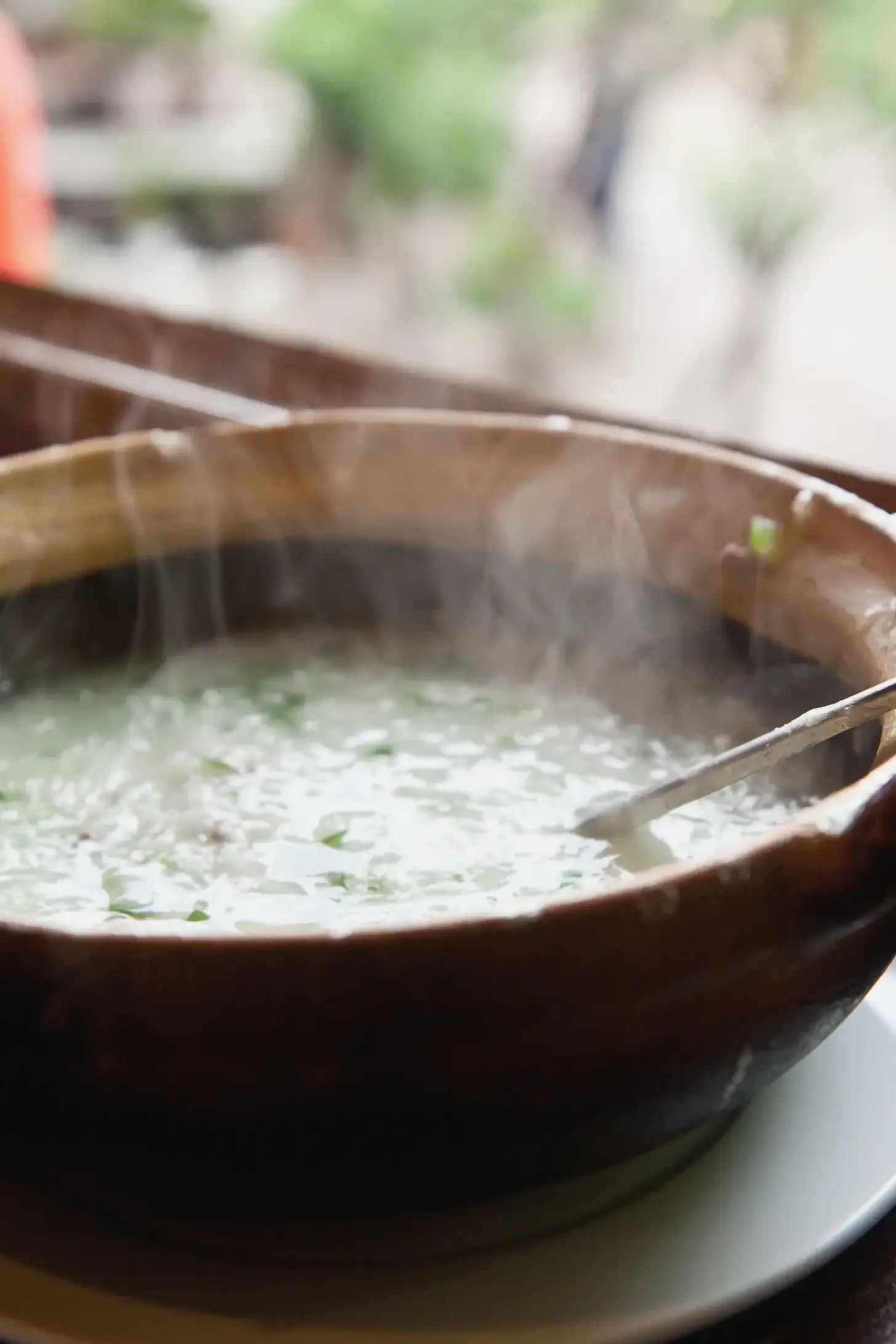
Before working for Mark, I was a restaurant writer for the daily in Pittsburgh, and over the course of my seven or so years there, I was smitten with the city’s Chinese restaurants.
Pittsburgh and Chinese do not seem to go hand-in-hand, but the city, with a handful of universities in the region, has been attracting thousands of Chinese students prior to 2010, with over 5,000 attending the University of Pittsburgh and Carnegie Mellon alone, pre-Covid. As a result, terrific regional Chinese restaurants have flourished: a spot that specialized in soup dumplings and hand-pulled noodles; a James Beard-nominated Sichuan place owned by an amazing chef from Chengdu; and a semi-secret Xi’an-restaurant-within-a-restaurant called Sakura Teppanyaki and Sushi, run for 14 years by Fengping Geng and Feng Gao, who are originally from the autonomous region of Ningxia in northwest China.
Why did they open a sushi place? The couple assumed it would be more popular. But Chinese students began requesting dishes from home, so eventually, they broadened the menu. When the restaurant added weekends-only congee several years after opening, it became the restaurant’s most popular meal.
This is how I ended up at Sakura, years ago. While I love their hot oil noodles, Chinese cabbage, and a pickled beef so named for its pickled mustard greens and chiles, I know that Ping’s favorite dish is unadorned rice congee along with the version that hails from her hometown made with corn.
In light of the Bittman Project’s unofficial breakfast week, and because Ping is the person I think of whenever I eat congee, I decided to call her. Now, however awkward this is going to sound, I also can’t help but think of my Chinese friends and Chinese communities after last week’s anti-Asian (and misogynistic) violence in Atlanta. It makes me enraged, of course, and my instinct is to connect with my friends in Pittsburgh and see how they’re doing; it reinforces my commitment to supporting them and our Asian communities in general. Now and always.
Some highlights from the call:
Melissa: Hi, Ping!
Ping: When are you coming to Pittsburgh?
When I’m vaccinated! I miss you! Talk to me about when you serve congee at your restaurant. How long had you been open when you started weekend congee?
I think it must be after 5 years. We had been getting a lot of Chinese students and we didn’t have Chinese brunch in this area and all the Chinese students kept coming by to ask for it. So I said, OK, and put together a small menu, just a few items, like plain congee and another one with chicken or pork. (Note: You can also get add-ons like youtiao donuts and century eggs among other things.)
Now, not only Chinese people come for congee — it’s everyone. I’m very glad.
Can you walk me through how you make it?
My husband wrote it down. For the first one, start with regular rice — one cup rice, and 10 cups of water. Rinse the rice, then add the water, bring it to a boil, then turn down the fire to simmer for an hour. The second way is to use 1 cup regular rice, and simmer it in 10 cups of water for 2 hours. With meat, use pork tenderloin and cut it into small pieces, like the size of beans. Make congee as you would and after 20 minutes, add the meat and as much chopped ginger as you want, a little salt and white pepper, and a little cooking oil, and stir. When you’re finished cooking, sprinkle with some chopped scallions.
Congee is something that you were telling me you give babies, right? Like, the liquid?
Yes. When you have a baby, China doesn’t have formula, so they’ll often use the liquid from congee, not the rice itself, and feed the baby sips of the sticky liquid.
But really, everyone eats congee for breakfast. Congee with pancakes, congee with steam buns, congee with refried dough. It makes your stomach feel good. It’s a small meal, but you can save your big meal for lunch.
I’d read about congee for years before trying it. The savory Chinese rice porridge, also known as jook, was not the stuff of your ordinary Chinese joint. Yet I think it is among the world’s best breakfasts, especially after a night of indulgences.
Jook can be hard to find if you don’t know where to look. Even today, you often need access to a Chinatown, and you usually need to be out and about in the early morning. I first encountered jook when steered to a well-known but seemingly anonymous little place in Hong Kong, at dawn, after a very long night; I am quite sure I was not the only person in there with an aching head. In any case, I quickly became addicted, and soon found jook in San Francisco, Los Angeles, Vancouver, and, finally, New York.
It is transcendent stuff. You might think of it as Chinese risotto. It is delightfully creamy, forgiving in its preparation, and variable beyond belief. In its most elemental form it is a relatively small amount of rice — usually short-grain, and sometimes mixed with a bit of glutinous rice — cooked with a large amount of water, and seasoned with ginger, scallions, and whatever else is on hand; clearly it originated as poor people’s food.
In restaurants, the variations can take up an entire page. You see jook cooked with bacon or Chinese sausage, with whole or ground pork, with fish or fish balls, with cilantro, with shrimp, with tripe or other offal, with vegetables, and so on. I especially like jook with a load of cilantro and some easily flaked fish.
Once I brought it into my own kitchen the jook world changed for me. I substituted chicken stock for some of the water and, not surprisingly, it made a huge difference in the underlying flavors. (I have since found, again not surprisingly, that some restaurants do this as well, where jook is often made in huge pots, even vats, and cooked overnight, then seasoned in the morning.)
I usually make it in the afternoon, simmering it gently and stirring it occasionally, while puttering around the kitchen. I often eat a little that night, but save the leftovers for the morning (despite its simplicity, jook does not keep well for much longer than that, especially once it’s been seasoned). You can also make it overnight in a slow-cooker or crockpot and ignore the thing entirely. The proportions are about eight or even ten parts water to one part rice. Start with this basic recipe, and check out the variations you find most appealing, or invent your own. — Mark
Jook (Congee, or Rice Porridge)
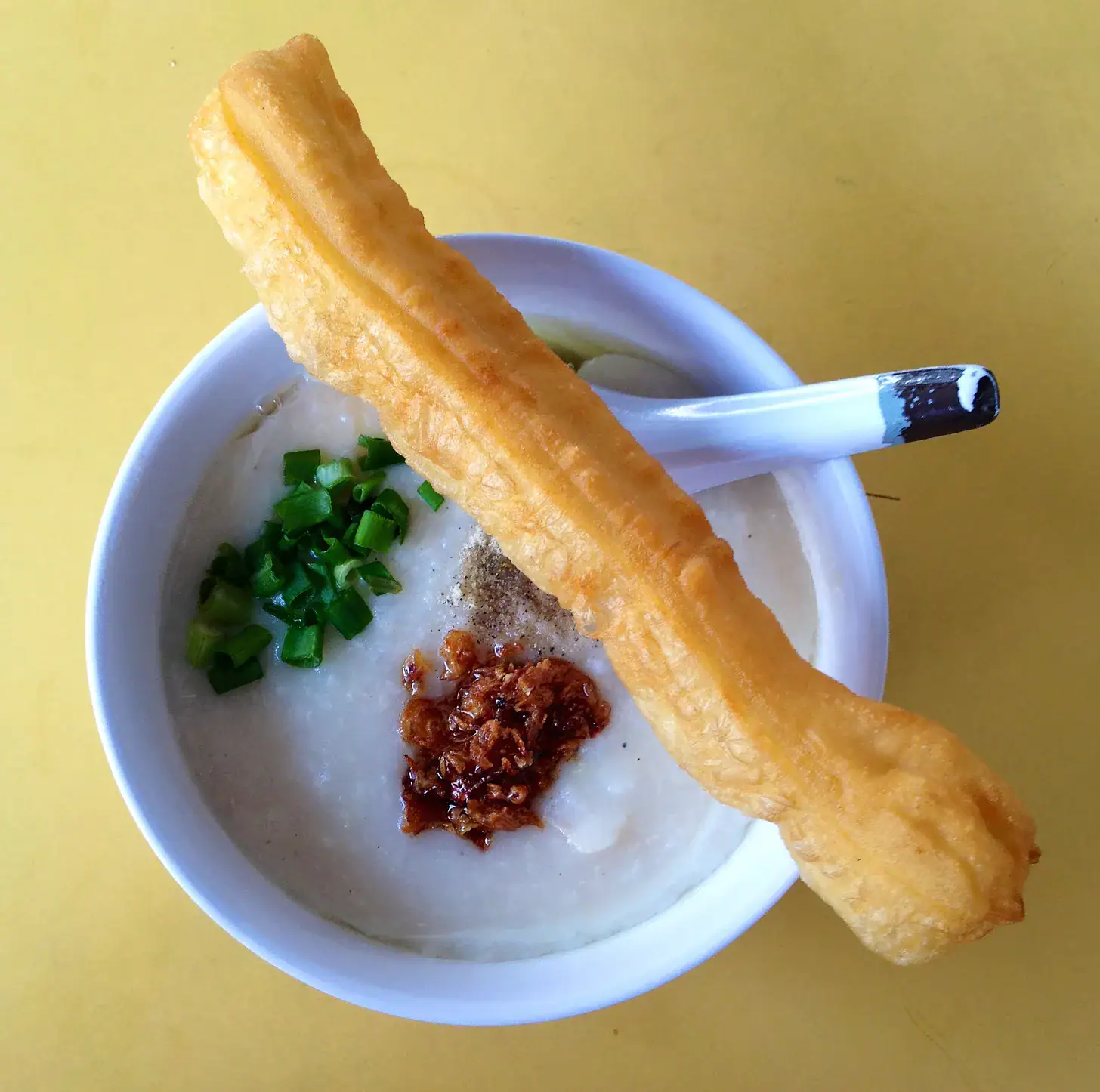
At its most basic, jook is soupy rice, perhaps with some salt or soy sauce. When it was first served to me I thought it miraculous—of course it had a few more ingredients—and it turns out to be even better when made at home, where you can cook the rice in stock rather than water. A great part of a Chinese feast, as well as a wonderful breakfast or lunch.
Comment