


For many, college is the first taste of an independence that resembles adulthood. You are responsible for your academic life: waking up for class, studying for a test, etc. But you are also responsible for your overall well-being, and arguably, most important to that well-being is the food you eat.
At the University of Virginia, where I am a student, first-years are required to subscribe to an all-access dining hall meal plan at a sticker price of $6,990. After your first year, though, you have the freedom to purchase a variety of meal plans or forgo them altogether and get your food independently. For many, these decisions can be distressing—UVA’s 2024 New Student Survey reported that 38.9% of students indicated concerns about food insecurity, defined broadly as unreliable access to affordable and nutritious food. Nationwide, the Journal of College Student Development estimates that 25% of undergraduates fit this criteria. These are alarmingly high figures, especially at an institution like UVA, which has a reputation for elite wealth and prestige.
Part of how UVA combats this distressing reality is through the Cavalier Food Pantry (CFP), an initiative that provides students with free, unrestricted access to essential food and hygiene items. To better understand how the Pantry operates and assess its impact on reducing food insecurity, I visited both of its locations on UVA’s Grounds.
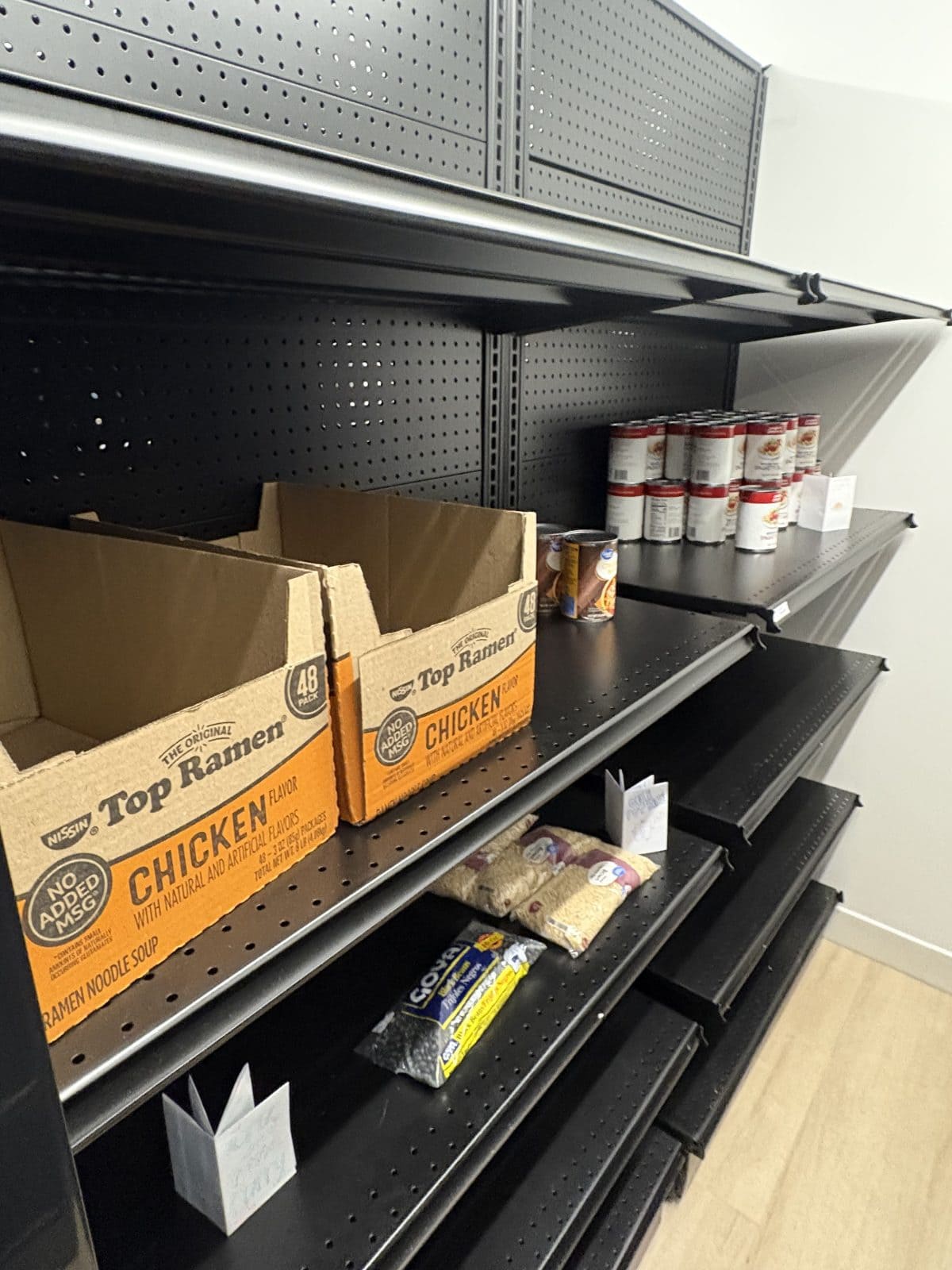
I first visited the primary location in the University Student Health & Wellness building, where I met Nicole Pierce, the Basic Needs Program Coordinator for Care and Support Services. When I first walked into the main pantry, I was alone. I moseyed around, scanning the aisles, cupboards, and fridges. The shelves were quite bare. One shelf had mandarin oranges, canned applesauce, canned green peas, and green beans. Across the aisle were some black beans and brown rice. As I began taking a few photos of the pantry, Nicole walked in, carrying a box of bagels. She spoke about establishing this location of the CFP in 2024 and the enormous increase in traffic the pantry has seen this fall semester: Students have been visiting the pantry at twice the rate of the 2024-25 year, when the two locations together saw 10,693 visits.

I asked Nicole if this spike might have been associated with the shutdown of SNAP benefits. She explained how the state-funded Virginia Emergency Nutrition Assistance (VENA) program continued to provide benefits to the 67% of UVA students who live in Virginia. Out-of-state students, for whom benefits remained on hold, were more vulnerable to the SNAP shortages.
From social stigma and shame to a lack of awareness of programs like the CFP, many factors make it difficult to reach students in need.
These shortages, however, affect considerably fewer students than you might think. Only one in ten four-year undergrads in Virginia who are SNAP-eligible actually received benefits in 2021-22, amounting to 2% of the total undergrad population. I was surprised by that data for multiple reasons. Surprised that the SNAP shortages were directly affecting only about 2% of students, but more surprised by the disparity between students eligible for SNAP and those actively receiving benefits. The 20% of undergrads in Virginia who are eligible for SNAP is half of UVA’s estimated number of students experiencing food insecurity. To me, these numbers convey that a large segment of the students who experience some degree of food insecurity are not receiving the support that is available to them.
From social stigma and shame to a lack of awareness of programs like the CFP, many factors make it difficult to reach students in need. Nicole recognizes the scope of overlapping crises that contribute to food insecurity among students, but she does not let that dread detract from the joy she gets out of her work. As she lined the fridge with bagels, she proudly told me about a restock of the fridges at the satellite pantry in the Newcomb Hall Student Activities Center that morning. After an Instagram post announced the restock, waves of students came through the pantry and emptied the fridge in under two hours.
I decided to visit the satellite pantry to see for myself the scene that Nicole described.
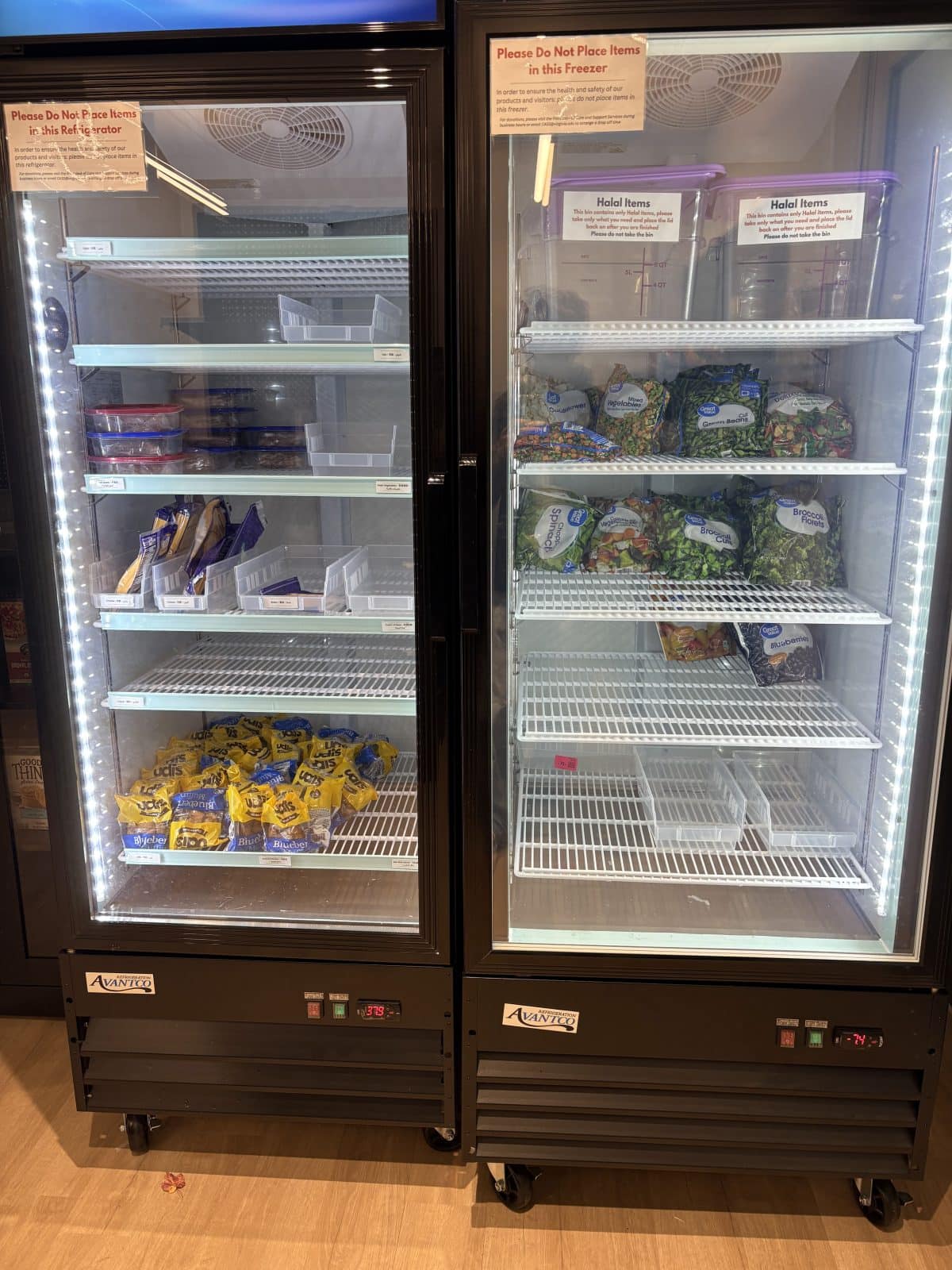
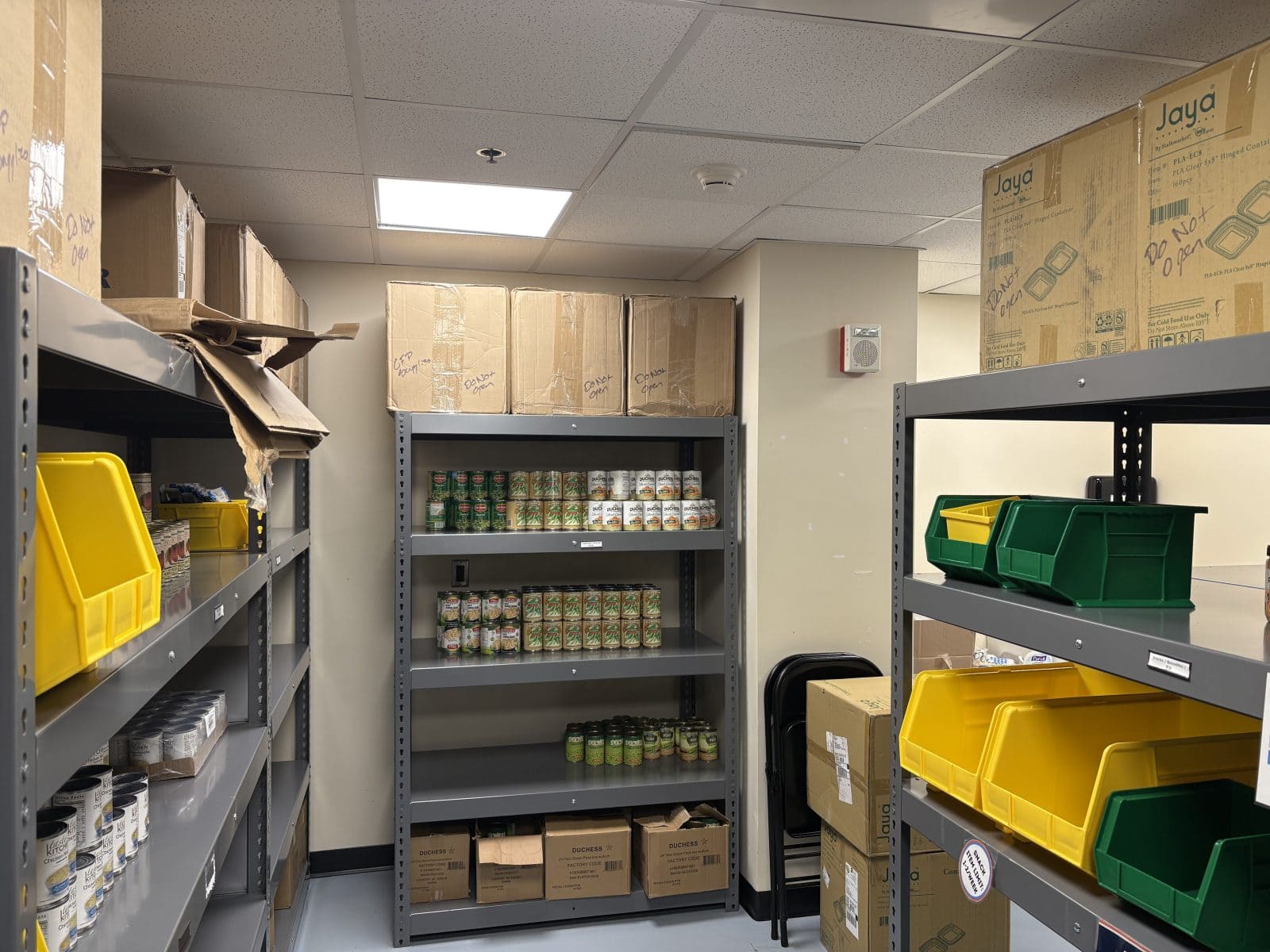
When I arrived, I met Cary Jalali, the Student Committee Executive Director of the CFP, who showed me around the pantry. It was bigger than the flagship one I had just been in, but Cary explained how the space isn’t perfect. Where the main pantry was on the other side of a beautiful, heavy wooden door and organized with aisles and shelves like a market, the satellite pantry more resembled a storage unit for nondescript boxes. The sleek furnishing of the main pantry was funded by a $6,208 grant from the Blue Ridge Area Bank Partner Initiative, but the satellite location has yet to receive that attention. Cary said that despite the CFP’s continued exponential growth, they are still working to increase awareness of the pantries among students and to destigmatize their use. Cary noted that the less appealing setup and decor of the satellite pantry were not doing them any favors in working against this stigma.
I still wanted to understand better the role of the pantry in students’ food plans, so I returned to the main pantry to talk with students. I first spoke to Elsa, who said she visited the CFP “probably every week, sometimes to pick up regular staples like noodles and vegetables, and other times when I have been looking for a specific ingredient like brown sugar.” Next, I spoke to another student, Leah, who said, “I come to the pantry a few times a month. And when I do, I always end up with more stuff than I anticipated getting. Normally, stuff like mac and cheese and bagels.” They both noted that their visits to the pantries are often in response to an update on the pantry’s Instagram, notifying them of a specific restock. They were enthusiastically appreciative of the pantry for aiding the financial burden of food, but it is not something they are relying on for daily meals.
While the CFP’s services are clearly making a significant impact on many students, thousands of other UVA students identified as food insecure were not using the pantries.
These students were very aware of the pantry’s operations, but I know this does not reflect the greater student body. In fact, the pantry’s spike in visits may misrepresent its awareness among the greater student body. The figure of 10,693 visits from last year is next to another data point in their annual report: 1,198 visitors. This means these students, on average, visited the pantry 10 times. While the CFP’s services are clearly making a significant impact on many students, thousands of other UVA students identified as food insecure were not using the pantries.
The CFP is not a magic bullet, but Cary, Nicole, and their team have made great strides in growing it into an effective resource for UVA students. Their funding has grown year over year, thanks in part to support from a diverse number of organizations. One especially impactful initiative was the Swipe Drives with UVA Dine, where one meal swipe at the dining hall gets converted to one pound of food for the pantry— this semester, 3,474 swipes during the drive meant UVA Dine, through its provider Aramark, donated 3,474 pounds of food to the Cavalier Food Pantry.
The CFP is fulfilling its purpose—easing the financial hardship felt by college students looking for their next meal—but its exponential growth is a symptom of broader issues.
The growth of the CFP is also a red flag. Cary and Nicole explained to me that seeing the empty fridges and shelves is simultaneously the most fulfilling and disheartening part of the job. When I first entered the CFP, the shelves reflected the fundamental interaction between the CFP and students: the pantry restocks its shelves and fridges, thus inviting a spike in interested students who flock to the pantry and leave the shelves, as I found them, bare. The CFP is fulfilling its purpose—easing the financial hardship felt by college students looking for their next meal—but its exponential growth is a symptom of broader issues.
The prevalence of this issue on a national level makes the CFP’s work seem like more of a stopgap, but as federal funding for higher education wavers, community-driven solutions to food insecurity may grow even more significant. At UVA, the CFP has to reach more students in need—those who are unaware of the pantry’s existence or struggle with the stigma surrounding the support it provides. The CFP is one example of how universities across the country can support their students, but a lot of ground remains to be gained in local and national efforts to eliminate food insecurity among students.
Data provided by Cavalier Food Pantry via Annual Impact Report 2024-25 and their home page.
Callum Bohn was born and raised in New York City and is currently attending the University of Virginia, where he’s pursuing a major in Media Studies and a minor in Spanish.
Comment