

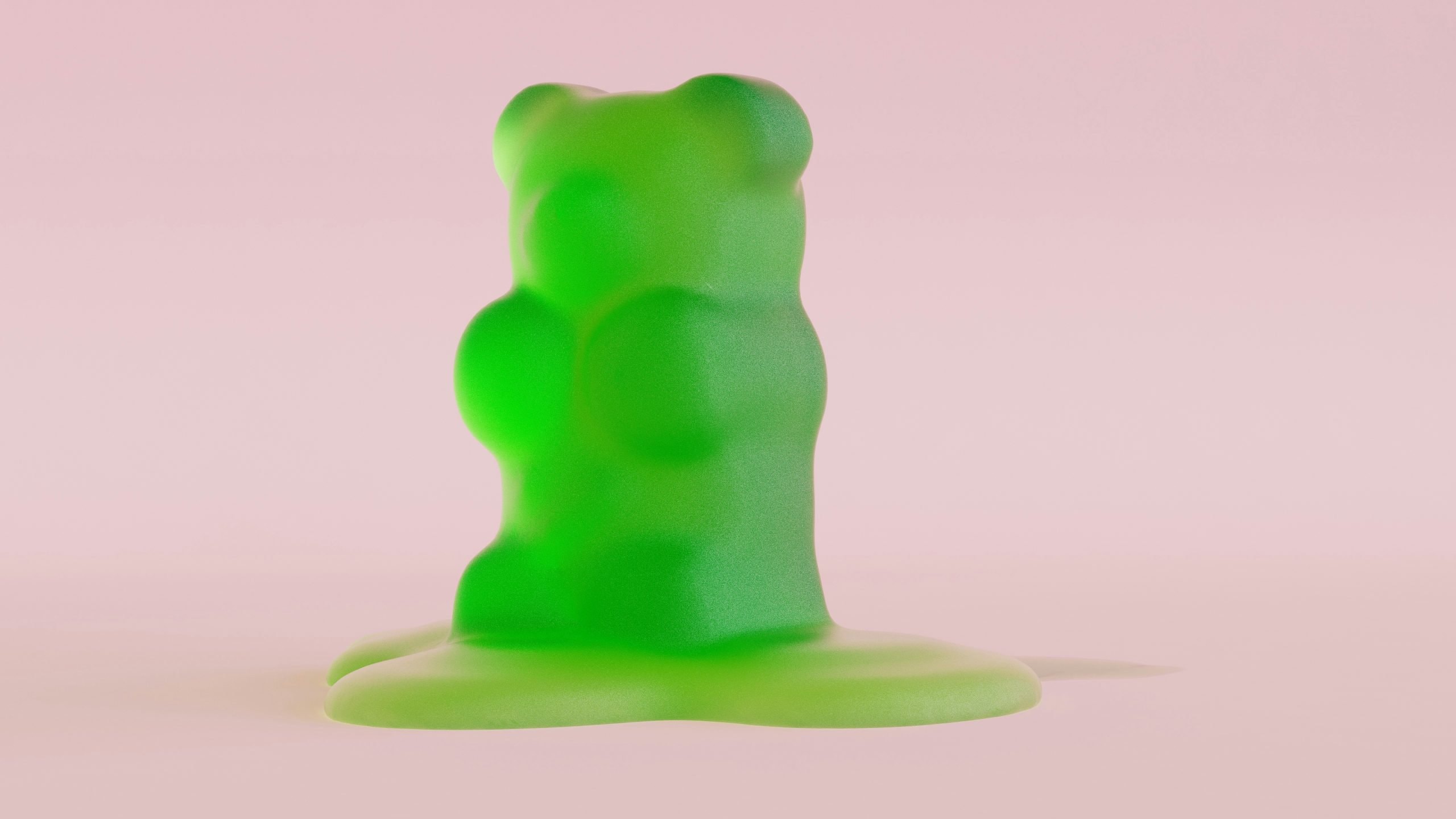
Hemp gummies and tinctures that can cause a high have become easily available on Amazon and on DoorDash. This has made hemp products cheaper and easier to access than marijuana products sold in dispensaries in states that have legalized marijuana, creating a “Wild West” situation that worries experts.
Daily cannabis use among Americans has overtaken daily alcohol consumption.
And it’s a nationwide problem, too, because daily cannabis use among Americans has overtaken daily alcohol consumption, according to a study at Carnegie Mellon University.
In response, state legislators in Colorado, Florida, Texas, and elsewhere have tried to regulate hemp products. Their aim has been to make products that contain psychoactive compound tetrahydrocannabinol, or THC, harder for teens to access.
Experts worry that hemp producers are exploiting a loophole in the federal law to make products that are as potent as marijuana products but without state or federal oversight.
But state rules designed to clamp down on hemp have been hampered by a federal law that permits hemp-based products. Experts worry that hemp producers are exploiting a loophole in the federal law to make products that are as potent as marijuana products but without state or federal oversight. They say only Congress can close the loophole.
Just like marijuana products, hemp products that can cause a buzz come in the form of edibles, gummies, tinctures, vape pens, and even fizzy beverages.
California, New York, Texas, Illinois, and Florida have become the largest suppliers of hemp-derived products, according to Whitney Economics, a cannabis research firm based in Portland, Oregon.
And the market is booming: in 2023, total demand for hemp-derived cannabinoids in the U.S. was valued in excess of $28 billion, according to a report by Whitney Economics. The market for legal marijuana products in the 24 states where it is legal stands at about $26 billion annually, according to that same report.
Hemp and marijuana both come from cannabis plants. THC made from hemp is identical to THC made from marijuana. For that reason, some think the distinction between them is arbitrary. “Hemp is a legal definition which I don’t personally agree with,” said Christopher J. Hudalla, president and chief scientific officer of cannabis testing company ProVerde Laboratories, Inc. of Milford, Massachusetts.
Hudalla continued: “Hemp is cannabis which has low levels of THC and low levels of THC-A (total THC less than 0.3% THC). Marijuana, on the other hand, is a legal definition of cannabis with more than 0.3% THC.”
How the hemp boom began
The hemp revolution got underway with passage of the federal 2018 Farm Act. That bipartisan bill was shepherded through Congress by Kentucky Senator Mitch McConnell and signed by President Donald Trump in his first term. Its goal was to help farmers by creating a market for hemp, which the U.S. had been importing from abroad.
But the bill’s language was broad. Entrepreneurs and their legal teams reacted by coming up with novel, hemp-based products that could cause euphoria and be sold in states that hadn’t legalized marijuana. When states have tried to challenge or ban products made from hemp, they have lost in court.
People “are essentially creating chemicals out of thin air, and releasing them to the population with risks that we know nothing about.”
Hudalla says the loophole is the 2018 U.S. Farm Bill’s exemption of hemp products and hemp-derivatives from the Controlled Substances Act. “If you take hemp-derived CBD and chemically convert that to THC, that’s legal, exempted from the Controlled Substance Act. People have begun taking hemp-derived CBD and, with simple garage chemistry, converting it to THC. That THC is heavily tainted with chemical compounds (synthetic byproducts). Many of the compounds have never existed before—they are essentially creating chemicals out of thin air, and releasing them to the population with risks that we know nothing about.”
Hudalla says this has resulted in an explosion of what he called “designer drugs” made of hemp. The products are often sold without age-gating, making them appealing to teens. “We are starting to see significant adverse events from these drugs that are all being marketed as hemp,” he said.
To attain a sweet taste and an appealing color, most hemp edibles contain corn syrup and some of the artificial colorants that Department of Health & Human Services Secretary Robert F. Kennedy Jr. is seeking to ban.
But researchers are more worried about the use of butane, propane, and ethanol to extract THC from cannabis plants to make hemp products. These solvents, if not properly removed, can be toxic to the liver, kidneys, or nervous system in high or prolonged doses, said Lucy Popova, associate professor of Health Policy and Behavioral Sciences at Georgia State University.
Some U.S. states have mandated testing requirements, but enforcement is spotty and usually only applies to products made in state, not those crossing state lines, as most hemp products do, Popova explained.
“The solvents can leave dangerous residues behind, and the solvents themselves might not be very pure to begin with (i.e., be industrial grade and contain lubricating oils),” she said by email.
Though some states have safety testing requirements, she isn’t sure “to what extent those rules are enforced or working.”
Another troubling issue might be pesticides and residuals, like heavy metals, Hudalla said.
“No one is testing for the actual contaminants that may be in these products.”
“For some of the synthetic products being created, the metals that are being used as catalysts are not tested by analytics testing labs,” Hudalla said. “No one is testing for nickel, cadmium, palladium…no one is testing for the actual contaminants that may be in these products.”
A test conducted of randomly selected products sold in Colorado found insecticide in four of 15 samples, and the pesticide piperonyl butoxide (PBO) in ten samples, with three exceeding hemp regulatory standards by 1.5x to 4.5x the permissible limit, according to the test report and NPR.
High THC levels
Greg Tung, an associate professor in the Colorado School of Public Health’s Department of Health Systems, Management & Policy, is worried that hemp THC producers are exploiting a policy gray area. “It’s night and day in terms of oversight, testing, and frankly, safety.”
He’s most worried about high levels of THC.
Those concerns aren’t unfounded: a 2023 study published in the Journal of Cannabis Research found that many hemp-derived THC products sold throughout the U.S. were inaccurately labeled. The report’s authors wrote: “in many cases, the advertised dosages are substantially higher than would be allowed in any regulated, legal, high-THC cannabis market in the country.”
The Colorado Attorney General last year filed suit against a hemp company and its owner, alleging that they sold products containing up to 35 times the legal THC limit, law firm Harris Sliwoski wrote on its blog.
The high THC labels can have tragic results. “I have seen cases when one gummy was enough to see one person institutionalized with psychosis,” Hudalla said. “We’ve seen teenagers pass out in school bathrooms after smoking from a vape pen.”
Congress’ role in the hemp debate
In 2025, both chambers of Congress introduced proposals to revise the definition of legal hemp to narrow or eliminate the perceived “loophole” created by the 2018 Farm Bill, Reuters reported. California and Colorado have sought to restrict the sale of intoxicating hemp products, but those laws are likely to be challenged successfully by hemp producers unless Congress modifies the law, Hudalla said.
In addition to the risks to physical health from contaminants, experts say the psychological risks from THC itself remain unclear.
In an effort to force hemp regulation, companies that make competing and more heavily regulated marijuana products have taken states to court. One Colorado company is suing Colorado, alleging that the state’s regulated marijuana market is riddled with unsafe and illegal hemp-derived THC.
But a better solution could be for the federal government to regulate cannabis safety like it does food safety. The United States Department of Agriculture’s organic farming program could serve as a template, said Ben Gelt, an advisor at Greenspoon Marder LLP in Denver.
“Food issues are dealt with at the federal level,” Gelt said. “Organic standards are a federal standard, and it’s regulated federally, but carried out by a series of independent contractors that include state governments. With marijuana there are state standards. With hemp, you have a lower regulatory burden.”
“Consumers don’t care if the molecule forms from a marijuana or a hemp plant. They want a replicable experience,” Gelt added.
Michael Scaturro is a multimedia journalist. He is a contributor to The Guardian, and has filed TV and print pieces for VOA, the New York Times, the Washington Post, CNN, and KFF (Kaiser Health News). He was previously a staff reporter at Bloomberg.
1 Comment