

Name a great food movie.
Over the past couple of weeks, I’ve asked several food-and-film loving friends this question and their answers are remarkably similar: Big Night, Babette’s Feast, Eat Drink Man Woman, Chocolat. These answers aren’t wrong; all are excellent films with great food! But why is the short list so short? There are dozens, hundreds of other movies that teem with, even center around, food.
Show a perfect burger on screen, and you’ll unlock sweeping sense memories in your audience, drawing them closer to the action.
Filmmakers love food because it’s a deft communication device. Show a perfect burger on screen, and you’ll unlock sweeping sense memories in your audience, drawing them closer to the action. Even more than that, you’ll open a window into your characters. Are they enthusiastic eaters? Greedy? Sensual? Grateful? Hedonistic? Or are they fussy, picky, sterile eaters, calculating and controlling and cold?
Think of Paulie (Paul Sorvino) in Goodfellas, using a razor blade to slice garlic so thin it’s see-through. What better way to telegraph his obsession with precision, in the kitchen and in crime? Think of Travis Bickle (Robert De Niro) in Taxi Driver, spooning into his bowl of schnapps-soaked white bread. Who would breakfast on that stuff, besides a dangerously isolated psychopath? Think of the opening moments of Breakfast at Tiffany’s, with Holly Golightly (Audrey Hepburn) peering into the jewel-filled windows on Fifth Avenue, nibbling her early morning pastry after a long night out doing, well, whatever it is we’re supposed to believe Holly Golightly does at night. Food doesn’t just surround these indelible characters, it helps define them.
Here are a few films that you won’t find on many lists of “Best Food Movies” — but maybe they should be there.
The Eagle (1925)
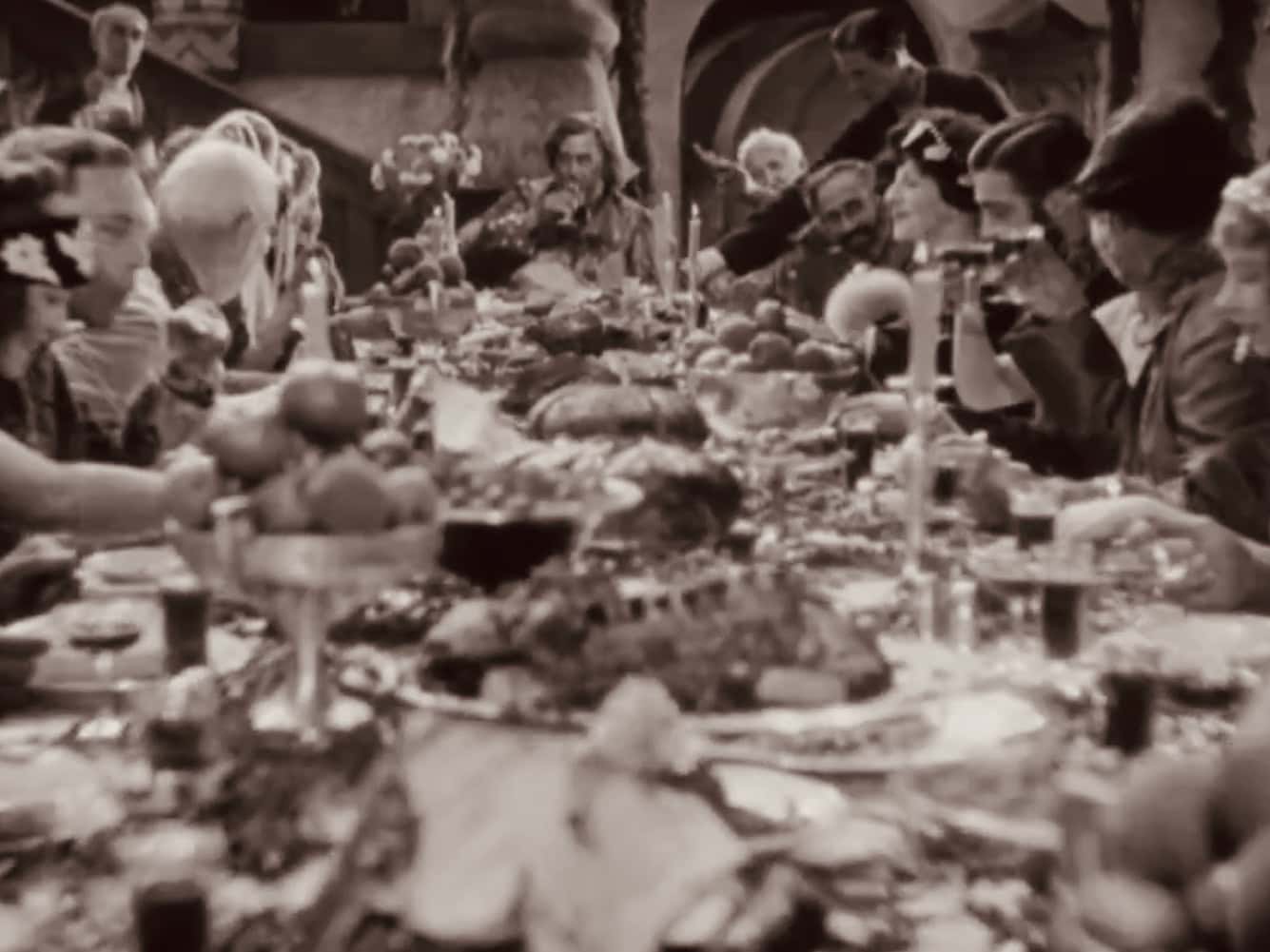
If there is an origin story for the over-the-top cinematic tablescape, an early chapter would feature a centerpiece scene in The Eagle, which stars the jarringly-handsome Rudolph Valentino as Vladimir, an Imperial Guardsman in the Russian Army who unwittingly catches the fancy of the Czarina (Louise Dresser). He demurs, and … well, you don’t say no to a Czarina, so Vladimir is forced onto the snowy lam. As he runs, he learns of a scheming nobleman named Kyrilla who plans to seize Vladimir’s land. Incognito, Vladimir worms his way onto the guestlist for a banquet at Kyrilla’s, hoping to sabotage Kyrilla’s plot, but he risks detection when his rural manners don’t comport. He puts too much pepper in his soup, betraying his baser roots and, as clocked by one dinner guest, his lusty leanings. (To be fair, he is seated next to the comely Vilma Banky.) Will his anonymity hold?
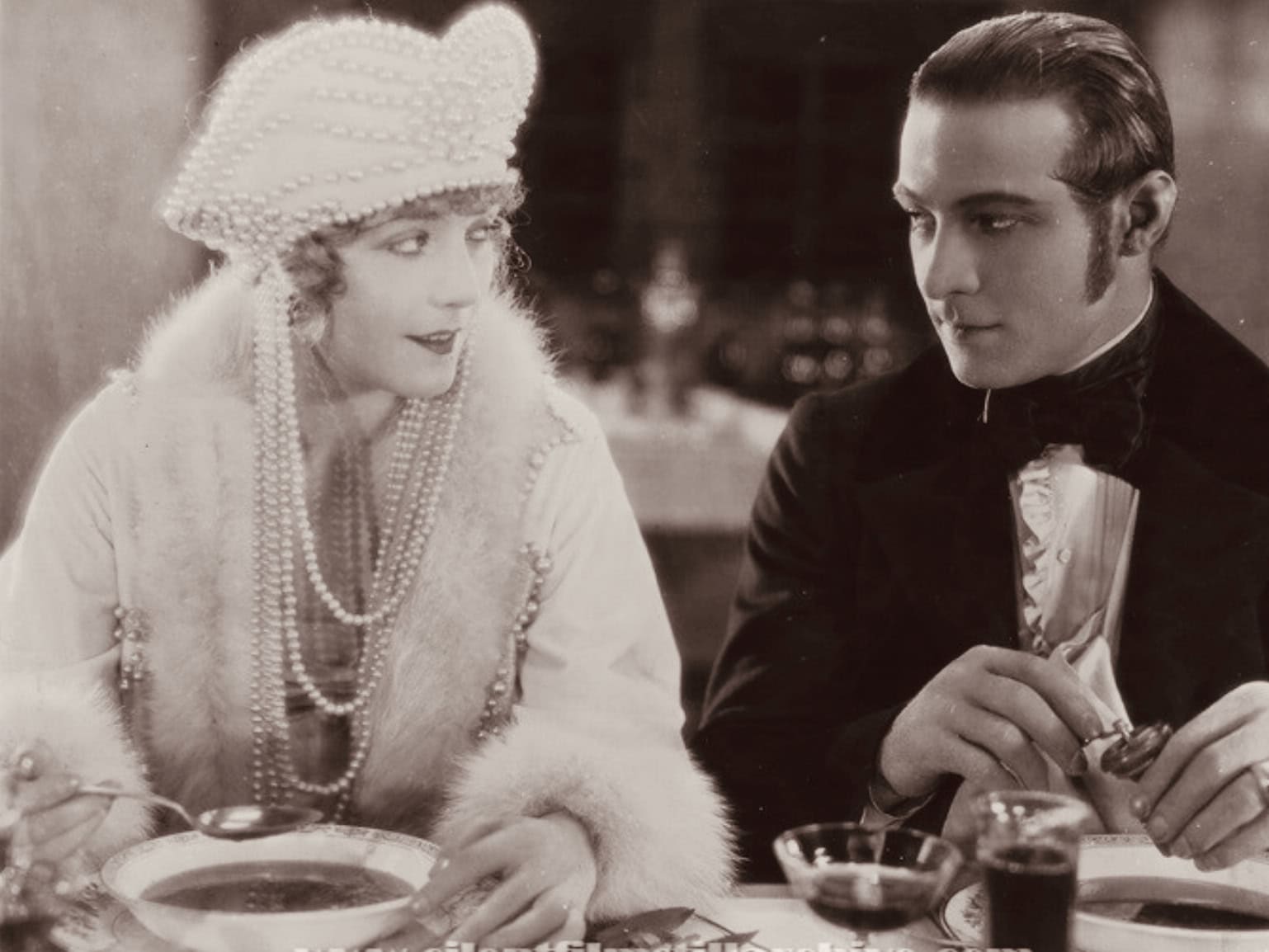
The scene is vital to understanding Valentino’s noisy inner life — not an easy task in silent film — but it is especially remarkable for its extraordinarily lavish table-setting, and the gymnastic cinematography used to capture it. At first watch, (which you can do on YouTube), you’ll scratch your head wondering how they pulled it off. If it were shot today, they’d use a low-flying drone, or maybe some kind of artificial intelligence. But in 1925? The crew rigged up an elaborate camera track, with the lens suspended inches above the table. After framing Kyrilla’s evil face in the center of the shot, the camera slowly draws back at eye level, revealing roasts and loaves and aspics and cakes while party-goers lean into the shot, reaching across the table to clink goblets as the bustling bacchanal opens up. It’s an astonishingly effective display of art direction and food styling — long before anyone would have ever imagined such a term.
Mildred Pierce (1945)
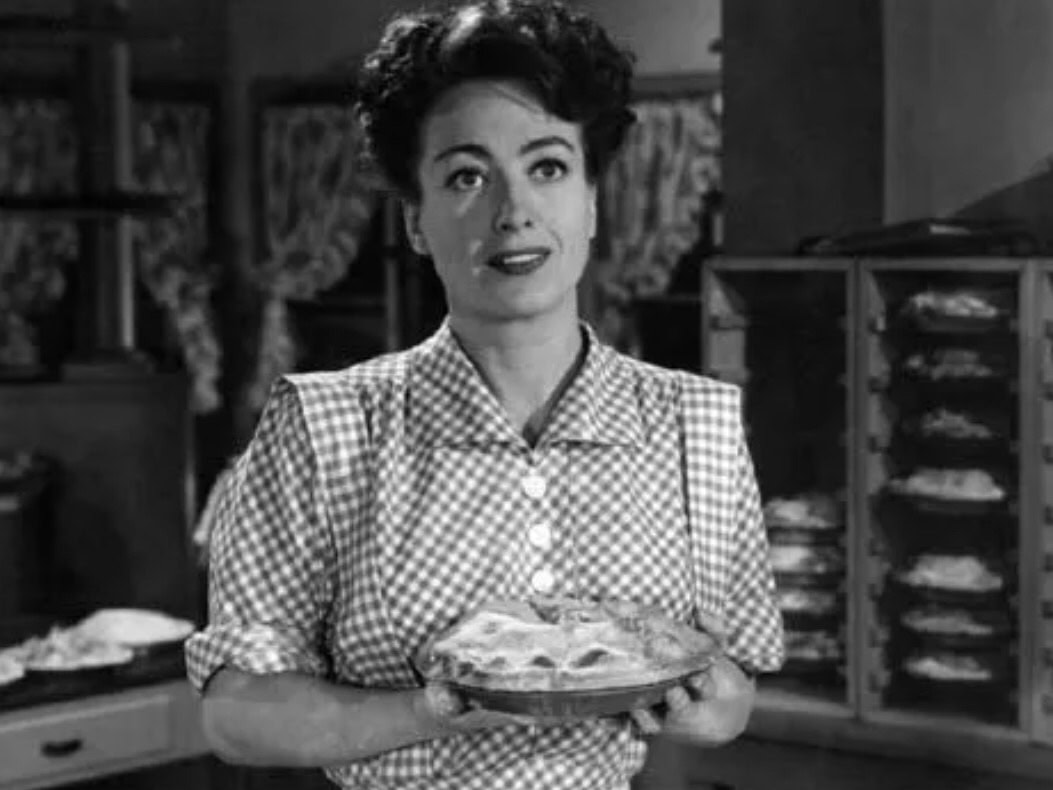
Yes, it’s a moody noir. Yes, it’s a tragedy about mothers and daughters. Yes, it confronts misogyny and revenge and societal decay and bootstrap-entrepreneurism. Yes, it is the ur-text of shoulder pads. But this story isn’t a story at all without food dominating the central narrative.
After her philandering husband decamps and her youngest daughter dies, Mildred Pierce (Joan Crawford, in a role she inhabits so completely it’s still hard to know where Joan ends and Mildred begins) is left with little more than heavy debts and a demanding older daughter, Veda. As Veda’s dissatisfaction develops into venomous conniving, Joan hustles — first as a waitress at a busy downtown lunch hall, as a supplier of home baked pies (so many pies) to local restaurants, and eventually as an uncommonly successful restaurateur whose menu is brilliantly simple: Fried chicken, waffles, and pie. That’s it. That’s what Mildred serves. You want something else? Eat somewhere else.
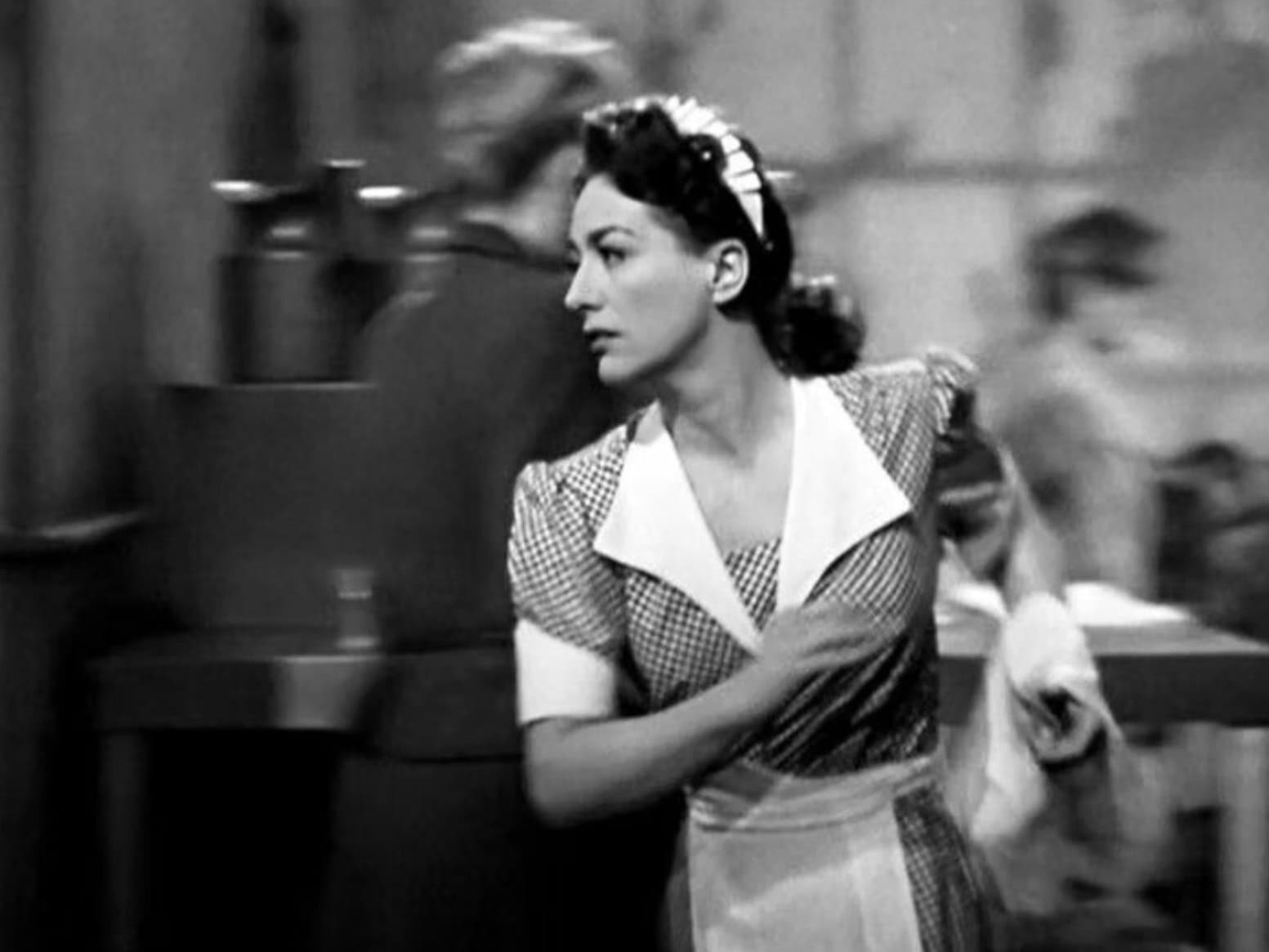
It wouldn’t work, not a scene of it, without its food.
Inevitably, of course, Mildred’s hard-won success is all sullied by a tawdry little murder. No spoilers here (it’s only been out for 80 years), but Mildred Pierce is a canonical character played by a canonical performer in a canonical film that defines stylized mid-century noir. And it wouldn’t work, not a scene of it, without its food.
Moonstruck (1987)
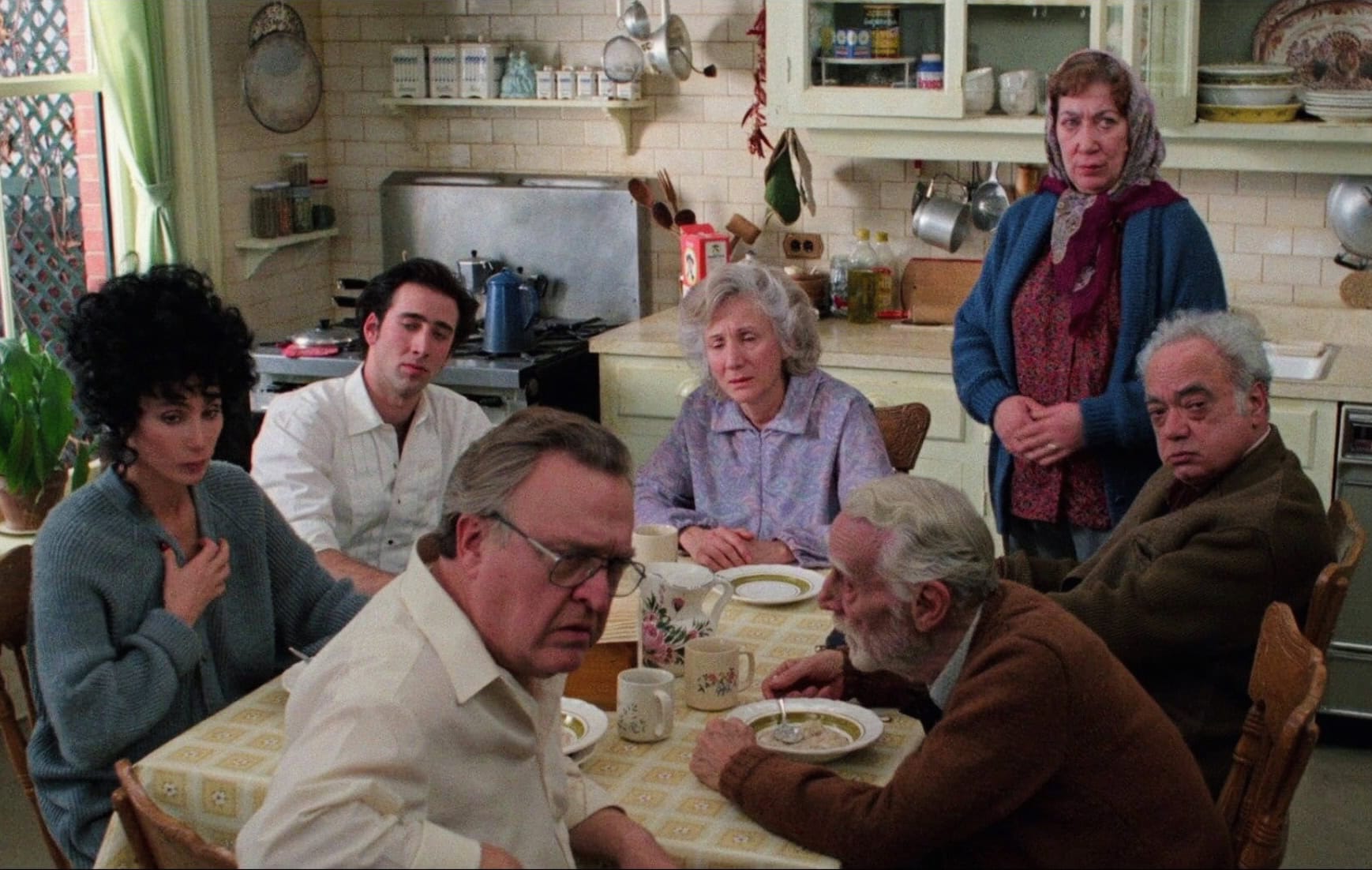
You’ve already seen Moonstruck, of course, so you won’t need reminding that this film is pure perfection for every one of its 102 minutes. But is it also a great food movie? After all, there’s no grand, showstopping feast in Moonstruck. Instead, food weaves through the story in a thousand sly and humble ways, creating a warm, humane texture to the world inhabited by Cher, Olympia Dukakis, Danny Aiello, and Nicolas Cage. Yes, it is a food movie.
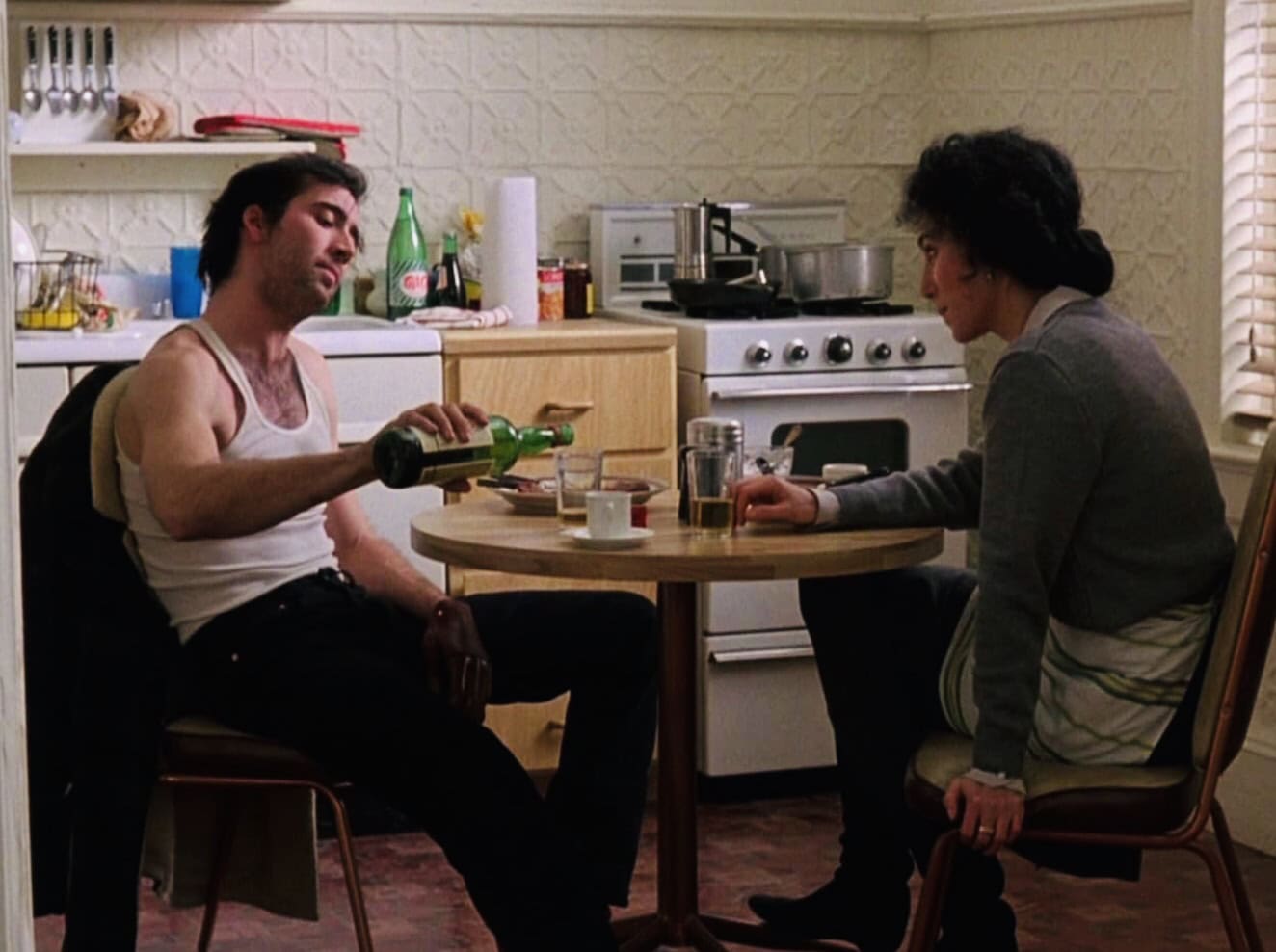
In emphatically Italian Brooklyn, we follow Loretta (Cher) as she navigates life as a young widow. Though betrothed to Johnny (Aiello), she somehow finds herself enthralled by one-handed bread-baker Ronny (Cage) who is, inconveniently, Johnny’s brother. She, and her mother Rose (Dukakis), cook and eat her way through the complications. In one scene, Loretta ties on an apron and casually tends a steak in the bare-bones kitchen of her paramour. She moves with a blasé deftness, overriding Ronny’s request for well-done meat. (“You’ll eat it bloody!” she corrects.) In another scene, Rose sits solo in a neighborhood restaurant with a martini and bowl of minestrone for what should be a simple supper of a comforting soup, before the moment, like the soup itself, opens up into something much more colorful, and complex. In another scene, Rose breaks a yolk as she flips an egg-in-the-hole, betraying her unraveling sense of domestic control. And, after tensions rise and all hell breaks loose, everyone —mothers, daughters, brothers, and lovers — sits down for the simplest imaginable breakfast, a common-ground pot of oatmeal, to hash it all out. Who can’t relate?
The Platform (2019)
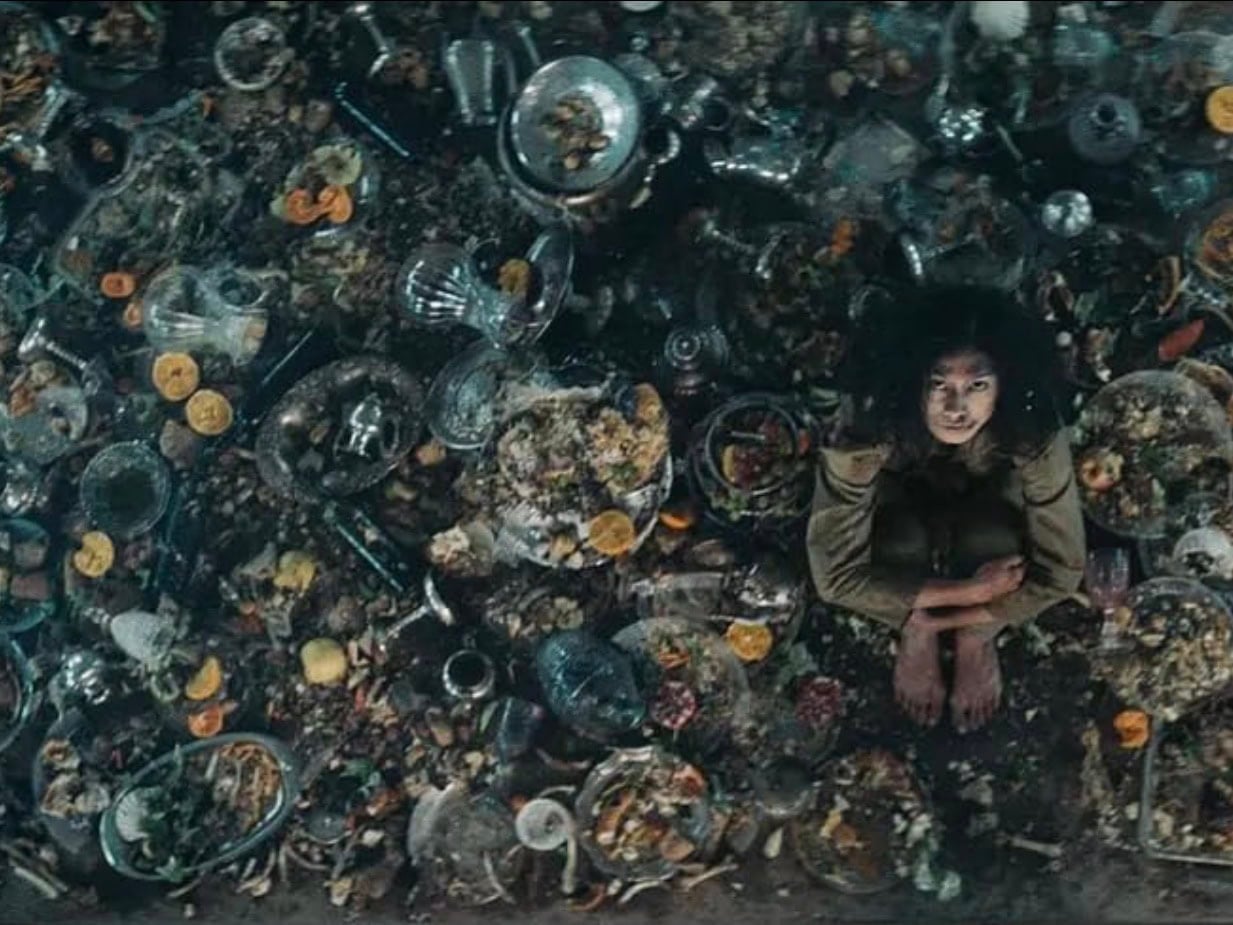
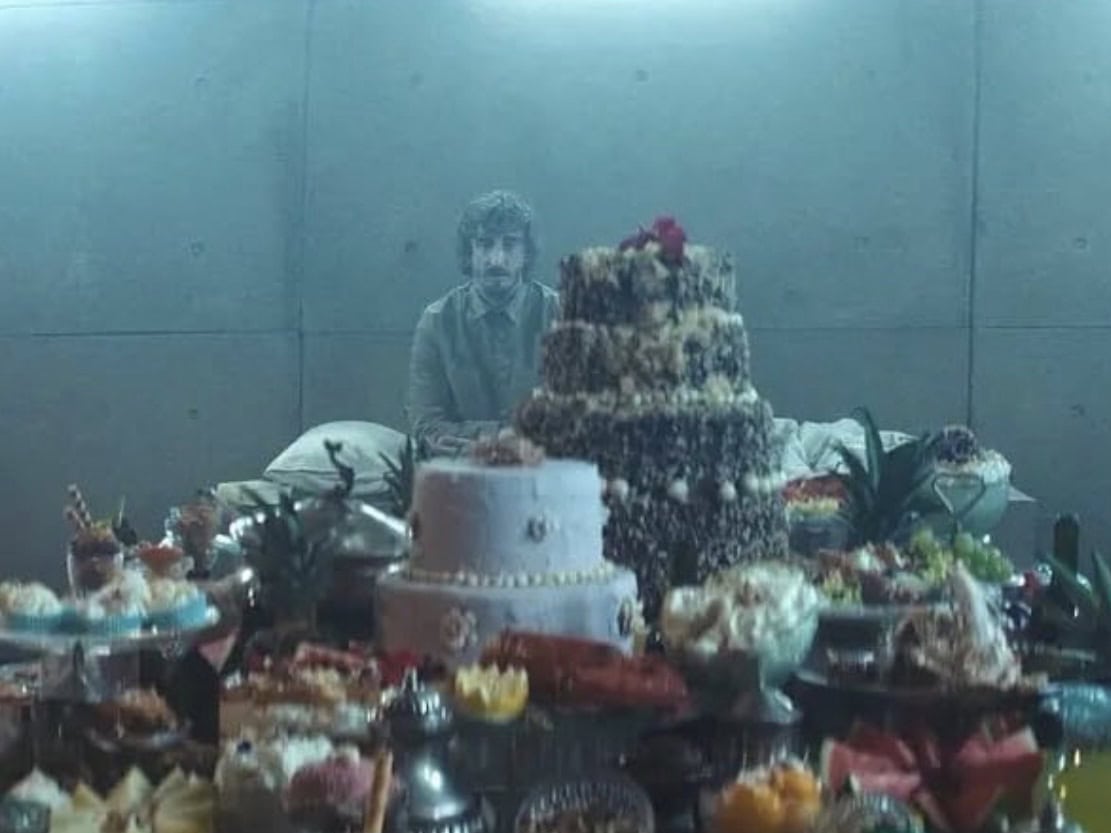
Food can also be used as a cinematic cudgel, as in this unsettling Spanish horror. In the film (which is bloody and disturbing and not for the faint of heart), an opulently laid table is filled by an extensive brigade of Escoffier-esque chefs. Once filled, the table descends down a vertical prison, stopping at each floor for just a few moments for the inmates, arbitrarily assigned their location in the stack, to eat as much as they can before the table jerks away. No hoarding of food allowed.
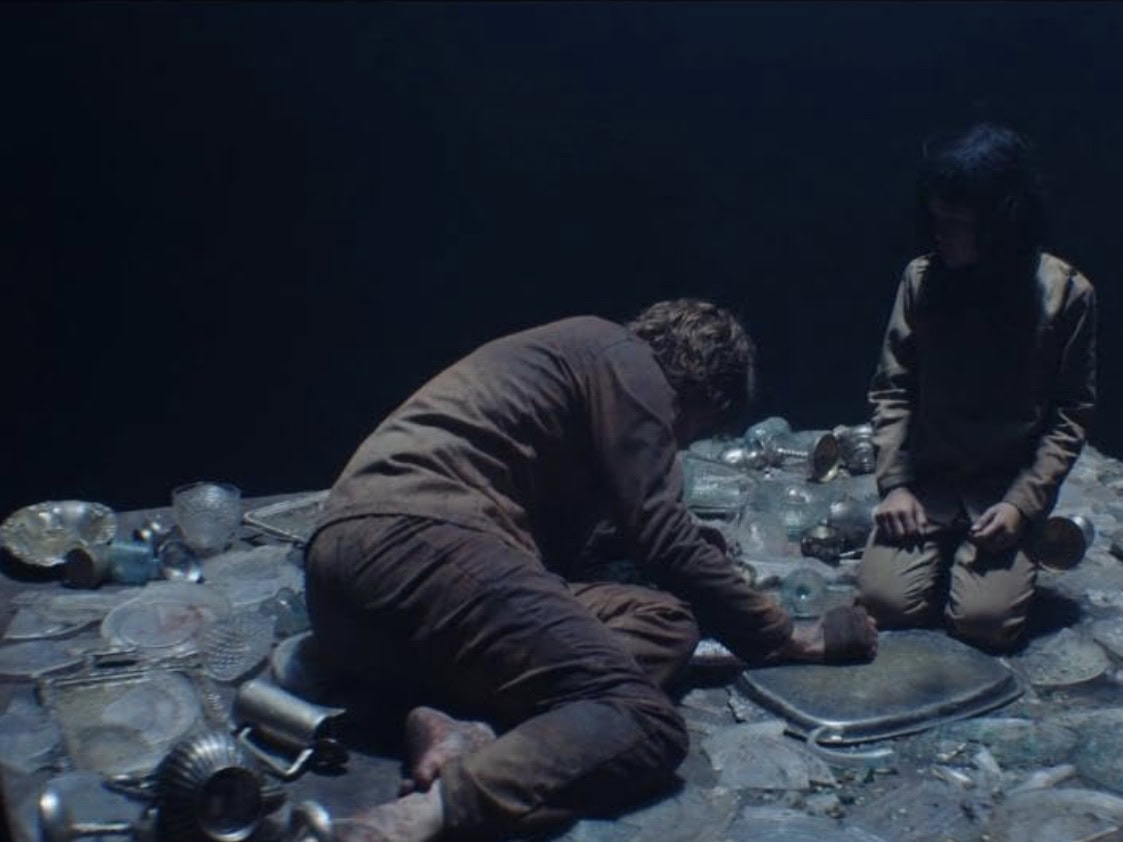
Few movies place food quite as concretely in the role of villain. And that strikes me as exciting.
The upper floors have first dibs and eat well. The lower floors — there are over 200 —are left with broken dishes already licked clean. No one’s position in the stack is any more deserved than the others — food is plentiful or scarce, depending on nothing other than luck. Nothing is fair, and mayhem ensues. But the revolt isn’t fueled by food. It’s fueled by hunger — which is another way of centering food. It’s a strange, disturbing movie. Is it about capitalism? Social isolation? Sense deprivation? Greed? Or is it just another self-indulgent set-up for gore? I’m not sure. But few movies place food quite as concretely in the role of villain. And that strikes me as exciting.
There are, of course, a million more films where food plays a crucial, often unexpected role. Spirited Away, The Texas Chainsaw Massacre, Beetlejuice, Lady and the Tramp, Deception, Heartburn, Whatever Happened to Baby Jane… the list is endless. What’s your favorite?
2 Comments