


“[When I got home from winter break], I realized that my [vegan] food choices weren’t just a personal choice. They also encompass community, because eating in the Chinese style is family style, we all sit around a table, we share these dishes, and we have a lot of traditions that involve pork.”
When Kate and I first saw Hannah Che’s recent cookbook, we had the same reaction: we couldn’t believe how beautiful it was, we were taken by the novelty of the recipes, and we couldn’t wait to cook from it. The book is called The Vegan Chinese Kitchen: Recipes and Modern Stories from a Thousand-Year-Old Tradition, and it’s exactly what it sounds like — a completely wonderful selection of Chinese recipes, with stories woven throughout, and spectacular photography (by Hannah!).
The history of Chinese vegetarian cooking is complicated, with roots in Taoism, the Shang Dynasty, Chinese folk religions, and, of course, Buddhism, and that complexity continues today with, as we discuss with Hannah, the three types of Chinese vegetarian cooking.
Hannah, who was born and raised in Detroit, but who lived in China for several years and attended cooking school there — much different than cooking schools in the US — knows much about Chinese vegetarian cooking; she’s passionate about it, too, and her beautiful food reflects that. We hope that after you listen to this week’s episode of Food with Mark Bittman, featuring Hannah, you’ll check out her book and fall for it the way we did. Plus, what better time of year to talk eating more vegetables?
Please listen and subscribe, and please review on Apple if you’re so inclined. Today’s podcast recipe is Blanched Spinach with Sesame Sauce, from The Vegan Chinese Kitchen.
Thank you, as always. — Mark
Follow on: Apple Podcasts | Spotify | Overcast | Pocket Casts | Amazon Music
Blanched Spinach with Sesame Sauce
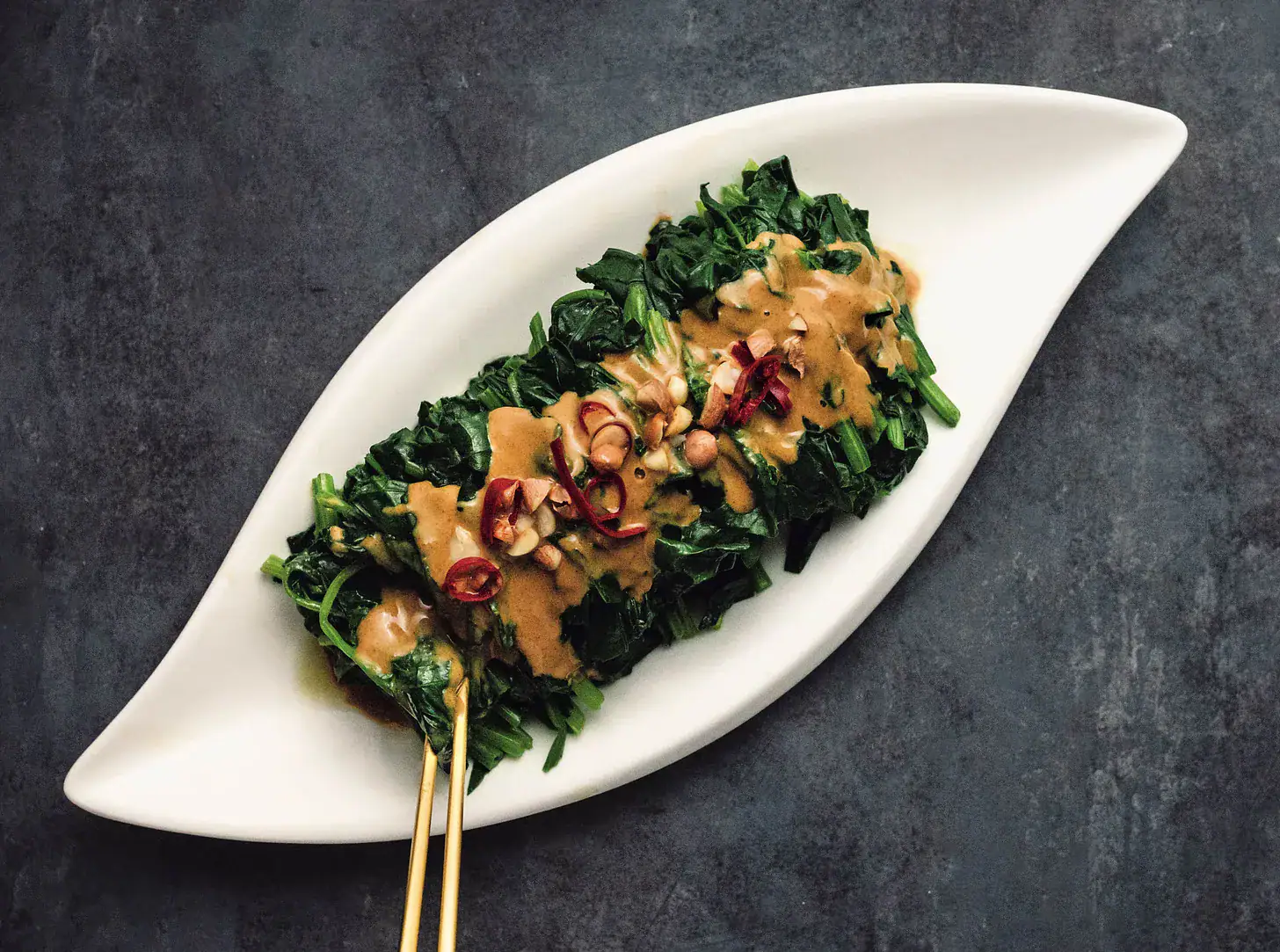
Blanching transforms a mountain of spinach in seconds, reducing teeth-chalking raw leaves into juicily sweet, tender morsels. My mom would tuck the wet spinach into a ball, wring out the liquid between her palms, and chop the emerald-green pile into bite-size pieces. Soothed with a creamy sauce of nutty sesame paste, perked up with minced garlic, and brightened with rice vinegar, spinach becomes irresistible—my siblings and I literally chopstick-fought over who got to eat the last pieces. At restaurants, this dish is often served as an appetizer, and chefs will either mold the spinach into a column or pile it neatly leaf to stem and dress it just before serving. You can replace half the sesame paste with peanut butter for a creamier sauce.
Look for sturdy stemmed spinach that can stand up in your hand like a bunch of flowers, not the bagged baby variety, which tends to melt away when blanched. — The Vegan Chinese Kitchen
Chinese Sesame Paste
Chinese sesame paste is not the same as tahini, which is lighter in color, runnier in texture, and ground from lightly toasted sesame seeds. Using roasted sesame seeds results in a richly nutty flavor and deep peanut butter–like color. — The Vegan Chinese Kitchen
Comment