


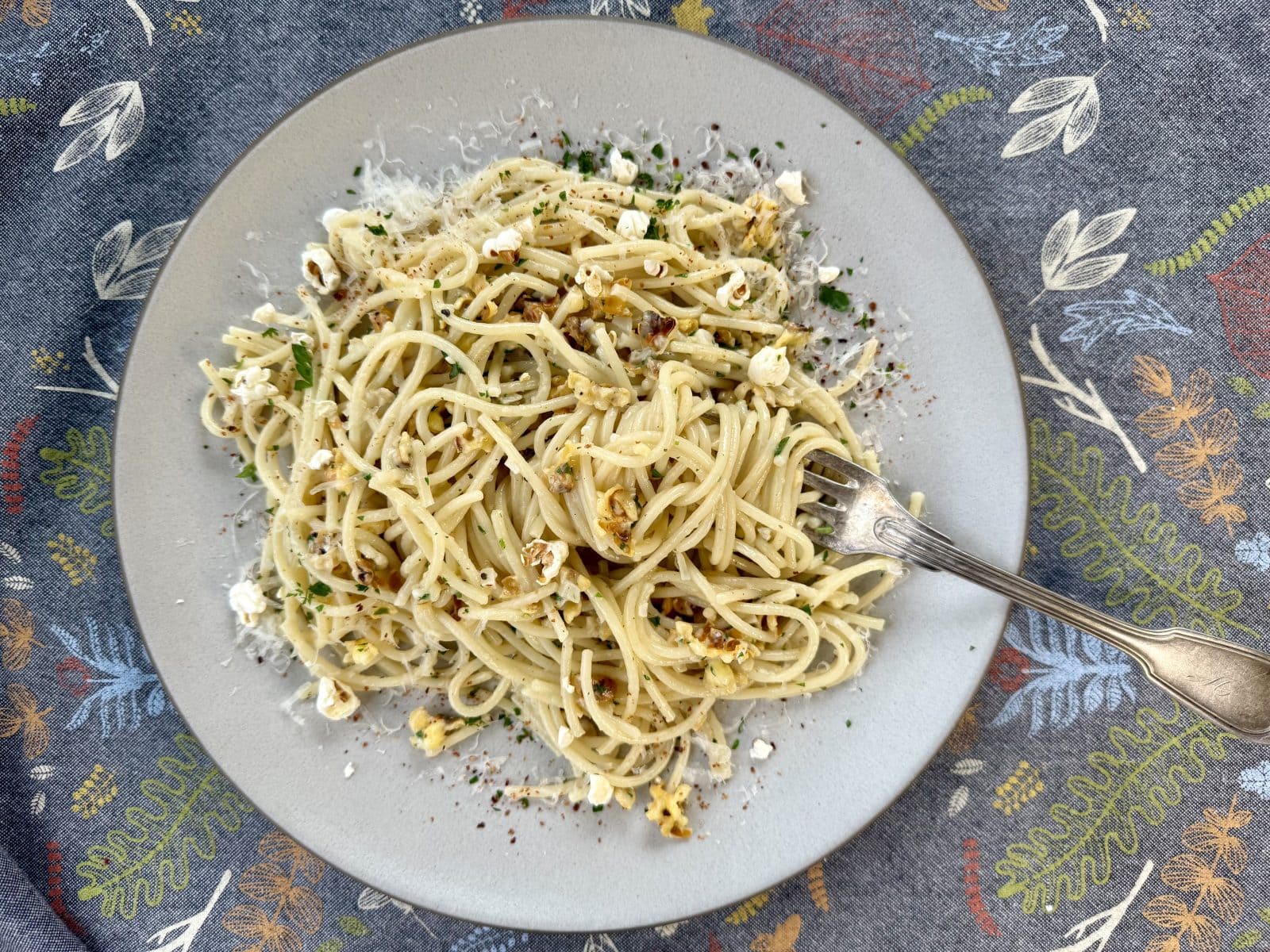
As the years have gone by, I’ve come to appreciate Bob’s Red Mill more and more for many reasons, but especially these two: One, they’re getting what were once difficult-to-find whole grains, legumes, and other ingredients (unsweetened coconut, for example), into mainstream American markets. The other has been their willingness to respond to trends in food and to create or find new and innovative products, like well-performing gluten-free flour, or fava and chickpea flours.
Because we’re committed to transparency, we wanted to let you know that we’re getting compensated to promote Bob’s. We try to be thoughtful about how we make money, and so we only partner with brands and organizations that we know well and believe in. Bob’s is one of those, and we’re glad to have reasons to promote them. — mb
Think of how much you enjoy a bowl of popcorn. Maybe you’re sitting on the couch with a bowl in your lap right now, scrolling the mail, reading this story between bites. Cue the lightbulb moment: Since I love this stuff so much, why don’t I cook with it?
We’re with you. And to remedy this obvious oversight, we have started to treat popcorn the same as any other grain-based ingredient. Like croutons, it adds crunch and heft everywhere it goes. Except there’s one big difference: Instead of getting soggy in liquid, popcorn turns pleasantly chewy while its nooks and crannies collect sauce and seasonings.
Also. It tastes corny.
To demonstrate, we’ve developed a popcorn version of “midnight pasta,” so called because the recipe comes together fast enough to eat as a pre-bed snack after a big night. It also happens to be perfect for lunch or easy dinner. You can make it for a crowd, or easily halve or quarter the recipe to serve one or two.
Once you try the pasta, here are a bunch of ideas of other ways to use popcorn:
- Stuffing (especially those based on cornbread)
- Baked pastas (either inside or crumbled over the surface before baking)
- Casseroles (same as above)
- Risotto (stirred in with the rice so it gets soft, or with the cheese for crunch)
- Polenta (crumbled in with the cornmeal)
- Chili (add just before serving)
- Green salads (instead of croutons)
- Pilafs (during fluff-with-a-fork-before serving)
- Soup (built in as it simmers for chewiness, or as a final crunchy garnish)
- Pie crusts (ground and added to the pastry like nuts)
- Cookies (whole or ground, and folded into the dough like nuts)
- Bread (ground and used like seeds inside or on top)
And now, on to the recipe demonstration:
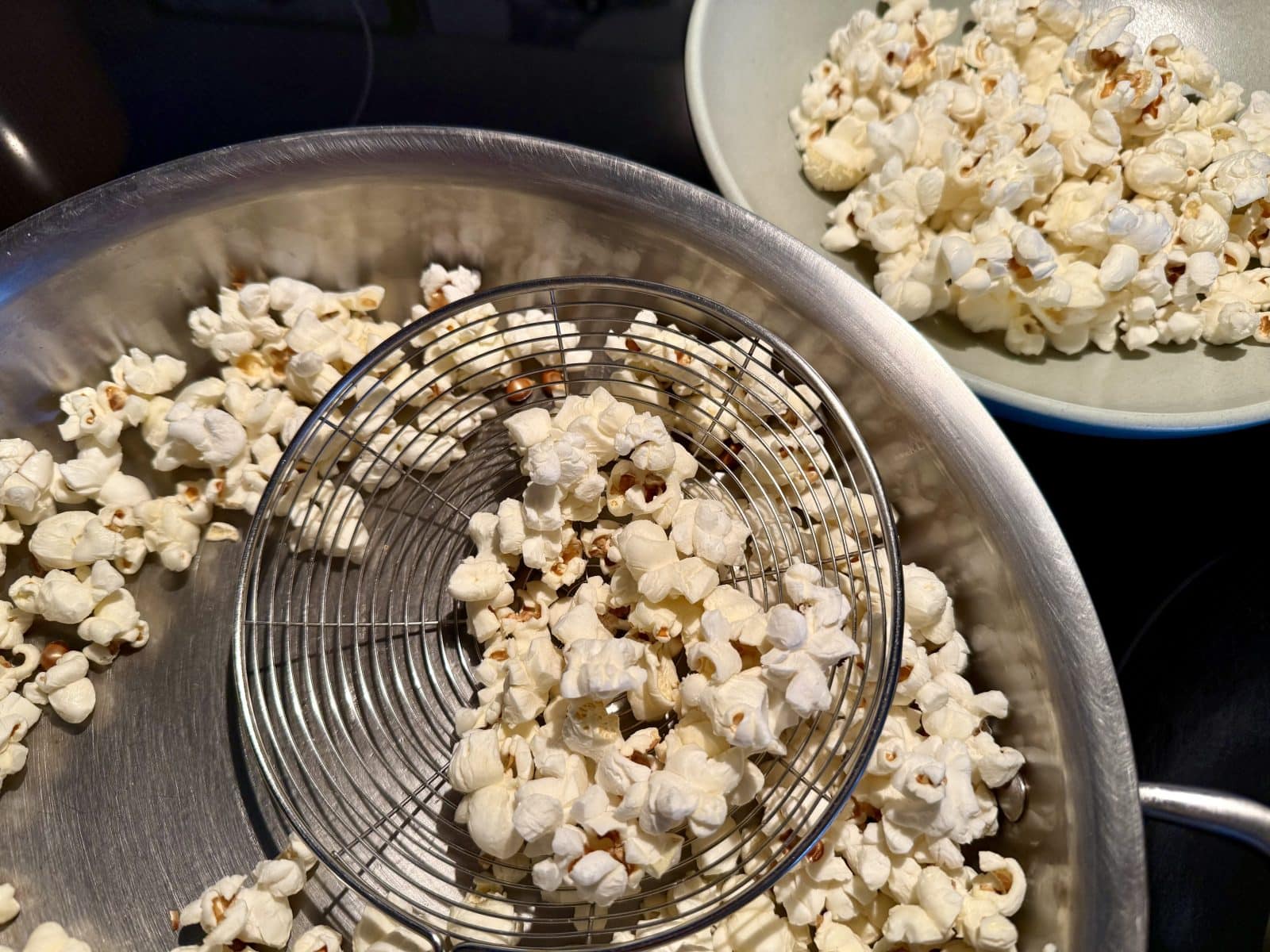
Stay close to the stove to make sure the popcorn doesn’t scorch. Remove the popcorn from the skillet as soon as it has popped.
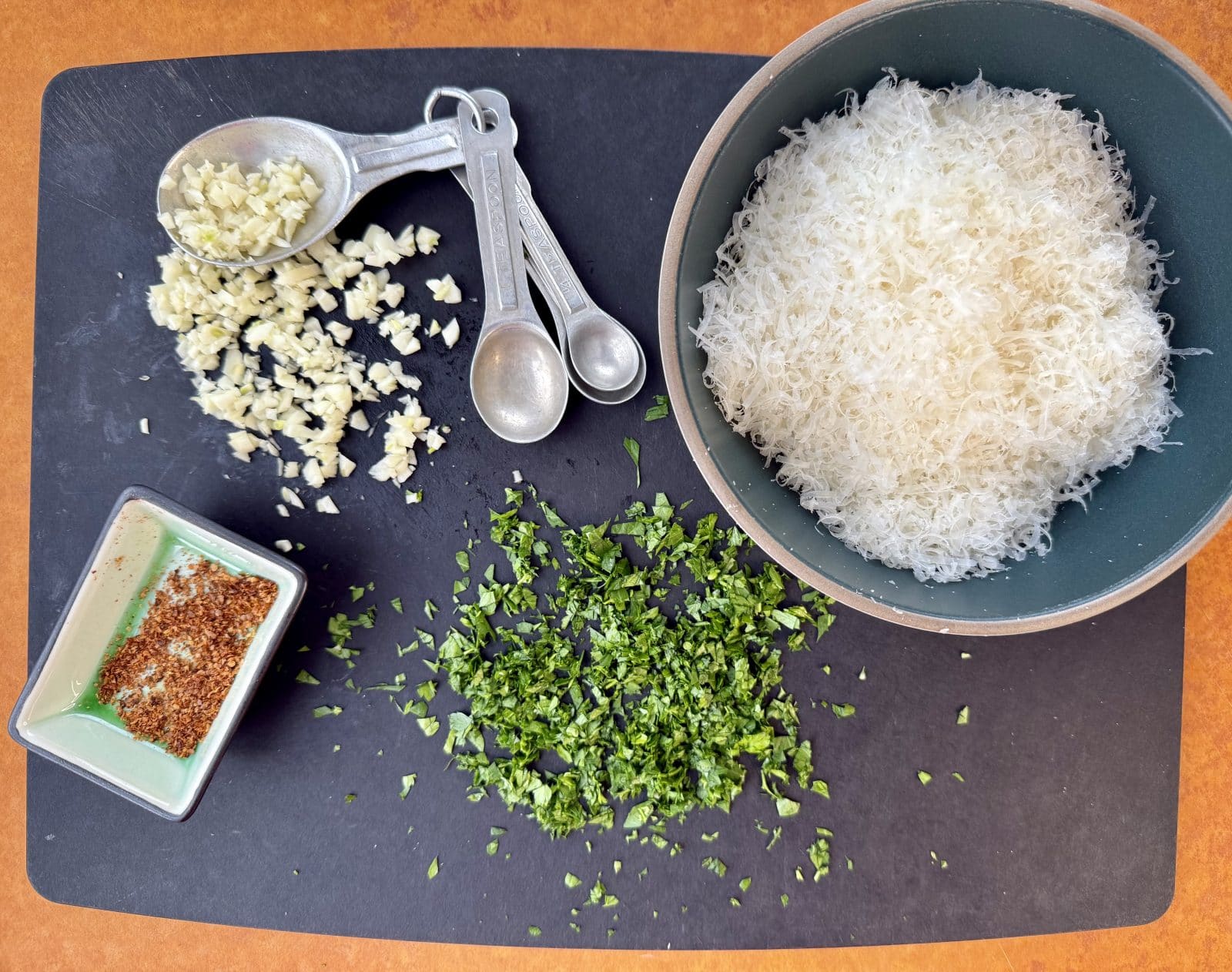
This pasta comes together fast, so make sure the ingredients are ready before boiling the noodles.
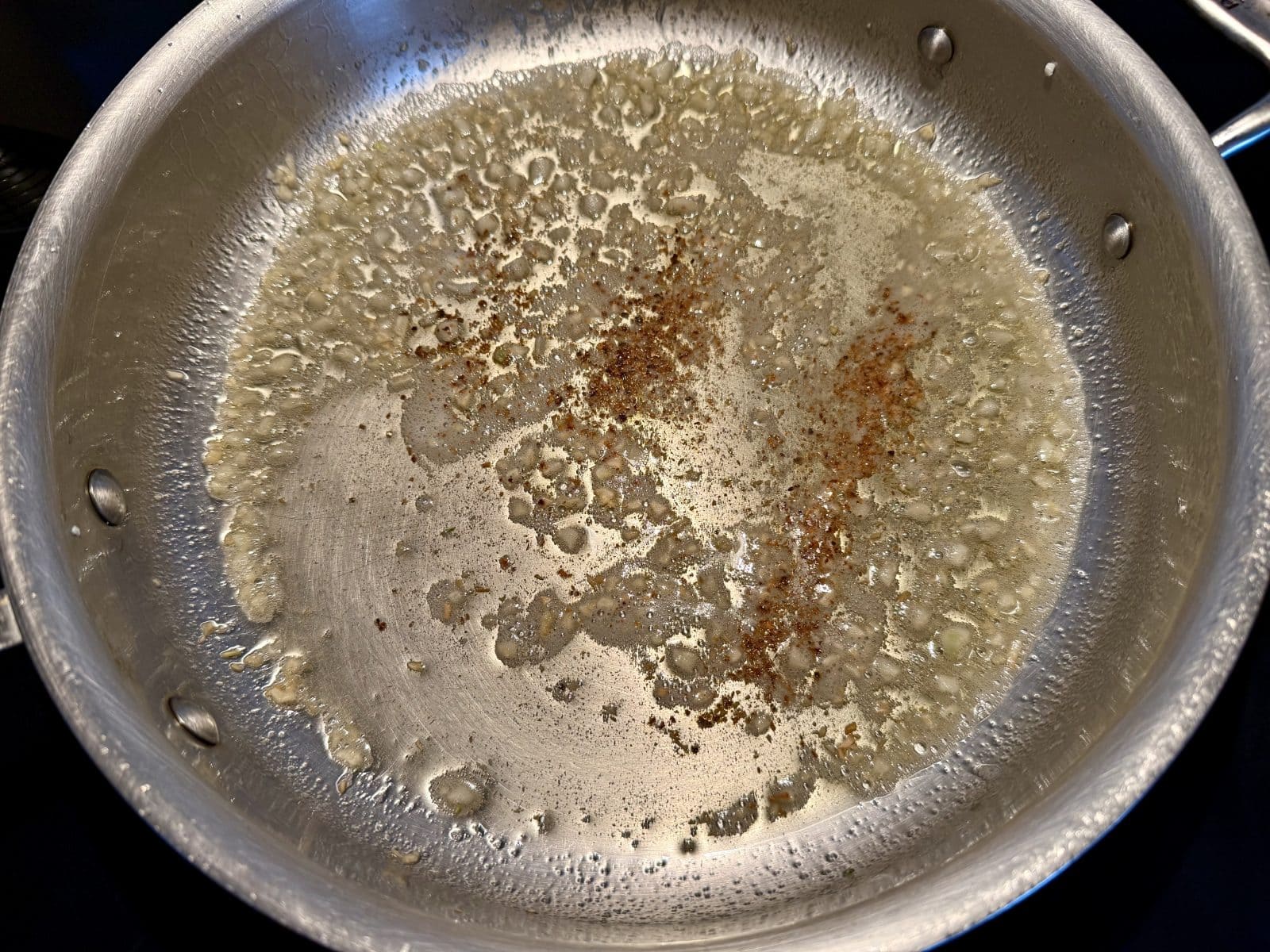
Let the sauce sit off-heat while you cook the pasta. (It doesn’t quite look like “sauce” yet, but have faith!)
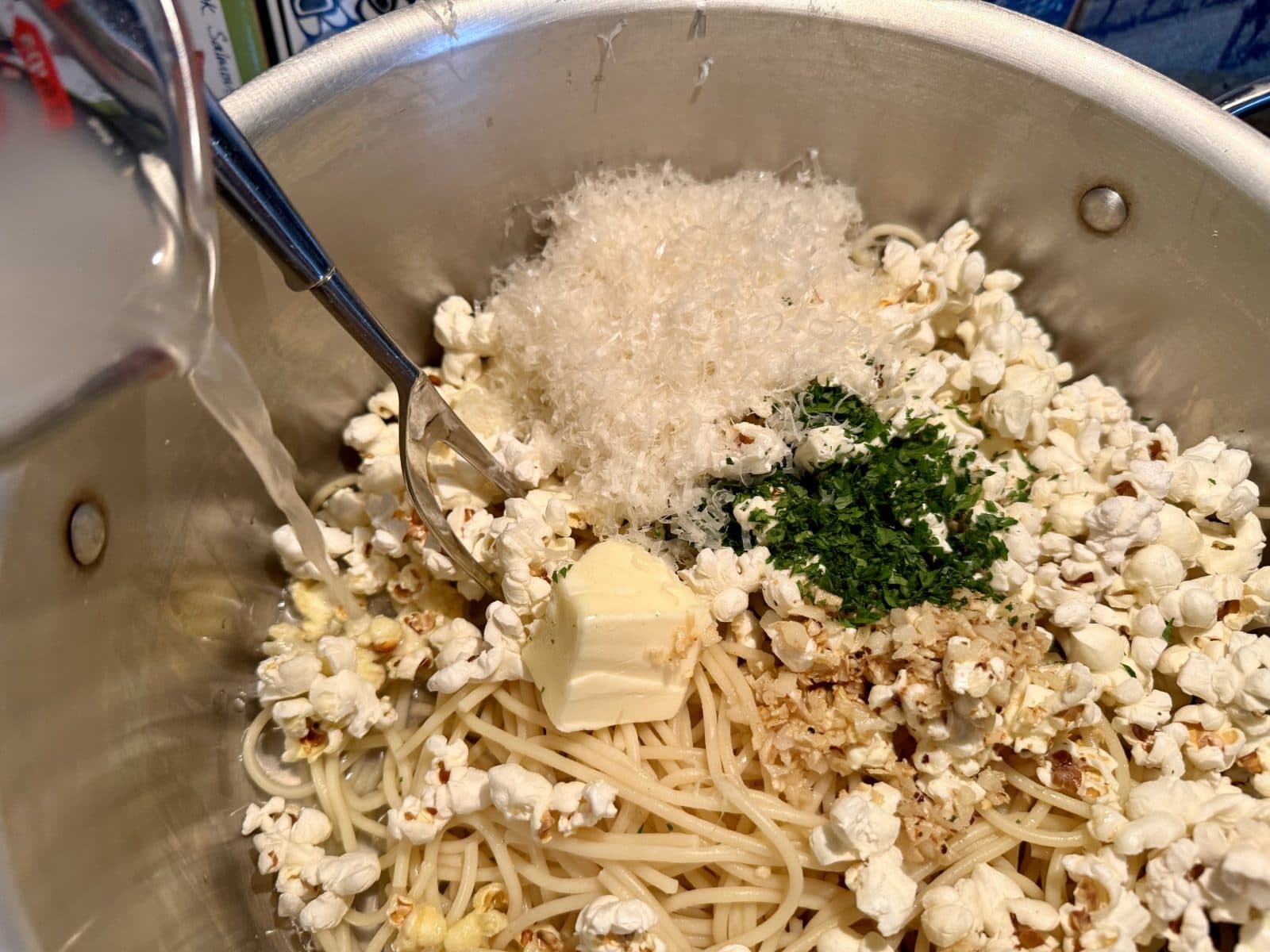
After draining the pasta, return it to the pot over low heat and scrape every drop of the sauce from the skillet over the top. Add the popcorn, cheese, and parsley. Stir in a little more butter and some of the reserved cooking liquid to pull everything together and coat the noodles in sauce.
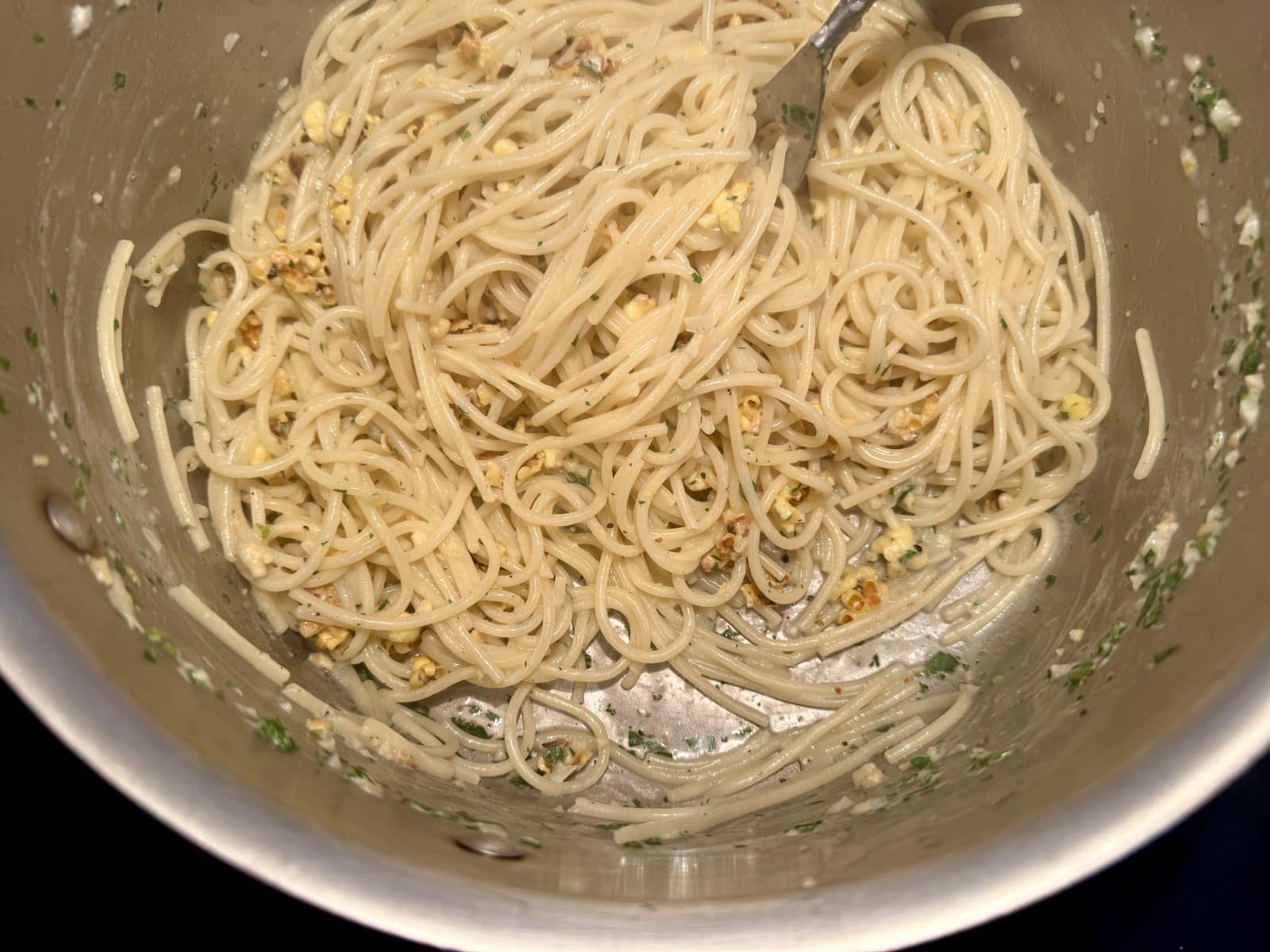
Keep stirring with tongs or a long fork, adding water a little at a time until the butter and cheese melt and the sauce coats the pasta.
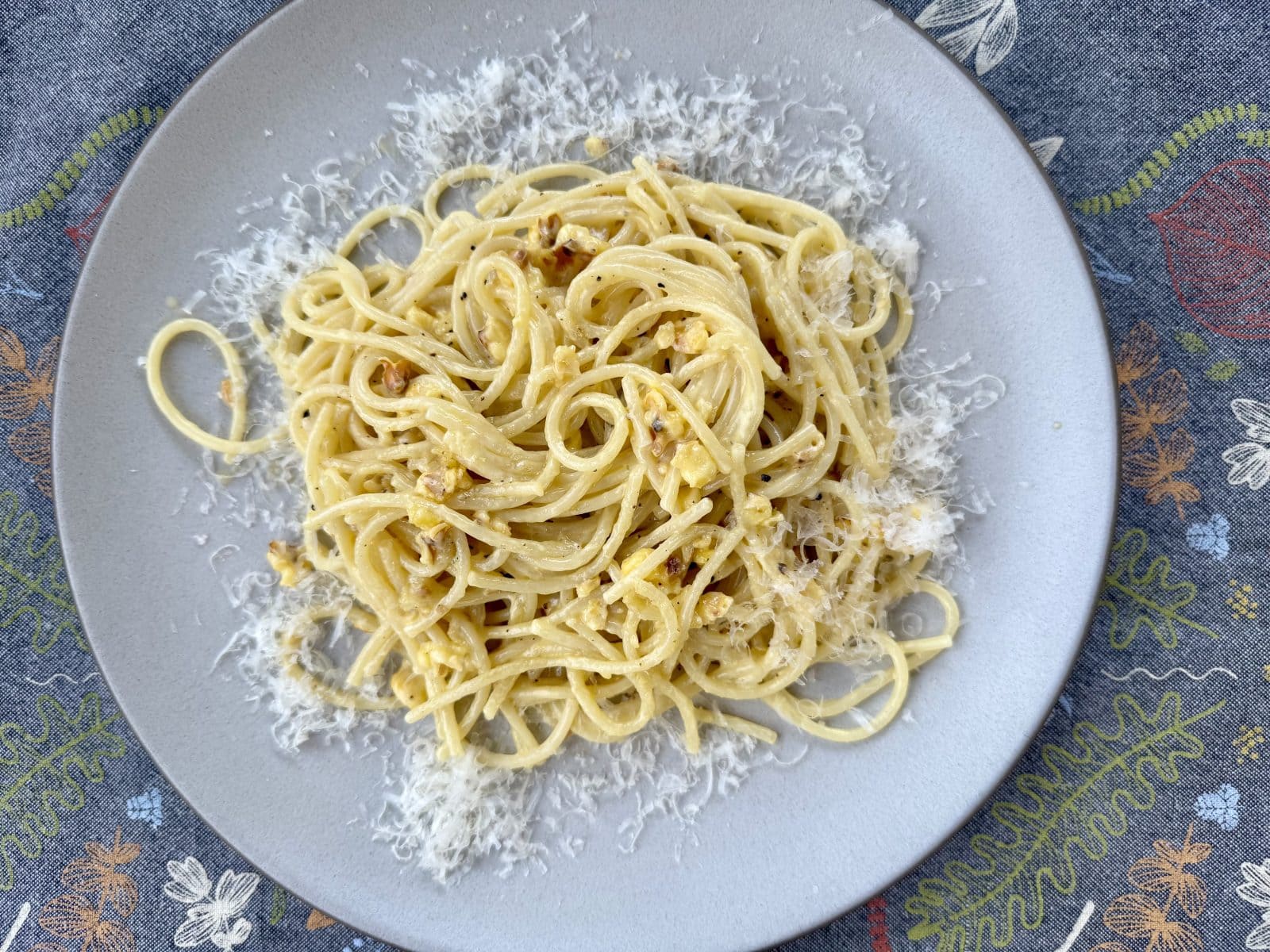
Here’s a shot of the Creamy variation, in case you needed any further convincing to try this recipe!
Pasta with Popcorn
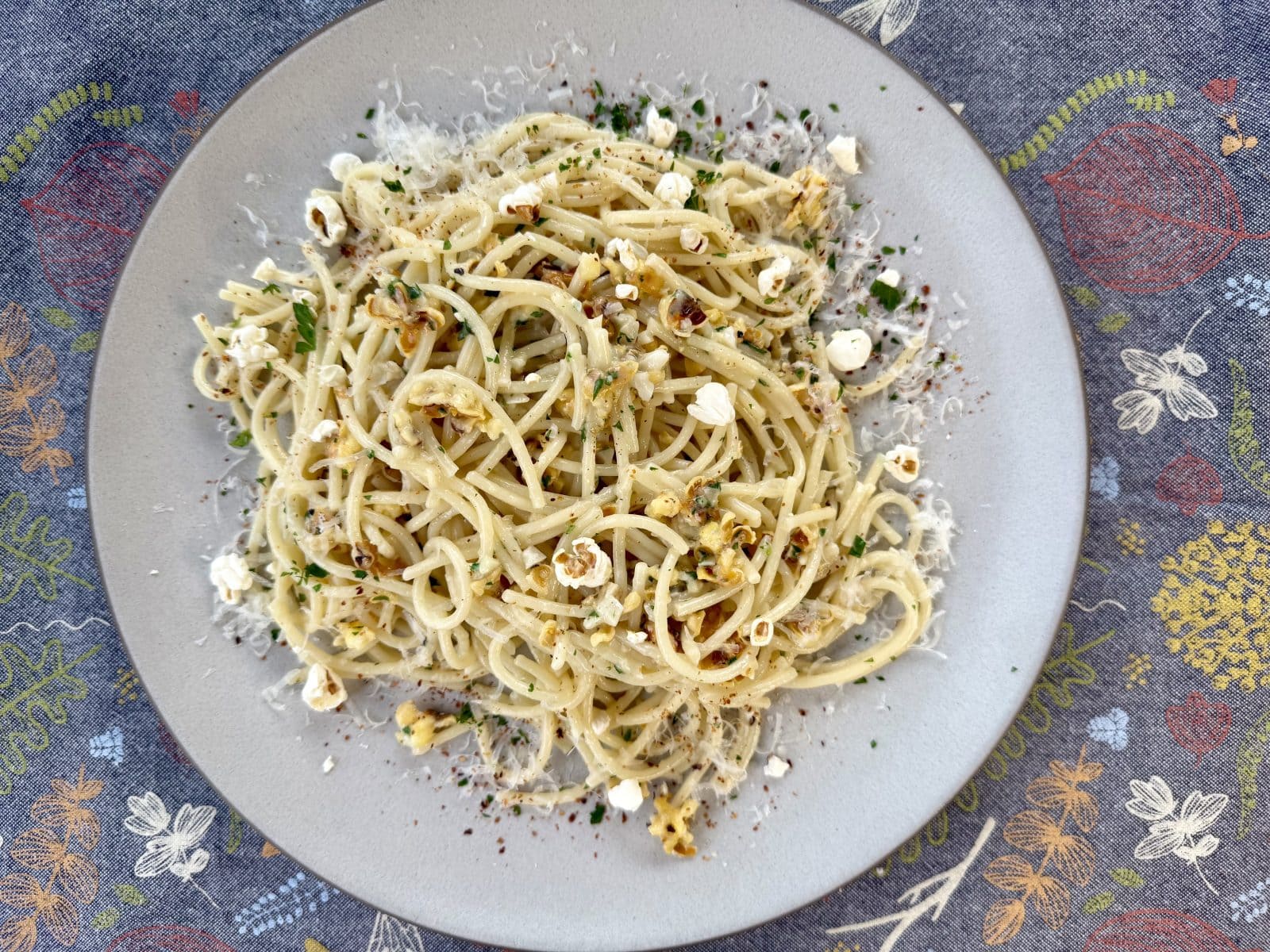
After a toss with pasta in this quick sauce, the popcorn shrinks to become pleasantly squishy like cauliflower, broccoli, or mushrooms (or chicken, for that matter), except it has the swell corny flavor and occasional crunch of dried corn—almost tortilla-like. Be sure to check out the variations that follow for easy ways to make the recipe vegan, creamy, hearty, and more.
Comment