

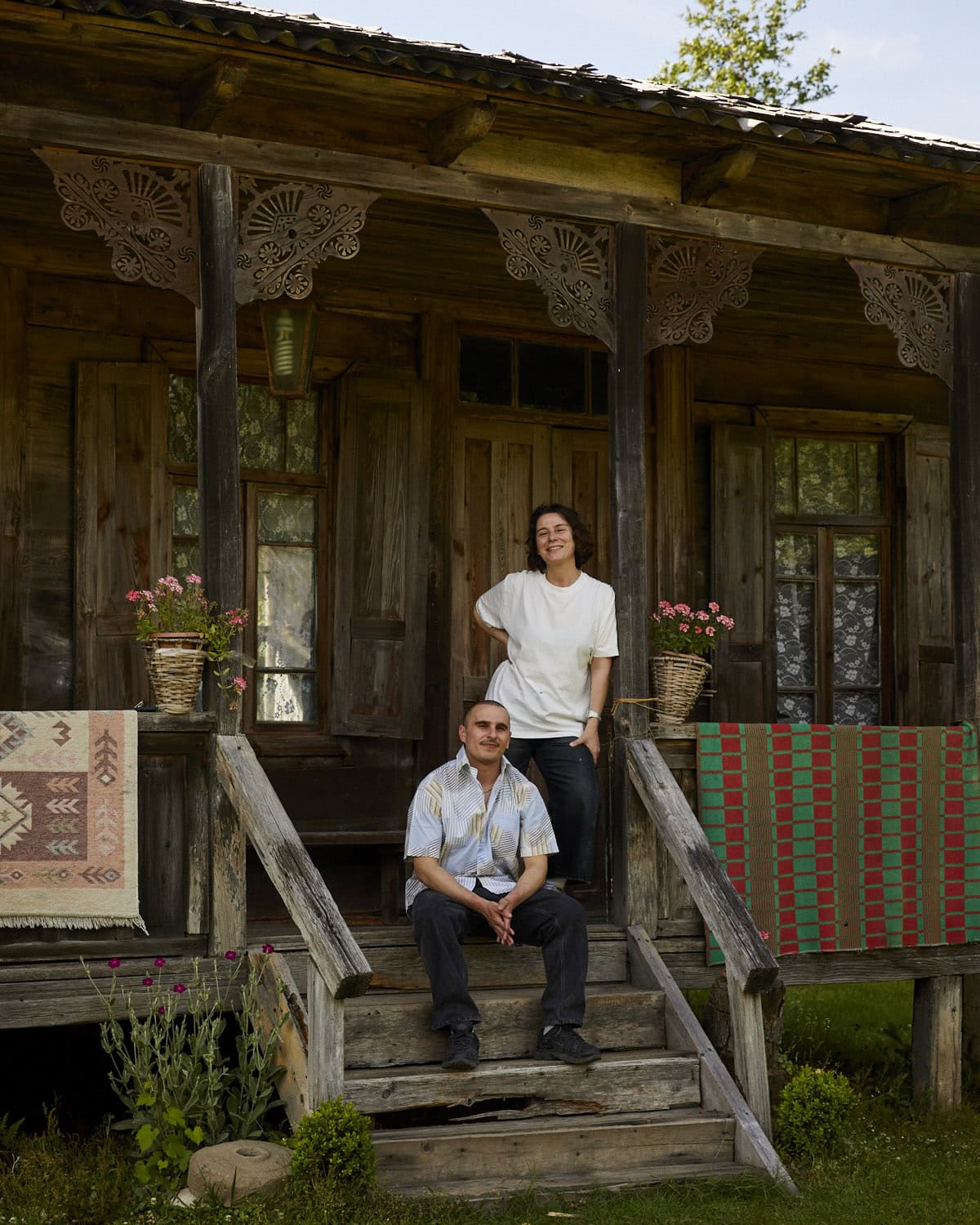
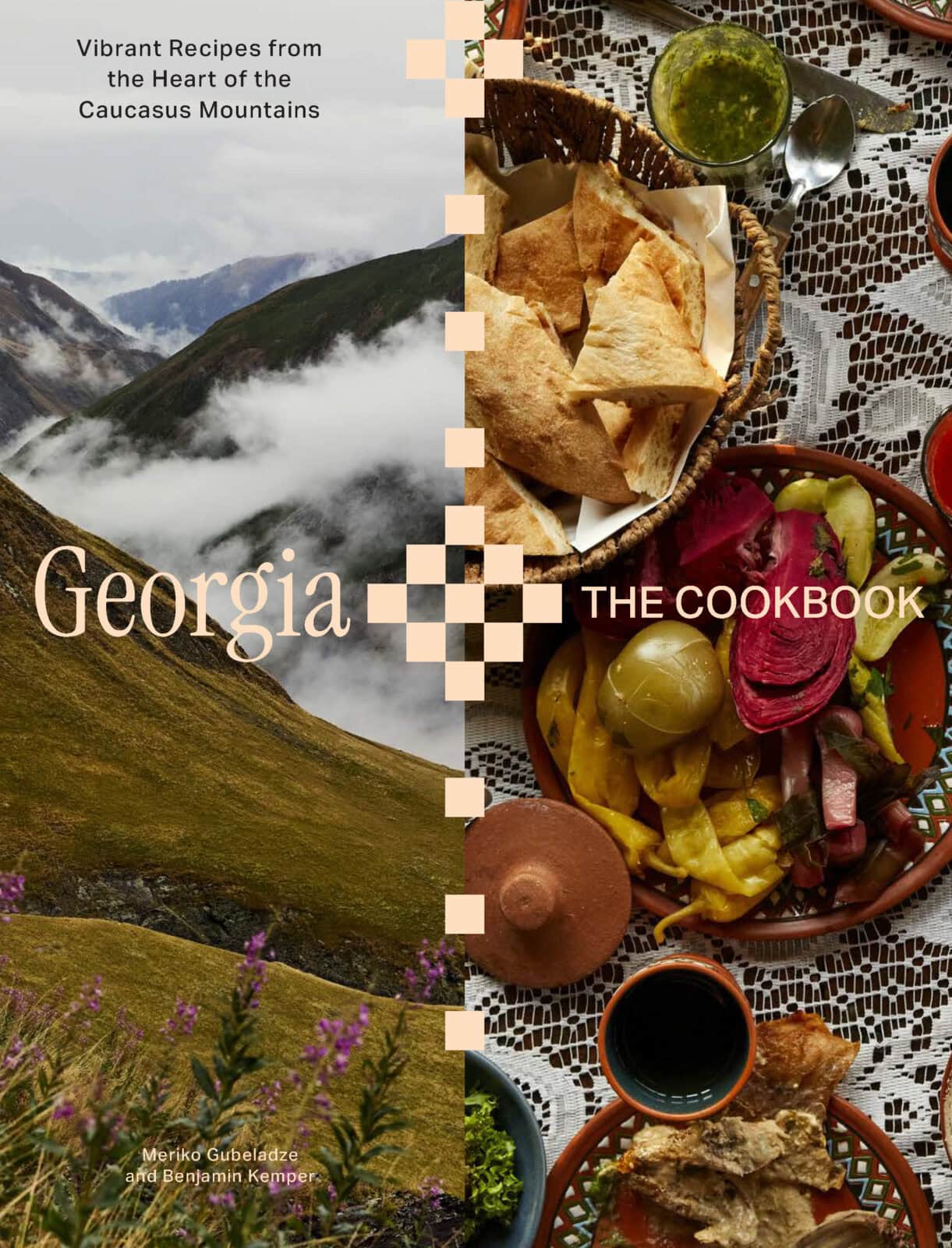
I’ve long suspected that Georgian food is nowhere near as popular as it’s got the right to be, and Georgia, a new cookbook by the chef Meriko Gubeladze (Georgian born and raised, and lives there to this day after taking a decade in the States) and Benjamin Kemper (American, loves Georgia and its food so much that he’s visited more than twenty times) proves me right.
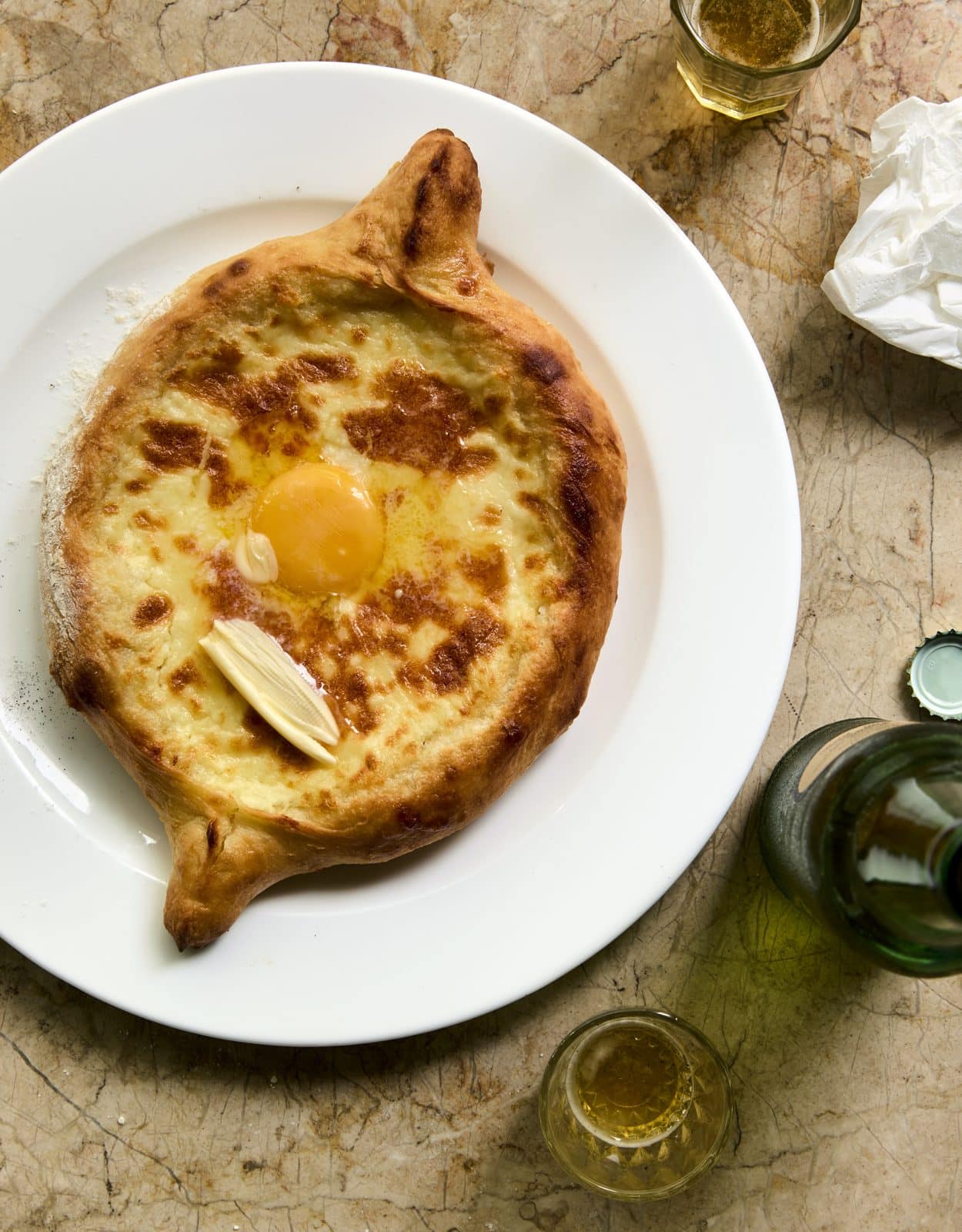
When many people consider Georgian food, khachapuri comes to mind — Adjaruli khachapuri, to be specific, “the ne plus ultra of bread bowls,” Meriko and Benjamin write in the book, a boat-shaped loaf filled with egg and butter and cheese. This makes sense — Adjaruli khachapuri is sooooo good. But paging through this cookbook was a true education for me, and inspirational, too: I especially loved learning about pkhali, an umbrella of spreadable vegetable dishes that are made with finely ground nuts (walnuts are traditional; some of the recipes in Georgia use hazelnuts).
I went through the book cover to cover, and when I was done, not only did I want to get into the kitchen (awesome ways to use beans, an elevated deviled egg, the cheesy corn cakes that we have for you below), I had questions and thoughts, and who better to ask than Meriko and Benjamin? Here’s our chat and some recipes.
Kate Bittman: Meriko, you talk about wanting to put Georgia on its “rightful place on the world stage.” Do either of you (or both of you) have a theory as to why Georgian food hasn’t yet become “mainstream” in America?
Meriko Gubeladze: I think two major factors contributed to it: the Soviet Union and the size of the Georgian population.
Since Georgia was part of the Soviet Union for most of the 20th century, the Iron Curtain simply didn’t allow the kind of migration that helped Italian, Chinese, Mexican, Indian, and many other cuisines spread around the world.
But Georgian food did travel very successfully within the Soviet Union. Moscow had and still has numerous Georgian restaurants, and if you open almost any Soviet-born chef’s cookbook or see their restaurant menus, you’ll probably find quite a few Georgian dishes in there.
So Georgian food did travel, but it just traveled within the borders of the Soviet world.
The second factor is our size. Georgia is a small country with a population of under five million people. After the collapse of the Soviet Union, Georgians did begin migrating more widely, but the diaspora was still relatively small and lacked the financial resources to open restaurants and introduce their food and culture abroad. That also has changed; we now have a more established diaspora, international travel to the country has grown enormously, and more Georgian restaurants are appearing around the world. Plus, it’s impossible to live in a food mecca like New York or London and not start dreaming about your own where you start sharing your food and culture.
In my experience, once people taste Georgian food, they tend to fall for it immediately.
To sum it up, I think Georgian food is having its moment now not because it suddenly become interesting, but because the world has greater access to it. In my experience, once people taste Georgian food, they tend to fall for it immediately.
KB: What handful of ingredients most/best represent Georgian food, and what makes them awesome?
Traditionally, every Georgian woman who cooks knows how to take ground walnuts in her hands and squeeze out that beautiful, intensely flavored oil.
MG: If I had to describe Georgian food in one ingredient, I’d say walnut. Walnut for Georgia is the same as olive to Greeks. We dress vegetables with walnut spread, use them as fat and thickening agent in stews, add them for crunch in desserts, we even extract walnut oil by hand. Traditionally, every Georgian woman who cooks knows how to take ground walnuts in her hands and squeeze out that beautiful, intensely flavored oil. Walnuts are basically a whole cooking technique.
Then there’s a holy trinity of Georgian seasoning, as we often joke: coriander, blue fenugreek and dried marigold petals. This combination appears again and again from vegetable dishes to hearty meat stews. For me, this aroma is the most recognizable taste of Georgia.
I should not forget Georgian tomatoes, so sweet and acidic and juicy, it makes your taste buds tighten. We use tomatoes abundantly in salads, stews, and soups. (I should probably add that I’m from western Georgia, so this list could be a little biased.)
Benjamin Kemper: Everyone talks about blue fenugreek being the flavor that makes Georgian food “Georgian,” but I actually think the coriander does much of the talking—the seeds used in Georgia, called kindzi, are much more pungent and floral than what you can ordinarily find Stateside. For me it’s also the combination of many herbs in a single dish—of parsley, cilantro, and Thai basil chopped and added together. And lastly, the Georgian acid punch that comes from green sour plums (tkemali), which are blended into a sauce that’s served with barbecue, potatoes, and just about everything you can imagine.
KB: What are a couple Georgian dishes that you most want to spread the word about?
MG: Since khinkali and khachapuri have already found their way to fame, I’d say our meat stews, like kharcho: a rich, spicy, and comforting beef stew that we eat with the Georgian version of aligot potatoes (called tashmijabi) or cheesy polenta called elarji. I also love chakapuli: a lamb stew that is very distinctive in flavor, fresh, tart, and very fragrant with Georgian Amber wine and fresh tarragon.
BK: I think pkhali—a whole category of dishes that combines puréed or chopped vegetables with spiced walnut paste—is extremely versatile and underrated. I’d also love to see Georgian stews get more love: the spicy kharcho Meriko mentioned, but also chakhokhbili (tomatoey chicken stew), kalia (Jewish pomegranate chicken stew), and Georgian-style borscht, which is more herb-forward than its Ukrainian cousin. And hardly anybody pays attention to Georgian desserts. One of my favorite recipes in the book is Georgian “pakhlava” that layers cinnamony meringue with walnuts and an easy yogurt dough.
KB: Can you explain how, as someone who was born and raised in Connecticut, you’ve come to visit Georgia more than 25 times? What makes Georgia so special for you?
BK: It comes down to tension for me—tension in a good way. Like any person or place or good book, a push and pull is what keeps you engaged. In Georgia it’s the contrast of the ancient and modern, with some of the world’s oldest churches and best techno clubs. Or the contrast of landscapes, from the barren steppes of the east to the mountains higher than the Alps in the north. Or the people themselves, often reserved and serious at first but ultimately the most welcoming I’ve ever encountered. And that extends to the food, too—where you can have a table laid with dumplings that look straight out of a dim sum parlor and a tomato-cucumber salad that would look at home in Beirut.
KB: I’m fascinated by pkhali. Can you explain what falls under its umbrella?
MG: My absolute favorite. I grew up eating seasonal pkhali and it was one of the first things I learned how to cook.
Originally, pkhali referred to the seasonal wild greens that grow in backyards all over Georgia. You blanch or cook the greens and dress them with a paste of ground walnuts or spices. But over the years other vegetables have joined and today we make pkhali from almost anything using the same basic walnut paste. In the book we use spinach, butternut squash, pinto beans, and baked beets but you also go with baked carrots, blanched cabbage, green tomatoes or tomatillos, green beans, Swiss chard, beetroot, leeks, you name it.
The seasoning can change according to your taste, too, Some people use pomegranate juice instead of vinegar, you could use herbs of your choice, hazelnuts or almonds instead of walnuts, you could also toast them, use onions and garlic cooked or raw, make it spicy if you like, there’s a lot of freedom in it and that’s what I love about pkhali. You take whatever season gives you and make it Georgian using the holy trinity of spices: coriander, blue fenugreek and marigold.
KB: I loved reading about the significance of shila, and how your DJ friend calls the last song in his set his ‘shila song.’ Can you tell our readers about that — and are there any other foods that hold that sort of place in the social arena, a social cue of a dish?
MG: Shila is a kind of pilaf, although we sometimes describe it as a Georgian risotto. It has a very particular ritual and cultural meaning in Georgia. Traditionally it is served at a funeral memorial supra and it comes to the table as the last dish. Once it’s out it signals that the supra commemorating the dead is coming to an end.
That’s where the joke with my DJ friend comes from. He calls the last song from his set his ‘shila song’, basically, this is it, we’re done, time to go home.
It’s actually a delicious, very flavorful dish, traditionally made with lamb and caraway, and I think it has been treated little unfairly because of its association with funerals. You rarely see it on restaurant menus for this exact reason.
Another dish that carried a very different kind of social memory for me is tatarberaki, a Georgian pasta-like dish served with caramelized onions and yogurt. It was incredibly common in Georgia in the 1990s, when people had very little money and very limited means to eat well. It was simple, inexpensive and filling. I remember making it quite often as a teenager and loving it.
For people of my generation you see tatarberaki and you’re immediately transported back to Georgia in the 90s. So those two dishes carry very different memories: shila is connected to ritual and mourning, while tatarberaki is connected to a particular period of hardship and survival.
KB: Meriko, you lived in the US for ten years. What foods did you miss the most?
MG: This is easy: anything that involved my mom’s hands.
Stewed Cranberry Beans with Fenugreek and Cilantro (Lobio)
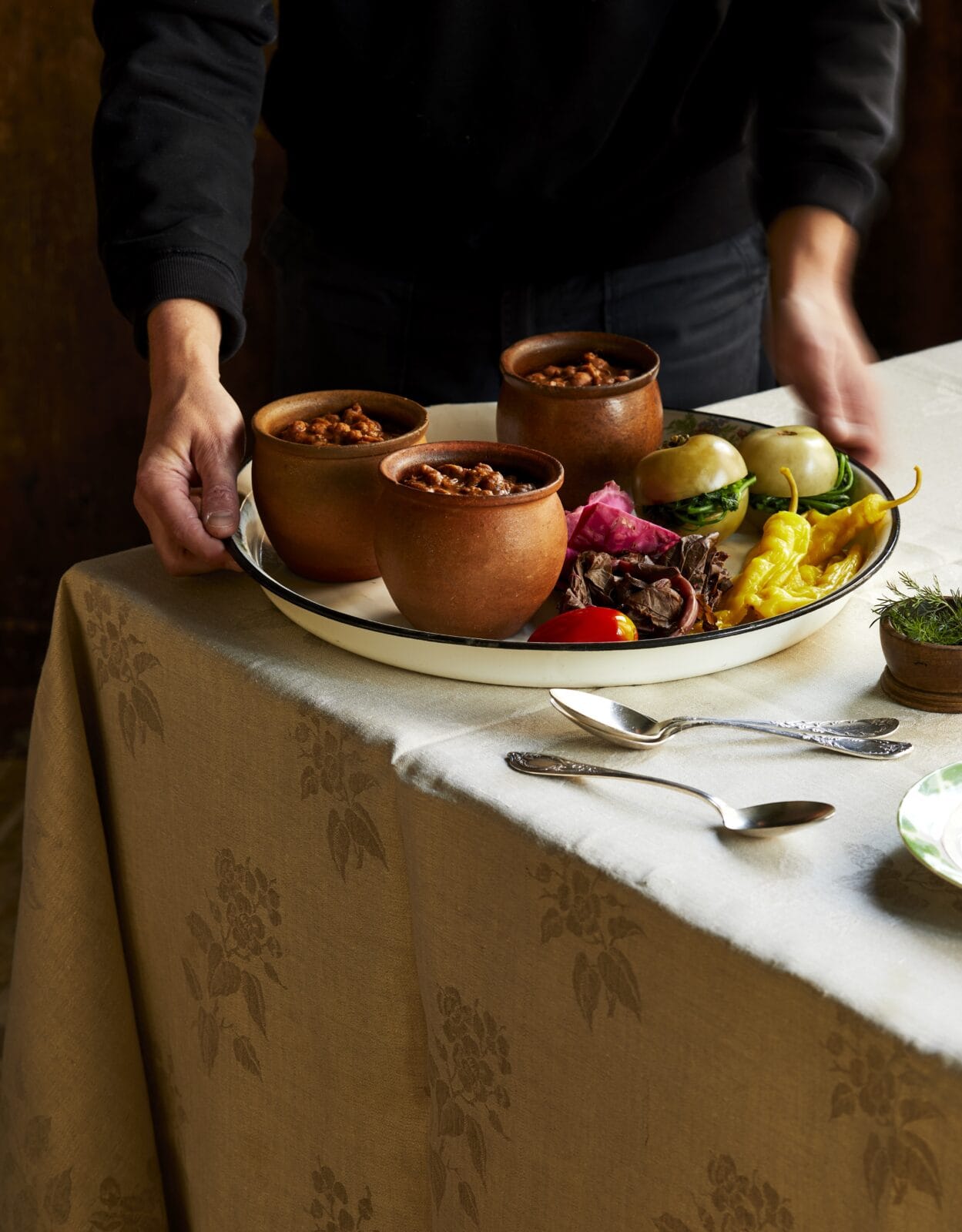
On chilly days when the wind whips down from the High Caucasus, nothing satisfies like a steaming bowl of lobio. Georgia’s signature pot of beans—redolent of cilantro, fried onions, and blue fenugreek—comes in a warmed clay urn accompanied by pickled peppers, squeaky-salty sulguni cheese (available at Eastern European groceries), and mchadi for dipping. Many Georgians say the best lobio is made in the highlands of Racha, where locals flavor the beans with the region’s traditional smoked ham. If that sounds like your kind of thing, add a smoked ham hock to the beans in step 2 or fold in 1 cup of chopped smoked ham along with the onions in step 4. Contrary to popular belief, salting beans as they soak makes for more even seasoning.
Pan-Fried Cheesy Corn Cakes (Chvishtari)
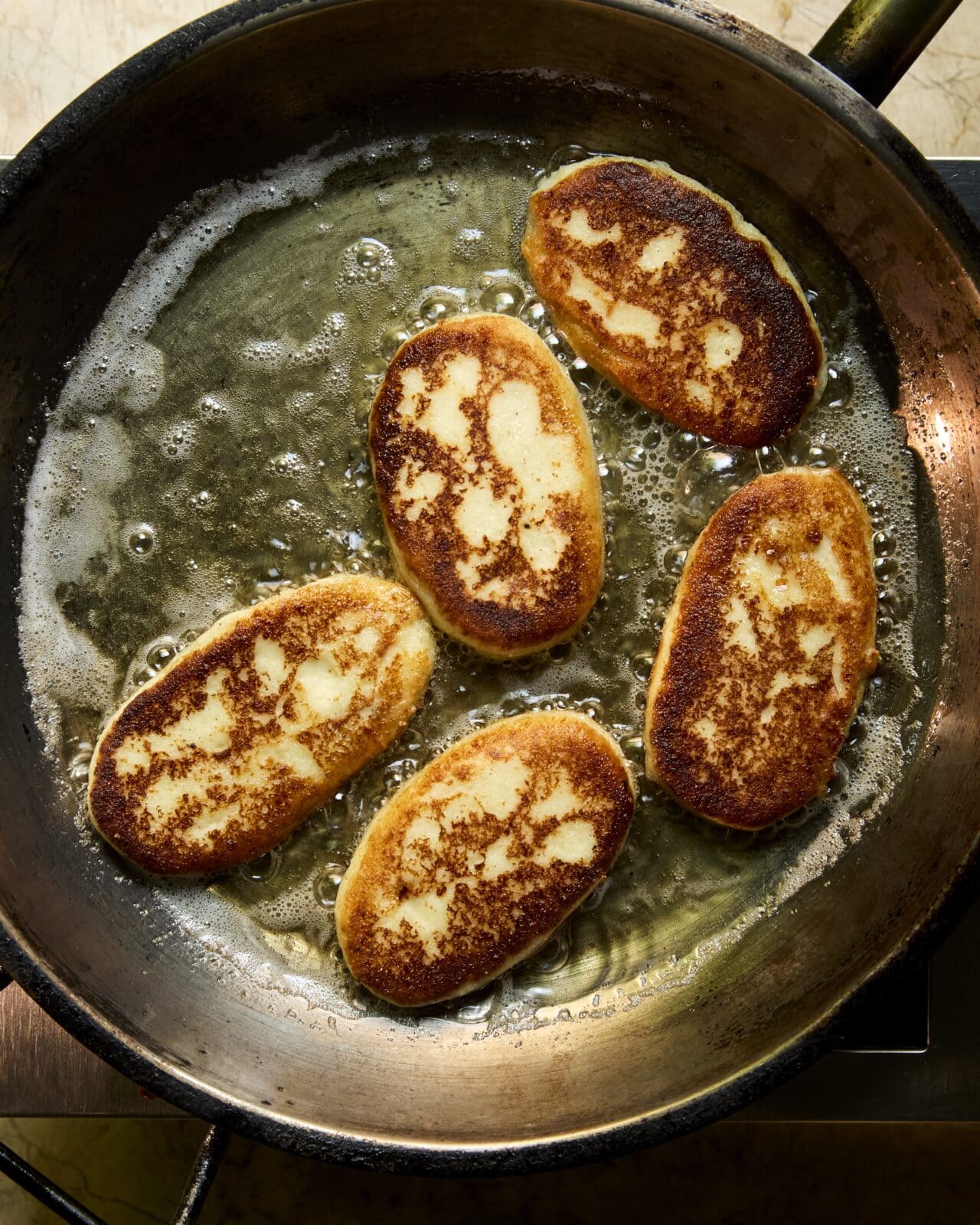
Chvishtari, the richer, cheesier cousin of mchadi, are pan-fried corn cakes that ooze with tangy, stretchy cheese. They’re the kind of hefty mountain fare you crave after a long hike in Svaneti, the dish’s highland homeland. Before maize reached Georgia in the 17th century, chvishtari were made with petvi, an heirloom green millet still used by some families today. Serve these golden cakes alongside pkhali and other West Georgian specialties such as kharcho, cauliflower in walnut sauce, ajika-rubbed rib, or chicken stewed with pomegranate. Feel free to experiment with other cheeses, particularly smoked ones, or fry the cakes in erbo (clarified butter), the Svans’ traditional cooking fat.
Bean Bread (Lobiani)
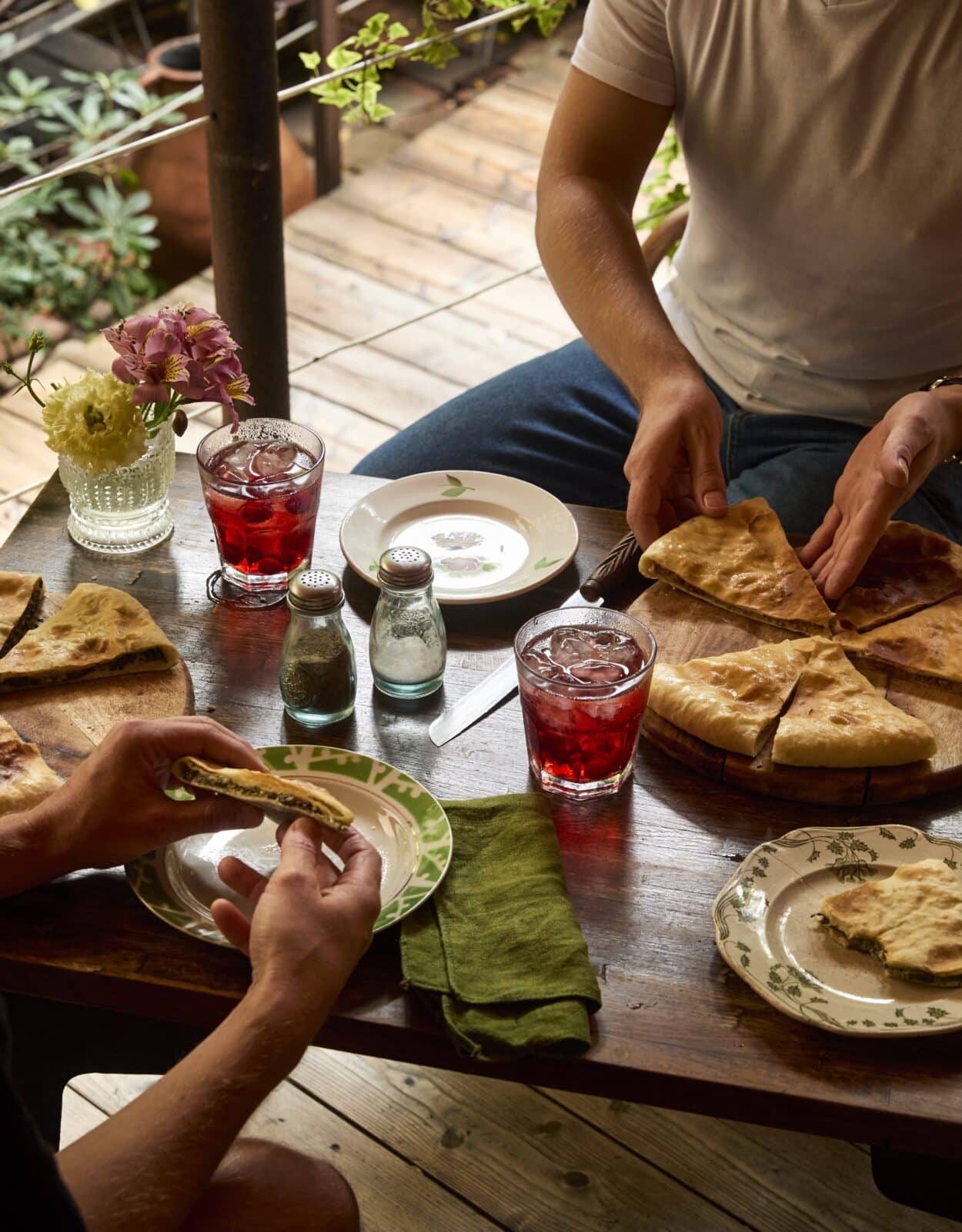
Buttery, peppery beans fill this hearty bread, found everywhere in Georgia, from gas stations to guesthouses to white-tablecloth restaurants. Before New World beans arrived, it was made with mashed gray peas. The dish hails from Racha, a highland region in the northwest known for its smoky lori ham. Locals often enrich their lobiani with ham drippings—a flavor you can approximate with Black Forest or another smoked ham. Onions, though not strictly traditional, lend a gentle sweetness. For the classic, pared-down version, skip the onions and stir the butter straight into the mashed beans.
Double-Crusted Imeretian Khachapuri (Imeruli Khachapuri)
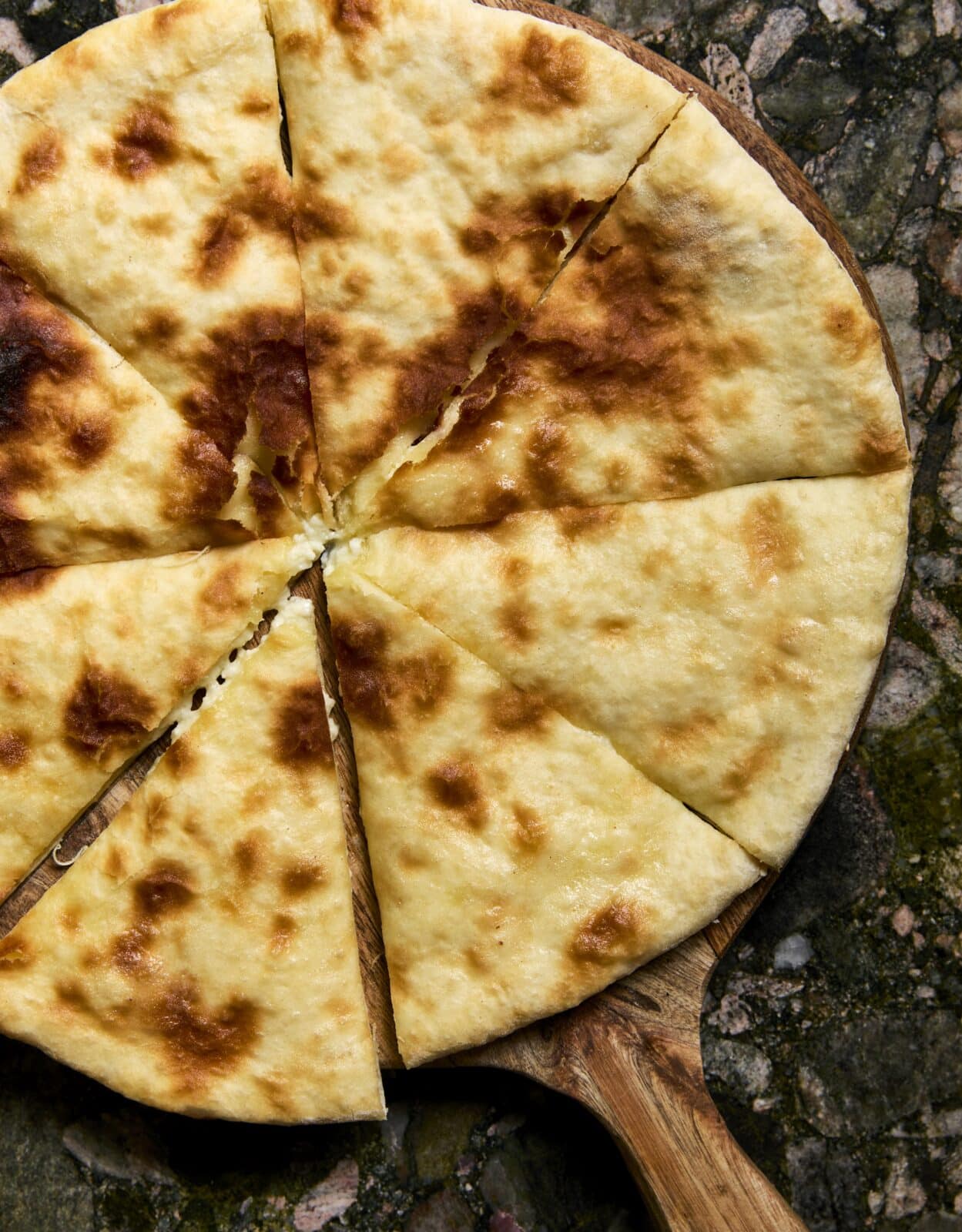
The Imereti region’s simple, comforting khachapuri is the most popular in Georgia: double-crusted, dinner-plate-size, and oozing with tangy, curdy cheese bound with beaten egg. It’s such a culinary cornerstone that economists track the price of its ingredients as an inflation indicator in what’s known as the “Khachapuri Index.” A blend of mozzarella, feta, and ricotta approximates the Imeruli cheese used in the motherland. Short on time? Use good store-bought puff pastry.
1 Comment