
We believe that everyone should have access to good policy writing, so we make ours free. If you’d like to support our work—and gain access to everything else we have to offer, such as our full recipe database, cooking how-tos, and getting all your cooking questions answered—please consider joining us as a paid member. Use the code BIGHOLIDAY40 at checkout for $25 off your first year of an annual subscription.
During his successful campaign to become mayor of New York City, Zohran Mamdani sparked the American imagination with his proposal to combat the city’s crisis of affordability with municipally-owned grocery stores. Now that he is mayor-elect, the idea of government-as-retailer is one step closer to reality in the Big Apple.
While the idea may seem far-fetched in this country, it happens that the government of Mexico has owned a grocery store chain since 1953—and it’s getting renewed attention and support from the current Presidential administration. Looking at the project’s problems and successes seems particularly timely at this moment.
The goal of the Mexican market chain—which is called the SuperISSSTE—has been to provide a place where working people can buy essential products that make everyday life more affordable. These stores source from wholesale suppliers like any grocer, but with a narrower selection to cut costs, and a preference for national rather than imported products. In a country where fresh produce, meat that’s been cut within the hour, and tortillas hot off the press are widely available outside of American-style grocery stores, these markets focus on dry goods such as coffee, sugar, other spices, and dried peppers; canned beans, peppers, and salsas; milk products and cooking oils; and cleaning and paper products.
Right now prices at SuperISSTEs are lower than you can get elsewhere—but not dramatically so, and budget supermarkets (and Walmart and other big-box stores) are filling exactly this type of need. Plus many people like lots of choices, which the government-run stores sacrifice compared to others. The SuperISSSTEs do, however, provide a low-cost and pleasant shopping experience that competes in the consumer market. However, government leverage and investment hasn’t made them into a juggernaut by offering, say, half-prices, or something that would really change the grocery game. They’ve been expensive to run, and plagued by corruption and decay.
The chain is called SuperISSSTE because it includes the acronym of the Institute for Social Security and Services for State Workers, a decentralized Federal office that administers health coverage and services, benefits, pensions, and other programs for state, municipal, and Federal workers and their families, as well as retirees. After originally serving ISSSTE members only, the SuperISSSTE stores opened to the general public in 1985, when they became important outposts for food aid in the wake of the country’s catastrophic earthquake. At its peak, there were 336 stores across the whole country.
Mexico’s newest President is infusing the stores with new life as part of her larger economic plan to strengthen the country’s internal economy while promoting everyday wellbeing.
Unfortunately, the 21st century has been a rough one for the government chain. Years of sustained financial loss, Federal investigations into systemic corruption, and persistent decay and neglect have given them a bad name. 2015 saw the closure of more than 200 stores, the vast majority of the chain’s locations. In 2022, then-President Andrés Manuel López Obrador (AMLO) made the SuperISSSTE an anti-corruption target. Now, only 43 locations remain, the majority of them in Mexico City. (In rural areas, the government also funds more than 25,000 “Tiendas del Bienestar” (stores of wellbeing) that stocks dry goods, milk, coffee, and other basic food products in vulnerable communities that the government says aren’t reached by private stores.The government buys its own milk, honey, and coffee, and packages it under its own brand, saying it emphasizes small and Indigenous growers and offers low-cost products. Community members apply for their own store by meeting requirements like demonstrating a critical mass of and pledge to support operations.)
But Mexico’s newest President is infusing the stores with new life as part of her larger economic plan to strengthen the country’s internal economy while promoting everyday wellbeing. I don’t think it’s a coincidence that in a time of right-wing momentum across the world, politicians are spending political capital on this kind of project, in which the government takes a more hands-on role in a globalized and predatory supply chain that has such an intimate—and frustrating—role in so many lives.
Since 2024, President Claudia Sheinbaum has prompted ISSSTE to make a sustained effort to revitalize those SuperISSTE stores that are left. Early that year, the ISSSTE announced that it was bringing the chain under national jurisdiction (it used to be decentralized like most of its other programs). It also promised new models of purchasing to reduce expenses and offer new products. In October, President Sheinbaum made public commitments to renew the SuperISSSTE. This fall, one year into the SuperISSTE’s glow-up, the supermarket chain has touted a series of successes, among them the opening of a new distribution center in Guadalajara, the addition of 750 new Mexican suppliers, and a nearly three-fold increase in sales. (To be fair, sales across the chain began at a fairly low metric).
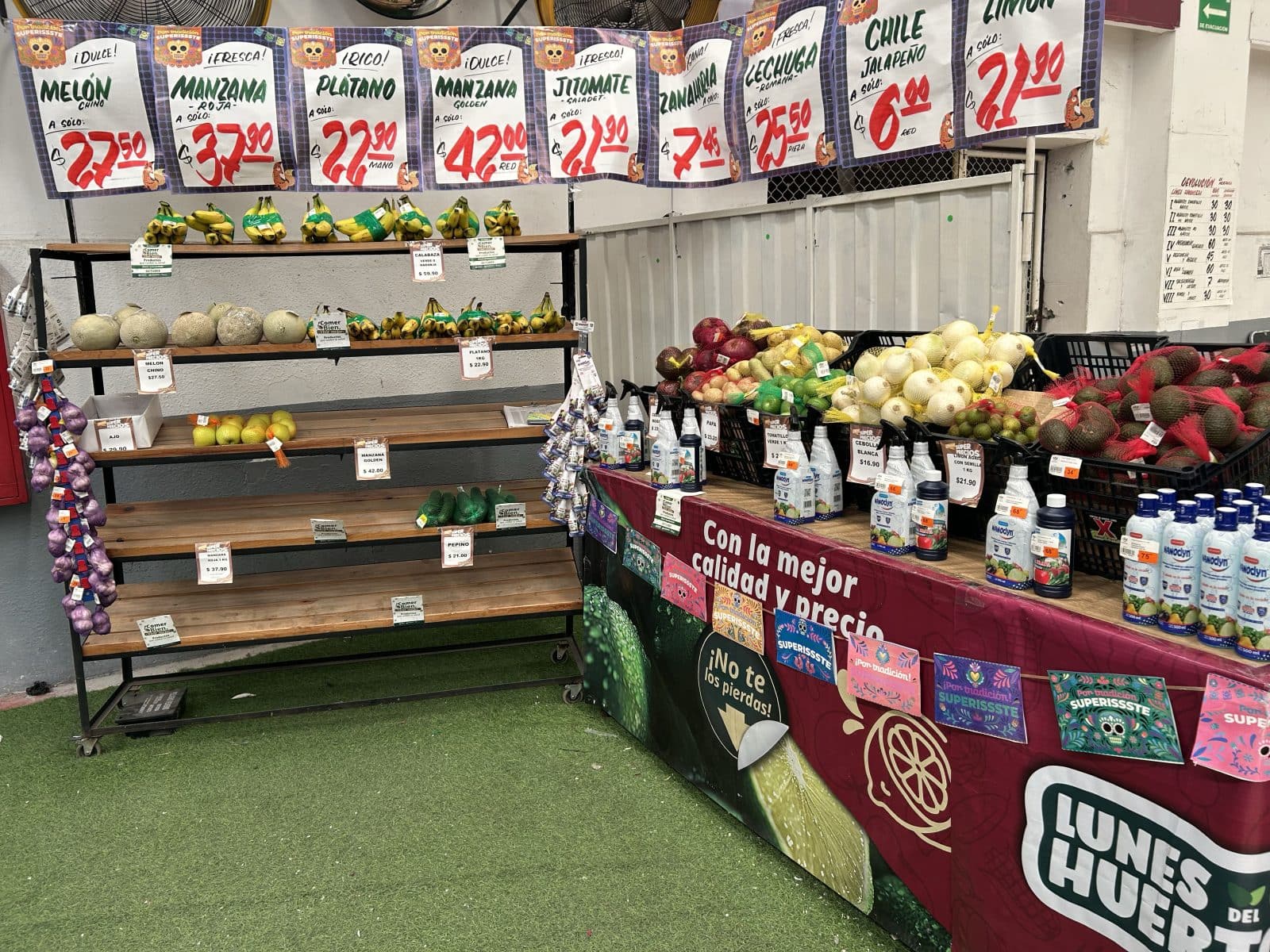
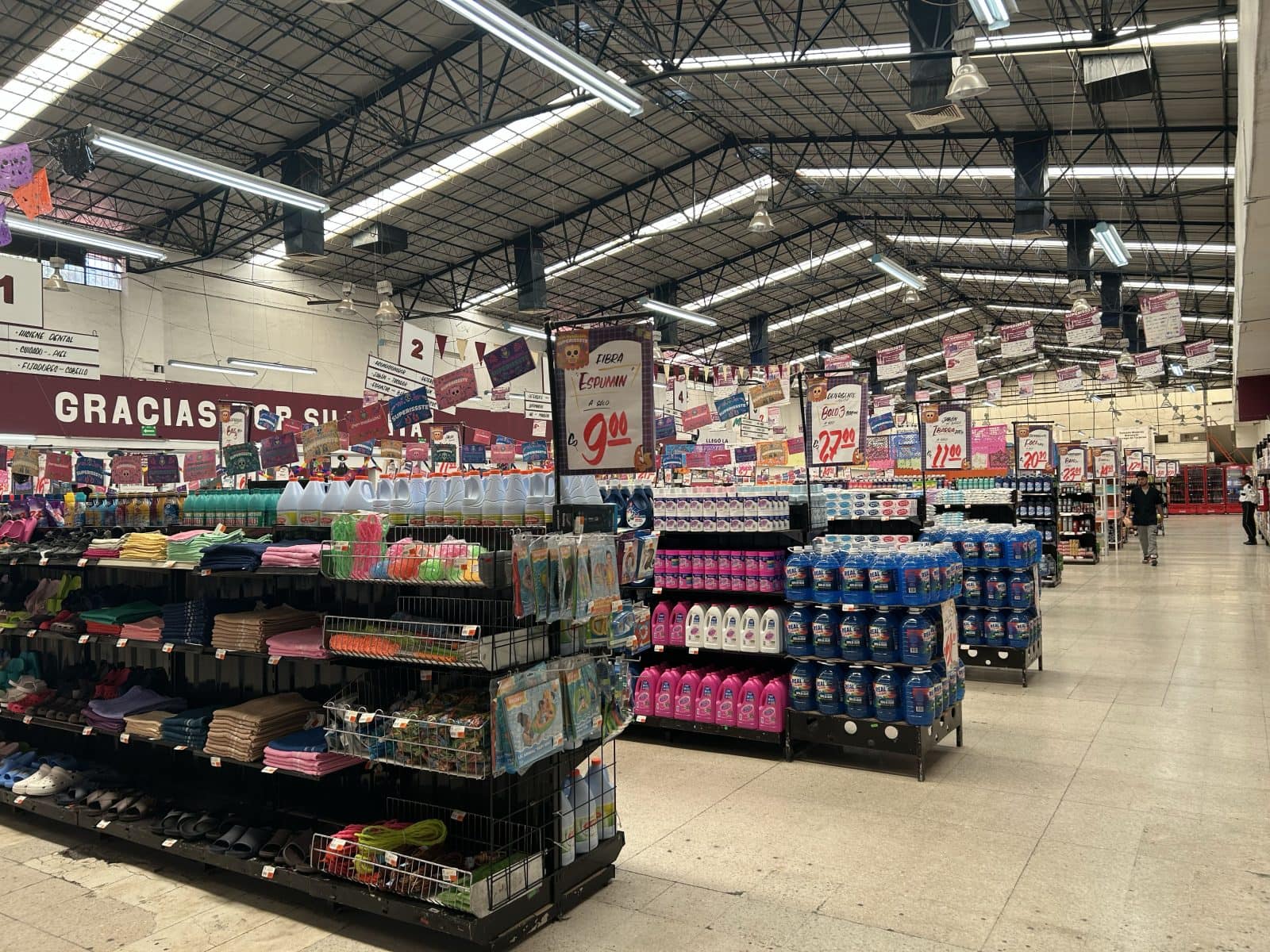
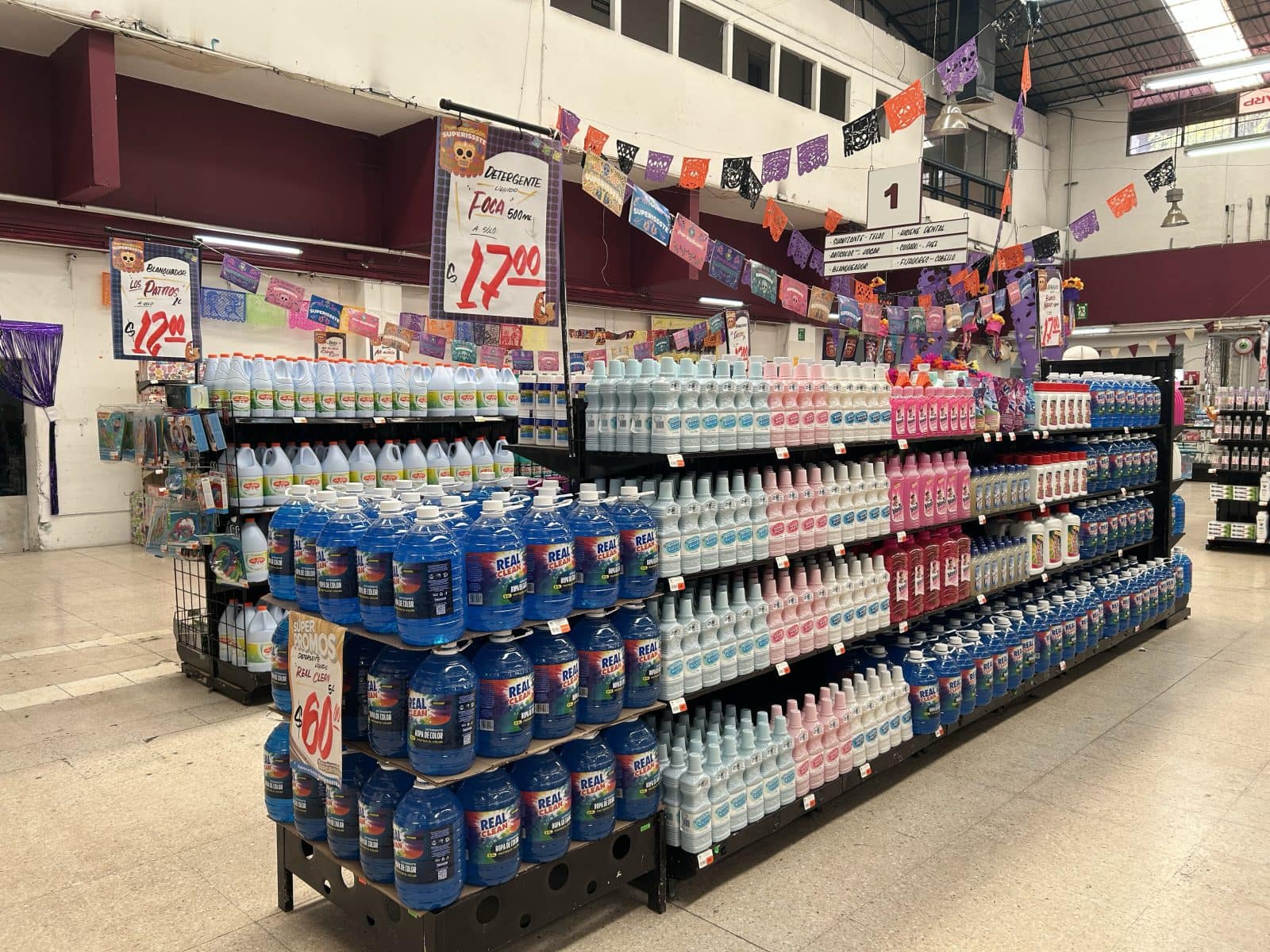
Some results are already clearly visible in the stores themselves, although the new effort is scarcely a year old. In one of the supermarket’s flagship locations, by the Balderas metro stop in Mexico City, all this new attention is in evidence. The interior is unglamorous but clean, with high, warehouse-style ceilings and soft overhead lighting. In the week I spent visiting, displays for Día de Muertos went up, along with sales pamphlets and showcases of weekly promotions. The store was never particularly crowded, but never empty either. It bears mentioning that compared with budget grocery stores that sell merchandise out of cardboard boxes, which are the chain’s closest competitors on price, the SuperISSSTE provides a traditional shopping experience with bright-colored signage and carefully stocked aisles.
One day in this market, I met a bespectacled gentleman named David, pushing a cart full on the bottom with bars of soap. He told me he comes three or four times per year to stock up on toilet paper, canned tuna, coffee, cleaning supplies, and other nonperishables. Though the variety, of course, is more narrow than other stores, a sale price in Walmart, he says, will be the normal price here. For being over 60, he also gets a 10% discount when he shows an older-adults benefits card issued by the government, along with the 5% discount available with the free-for-everyone benefits card.
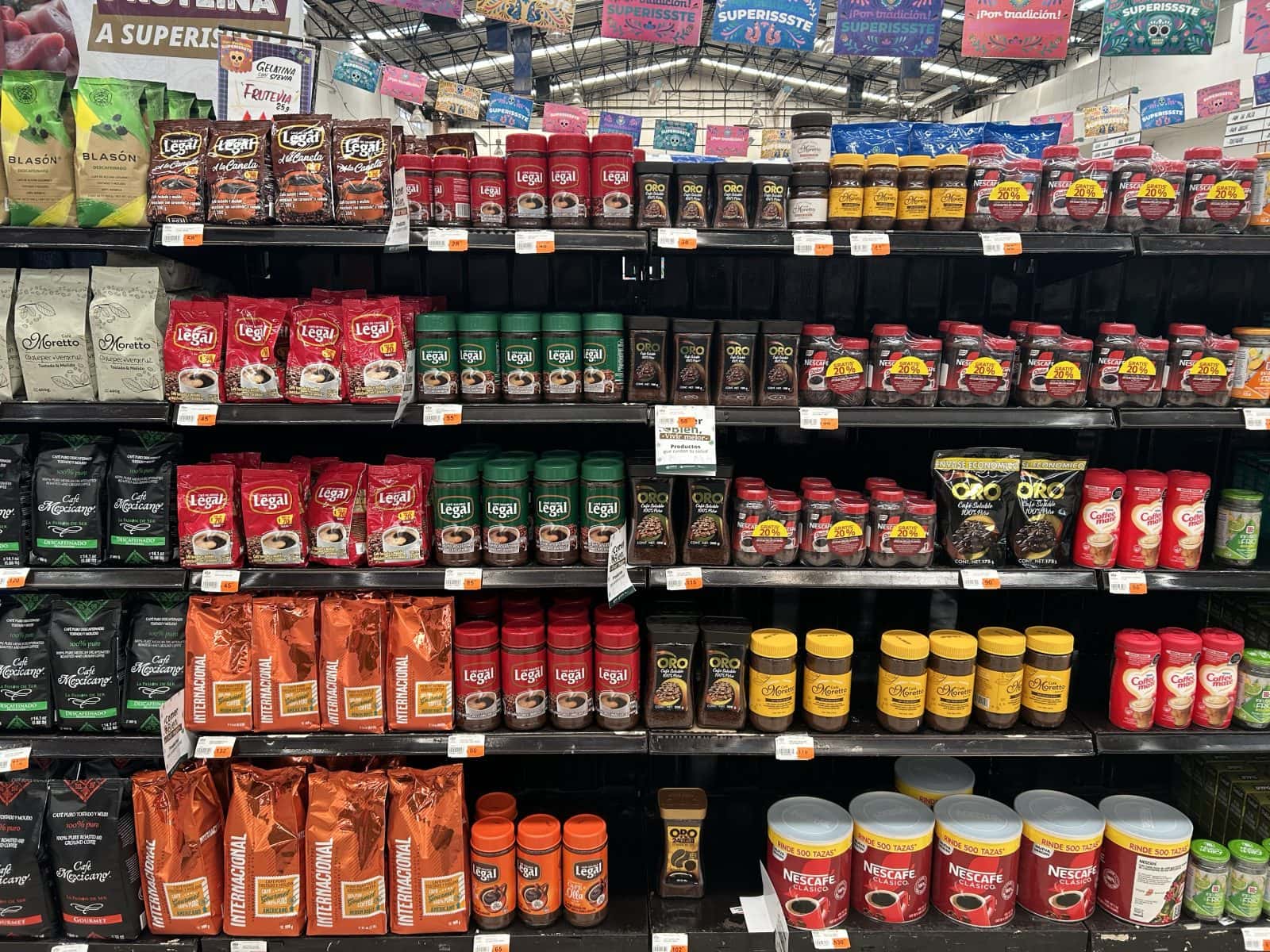
David also feels personally invested in the idea that SuperISSTEs provide affordable products that also promote the national manufacturing economy. “A mí me interesa que lo que yo compre sea Mexicana. Ni siquiera que sea una empresa transnacional que produzca en México. Si es Mexicana, yo puedo elegir de donde quiero. O a quien quiero impulsar.” [“What’s important to me is that what I buy is Mexican. Not even a transnational business that manufactures in Mexico. If it’s Mexican-made, then I can choose where to get it from, or who I want to support.”]
Here, the global brands have a lower profile, if they’re there at all, and smaller suppliers have a better chance of getting in.
When buying tuna, for instance, David finds two brands—one from Sinaloa and the other Michoacán—but he selects Michoacán, because it’s not in the larger supermarkets. He wants to support businesses that have little traction in the bigger stores. He shows me one soap brand and then another, identifying on the packaging the places in Mexico where they’re manufactured. In other grocery stores, shampoos from national and Latin American companies compete with brands like Head & Shoulders and Herbal Essences, both owned by the American super-conglomerate Procter & Gamble. Here, the global brands have a lower profile, if they’re there at all, and smaller suppliers have a better chance of getting in.
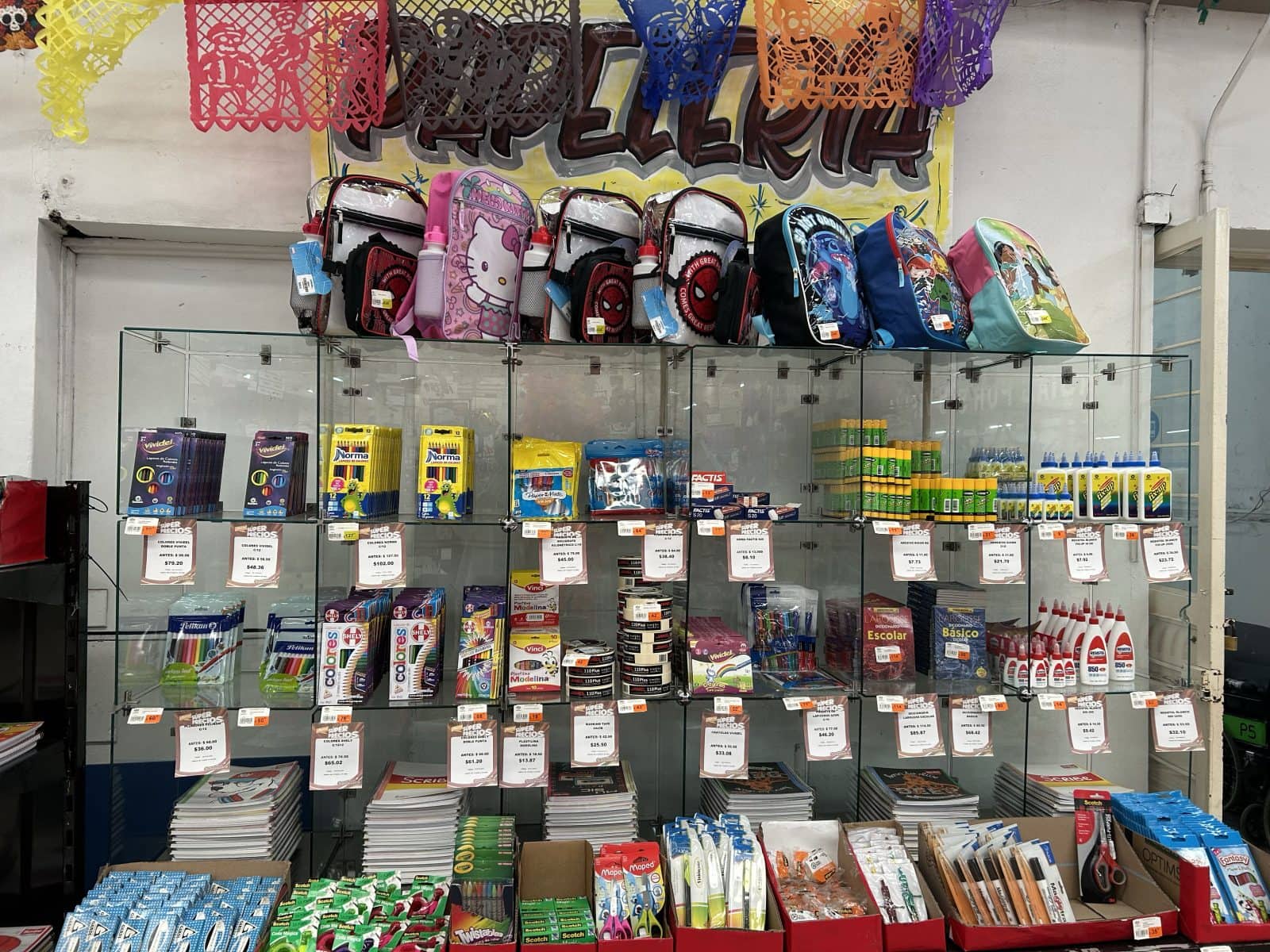
In the “papelería” section, stocked with office and school supplies, David takes a notebook off the shelf and asks me to notice the quality of the paper, and then the price. He claims it’s far cheaper than elsewhere, and it’s made in Mexico. The pens, too, he proves to me, are Mexican. He also says that the papelería shelves are new this year.
All that said, it is true that, even if these state-owned grocery stores can return to their former glory, or even double or triple that success, they would play a marginal role in the grocery industry in Mexico, much less the foodshed as a whole. Only the country’s richest consumers spend the highest portion of their income in supermarkets. Mexican society makes an estimated 85 percent of its food shopping visits, and does the majority of its food spending, at what researchers call “informal” food outlets: public markets, taco stands, tortilla makers, bodega-style corner stores, small mom-and-pop restaurants, and the numerous other ingenious and delicious ways that one can eat in Mexico. This is more evident than ever when one steps out of the SuperISSTE that I visited, which lies in the center of just such a cornucopia of vendors, surrounding a park in front of the national library.
The state-owned grocery stands beside the private sector as an option that prioritizes price and its members above all, and actively works to cultivate national supply chains.
For now, Mexico has 7,000 grocery stores and not even 50 SuperISSTEs. Still, the state-owned grocery stands beside the private sector as an option that prioritizes price and its members above all, and actively works to cultivate national supply chains. “If many [Mexican] businesses are having a hard time finding distribution networks and getting into new markets, here they have a distribution network they can use to access the SuperISSSTE…they’ll be welcome, they’ll find a physical space for their products, for their sale and dissemination,” the ISSSTE’s director said in September at a convention for new suppliers.
If state projects can help to hold back the tide of imperialism, then Mexicans stand a better chance overall at having the food system they want.
Meanwhile, USDA, McKinsey, and other handmaidens of global capital will keep working to bring a greater share of Mexican income into the coffers of Walmart—the country’s largest grocery retailer—and other supermarket giants like Soriana and Chedraui. Budget grocers like Tiendas 3B, similar to Aldi, are growing in Mexico and often mentioned in Google Reviews of the SuperISSTEs as comparable options. All of these actors see the population’s $80 billion food budget as a massive opportunity for profit. If state projects can help to hold back the tide of imperialism, then Mexicans stand a better chance overall at having the food system they want.
In the SuperISSSTE we find a cautionary example as much as a proof of concept.
From the perspective of the United States, the SuperISSSTE is thought-provoking on the basis of its mere existence. As others have pointed out, from the military commissary system to similar subsidies and programs in Turkey and elsewhere, these kinds of projects have precedent. In the SuperISSSTE we find a cautionary example as much as a proof of concept. Independent of their capacity—in the short term—to make a scalable impact on the entire supply chain, the presence of municipally-owned purveyors affects what we think is possible when it comes to how and from whom we buy our food. If a political project can successfully supply neighborhoods with affordable food, even if it doesn’t take over the entire local market, it might build some faith and goodwill, or at least a more concrete relationship, between citizens and government. In a society characterized by mistrust and disconnection, this alone might be worth the effort.
For my own opinion, I think the treatment of food as a purchasable commodity has been a catastrophe, and state grocery stores upset this in a significant way. We need this and many more ways to interrupt the private market for food, which privileges the wealthy and perpetuates hunger. For me, this is one small step toward every grocery store being completely free, whether the state owns it or not. But that’s just one vision, a long way off, of a just food future.
David wants more of the population to know about this project. “Aquí lo que le hace falta, es que se conozca, porque nadie sabe que aquí venden bien. Nadie sabe.” [“What’s missing is knowledge, because nobody knows that there’s good stuff here. Nobody knows.”] Progress is being made on that front—I was drawn to the grocery store, for instance, from a sign on the metro. Perhaps with more time, the renewed success of SuperISSSTE will continue.
Charlie Hope-D’Anieri is a freelance writer. He’s covered food policy and politics for The New Republic, Vox, Mother Jones, and many other places. To follow his work, subscribe to his newsletter.
Comment