

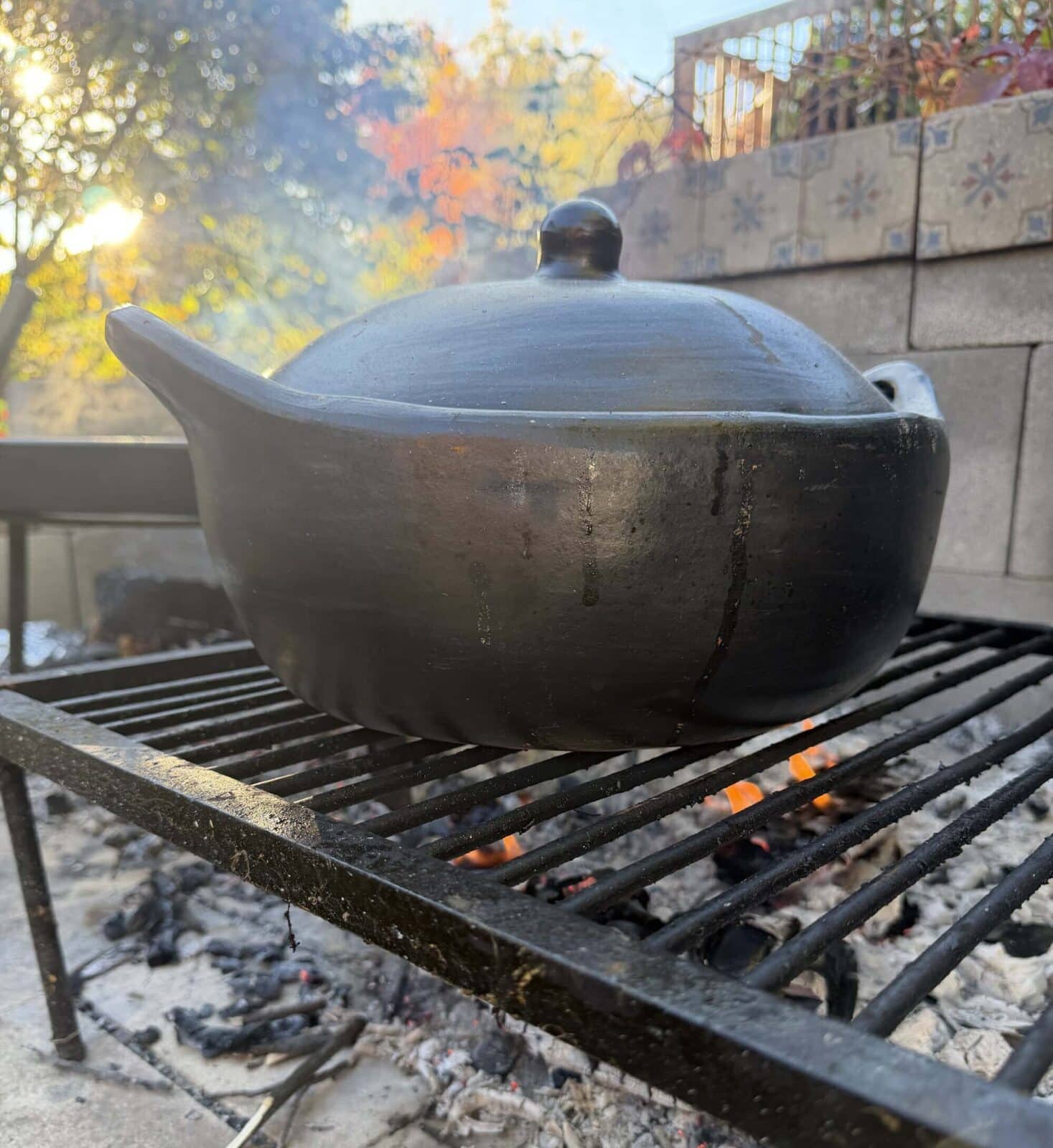
Cooking in clay is usually impractical. There is a right way to do it, but if you get too comfortable with a high flame, your pot will crack, spilling greasy broth into all the orifices and crevices of your stovetop. Still, give me a chance to simmer shrimp and garlic in a blue terracotta cazuela, or carrots and onions in a cone-capped earthen tagine, and I’ll risk disaster every time. If you lead a vibes-based existence (as I trust you Bittman Project readers do), it’s worth the risk. So I think you’ll be as excited as I was to learn about a type of beautiful, storied clay cookware that actually holds up to high direct heat. It’s called chamba.
I came across it three summers ago at a craft market that my aunt and uncle took me to in downtown Bogota, Colombia. Sitting preciously in the corner of an upscale wares shop was a large shiny black clay pot with an imperfectly fitting lid. The attached tag explained that the cookware has been made for over seven hundred years by the Pijao people in a town called La Chamba on the Magdalena River. (Incidentally, it’s in the Tolima department, where my father is from.) I was ready to pay the equivalent of three hundred dollars for it, when my aunt forbade me: “No, Mijo, es un robo.” (No, my boy, that’s a rip off). Later, back at her apartment, she held off my pleas for 48 hours before relenting and bringing me to a different, no frills wholesale market called Plaza de Mercado Paloquemao. There, amidst a dazzling array of fruits and flowers, were stacks and stacks of black chamba on wire racks. I found a pot like the one I’d seen before for the equivalent of thirteen dollars. I also picked up several other pieces: a smaller pot, two casseroles, and more. I had to borrow an extra suitcase and buy some bubble wrap to get it all home.
In the three years since, I have cooked constantly and incautiously with my chamba—over a gas flame, a wood fire, in the oven, and in a roasting pit. It’s time to report: there have been no cracks.
The cookware owes its durability to the high mica content in the clay. Mica is a silicate that occurs naturally in certain geological conditions. Volcanic regions (like Tolima, Colombia) have especially micaceous clay. Turkey has micaceous clay cookware dating back 8,000 years, and in New Mexico, indigenous people harvest perfect micaceous clay by digging just a few inches into the soil. They’ve been making pots with that for centuries.
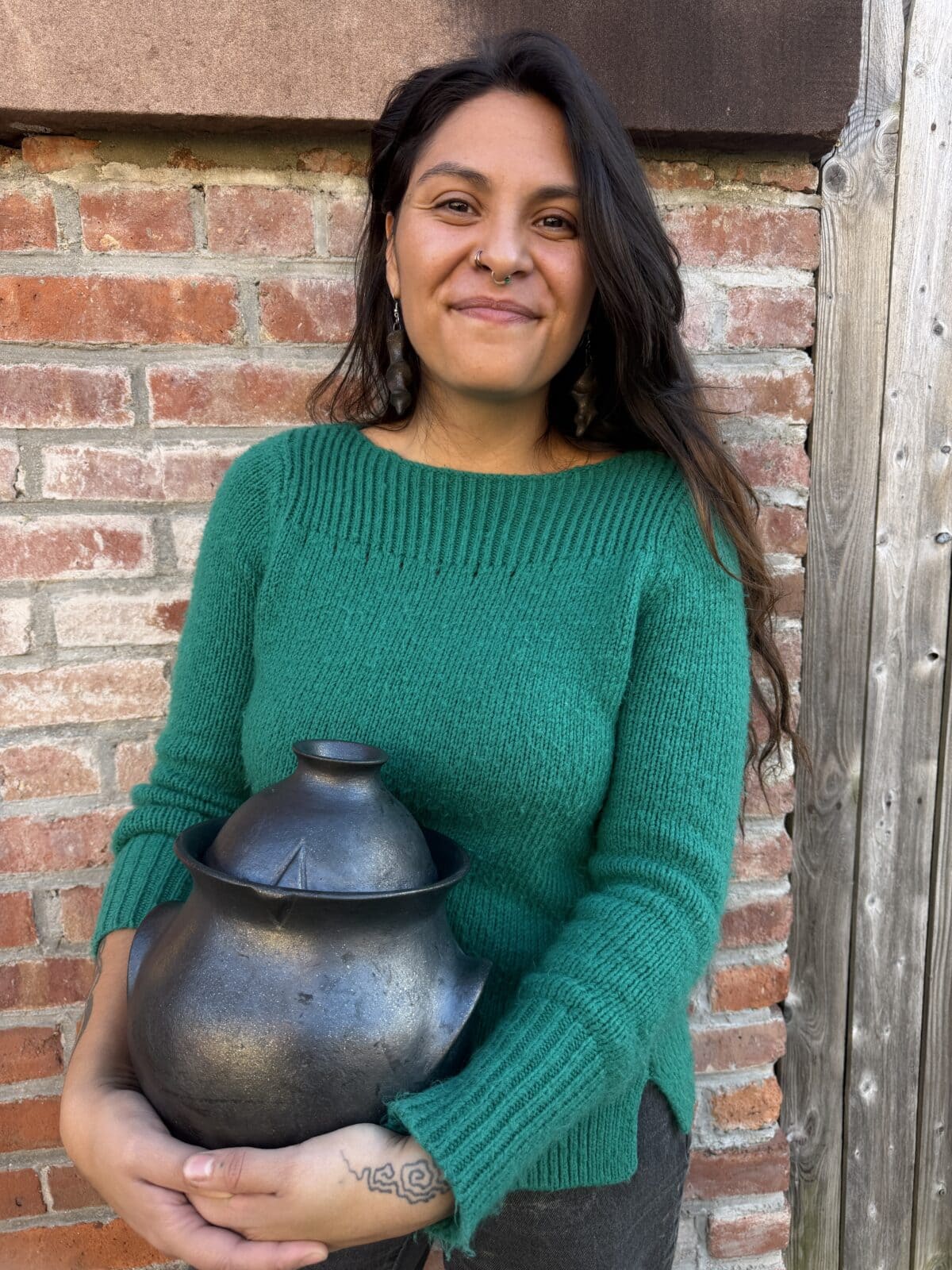
Recently, my two sons and I visited the home studio of a potter named Elycia Castenada who makes micaceous clay pots in Newburgh, NY, just ten minutes from my house. Castaneda is of Apache and Comanche heritage and for three years now, she has made annual, month-long trips to her ancestral homeland in present day New Mexico to make bean pots with masters of the craft. She said, “We start by harvesting the clay. Mica is abundant, but the places where mica, grog (sand), and clay exist naturally in the right proportions are precious, well-guarded secrets.” Castaneda held up a pot and turned it. “It’s a long process but in the end you have this.” She said, “You can see more of the sparkle in these ones.” (Chamba is pitch black because of the way it’s fired; you can’t see the sparkle of the mica dust.) Also, these have touches, like matching triangles on the lid and pot lip, to indicate where to place the lid for the best seal.
Let’s be honest … the cookware’s effect on the food is pretty subtle; its effects on the dinner party, however, are not.
Like me, Castaneda uses her pots daily. She says, “I’m pretty carefree. The only thing I wouldn’t do is soak things in them for a long time. They are porous, so that would make them brittle.” Castaneda shared the pinto bean recipe she usually prepares in her pots. I of course immediately made that (the beans are delicious), and since then I have made everything from spicy Thai curries, to sancochos, to seafood stews in my pots. If you use them enough, you might notice tomato or chile pepper-based stews are smoother than normal; the alkaline properties in the clay neutralize high-end bitterness, harshness, and acid. Let’s be honest, though, the cookware’s effect on the food is pretty subtle; its effects on the dinner party, however, are not. Moving a pot like this full of some rustic stew straight from the fire to the table will make people squirm for their turn with the ladle. Buy some and see for yourself.
There aren’t any pre-made pieces available on Castaneda’s website, but you can reach out to her for custom New Mexican style micaceous pots. She admits, it’s not as cheap as what I found at Paloquemao, but neither is a plane ticket to Colombia. For Colombian chamba, Chamba Imports is the longest running commercial site.
Once you have your pots, come back here and try Castaneda’s pinto bean recipes and two from Mark — Run Down Jamaican Codfish Curry, and Popcorn Posole — that work especially well, below.
Run Down Jamaican Codfish Curry
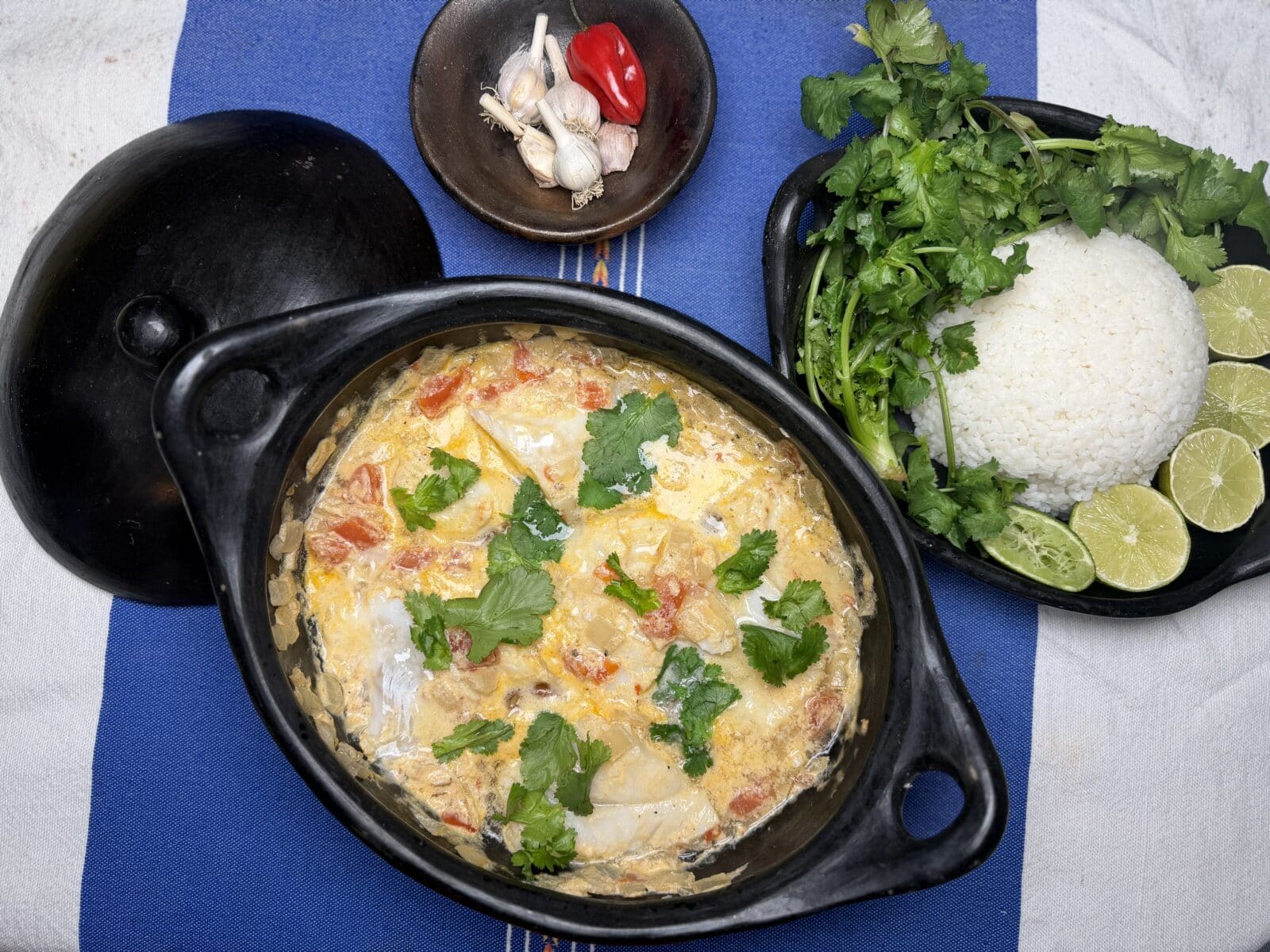
From Mark: This dish is usually made with pickled or salted fish, but it’s simpler (and, in my opinion, better) when made with lightly salted fresh fish. To be truly authentic, the chile should be a Scotch bonnet (habanero), which has a distinctive fiery flavor, but any chile will do in a pinch. Serve this with Coconut Rice.
Elycia’s Pinto Beans
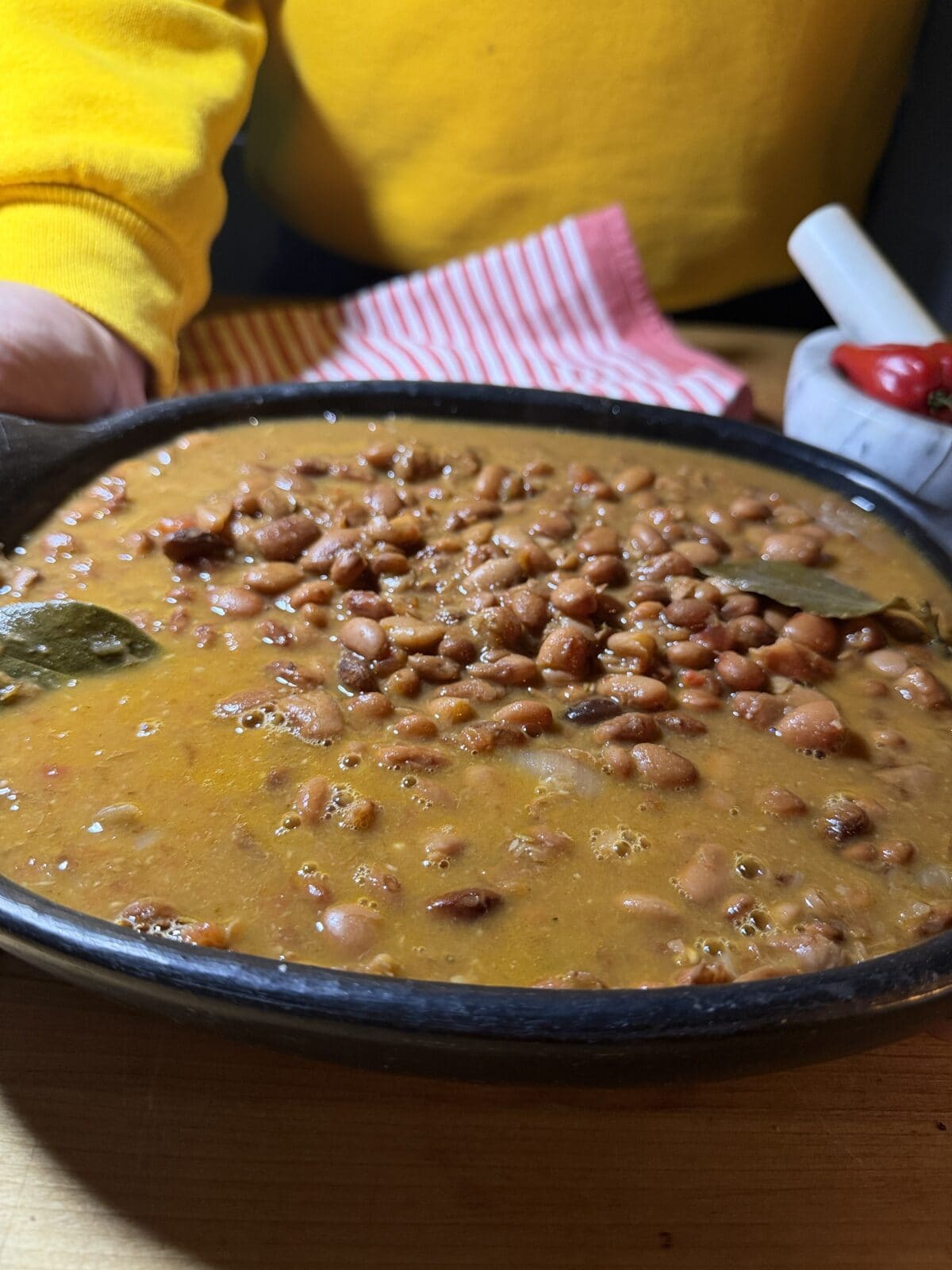
Some of the world’s micaceous clay cookware doesn’t have a catchy name like “chamba.” When I asked Elycia Castaneda what the variety she learned in New Mexico is called, she said, “We just call them bean pots.” She cooks a variety of dishes with her pots, but perhaps nothing more than these pinto beans. The roasted tomatoes and spicy chiles showcase the mellowing and melding powers of mica, bringing their flavors into perfect sync with the rich bean flavors and toasted spices. Even if you do nothing more with this pot than leave it on the stove as a dedicated pinto bean machine, this recipe will make it worth the investment.
Popcorn Posole
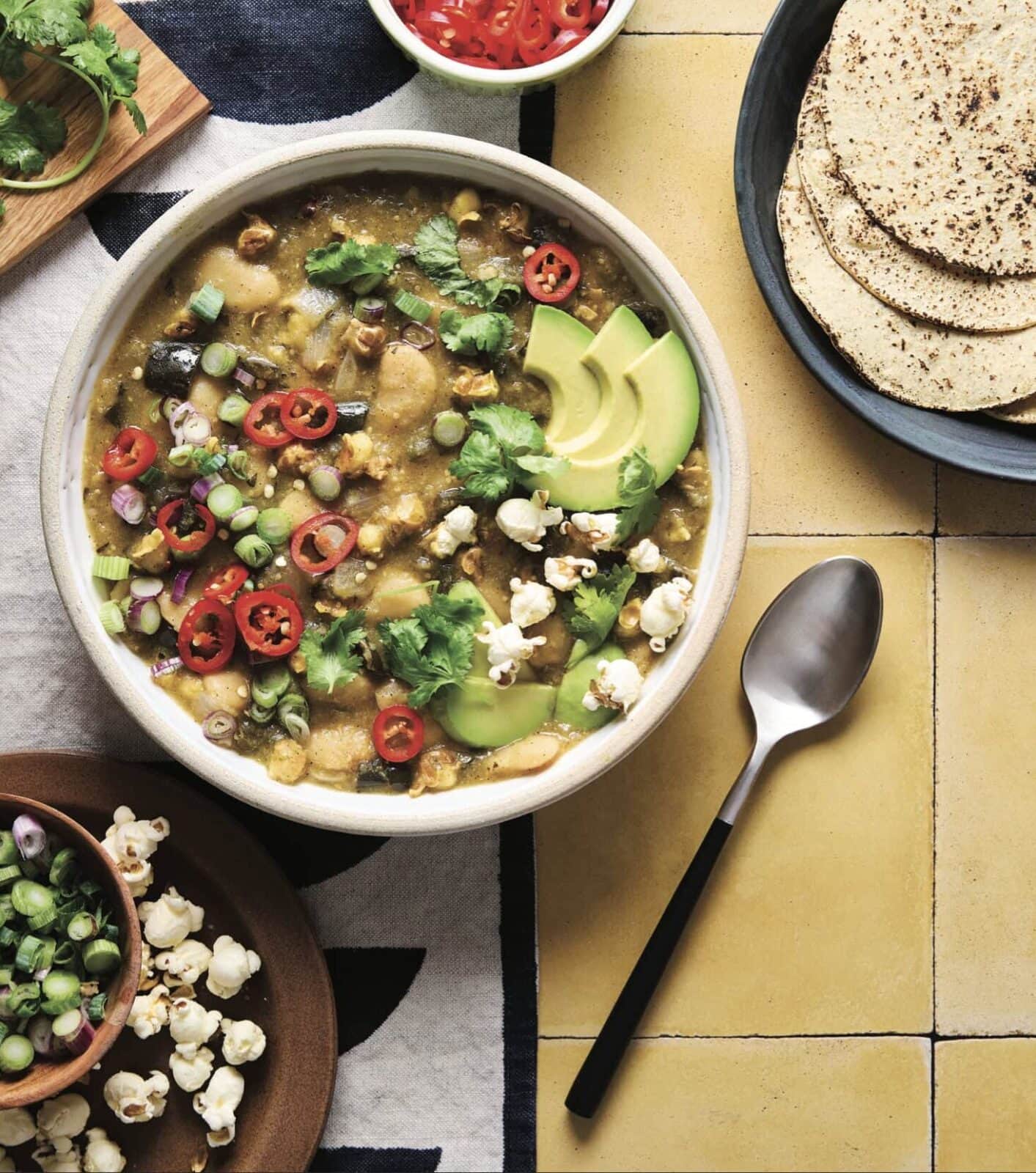
And now for something utterly untraditional: a hearty spin on a Mexican classic, with all the colorful and crisp garnishes and a couple corny surprises. This hearty stew is a party in a pot. For a smaller gathering or family dinner, the recipe is easy to divide in half.
Comment