

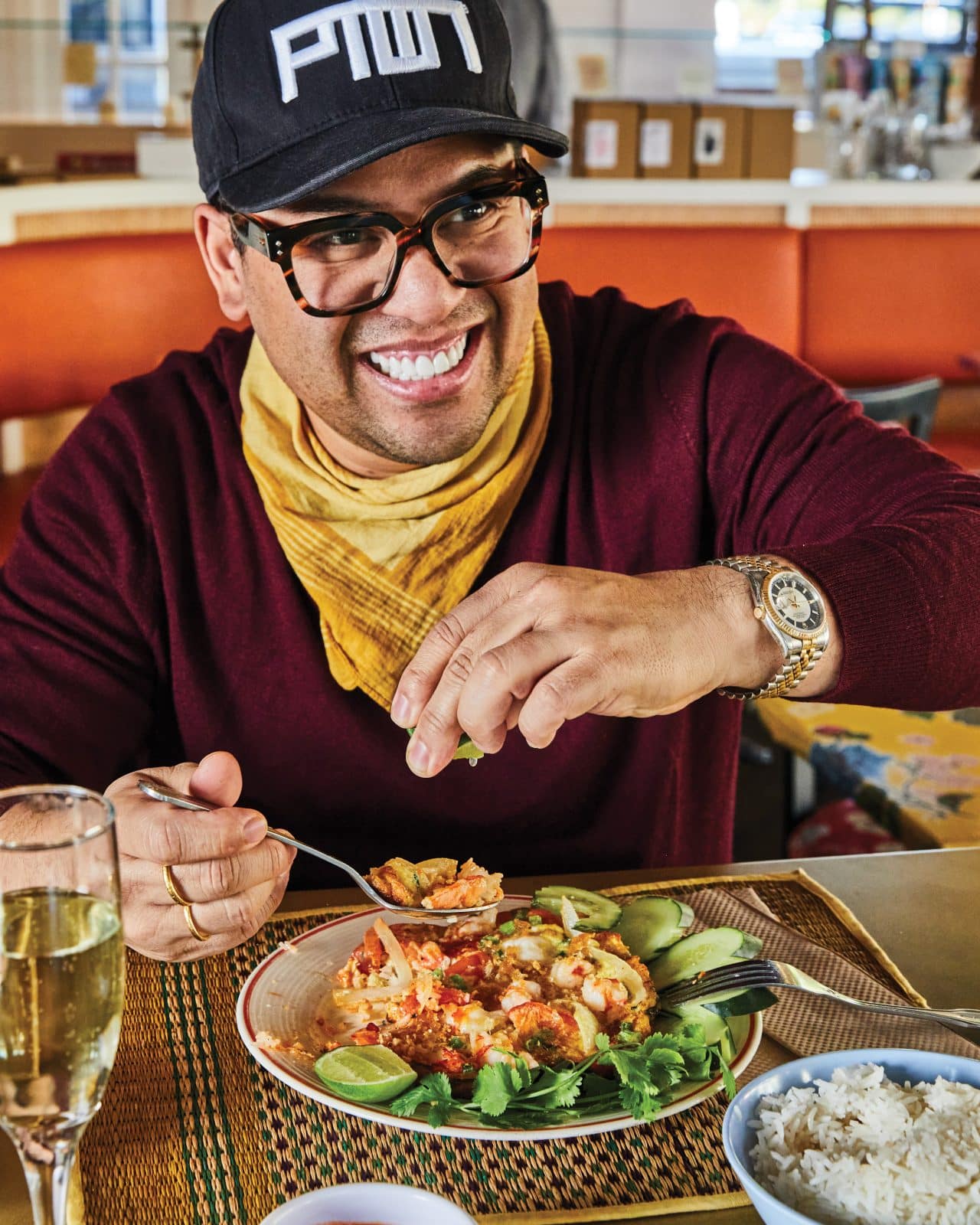
The below excerpt is from Arnold Myint‘s cookbook, Family Thai: Bringing the Flavors of Thailand Home, a book I recommended back in December. After many scheduling snafus—all mine and Mark’s—we finally had Arnold on the podcast, a joyful interview that went up today. I’m so happy that Arnold wrote this book, that we got to meet him, and that we’re able to share part of the book—along with recipes—with you. – Kate
Authenticity can be a loaded term. The designation “authentic” has been used to both decry restaurants and celebrate them. It can be a force for good as well as a weapon to disparage. I have no problem with authenticity as a philosophy, but I don’t like how it can be wielded to discredit restaurants. I’ll explain what I mean.
When Thai food began gaining traction and popularity in the United States, it seemed like a set of rules appeared as to what made a restaurant authentic or not. Who came up with these rules? It’s unclear. Sometimes, it’s fellow Thai people who feel there is only one way to prepare Thai food. Other times, it’s foreigners, known as farang in Thai, who have lived or vacationed in Thailand and think that because of their experiences, they are authorities on the cuisine.
I’m not saying that I have any authority over what constitutes “real” or “authentic” Thai food either. Yes, I may be Thai, but I was born and raised in America and, like many of you, I am just a genuine fan of the cuisine. The rules that some people use to dictate what is true Thai food, to me, have always seemed unfair or just plain inaccurate. Some examples: Thai restaurants that serve chow mein or orange chicken are inauthentic (this ignores the fact that Thai restaurant operators once had to adapt their menus to appeal to wider audiences); you can only use flat and wide rice noodles to make drunken noodles or pad see eiw (this is just untrue); and Thai food cannot be vegan because fish sauce is required for it to taste authentic (this ignores the rich history of plant-based Buddhist cuisine in Thailand).
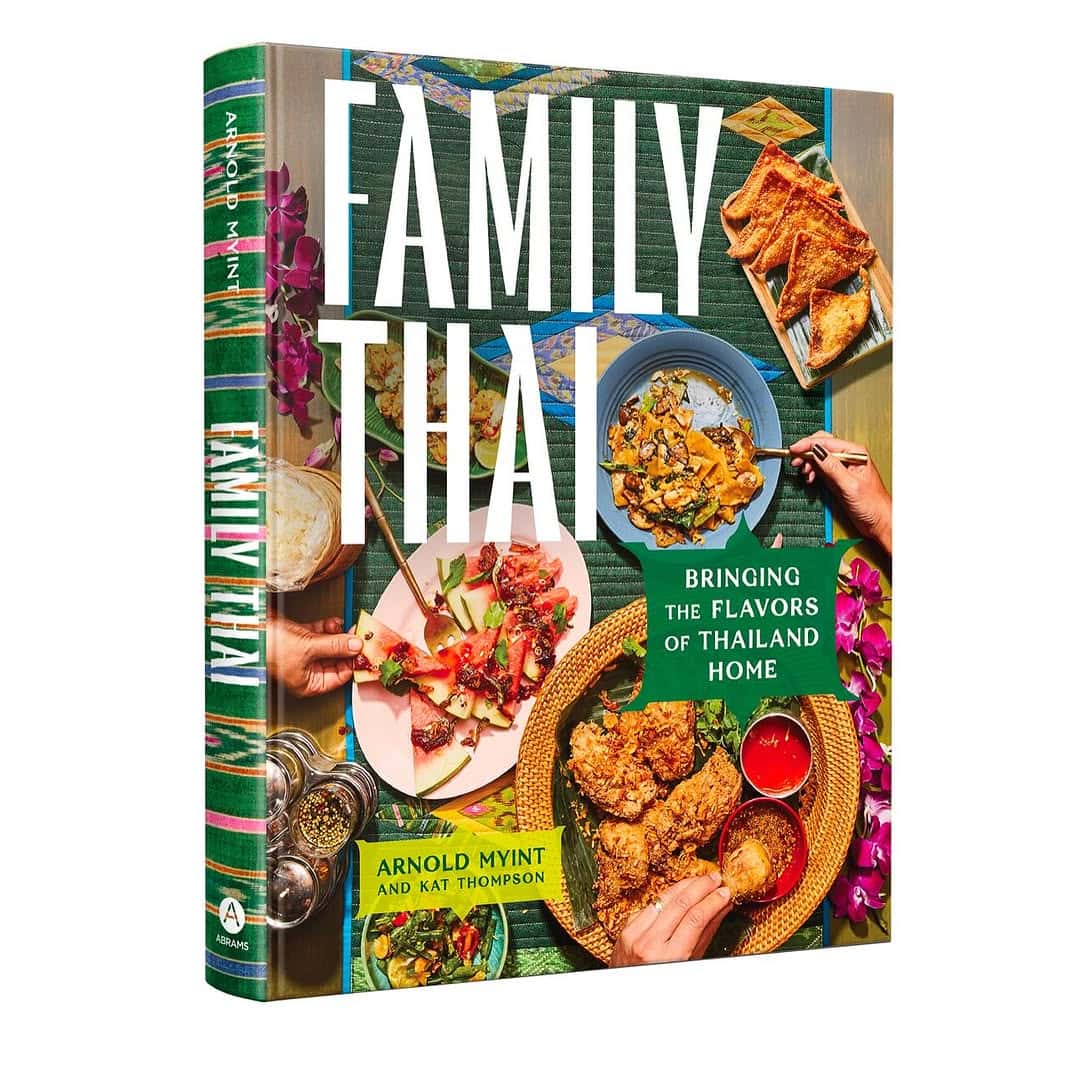
As a restaurant kid who grew up in the eighties and witnessed almost every iteration of International Market [editor’s note: Arnold’s parents started International Market and he now runs it with his sister], I’m here to say that everything my mom did, she did with authenticity. So, yeah, she used ketchup in pad Thai and named a dish she invented “Siam Chicken.” She took traditionally Southern dishes, like braised cabbage, and put a Thai spin on them by incorporating ingredients like red curry paste and tofu. Whatever she did, my mom was fully and authentically herself: a Thai immigrant in Nashville, making delicious food to feed her community.
I’m now doing the same. I’m cooking the way my forefathers and mothers did and using what they had access to. The thing about Thai food is that you don’t just eat it—you experience its regions. In the mountains of Chiang Mai, you taste the fermentations, the stews, the herbs native to higher elevation. In the beach towns of southern Thailand, the flavors of fresh seafood and extra-hot curries are intended to wake up sleepy, rainy villages. I am not necessarily looking to deviate from classic Thai flavors, but I do want to celebrate the resources I have access to in Nashville, my own little region of Thailand. So instead of barramundi for steamed fish dressed in lime juice, I’ll source trout. If I can’t find green papaya, I’ll swap in green beans. Instead of a generic minced pork, I’ll use pork belly from heritage farms. There’s nothing right or wrong about it; I am being authentic to me, a chef at the intersection of Thai and Southern cuisine.
I think people are getting more hip to the changing tides. In recent years, a majority of the nominees for the James Beard Awards in Nashville went to Asian chefs and/or restaurants. The Beard committee celebrated dumplings, Thai family meals, and Japanese chilled udon. There was not a biscuit or barbecue in sight—and I’m proud to be among my peers to show the world that Southern food can and does include an Asian sensibility—and there’s nothing inauthentic about that.
Khanom Pang Tod (Shrimp Toast)
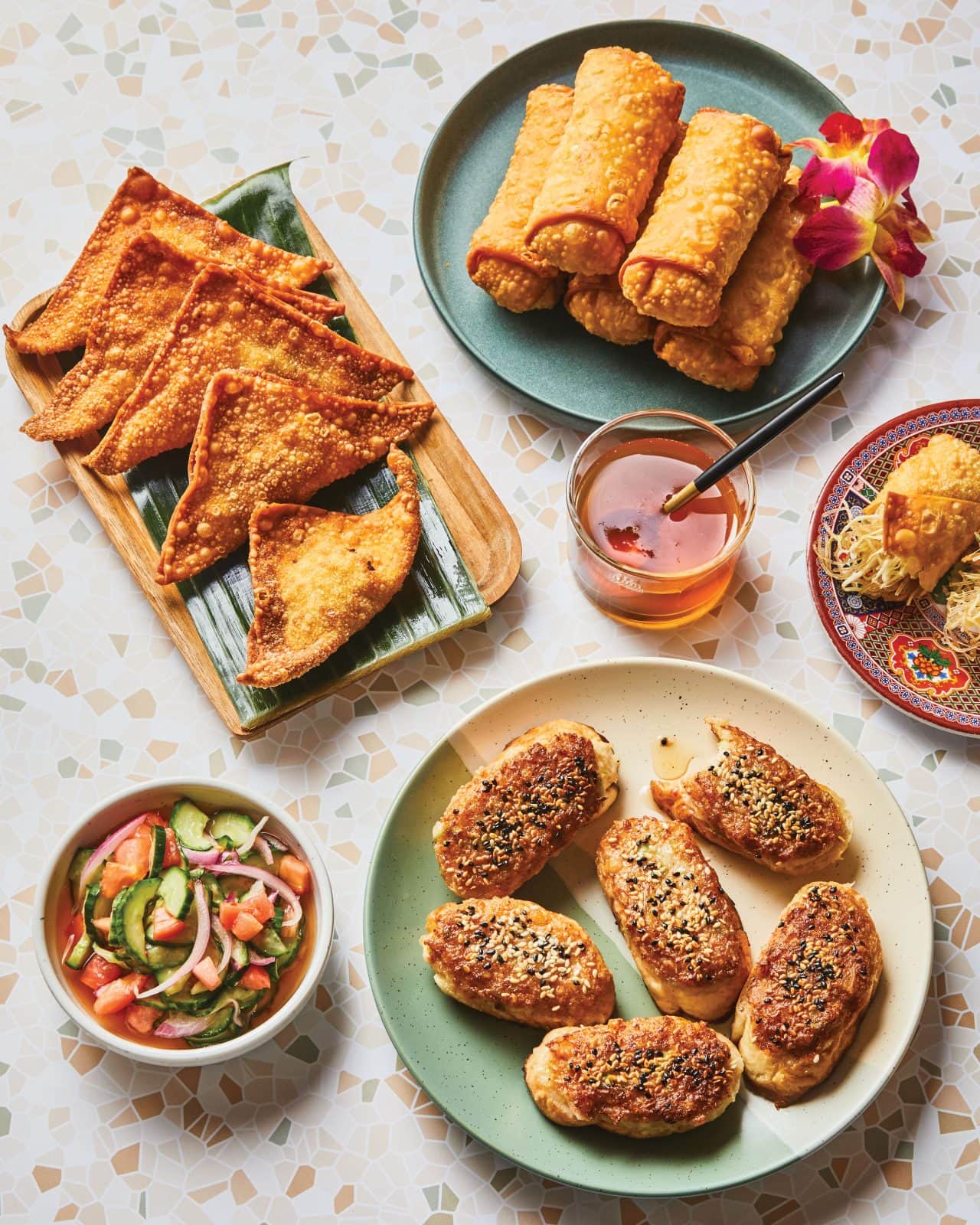
It’s impossible to deny the appeal of fried bread, especially when the bread has a generous smear of shrimp on it. My mom introduced this dish to International Market back in the eighties, mixing pork with imitation crab before battering the entire thing in egg and deep-frying it. The dish is inspired by the Chinese takeout classic and also references the popular Thai snack khanom pang na moo, a similar fried bread appetizer that uses ground pork instead of imitation crab. I’ve since made my own adaptations to my mom’s earlier version by swapping the imitation crab for shrimp and including water chestnuts for added crunch.
Nam Prik Klang Dong (Caramelized Dried Shrimp and Anchovy Crumble)
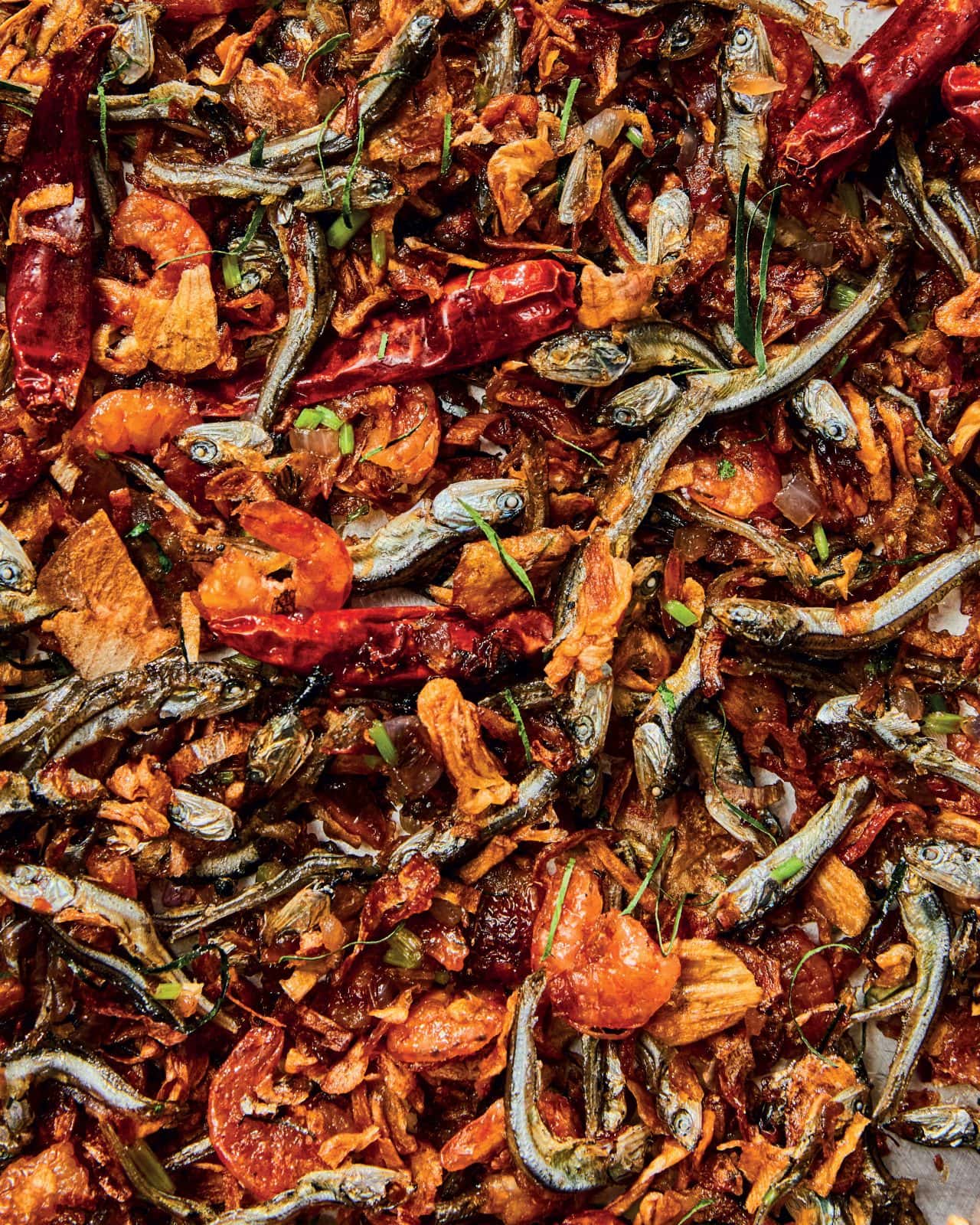
Nam prik klang dong is one of many versions of nam prik in Thailand (and also in this book, as you may have noticed). The term nam prik is a catchall phrase for chile paste, but the consistency varies across different styles. Some are chunkier, like a pico de gallo, while others are sticky and jammy. This particular version translates to “chile dip in the middle of the jungle,” and is special because it’s not pasty or wet but rather dry and crispy, almost like Chex or trail mix or even a Thai version of Japanese togarashi (a spice blend of ground dried chiles, citrus, sesame seeds, and other seasonings). I love to enjoy it simply in the same way togarashi is typically used—to season a piping hot bowl of steamed rice. You can also sprinkle this over salads and fried eggs. When my family would travel on long trips back in the day, nothing beat a ball of sticky rice to dip into this savory flavor explosion.
Kai Jeaow (Thai Omelet)
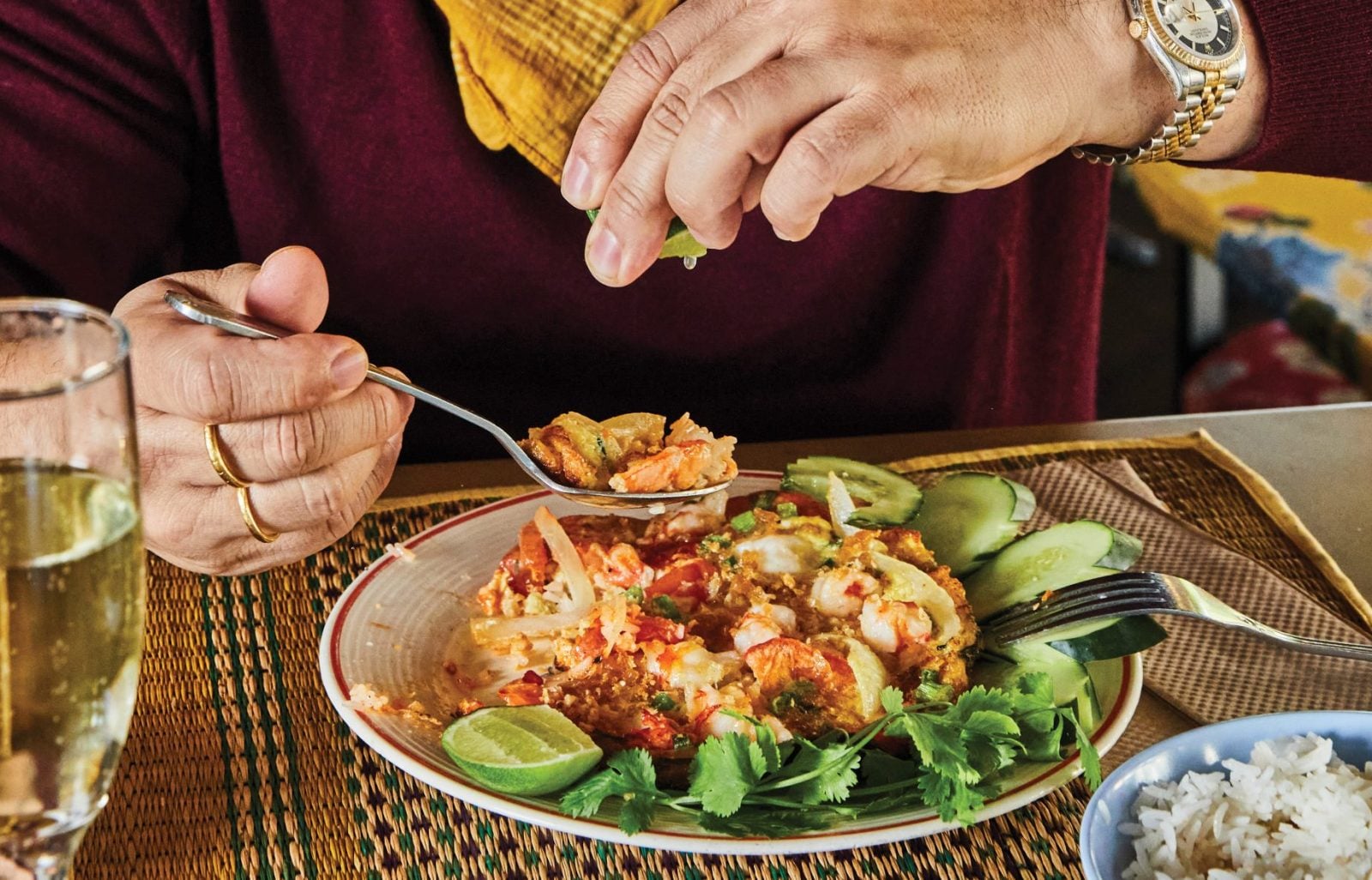
If you’re searching for a recipe with the best ratio of ease of preparation to delicious payoff, you’ve found it. The Thai omelet is a kid-friendly classic, a midnight meal, and a welcome side dish all in one. Yes, you can eat this at breakfast, but it’s also the perfect accompaniment to a midnight bowl of jhok or a fiery plate of stir-fried morning glory . In almost every family sit-down meal in Thailand, you’ll find kai jeaow. The key here is hot oil, which sounds scary but is pretty easy as long as you’re careful. You want to lower the beaten eggs gently into the hot oil, which causes the eggs to puff up. You are looking for crunchy edges and a fluffy center. The fun part about this recipe is that it’s incredible as written, but you can also add ground pork with white pepper, crab meat, and/or Thai chiles.
Arnold Myint is a James Beard Award–nominated chef, recipe developer, TV personality, cooking content creator, Thai food enthusiast, former competitive figure skater, mixologist, and much more. Myint competed on season 7 of Top Chef, as well as season 11 of Food Network Star. He has cooked in New York and Los Angeles and studied at the Institute of Culinary Education. His real training began during his childhood at International Market & Restaurant, his parents’ Thai restaurant that opened in 1975 and remains a mainstay of Nashville’s culinary scene under his leadership. He lives in Nashville.
Comment