

“This is where we’re from, this is what we do, and this is who we are”

Spring break recently passed, and while most years I drag my family to a far-flung mountain lean-to for goat brains or an equatorial beach shack for grilled fish, this year, you couldn’t have convinced me to go to Philly for cheesesteaks. Traveling with kids is exhausting—not just the trip itself, but the rebound. We weren’t ready for it this year. Baby Naeem was keeping us awake at night, Zoraida was having dizzy spells, my joints throbbed, and 8-year-old Marcel was chewing his fingertips like a madman. We needed to hang back and get into a rhythm.
Zoraida and I hypothesized that we’d been making ourselves too busy, traveling at every opportunity and looking too far afield for fulfillment. It prevented us from steeping in the local waters and from maintaining the sort of calm, consistent routines that are grounding—laundry and budget on Sundays, dinner out on Wednesdays, pizza and a movie on Fridays. We decided to spend the break getting back in touch with the familiar. So, a few weeks before vacation, we had a video call with my dad and told him we were canceling our trip to see him in Barcelona. After hanging up, our shoulders sank like we had just dropped handbags full of gold bricks. (Canceling also made us thousands of dollars richer.)
Adventure is enriching, but for kids, it’s crucial to have a sense that, “This is where we’re from, this is what we do, and this is who we are.” For that, you must create home rituals and routines; they give kids predictable checkpoints in chaotic times. Fifty years of academic literature supports the positive impact of routines and rituals on child development and marital satisfaction, but I already knew that. In my life, they’ve always been fortifying, especially food routines.
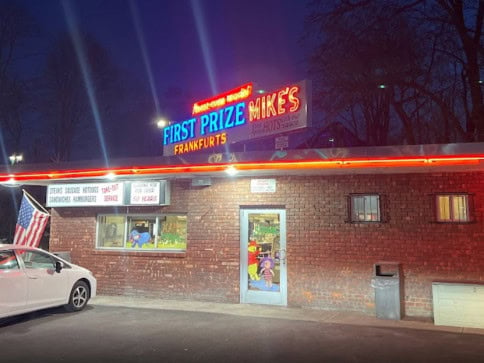
I was twelve when my parents split. My mom and I moved from our big house in Spain to my grandparents’ two-bedroom apartment in suburban Albany, NY. The adjustment was awful at first, but my grandparents stepped up. Every Tuesday, my grandfather took me to one of his many old man depression-era lunch counters, Mike’s First Prize Hot Dogs in Schenectady. The staff knew my order within a month: two Texas dogs (meat sauce and onions) with yellow mustard. Then, on Sunday afternoons, my grandmother prepared whole-family lunches. Usually, she served spaghetti with sausage or meatballs and a pie: apple or lemon meringue. I’d wind spaghetti around my fork, devour it like a nervous dog, and then pass out on the floor watching Mr. Bean re-runs. The meals didn’t solve everything, but when my mother and I felt like we were in a free fall, they gave us definition and a soft landing place.
Ten years later, it was up to me to provide a soft landing. In my twenties, I ran group homes for kids in Orange County, NY. New kids would arrive at the door carrying black industrial-sized garbage bags full of their belongings. They had either just been removed from their homes by Child Protective Services or from other facilities. We took everyone. A consultant named Tom from Cornell University famously recommended that we have chocolate chip cookies ready for the kids each evening. He also said we should have themed “family” dinner nights—like Taco Tuesdays and Fried Chicken Fridays. He said, “When kids arrive here, rather than reading the rules, we should read them the menu.” I broached the subject with the tough lady who ran the girls’ home: “Tom said….” She cut in, “Fuck Tom, Mike! I just got spit on, and he wants me to give the kid a fuckin’ cookie!” Indeed, Tom was smug—he always spoke professorially with his hands clasped in front of him. Also, the kids exhibited a lot of what Tom called “Trauma-Based-Behaviors” like keying staff cars, so it was impossible to tell staff that his doctrine of few consequences and abundant care was correct. I had to demonstrate.
For a short while, I stayed late every Wednesday, to host smoothie competitions. The youngest female resident at the time worked alongside me, asking for permission at each step and looking up at me with a heart-melting smile, “Mike, can I add Oreos?” Another staff member’s fried chicken became a coveted weekly meal. The dining room became a non-contentious place for kids and staff to develop relationships. Sadly, it was hard to create predictability or family culture when kids weren’t sure if they’d leave in a week– foster kids are incredibly transient. Still, while they were with us, the meals helped.
Now, another decade later, I have more control over the kids I’m responsible for: my own. As far as I can tell, my wife and I haven’t traumatized them. But, this past March, I don’t know if it was the apocalyptic news reports emanating from our smart speaker each morning at 7 AM or the mold growing in the ceiling, but something was in the air. We all needed grounding.
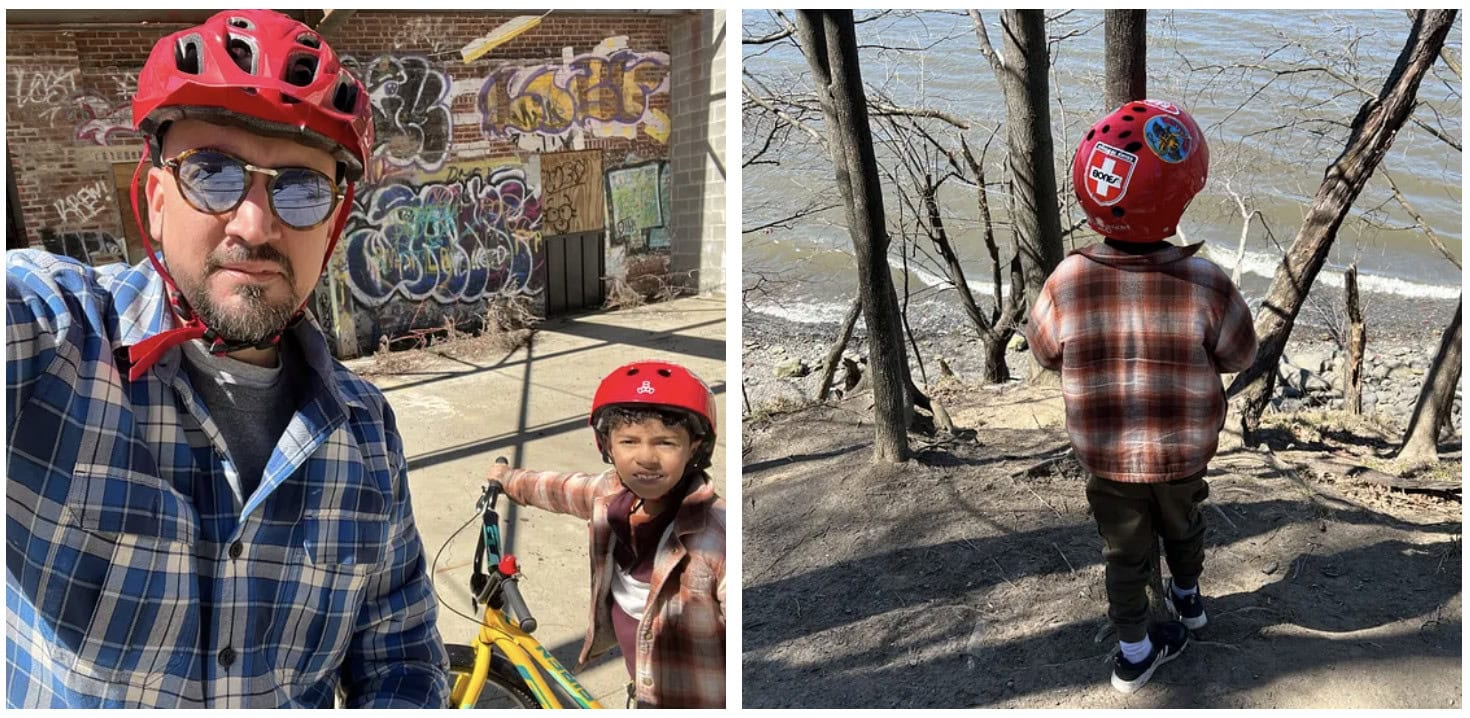
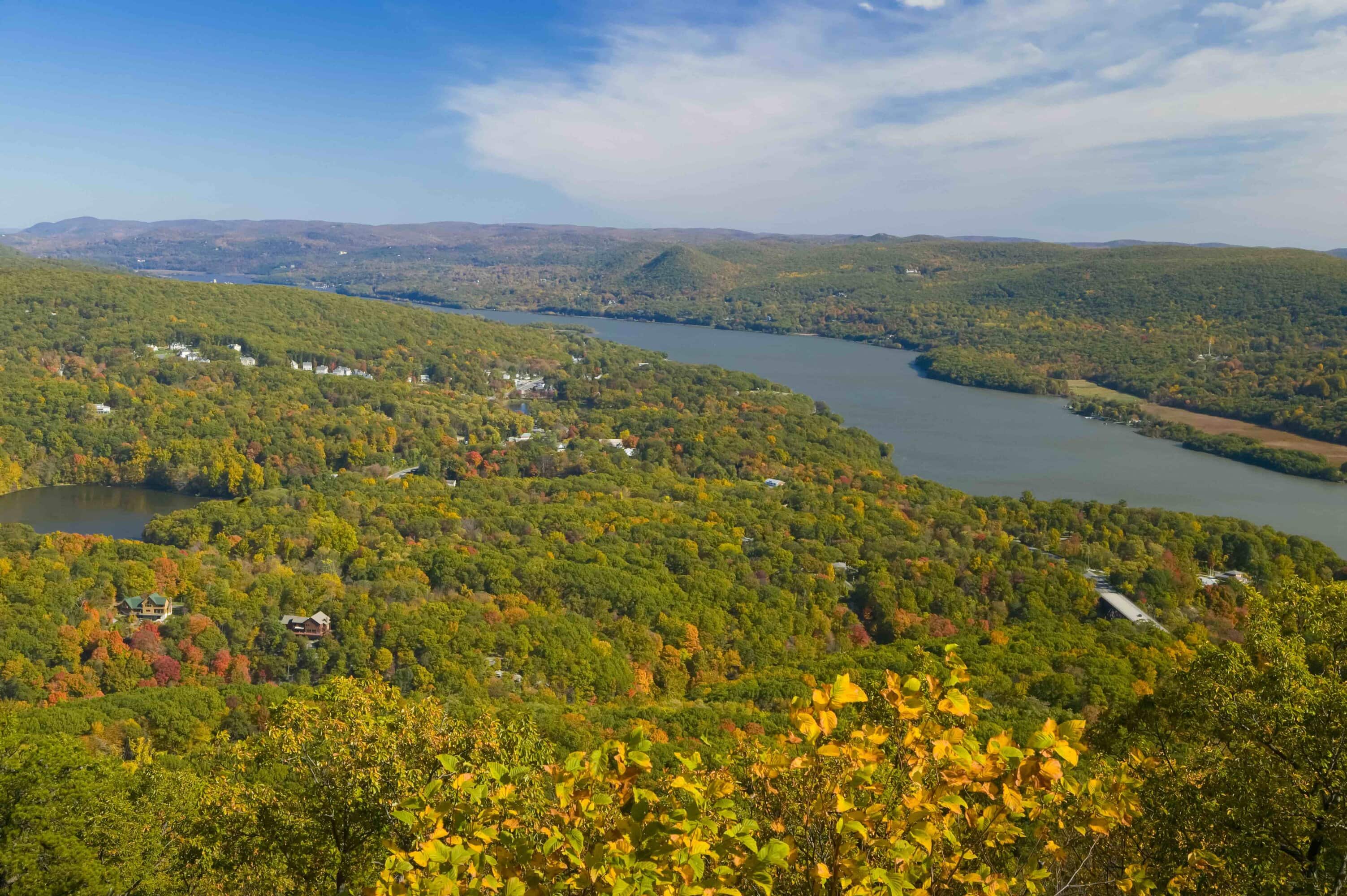
That week at home, we called the handyman to deal with the mold issue (he caused it) and then got right into our rhythm. I used some of the vacation money to buy a bike, and Marcel and I rode to nearby Hudson River parks nearly every day. Down there, we built driftwood huts, lightly trespassed in abandoned factories, and watched great blue herons coast low over the creek. In addition, we learned the patterns of our region’s namesake river. The Hudson is a tidal estuary. When the tide rises in New York Harbor twice daily, water travels roughly 160 miles up the river to the Troy Dam and then back down again, effectively changing the river tides four times a day. In the mornings, we’d sit on a curved barrier of carefully stacked river stones and watch ducks dunk their heads. As we played with driftwood in the afternoon, we noticed the wall submerged.
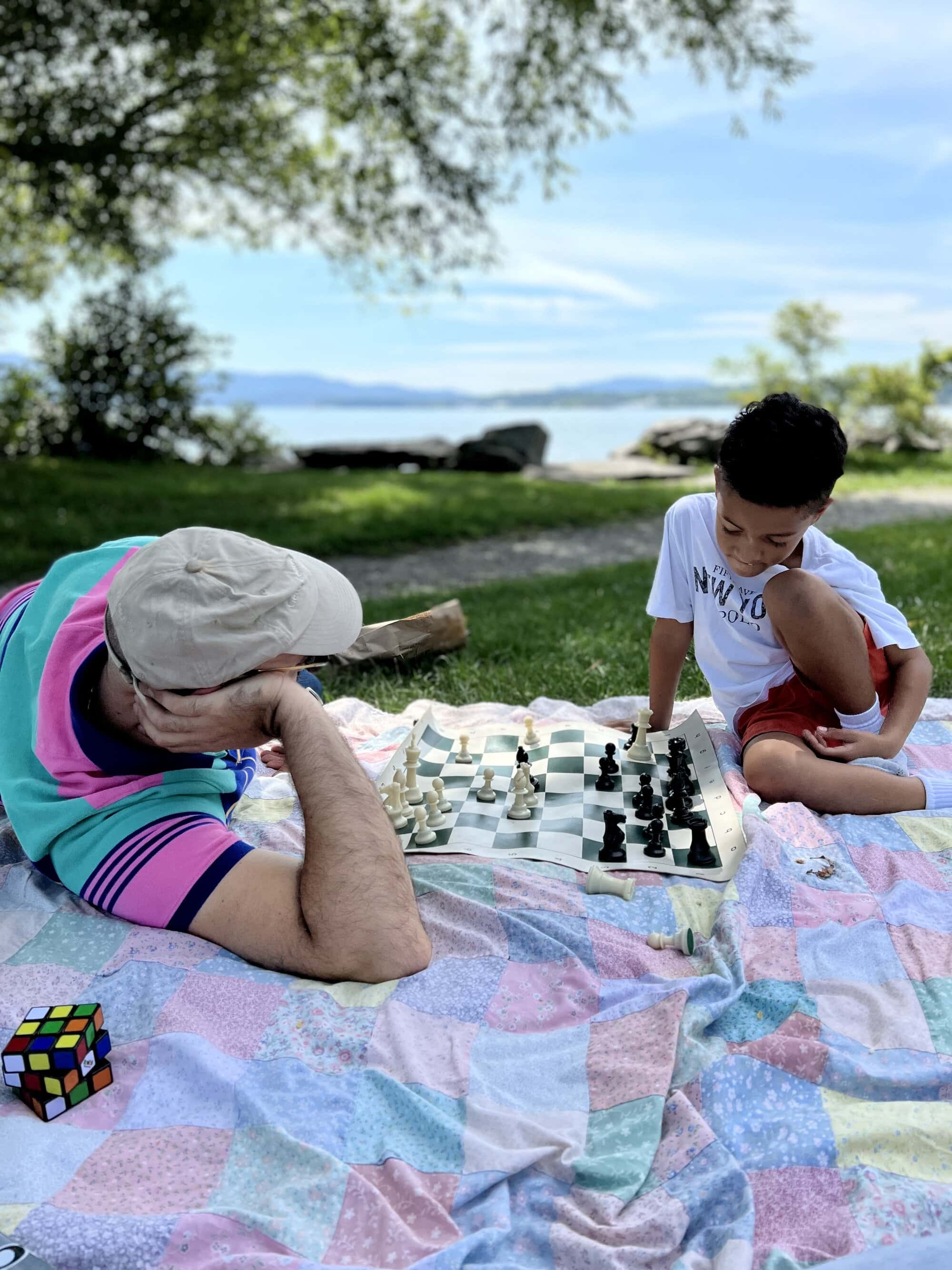
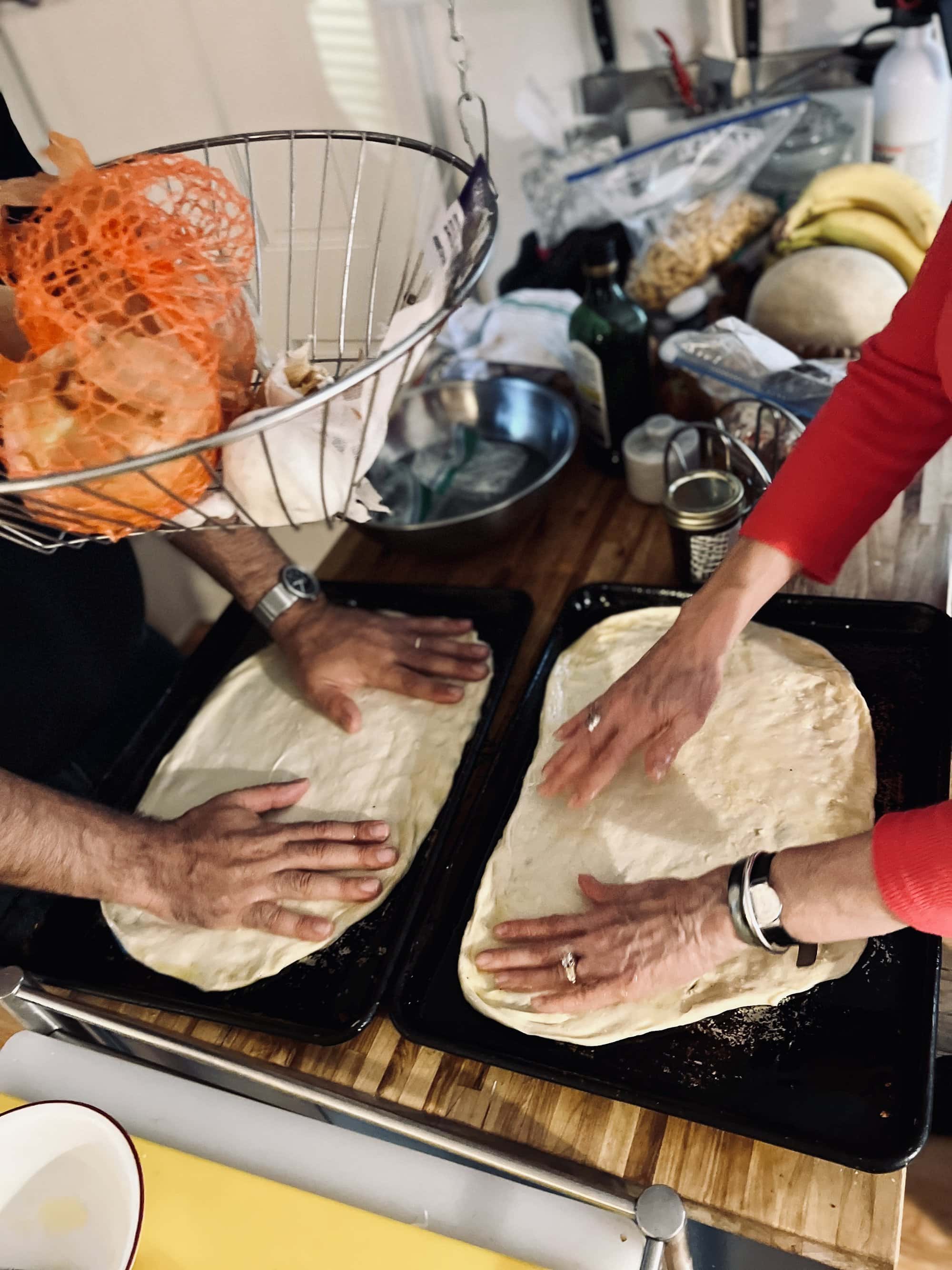
Before sunset, we raced home on our bikes in time for dinner, still invigorated by the sweet smell of the reeds and the river breeze. In a hilarious moment of earnestness, as if he just discovered the feeling, Marcel belted, “I feel so free!” Back home, we didn’t need to fuss with recipes because we didn’t eat anything new. We ordered sizzling fajita platters at the diner that Wednesday. That Friday, we made sheet pan pizzas like my mom used to—store-bought dough stretched by hand, topped with marinara and shredded mozzarella. We made a wood-fired paella of local CSA vegetables and fridge scraps Sunday. After each dinner, we watched the pastel sunsets from our bedroom window. Then, after dark, we re-watched familiar movies like Cool Runnings or E.T. and ate popcorn with butter and salt—no paprika, hip spice mixtures, or other annoying accouterments. Everyone was relieved.
Now, we’re committed to continuing the routines we established during our week off. The four of us eat together nightly. Monday, it’s pasta, Wednesdays we eat out, and Friday, we have pizza. At dinner, we ask, “What was your good, bad, and ugly today?” The “ugly” is supposed to be an embarrassing moment that we can laugh about together. Our house is no less noisy, but lately, there has been more music and laughter. Spring break went so well that we’re looking forward to canceling future vacations. If we can keep steady footing, though, we’ll visit family in Colombia this summer, as planned. Just in case, I bought refundable tickets.
Comment