


We try to be thoughtful about how we make money, and so we only partner with brands and organizations that we know well and believe in. Bob’s Red Mill is one of those brands, and we’re glad to have organic reasons to promote them; our partnership with Bob’s got me thinking about one of my favorite memories in the kitchen—which is learning how to cook oatmeal (the right way!) from my dad.
Dear reader, youth is wasted on the young. I feel this cliché so much lately, for a variety of reasons. Today’s reason: I wish, when I was a kid, and a teenager, I’d paid more attention to my dad when he tried to cook with me. My sister was better about that, and I think that’s part of why she’s a more natural cook than me.
My dad is actually a very gentle, patient person, and now, in my forties, I’m finally getting some cooking lessons from him. Nothing formal, and 99 per cent of the time it happens organically, but he’s taught me some memorable and, at least to my mind, brilliant techniques.
I think my favorite lesson—certainly the one that’s had the most staying power—is attached to the most simple, satisfying, and comforting of foods, oatmeal. I wasn’t a big oatmeal kid growing up—my favorite was Cream of Wheat with lots of butter and maple syrup or honey—but my son, Holden, has loved oatmeal from the time he was able to eat it.
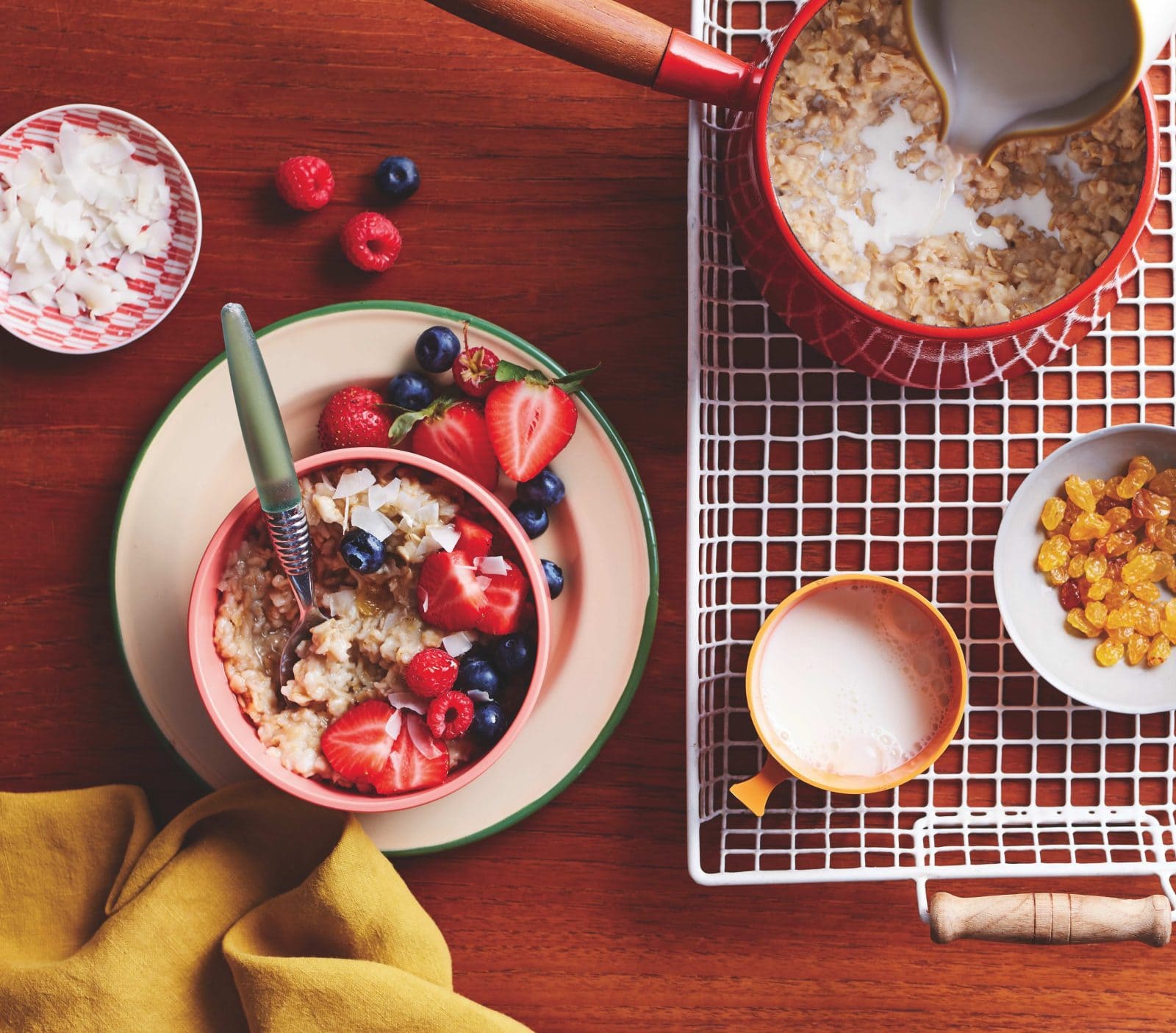
At one point, when Holden was really small, I was making him oatmeal in my dad’s kitchen, and my dad, as he does when other people are cooking (he can’t help himself), intervened. “You’re measuring the water and the oats?” he questioned me. “Why?” The answer was obvious: I was playing by the rules. “It doesn’t matter,” he said. “Use whatever amount of oats you think will get eaten, and top them with water. Then just keep adding water as they cook.” The key? “You don’t want to see the sharp edge, the shape, of the oat. Keep cooking them until they lose their borders.”
I’ll be damned if that pot of oatmeal wasn’t the best I ever had.
This is not how I cook. This is how I aspire to cook. My flexibility in the kitchen needs some, uh, flexibility. It’s how my dad cooks, though, maybe how he’s always cooked, and so I listen to him. And I’ll be damned if that pot of oatmeal wasn’t the best I’ve ever had.
A couple years ago, my nephew Max was born, and one morning, after he’d started eating solids, my sister asked me to make the oatmeal. “You know your oatmeal is the best,” she said. (Maybe she was just being lazy, but because of my teacher, my oatmeal really is the best.) So every time I see Max I dutifully make him oatmeal, and he and Holden sit together and put it away. My sister was the one who urged me to write about this “technique,” if you can even call it that.
Here is what you do; this is all you need to do, but first, a brief PSA.
You’re going to start with regular old fashioned rolled oats (not instant), but do yourself a favor and get Bob’s Red Mill—they’re a favorite in all the Bittman family households for a reason. Bob was an innovator; he was a champion of whole grains when it most certainly was not cool or common to be. He got what were once difficult-to-find whole grains, legumes, and other ingredients into mainstream American markets; and was willing to respond to trends in food, such as well-performing gluten-free flour and fava and chickpea flours. Bob built close relationships with farmers and suppliers, and treated his employees well; the company is 100% employee-owned. And lastly, I can say this because we’ve been lucky enough to be in partnership with Bob’s for almost two years now—their team is warm, and smart, and loves what they do. PSA over.

The beautiful thing is that it doesn’t really matter how much water you add, as long as you don’t let the oats stick.
Okay, so get a pot, and my dad always says the pots I use are too big for oatmeal, so err on the smaller side unless you’re cooking oatmeal for twenty. Figure a quarter cup of oats per serving; I am actually at the point now where I eyeball it, which is huge for me. Cover with about an inch or two of water; bring to a boil. Lower the heat so everything’s simmering, and stir often. When the oats start to look dry or stick to the bottom of the pot, add water, about a quarter cup at a time—but the beautiful thing is that it doesn’t really matter how much you add, as long as you don’t let the oats stick. Whatever water is added will cook right off, baby.

Stir every couple minutes or so; keep adding water. The oats will lose their individuality and become codependent. You want this! (At least, that is, when it comes to your oats.) Once that happens, keep cooking until the oatmeal is no longer watery, and serve. And here are some of our favorite topping ideas.
- A drizzle each of soy sauce and sesame oil; minced bacon, scallions, and/or peanuts;
- Ground spices like cinnamon, nutmeg, cloves, allspice, cardamom, or anise;
- Peanut butter and bananas;
- Chopped dried fruit (I especially love unsweetened dried cherries, dates, dried apples, and dried apricots);
- Fresh fruit: apples, bananas, strawberries, apricots, peaches, blueberries, cherries, raspberries;
- Jam, jelly, marmalade, preserves, or fruit compote;
- Shredded coconut (even better if it’s toasted);
- Granola;
- Grated cheese (any kind that’s good at melting: Gruyère, cheddar, provolone, etc.);
- Poached egg; you can also poach eggs directly in the oatmeal, simply by cracking the eggs into the simmering mixture during the last 3 to 5 minutes of cooking;
- Sautéed greens, especially with soy sauce and a poached egg;
- And, of course: maple syrup or honey with butter and milk or cream.
5 Comments