

A mutual friend introduced me to David Bacon; though our paths have crossed many times, we’d never met. David is a California-based writer and photographer, who was a factory worker and union organizer for two decades with the United Farm Workers and other unions. Today he documents the changing conditions in the workforce, the impact of the global economy, war and migration, and the struggle for human rights. This work has led to the publication of several books about migration. One of them, In the Fields of the North / En los Campos del Norte, documents the lives of farm workers in photographs and oral histories like the photo essay we ran in April, “Consider the Broccolini—And the Farmworkers Who Harvest It.” That essay resonated with so many of you—yay—that we reached out to David to see if we could run another, which was about Brussels sprouts. Today’s edition? Cauliflower. We’re so glad you’re loving these. – Mark
In the winter of 1977, at the Watsonville union hall, I got a dispatch to a job in a Valley Harvest cauliflower crew. Two years earlier the state legislature had passed the Agricultural Labor Relations Act. The company was one of the first where workers used the new law, winning a union election, a contract, and with it the hiring hall system for distributing work.
That year I left my job as a UFW organizer and went to work in the fields. I needed the money, and wanted to understand firsthand agriculture’s often brutal labor. I worked through that fall, getting a dispatch first for a painful job picking strawberries, and then another to harvest wine grapes on the piece rate at the huge Almaden Vineyards. (Working on the piece rate you’re paid according to what you produce — in this case, the quantity of grapes we picked.)
When the grapes were gone, I needed another job. Cutting cauliflower for Valley Harvest was one of the few available in December. It paid by the hour, not much more than minimum wage. That meant that I wouldn’t make as much money as I did at Almaden, but working for an hourly wage avoided the intense pressure of the piece rate. I was never a very fast worker anyway.
So every morning I’d leave my SRO hotel room in Hollister, pick up my lunch burritos and a cup of coffee from the bar downstairs, and drive the 23 miles to the packing house parking lot in Pajaro. With the other 40-plus workers in my crew, I’d get on the company bus for the ride to the field. We’d sleepily stumble out into the cold fog, put on our aprons, and use one of the company stones to sharpen up our machetes for the day’s work.
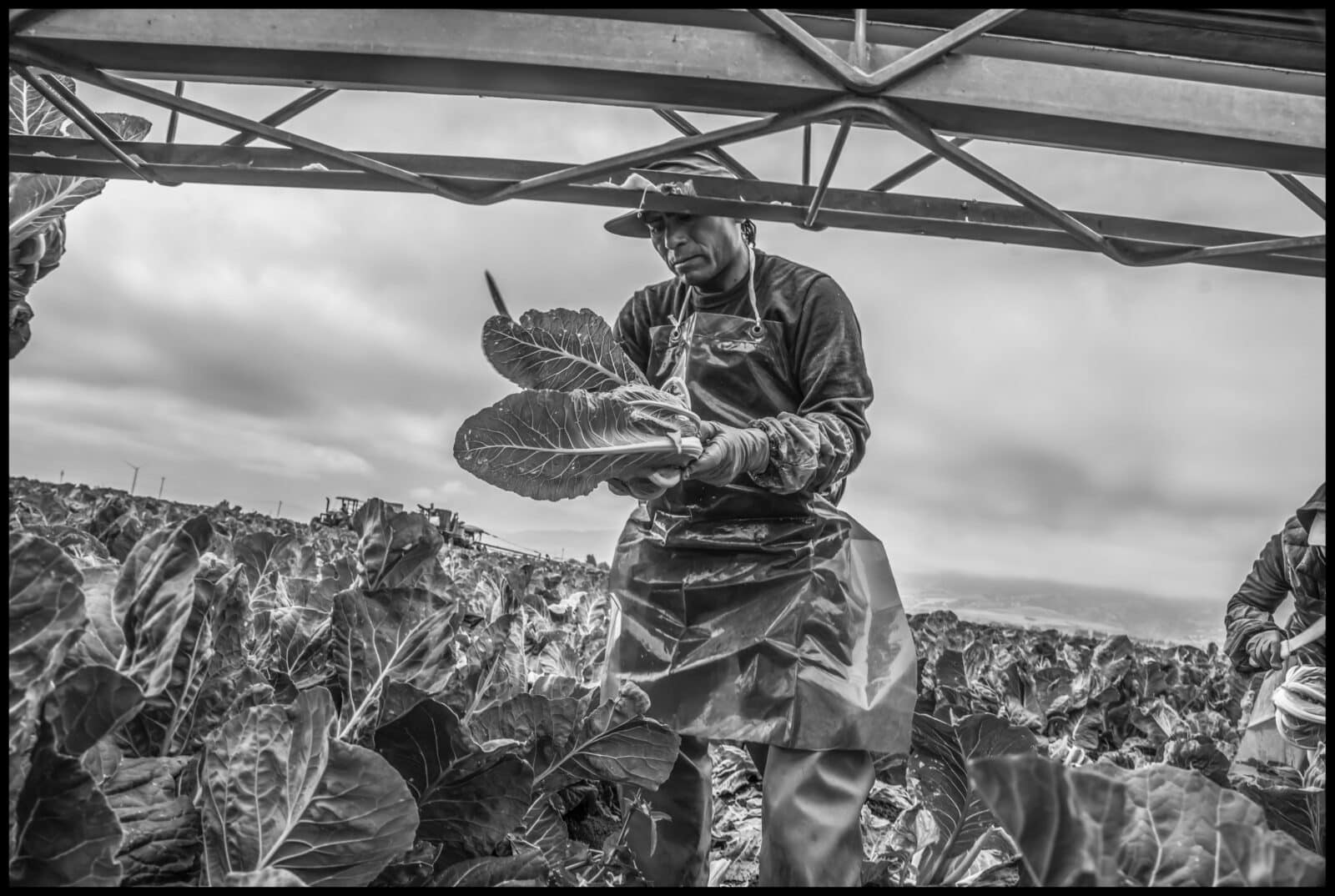
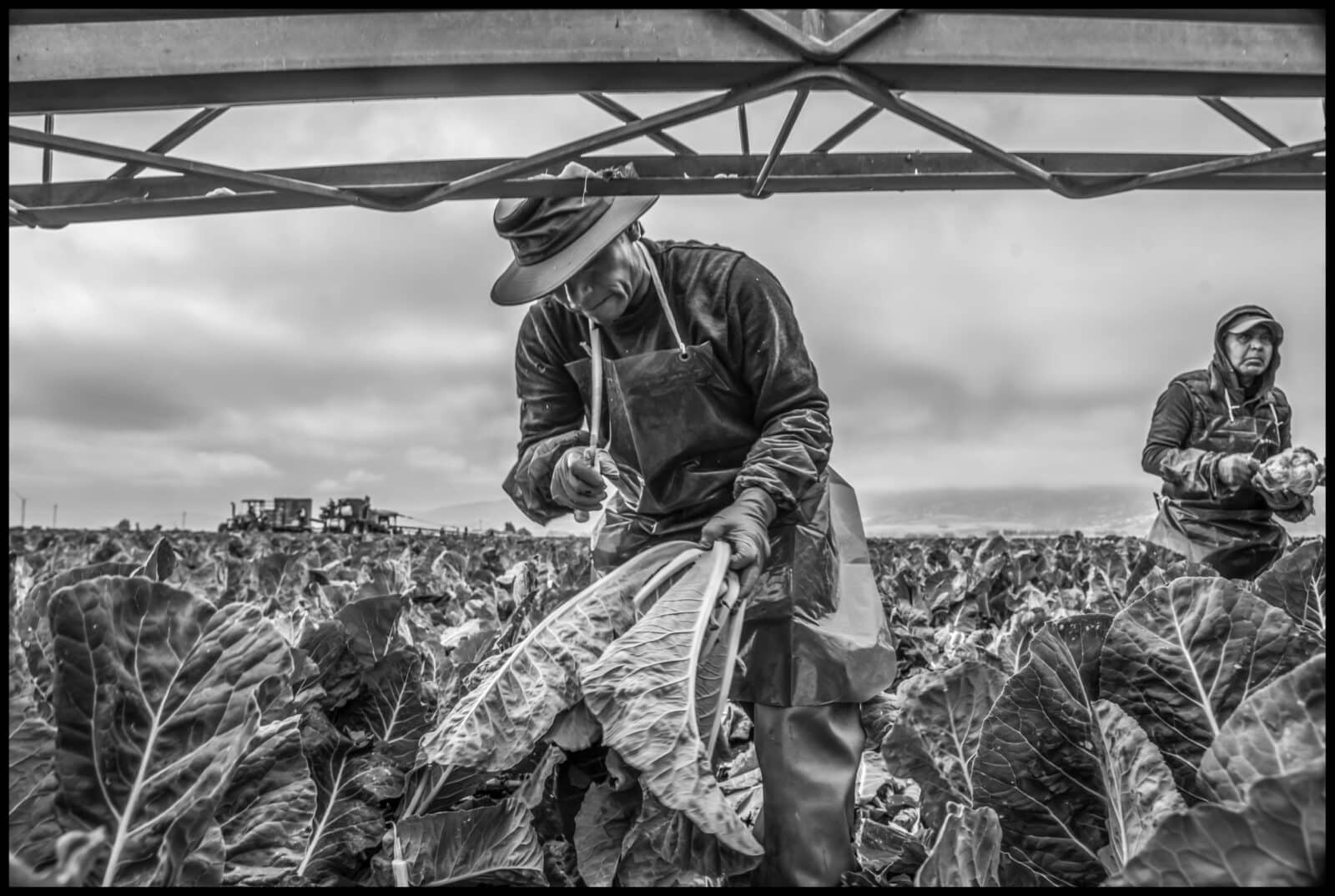
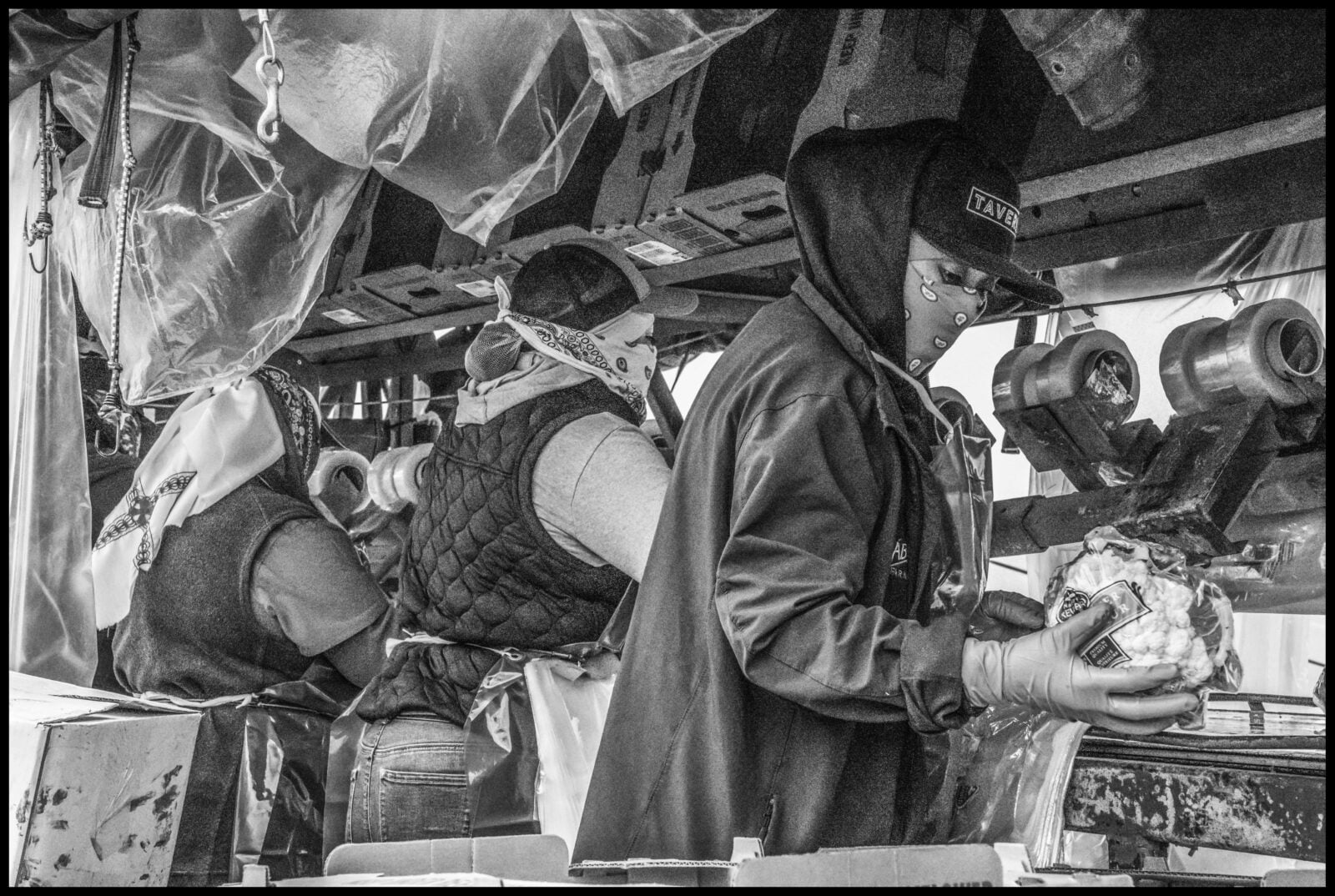
As the mist burned off the coastal fields, we’d walk behind a conveyor belt and packing platform, pulled by a tractor. The giant leaves of the plants were covered with dew, and bound together with long rubber bands. This practice, called blanching, protected the cauliflower heads from the sun, making sure they stayed the white color favored by consumers at Safeway. The job was to grab the leaves, cut the stalk with a machete, and toss it onto the belt. Other workers there would trim the leaves, wrap the heads in plastic, and pack them into boxes.
One morning we looked for the stones, and they weren’t there. The foreman announced that in a fit of economizing, Valley Harvest had decided not to furnish them. If we wanted sharp machetes, we’d have to fend for ourselves. The stones couldn’t have cost the company much, but they were crucial. Trying to cut a tough, thick cauliflower stalk with a dull blade makes the work twice as hard. We were pretty angry.
We worked through that day, and at lunch some of us talked it over. I said, “Well, we need to do something, so maybe we should tell the company we’re not going to work unless they give us the whetstones back.” Someone else said, “Yeah, but what about those folks over there, the Oaxacans?” They were a close-knit group that would eat a little ways away from the rest of us, talking softly with each other in an unfamiliar language. Later I learned they were speaking Mixteco, an indigenous language of southern Mexico.
I went over to talk to them, and explained in Spanish what we wanted to do. I asked, “What about you folks? Are you going to be with us or not?” One of them answered, “Well, let us talk about it and we’ll get back to you.” Then they went off by themselves and had a little meeting in the road by the field. When they came back he said, “Yeah, we’re with you. Let’s do it.”
Several hundred thousand Indigenous farmworkers from southern Mexico labor in fields, not just in California, but all over the U.S. Their culture, and their political and labor activism, are changing rural communities profoundly.
The following morning we got out of the bus and refused to go into the rows. The foreman suddenly discovered the box of stones, still under a seat. So we got them back, sharpened our knives, and went to work. That day I learned a little about the Indigenous people arriving from Oaxaca, especially that they were already very well organized. They knew how to act collectively, thanks to the indigenous culture of the towns they came from.
Today several hundred thousand Indigenous farmworkers from southern Mexico labor in fields, not just in California, but all over the U.S. Their culture, and their political and labor activism, are changing rural communities profoundly. They’ve educated me for fifty years, an education that started in that field.
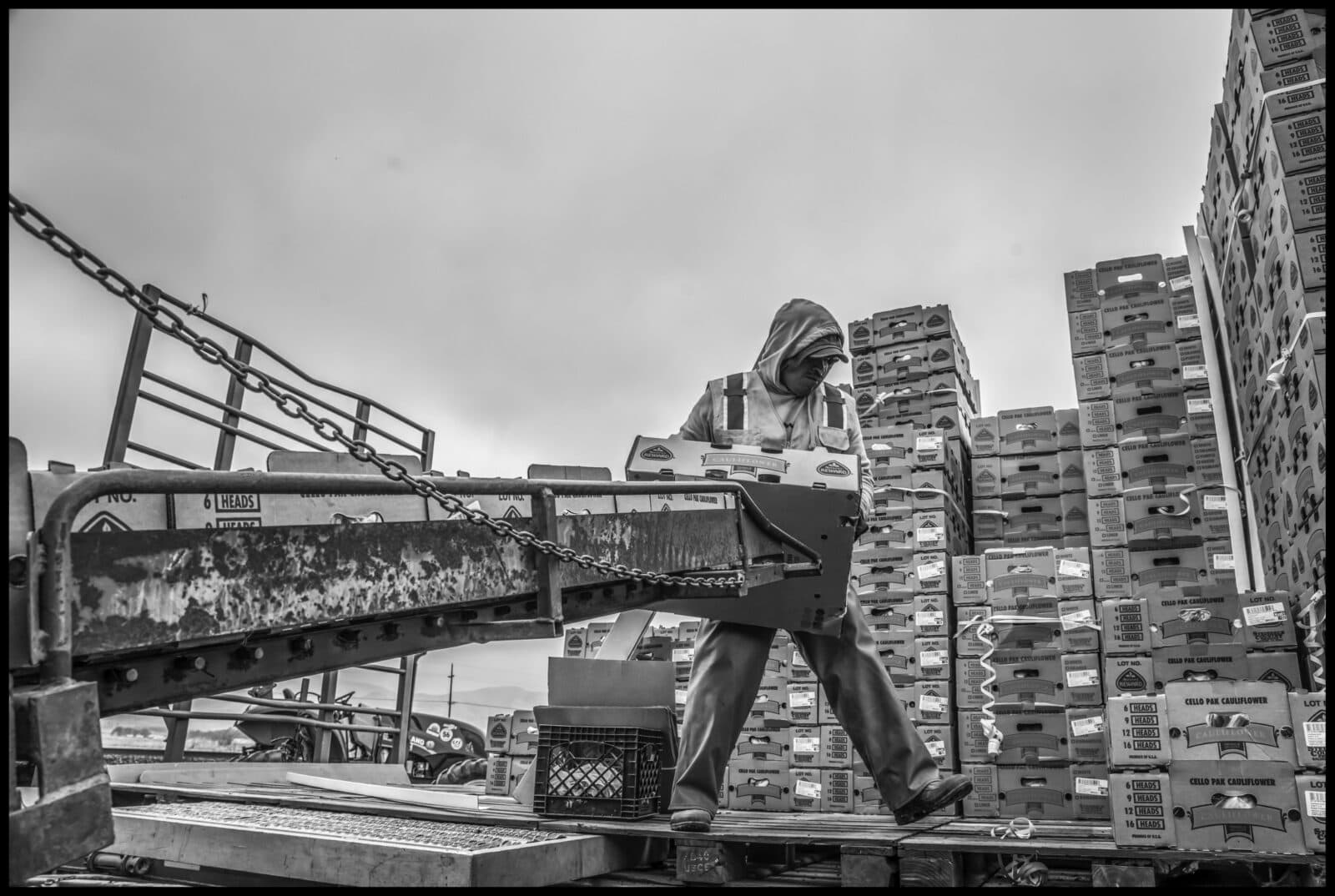
Not long ago I came upon another cauliflower crew working on a Salinas Valley farm. It took a while, and several phone calls, to get permission from the foreman, but finally I was able to start taking pictures. I joked with the workers, asking their permission also, as I tried for photographs that would show the intimate details of their work.
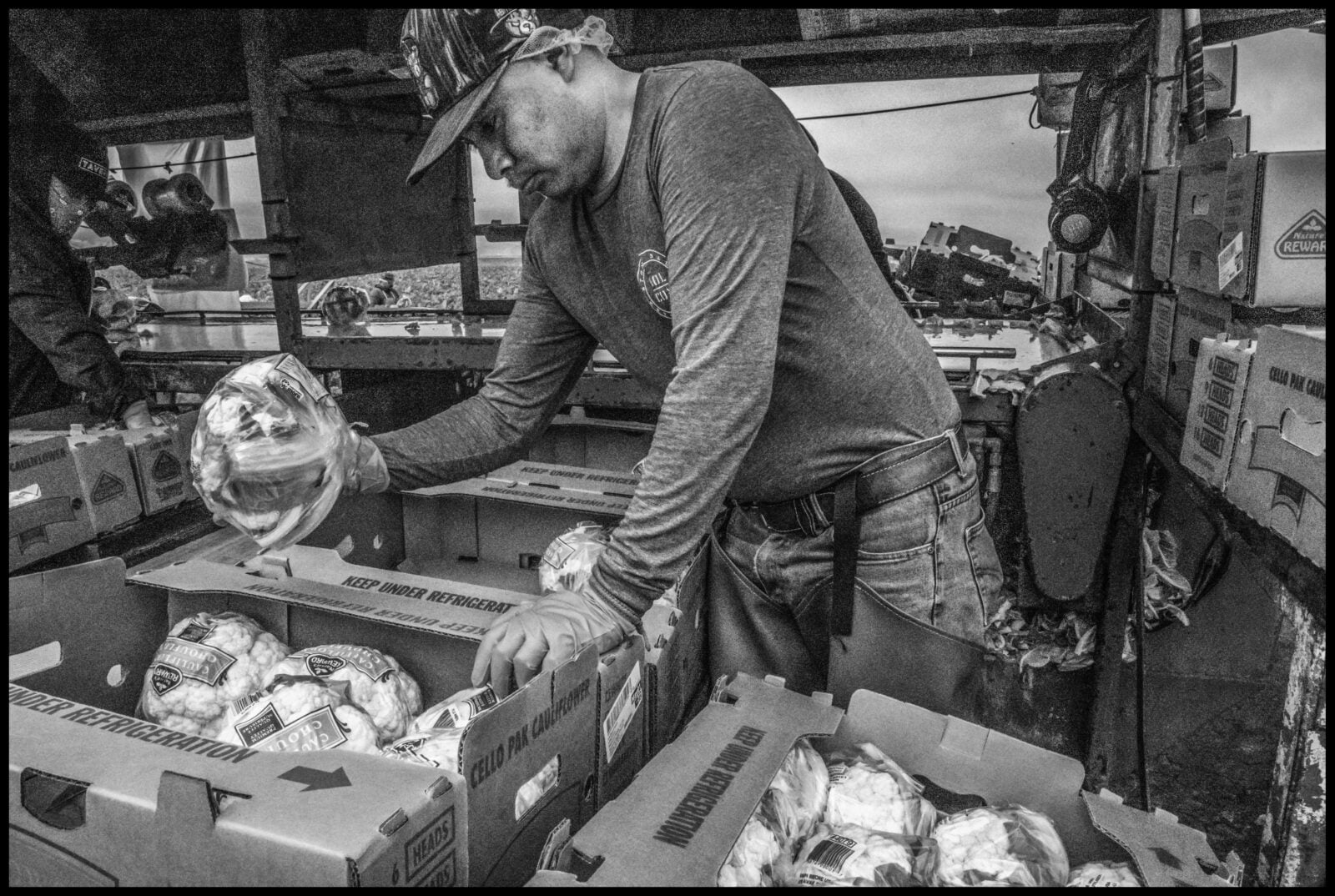
I saw that in 50 years it hadn’t changed that much. Workers till cut behind the slow-moving tractor and packing platform. These workers used shorter knives, rather than our long awkward machetes, and trimmed the leaves from the cauliflowers before putting them on the conveyor belt. But bending into those big wet leaves, cutting and tossing the heads onto the belt, was the same. I remembered too how my back would feel on fire after hours of this labor, and I’m sure that was the same as well.
The idea that a sun-tanned cauliflower head is unattractive to consumers actually leads to waste on many farms.
The biggest change is that growers have bred a variety of cauliflower that produces leaves that bend inward to shade the head. Now they get that white color, and don’t have to pay workers to put the blanching bands around the plant. But that job, which used to help families survive the slow season, no longer exists.
The idea that a sun-tanned cauliflower head is unattractive to consumers actually leads to waste on many farms. Heads exposed to the sun taste the same, and may actually contain more phytonutrients — chemicals that help plants defend themselves against insects and disease, and that benefit humans as well. But Richard Melvin, a Nova Scotia cauliflower grower, estimates that up to 40 percent of his crop is plowed back into the ground because of its “off” color.
Nevertheless, the crew in the Soledad field, cutting for the Nature’s Reward brand of the Huntington family, didn’t seem to leave many heads behind. A lot of growers also grow orange, purple and green varieties. The chemicals that create the colors include beta-carotene, chlorophyll and anthocyanins, which are antioxidants and healthy for humans. But even white cauliflower provides Vitamin C and folate, sun-tanned or not.
I used to steam my cauliflower whole and smother it in cheese sauce until my wife became lactose-intolerant. Now we usually cut the head into florets, and roast them with a sprinkling of breadcrumbs and parmesan cheese, dusting them with a little chile spice mix. When I eat them I think of the fields where I worked near Watsonville, and appreciate the labor of the men and women who cut the cauliflower today.
Inspired? We are, too — here are some of our favorite cauliflower recipes.
Warm-Pickled Cauliflower Salad with Roasted Red Peppers
Rigatoni with Cauliflower and Leek Purée
Cauliflower Fried Rice with Fresh Chiles
Grilled Cauliflower and Eggplant with Labneh and Green Chili Oil
Comment