

A not insignificant turning point in my culinary journey

When I was little, as soon as it got warm out, without fail, my mom and dad would make a big deal out of making and eating blueberry soup. “Time for blueberry soup!” I remember their utter excitement. I thought the soup was gross. Sweet and cold, with some spice or other that I didn’t think jived with it, I think it was actually cinnamon — just everything I thought a soup should not be.
Between that blueberry nightmare and a cucumber soup that my parents also liked, which relied too heavily on yogurt, my view on cold soups was tarnished. I steered clear. That is, I did until I was in my late teens and we started going to restaurants owned by Ignacio Blanco. Back then, he owned Maison Galicia and Pika Tapas, both in Connecticut, and maybe one other; now, he owns Ibiza Kitchen, in Chappaqua, NY.
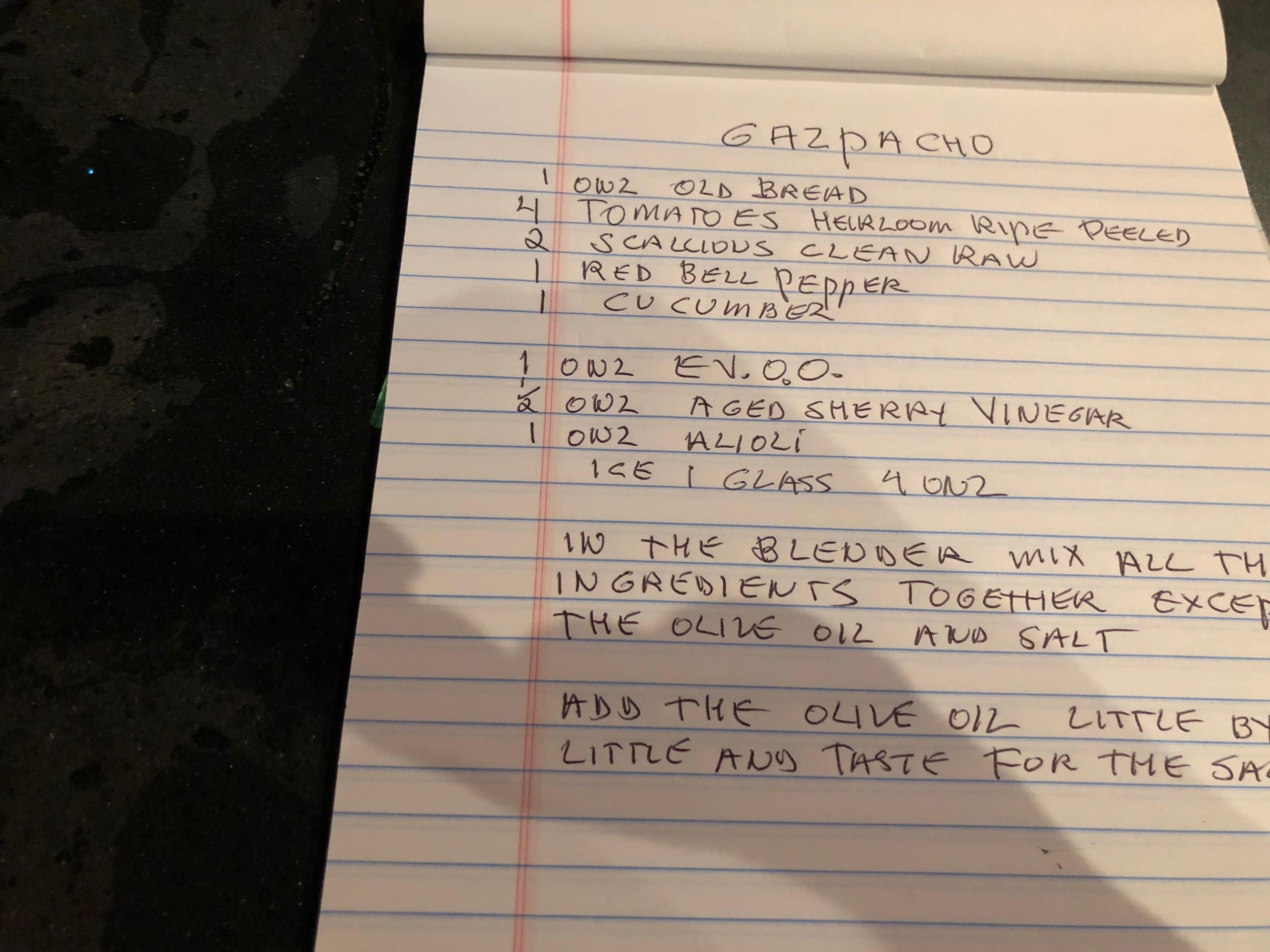
Ignacio is just about the nicest person you’ve ever met, and was responsible for the best gazpacho I’ve ever had. It’s not the red and chunky kind, which I loathe and can go sit in a corner with the blueberry. It’s the melon-colored gazpacho that tastes like it’s got a ton of cream in it, but it doesn’t. Ignacio’s does, however, have aioli, which makes it so silky — and sherry vinegar, which gives it a satisfying tang, and he uses really good Spanish olive oil, which you can actually taste. And it’s ruined me of ever ordering gazpacho in a restaurant ever again, because I know it won’t be anywhere near as good as Ignacio’s.

BUT: Last weekend, Holden and Nick and I went to our friends’ Ramya and Samir’s place, and they made us a beautiful brunch — comprised mostly of farmer’s market finds — and Ramya made Samin Nosrat’s gazpacho, and it looked like Ignacio’s. I eyed it for a while, refusing to get my hopes up. But when I tried it, it was so similar, and I was thrilled, and ate two big bowls. (There was pasta after that, so I could have used a lie down.)
And then, of course, I realized that, all along, Mark’s recipe is similar to Samin Nosrat’s, which is similar to Ignacio’s. Full circle! (No aioli in Mark’s or Samin’s, though.)

The Ramya-Samin gazpacho made me feel slightly less wary of cold soups in general, so I decided to make Mark’s Coconut-Avocado Soup, which is essentially a perfect lunch — make it dinner with a sandwich or quiche or whatever else you want — and now I’m convinced that cold soups can be good. In light of that, I’m sharing with you today:
Ignacio’s (!!!) Gazpacho
Coconut-Avocado Soup
Rhubarb-Orange Soup
Watermelon and Mint Soup
I understand that the second two are sweet soups. Turns out I don’t dislike them all (maybe just the ones that insist on containing cinnamon). And, by the way, I couldn’t find blueberry soup in any of my dad’s books. Maybe I finally cured him of that particular affliction.
Ignacio Blanco’s Gazpacho
Coconut-Avocado Soup
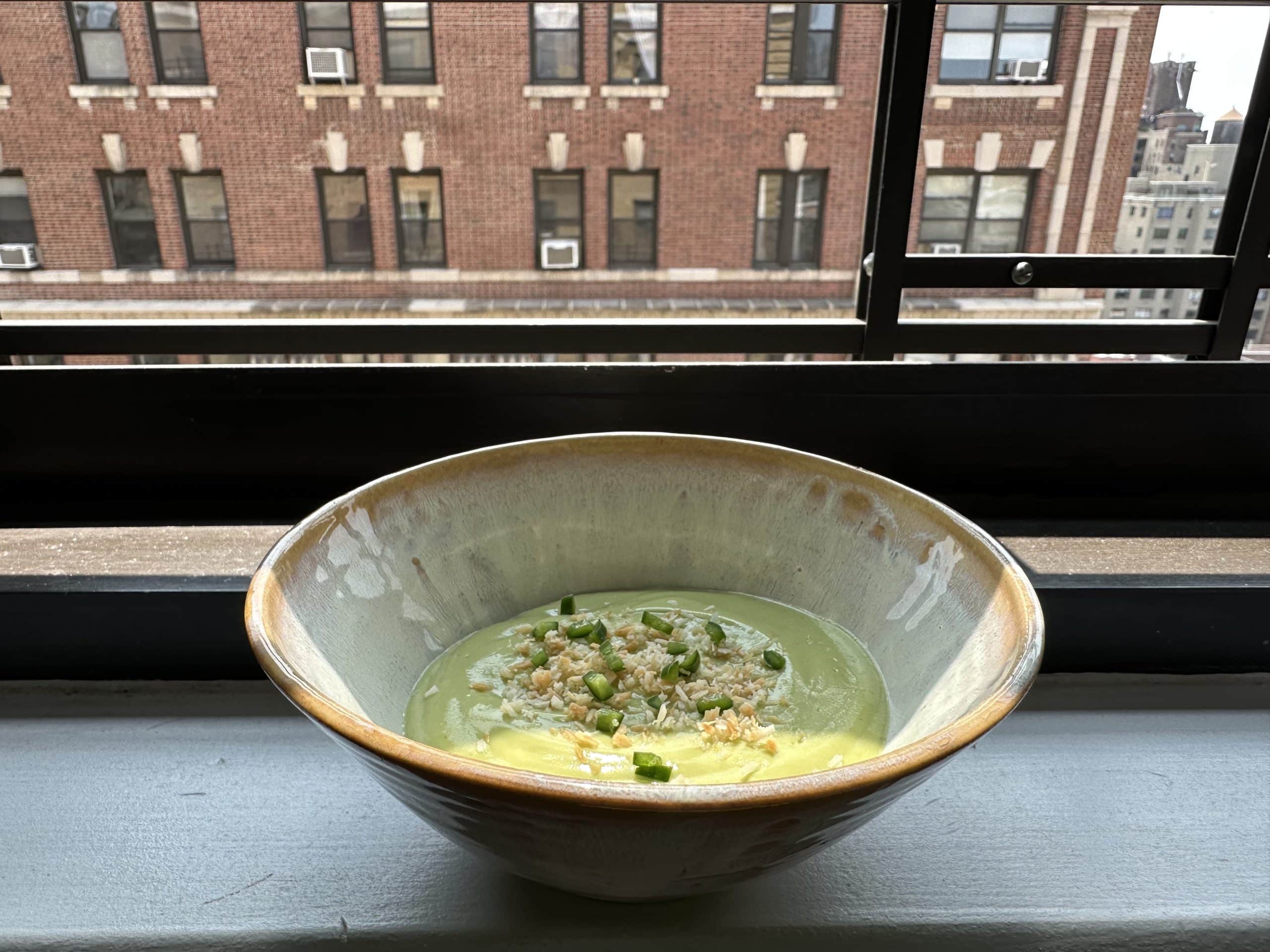
This lovely, celadon-colored soup is about as simple as it gets. The subtle, rich flavors of avocado and coconut milk benefit from a hit of acidity, so I add orange or lime juice at the end, but that’s about it. You can, however, dress it up for company: A couple of brightly colored cherry tomatoes tossed with oil, salt, and pepper and nestled in the middle of the soup are handsome additions, as are a few cilantro sprigs. — Mark
Rhubarb-Orange Soup
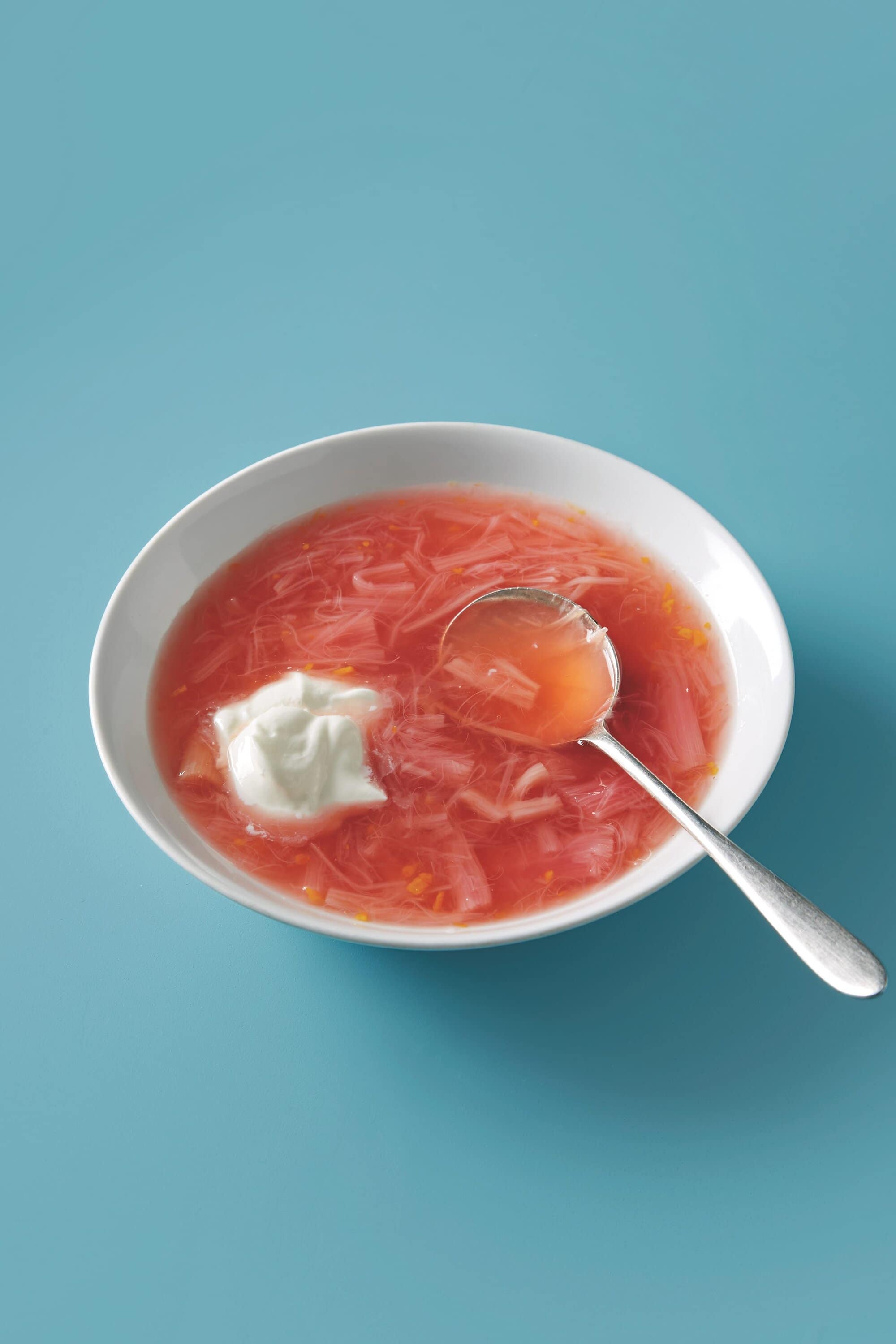
Since first having this soup in England, where rhubarb is much more popular than in the United States, I can’t help making it at the first sight of rhubarb in the market. — Mark
Watermelon and Mint Soup
This light and refreshing soup is an ideal summertime dessert — add more rum and turn it into a cocktail you can either sip in a glass or eat with a spoon. Cantaloupe, honeydew, and other melons work here too, but since they aren’t as watery as watermelon you’ll have to press the purée more in Step 2, and may have to add a little water to the blender. — Mark
Comment