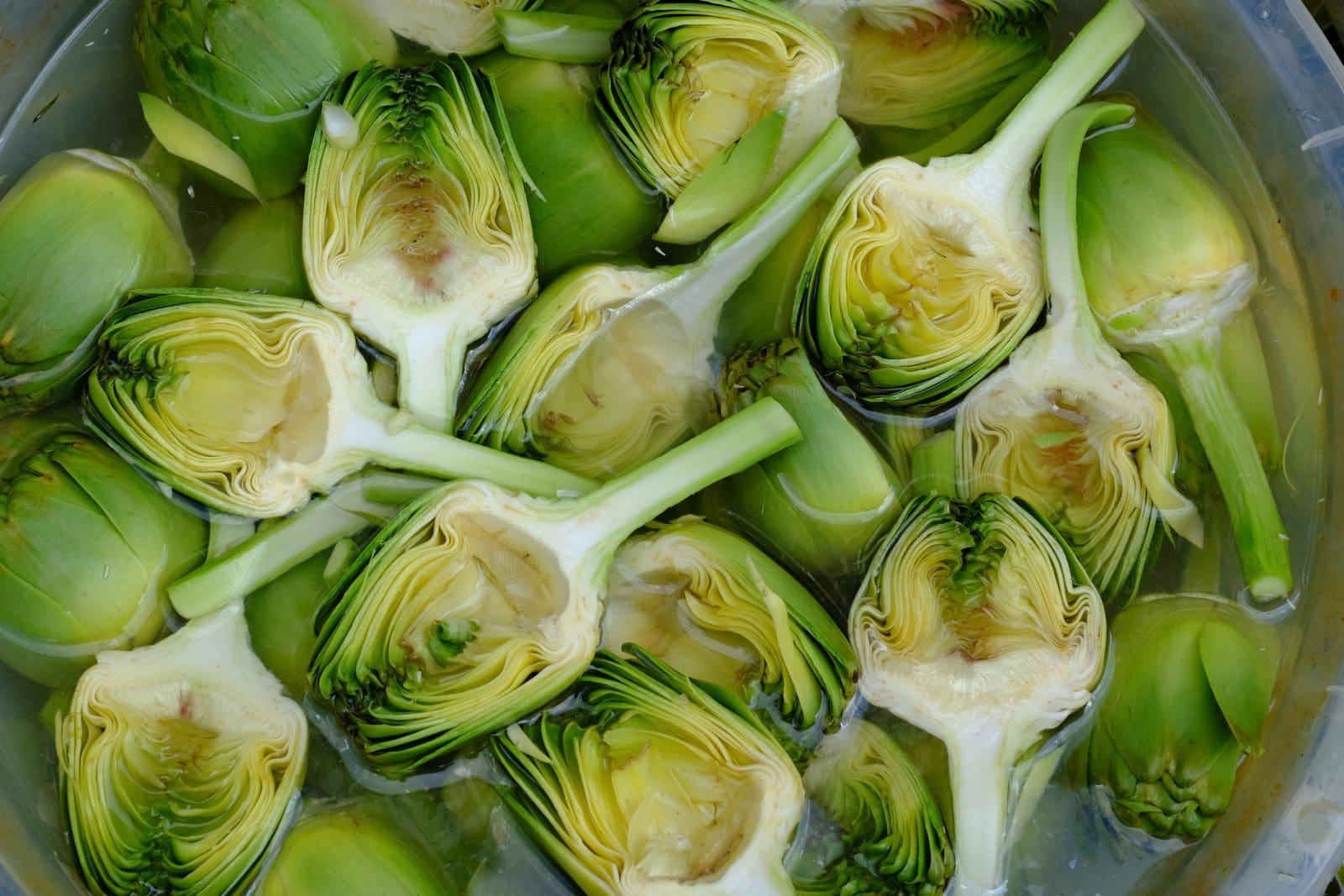
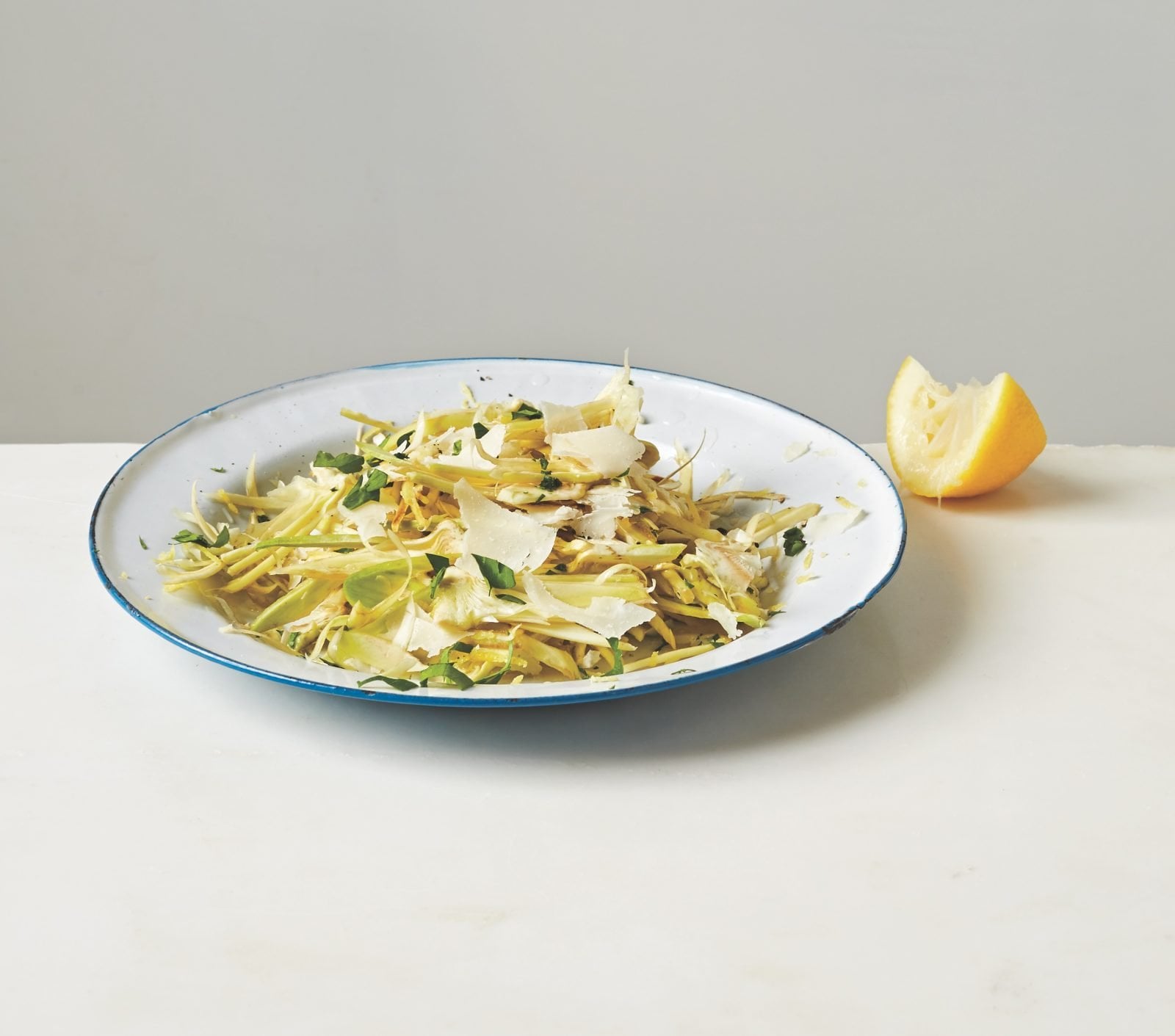
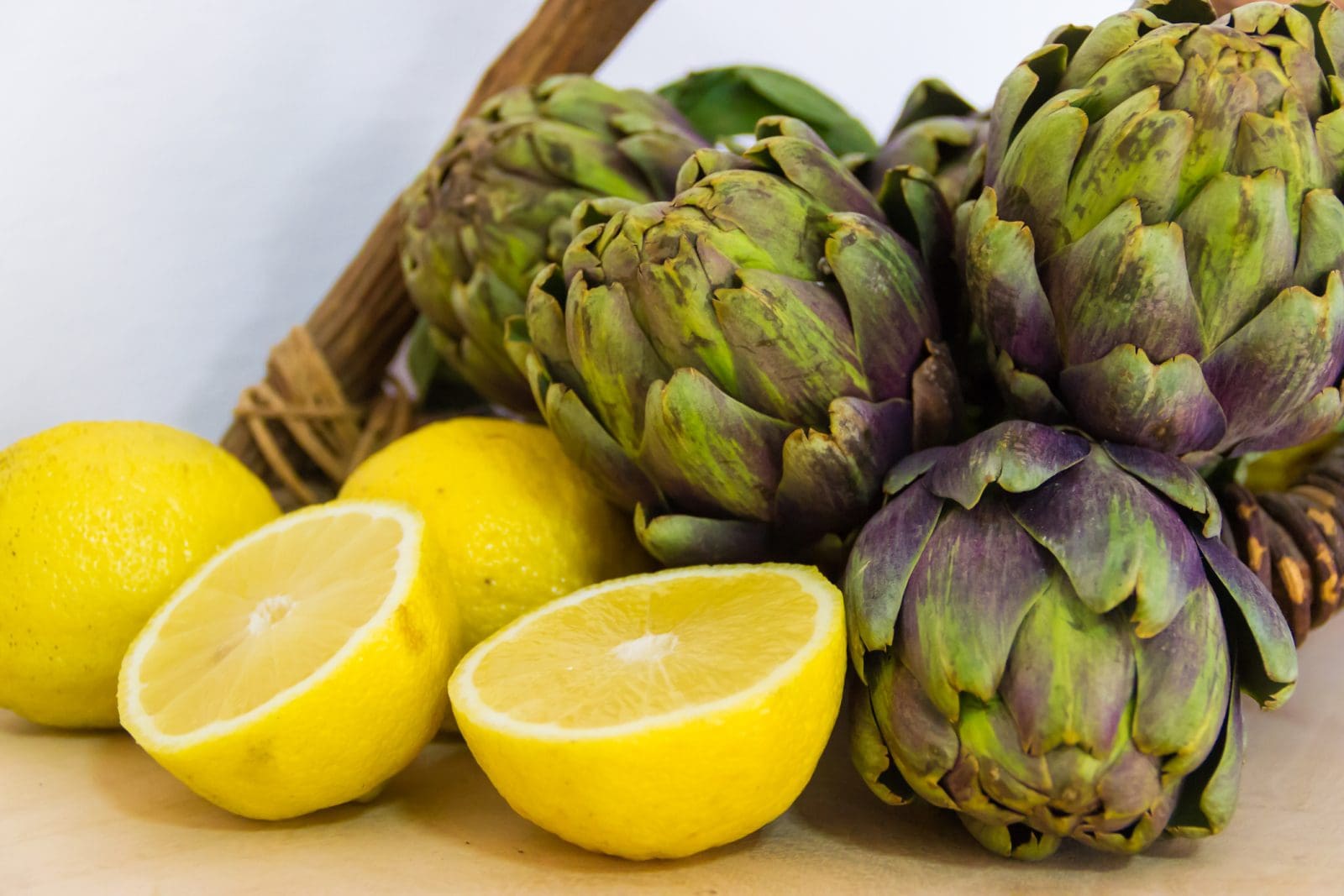
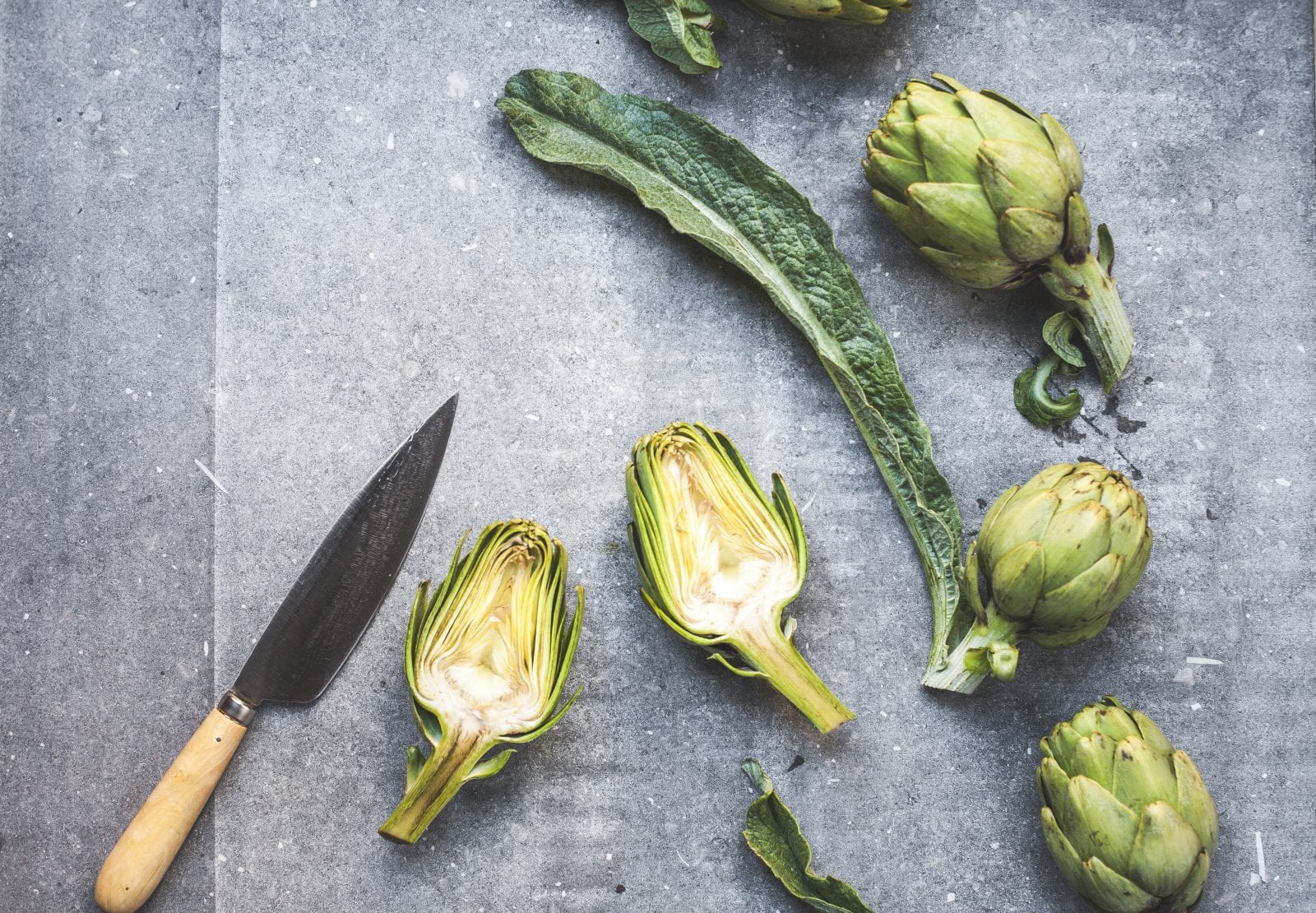
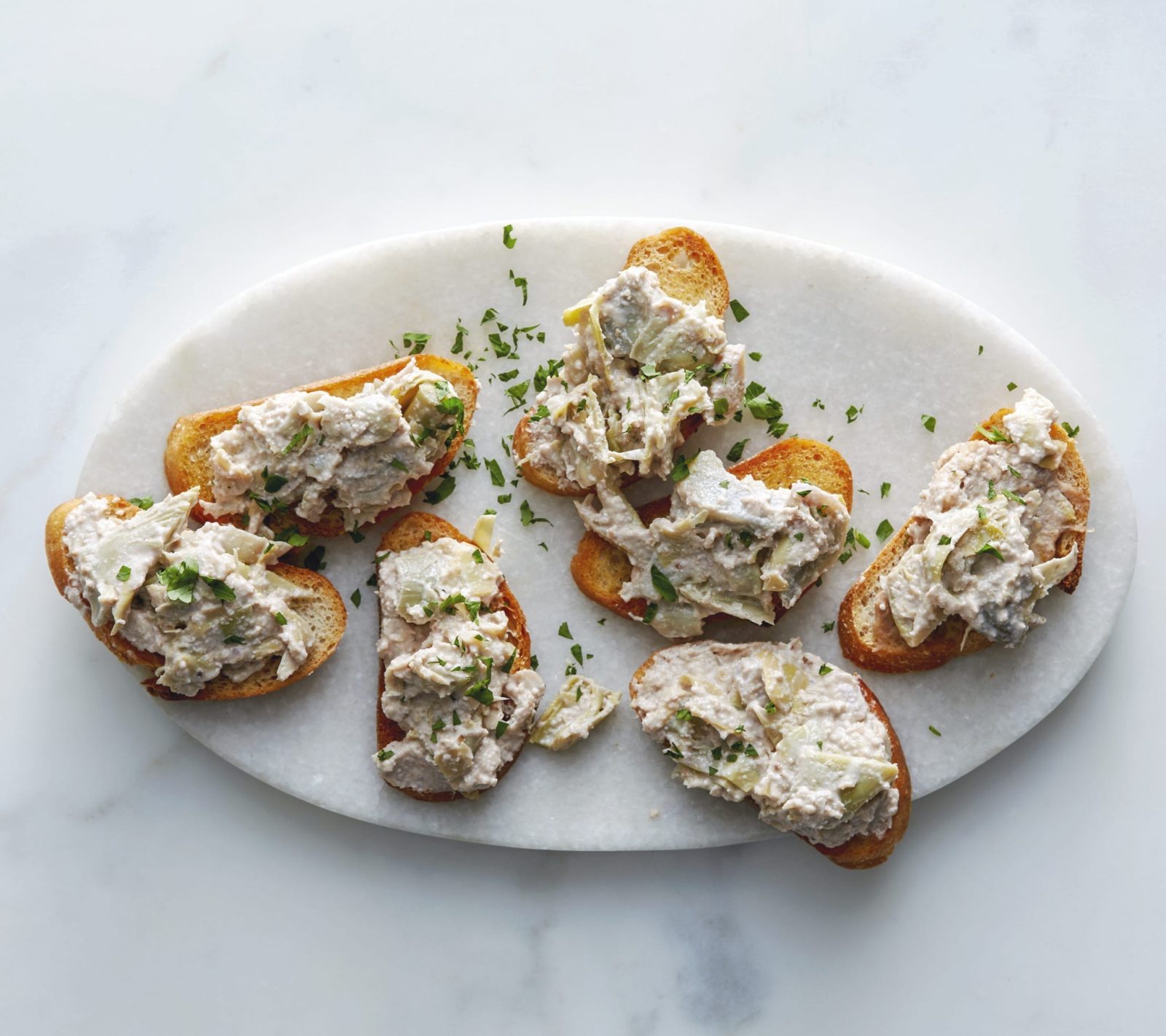
We love them, even if they’re a bit expensive and labor intensive. Artichokes are always worth it, especially the precious babies, which you can trim and eat whole, leaves and all, either raw and thinly sliced for salad, or quartered and sautéed in lots of olive oil. Cardoons, the celery-like, thistle family cousins to artichokes, have more open heads and can be cooked the same way.
Discoloring: Raw artichokes and cardoons discolor very quickly when cut and darken quite a bit when cooked; rub with half a lemon or dip in water with a couple of tablespoons lemon juice or vinegar (“acidulated water”) immediately after cutting to minimize darkening.
Best cooking methods: Steaming (whole, hearts, or cardoons), sautéing (baby artichokes and hearts), braising (baby artichokes and hearts, cardoons)
When are they done? Whole artichokes are done when the outer leaves pull off easily and the meat in them is tender. Artichoke hearts are done when very tender; pierce with a skewer or thin-bladed knife to check, then taste to be sure. Cardoons should be tender enough to pierce easily with a skewer or thin-bladed knife.
Other vegetables you can use: Artichokes and cardoons are interchangeable in terms of flavor. There is no substitute for artichoke hearts, but you have lots of options for how to buy them.
Read
By Melissa McCart
A Vegetable That Requires a Little Extra Work Is Worth It
I’ve been looking forward to artichoke season since Mark name-dropped them in his travel writing about Rome. (If you missed the favorite travel dishes discussion, you can check it out here.) While we’re a bit away from the season on the unseasonably cold East Coast, scenes from Italian Instagram have been flashing farmers market beauties for several weeks, while over…