

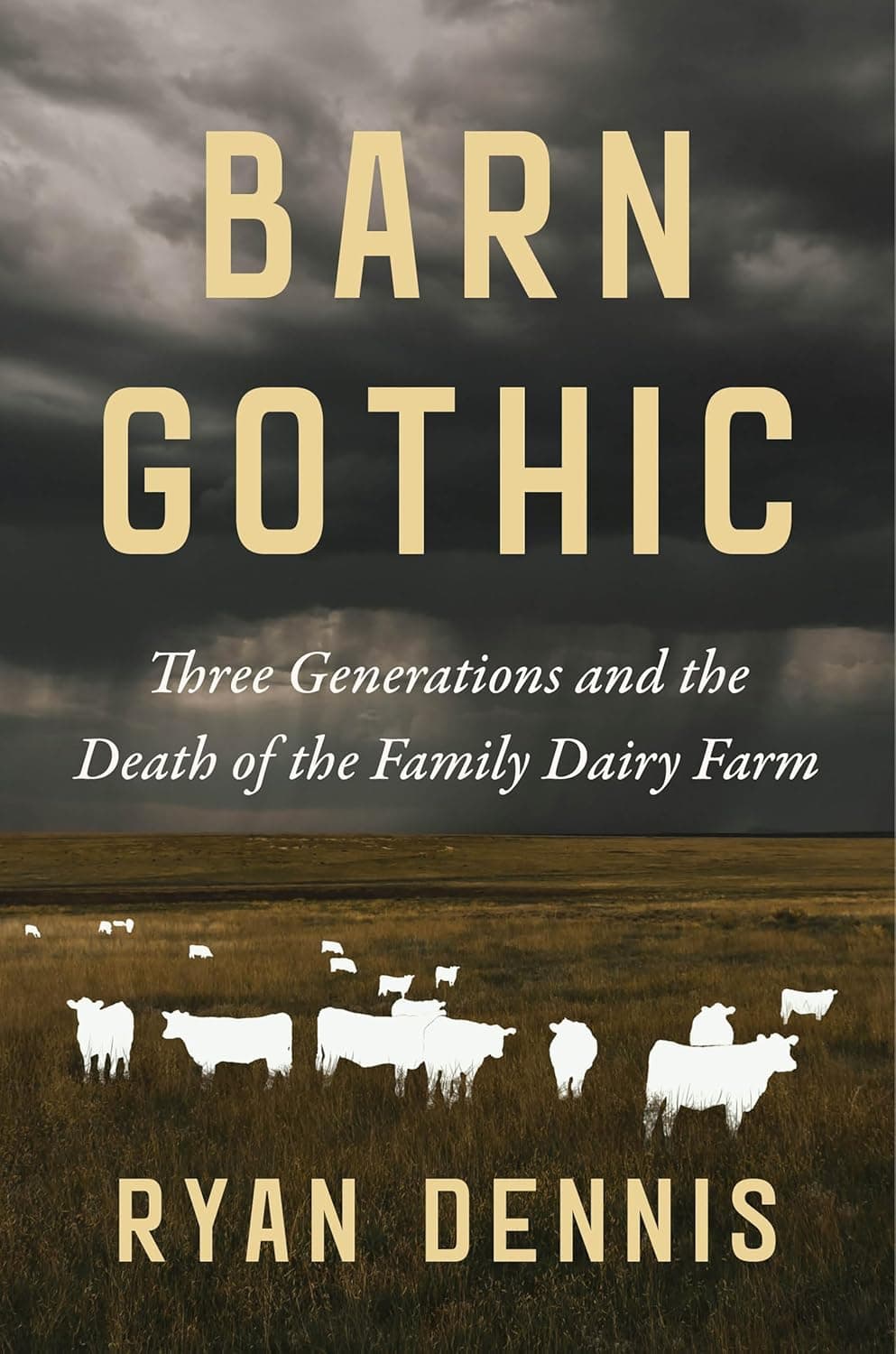
Before I even knew what Ryan Dennis did for a living I knew I wanted to read his book, Barn Gothic: Three Generations and the Death of the Family Dairy Farm. In theory, I’m interested in learning about farms and farming, but the way that they’re presented to the general public tends to be campy and uninteresting, which leads to very few of us actually knowing what actually goes on.
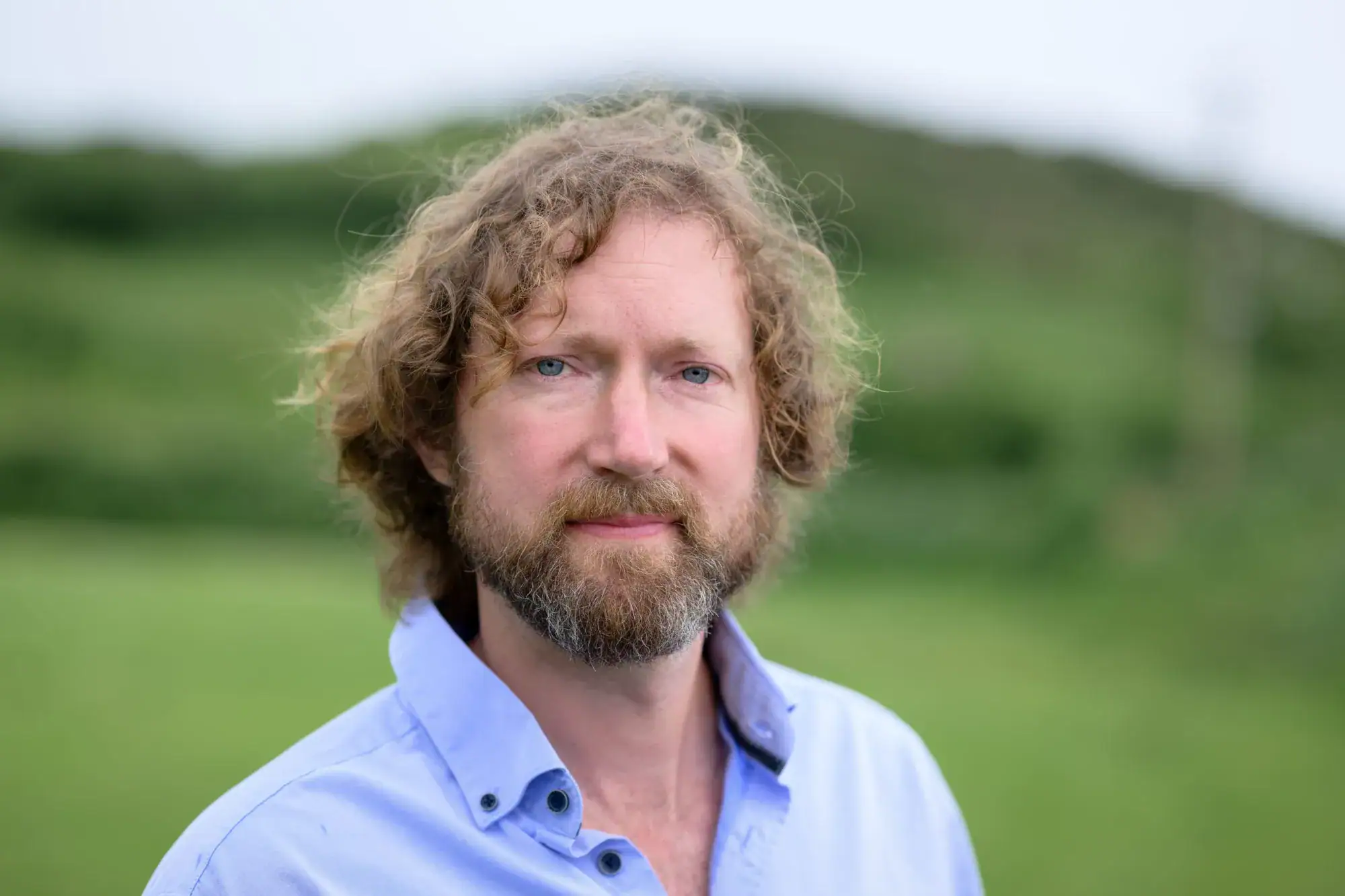
Ryan Dennis was the would-be heir to his family dairy farm in Canaseraga, New York—but he didn’t end up following that path. Instead, he got his PhD in creative writing and is using it in a unique way—to explore the dynamics of rural life in literature, and, in doing so, he’s seeking to serve rural communities more directly. In 2020 he founded The Milk House, an initiative to showcase the work of people who write about rural topics in order to help them find greater audiences.
Ryan’s background uniquely suits him to write a book like Barn Gothic, which is both an ode to the family farm as well as a deeply intimate portrait of three generations laboring to be fathers and sons while their livelihood falls apart. For anyone who wants to learn more about all that goes into working on a family farm—both labor-wise and personally—and who loves a beautifully written book, this one’s for you.
The below excerpt has been slightly condensed. – Kate
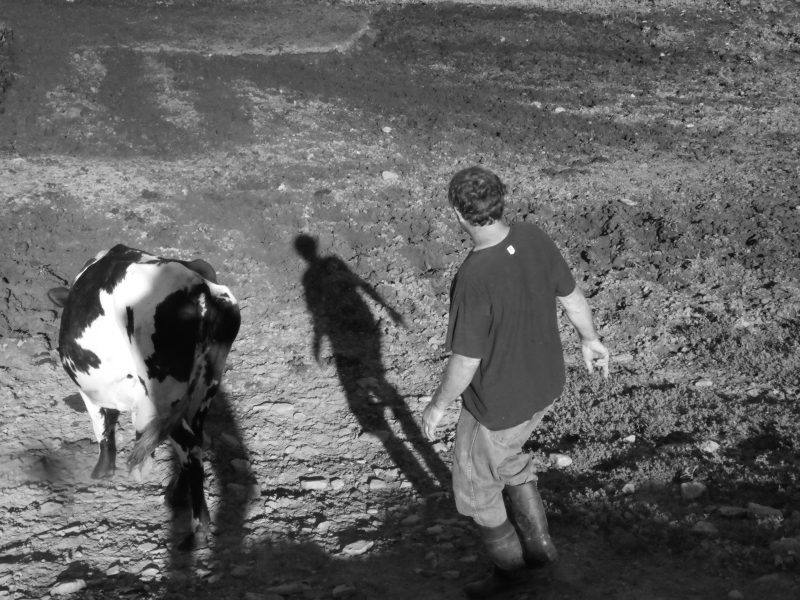
We met at the tin barn after evening chores. The heifers and dry cows stood by the feeder wagon in the last light of a summer evening and watched us. We threw our gloves on the seat of the tractor and started moving gates. My grandfather had driven the John Deere there, but my father and I had walked. Around us the distant shadows of gray squirrels wove through brush and undergrowth as they headed towards their nests. After the usual greetings, no one spoke. The right moment to talk would be later, once the dry cow was inside and we could put a boot on the hitch or lean on the back of the trailer. Then we could tell about our day for a few minutes before heading off. Now, we tied gates together with chain until it ran out and then used twine.
Because there were three of us, it meant that my father knew this dry cow would be difficult to separate and bring home. There were probably only a few days before she would have a calf and return to the freestalls. Most cattle mellow with age. They begin to understand what is put before them, which is to calve, to milk, and to dry off before freshening again. Still, every once in a while, there was a cow that railed against this agreement.
The cow stopped chewing her cud when the gate opened. She was a deep-barreled Holstein, probably on her third or fourth calf. Her eyes were already wide and flighty. No sooner had my father pointed her out that she alighted with the rest of the heifers and dry cows towards the end of the pasture, pushing herself into the middle of the herd.
In summer I wore shorts with barn boots. Cow shit often clung to my legs and the hair was rubbed off my shins. A few days into the warm weather I stopped noticing the rubber slapping on my bare skin. My father lifted the last gate while my grandfather slotted its pins into the hinges of the previous one. Then my father swung it open. The channel the gates created narrowed towards the trailer. The three of us headed into the pasture. In the silence I heard my boots again.
The tin barn was down the road from where we kept our other non-milking stock. It stood at the beginning of a large gully between my father’s and my grandfather’s farms. When the leaves changed, the colors set the type of background found on postcards and paintings. Often the cattle there watched us walk into the gully with shotguns during deer season, turning their heads in unison as we passed. Some would follow and then put their necks over the wire and stare at our backs until we were gone. Because we were inside the fence this time, however, they knew we were coming for one of them.
We reached the back of the pasture and allowed the cattle to bend around us, putting the herd between us and the trailer. The cattle trotted ahead and then eventually turned as they neared the barn. Part of knowing cattle is using angles to make them move in the right way, and we winnowed out the animals around the dry cow and allowed them to scamper past. Whenever the dry cow turned, whoever was closest to her put up his hands and shouted. It was muddy near the barn from cattle traffic. It gripped at our feet and made our steps heavy. Often someone chasing cattle would run out of their boot and step into the mud with their sock.
We carried sticks made out of stiff plastic piping, the kind to strike cattle with and not hurt them. We closed in on the big dry cow. She turned and faced me with bulging eyes. I yelled and swung the stick and shouted at her not to do it. Instead, she put her head down and pushed past me. The plastic echoed off her skull as she went by.
The feeder wagon’s metal frame was painted red and held a glare from the low sun. It had a long rack that kept enough hay for two days. Inside were a few half-eaten bales and a piece of twine that got overlooked. It was surrounded by the shapes of hooves.
A cow that got past someone is harder to get. We walked behind the group again and tried to close in on her and move side to side as she darted. We rushed her so she couldn’t turn around or have time to think, pushing her to keep trotting towards the barn. She was quick, however, and bullheaded. My father and grandfather yelled at me—Hit her, hit her—when she headed my way, but she lunged through us, her brisket bouncing off her chest. My father threw his stick at her after she passed. It glanced off her side. She flinched and kicked her rear legs in the air.
The sun was lowering, putting the tops of trees into silhouette. Our faces were red. It takes a while to hook and unhook the tractor from the trailer, and to try to catch her the next evening would be a failure made worse by the cost of time already spent. We headed towards the back of the lot and tried again.
We got the cow past the feeder wagon, the length of which narrowed the ground we had to cover. We converged on her, shouting and flashing our sticks. She had started to pant, a pale mist rolling from her nostrils. We told her to be good, to make good decisions, and to not be the things we called her. There wasn’t much space between my father and the edge of the wagon. It seemed that we finally had her.
Then she turned and faced my father.
The dry cow rushed at my father and struck her head into his chest. He grabbed it as he was pushed back. He took a few quick steps, trying to keep his balance. Then she thrust him into the metal corner of the feeder wagon and scraped him along it.
It was the first time that I saw my father cry. He lay in the mud, tucked into himself. I had never watched an adult in pain before. Not real pain like this. My grandfather stood over him with his hands on his hips. Occasionally, he shifted his weight from one foot to another. “You’re all right, aren’t you?” he said. My father couldn’t answer, only sob while my grandfather stared off into the distance.
…
My father sat at the kitchen table when the ambulance arrived. He stared blankly at the wall. His face was pale. In his eyes it was apparent that he had been crying. The ambulance crew was made up of local volunteers who knew my father, which added to his embarrassment. They were obligated to take him to the hospital for a checkup and said it couldn’t hurt to have things looked over, anyway. Occasionally, they glanced at us for support. My father sat there stoically, pulled into the bleached kitchen light. He was not the jovial, bantering person the ambulance volunteers knew him to be.
…
A child knows that farming is dangerous. I was told of everyone in the area who had died from rollaway wagons, tipped-over tractors, or having clothing caught in the PTO shaft behind the tractor. Death is a vague concept, though, especially at the age I was then. However, to see someone injured was another matter. It was the first time I realized that pain was natural to farming. To be a farmer meant eventually getting hurt. In the end, some come out of it and some don’t.
Eventually the ambulance crew made my father sign a waiver before they left. The sound of the truck climbing the hill in front of the kitchen table seemed to linger before fading away.
Excerpted from Barn Gothic: Three Generations and the Death of a Family Dairy Farm, 2025, published by Island Press and reprinted here by permission of Princeton University Press.
Ryan Dennis is a Fulbright alumnus and PhD in creative writing, and has taught writing at the University of Education, Schwäbisch Gmünd, the National University of Ireland, Galway, University College Dublin, and Maynooth University. His work has appeared in various literary journals and he is a syndicated columnist for agricultural print journals in four countries and two languages. In 2020 he founded The Milk House, an initiative to showcase the work of those writing on rural subjects in order to help them find greater audiences.
Comment