

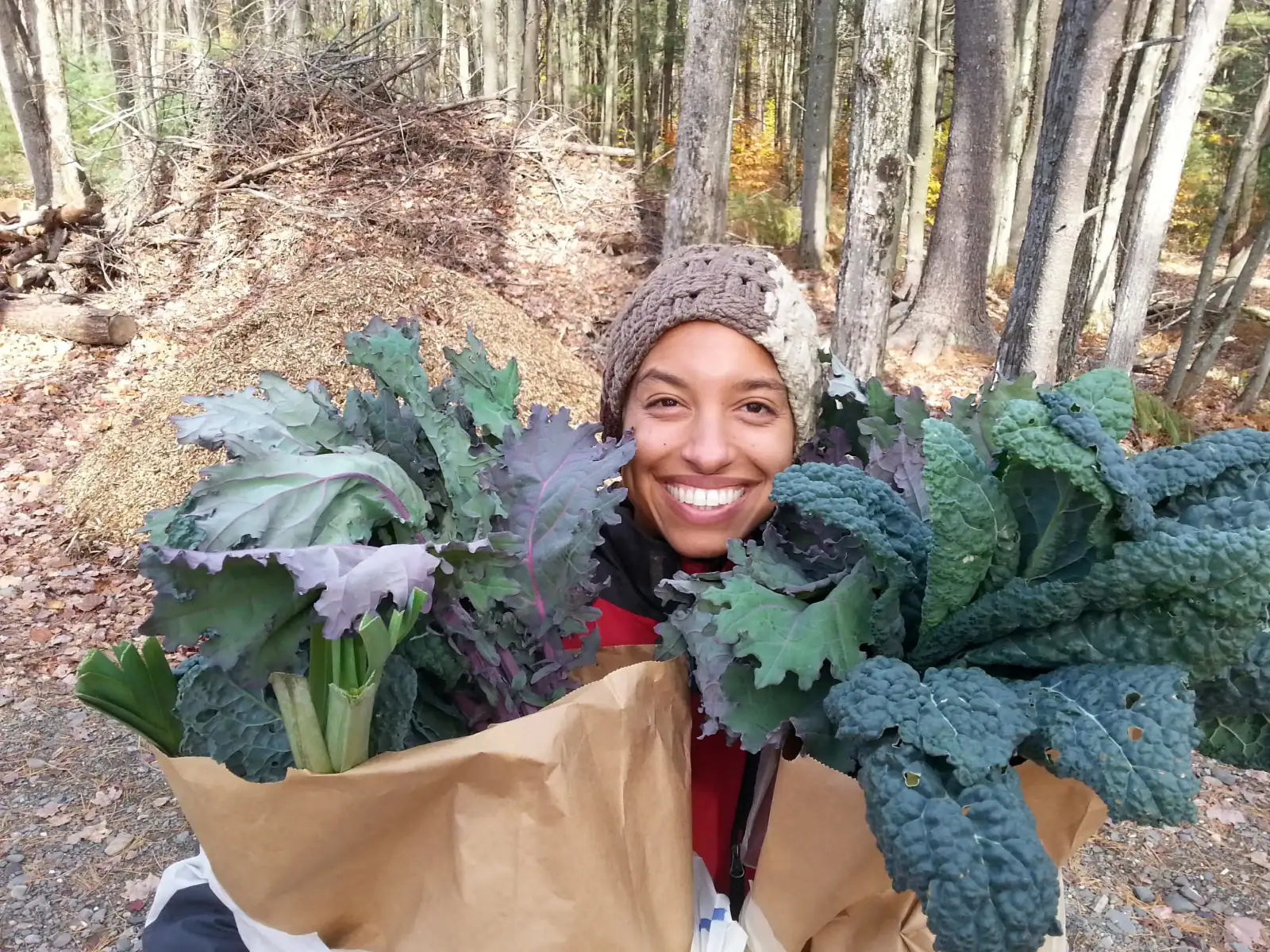
In 2011, Leah Penniman co-founded the 72-acre Soul Fire Farm in Grafton, New York. Her mission is to end racism and injustice in the food system and maintain a commitment “to train the next generation of activist-farmers and strengthen the movements for food sovereignty and community self-determination.”
Her book, Farming While Black: Soul Fire Farm’s Practical Guide to Liberation on the Land, is the culmination of 20 years of work in agriculture and social justice. “To farm while black is an act of defiance against white supremacy, and a means to honor the agricultural ingenuity of our ancestors,” she writes. It’s the book, she tells us, that she “needed someone to write for me when I was a teen who incorrectly believed that choosing a life on land would be a betrayal of my ancestors and my black community.”
This week, Penniman was one of five recipients of the 2019 Leadership Award from the James Beard Foundation. Mark sits down with her, here:
Mark Bittman: You have been all over the country for the Farming While Black book tour. What’s the response like?
Leah Penniman: The book is selling out and garnering standing ovations everywhere, from super white Midwest organic farming conferences to artsy Brooklyn spaces and rural southeast black farmer conventions. I don’t say that to be boastful, but to recognize that folks are generally ravenous for authenticity and truth-telling.
As black people, we are yearning for dignified narratives of our relationship to the land that reach across 400 years of enslavement, sharecropping, and dispossession to access thousands of years of belonging, innovation, and leadership in the agrarian space. For white people, there is a yearning to cast aside the ignorance and injustice that comes along with their racial privilege and get into the mess of something real and transformative, albeit uncomfortable. People are tired of abstracted armchair activism and come alive at the prospect of change that is gritty, muddy, practical, and real.
MB: You have a whole chapter written specifically for white people who want to challenge racism. Are folks responsive to the call for reparations?
LP: One of my mentors and a lifelong social activist, Ed Whitfield, helps us understand reparations through a simple story: Imagine your neighbor stole your cow. Then, a couple of weeks later, the neighbor feels remorse and comes over to apologize and shed some tears. In doing so, he promises to rectify the transgression by donating to you a half-pound of butter for the rest of the cow’s life. In hearing this story, our gut lurches with the injustice, and we object, “Give the cow back!”
Of course, this is the situation in the food system today, which was built upon the stolen land of indigenous people and the stolen and exploited labor of black and brown farmers. From the Homestead Act to the G.I. Bill, we stand on a legacy of white affirmative action in this country that has led to gaping wealth disparities between black and white people; it’s 13:1, according to Pew Research Center. It is impossible to create a just food system without redistributing stolen land and capital. People of reasonable intelligence and unhardened hearts cannot deny this logic.
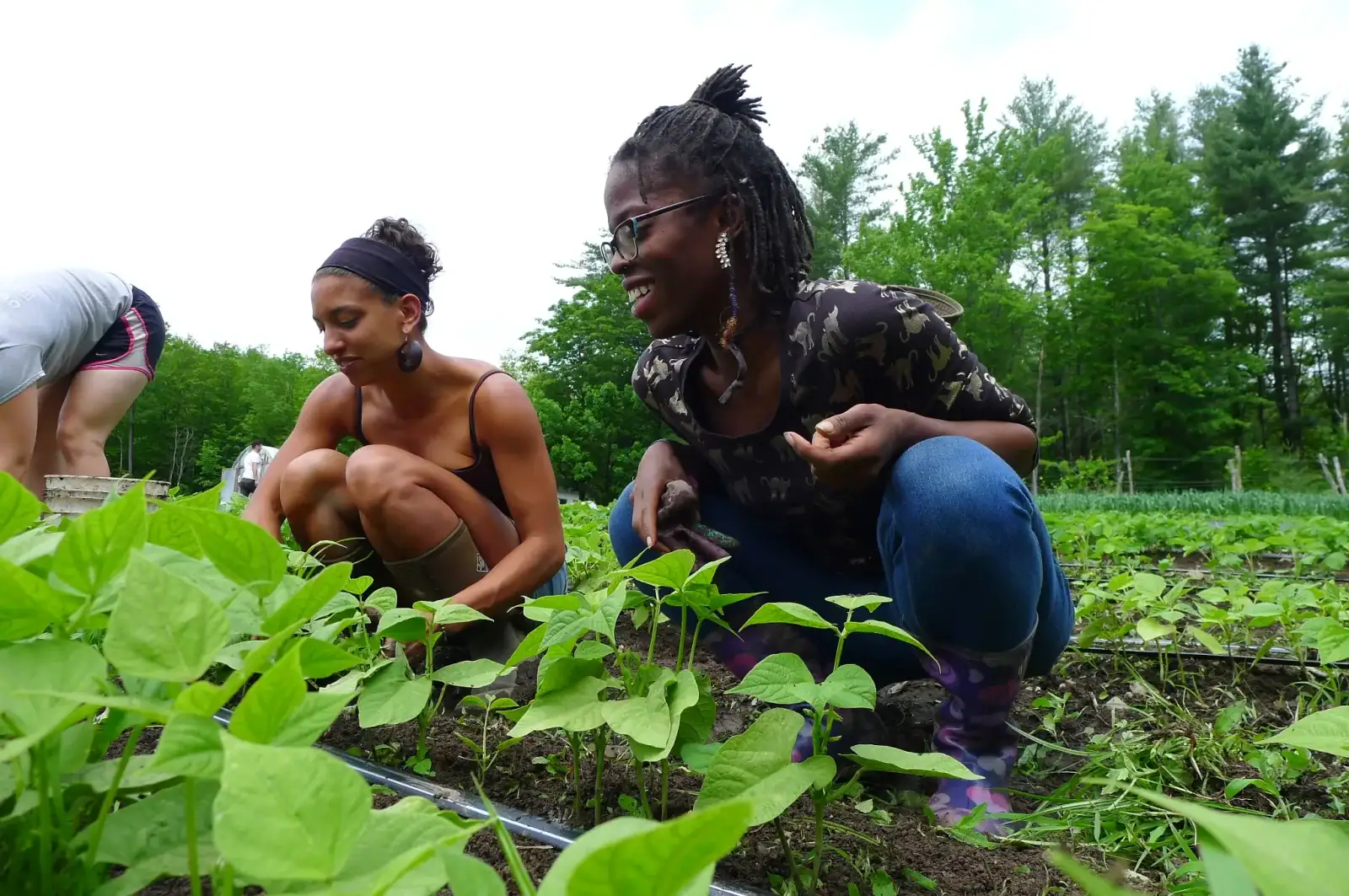
MB: In another bold decision, you bring a spiritual lens into a book that is otherwise a mix between a how-to farming guide and an anthropological treatise. Can you talk about that?
LP: I lived in Ghana, West Africa, for about six months after college and a group of respected women leaders in the community, the “Queen Mothers,” took me under their wings. During one of our afternoons together, they asked me, “Is it true that in the U.S. farmers will plant a seed and they do not offer any libation to the soil, do not pray, sing, or dance their thanks, and they expect the seed to grow?” Upon my confirmation of this truth, they added, “That is why you are all sick.”
The belief that the earth is living, conscious, and requiring of reciprocity is central to traditional African cosmology, and the book would be hollow without honoring that. I believe that our current ecological catastrophe is partly the result of demonizing traditional, earth-based religions and losing the practice of listening to the earth with our hearts and not just our scientific instruments.
MB: In 1910, black farmers owned and managed 14 percent of the nation’s farms; they now control just over 1 percent. In the face of this history, what keeps you hopeful?
LP: My ancestral grandmothers who braided seeds in their hair before being forced onto trans-Atlantic slave ships, believing against odds in a future on soil, and believing that I would one day exist and need to inherit that seed. It would be a dishonor to them if I were to relinquish hope. There is a good reason to hope. We are seeing a resurgence of interest in urban and rural farming in the black community, so much so that we are being called the “returning generation.” At Soul Fire Farm, our training programs are overflowing, and we are now training trainers to do similar work across the country. For the first time in 100 years, the last USDA census showed a slight increase in the number of black farmers, and we expect a continued rise.
MB: Can you give readers a sense of what they can do to end racism in the food system?
LP: Ending racism starts with listening to those most impacted by the problem: people of color. This sounds obvious, but unfortunately, a savior complex can get in the way of actually listening and following the lead of the experts. Black and brown farmers have put together thoughtful lists of action steps for society, and all we need to do is implement them. (HEAL platform and Soul Fire platform). In summary, we need to work on land redistribution, farmworker rights, economic and educational supports for farmers, and reparations to POC-led community projects.
MB: You started out thinking you were running a family farm, and now are catapulted into a role of spokesperson for food justice. How is it for you personally?
LP: Oh, it’s super hard. I firmly and unequivocally see the movement and even the book as a “we thing,” but our society is so obsessed with the individual that folks sometimes put me on a pedestal and make me into a projection of their hopes (or fears), which can be lonely and dehumanizing. I am also super introverted and sometimes long to just be on the land pruning my blueberries and being with my family, far from the crowds. At the same time, I am awed and humbled by the power of storytelling. I stand on a long griot tradition in my family, a lineage of pastors and preachers, and believe my ancestors are requiring this work of me. A story is how we pass on culture, wisdom, and belonging, and it is how we catalyze action.
Comment