


I’m what you could call a purist when it comes to ice cream. For starters, my favorite ice cream, hands down, is Häagen-Dazs coffee, and not just because reminds me of my favorite yogurt when I was a kid, Dannon coffee (where did it go?!)—but because it’s as close to perfect as any ice cream I’ve tasted. I don’t want anything too sweet, I don’t want a ton of things mixed in (I’m sorry, Ben & Jerry’s—I love your politics and I love your pistachio, but anything more than one or maybe two mix-ins is just too many).
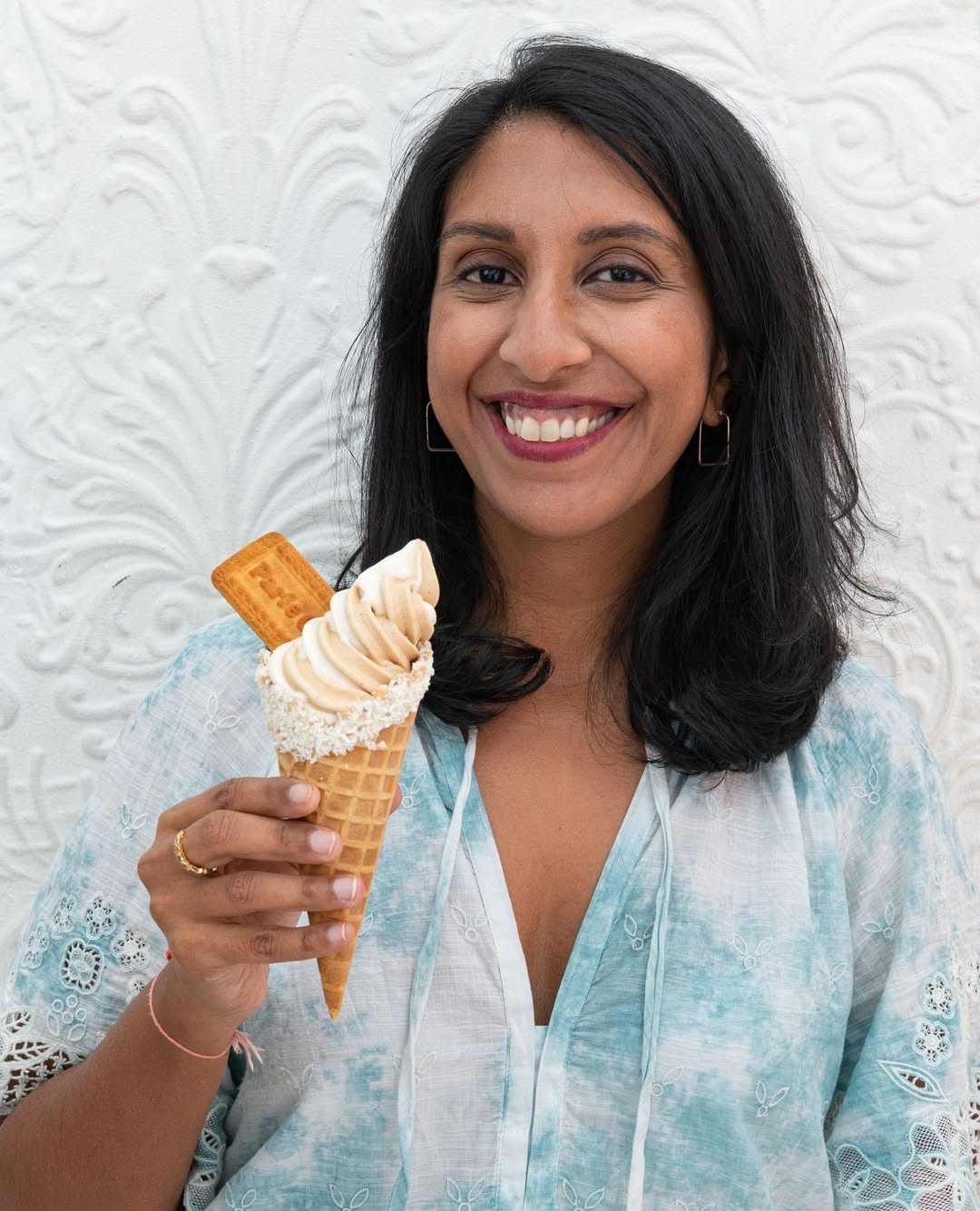
Pooja Bavishi is the founder of Malai, an ice cream company—with two brick and mortar shops in Brooklyn and DC, and a third, in Philly, opening next month—that employs flavors highlighting the culture and traditions that she grew up with, and, as she puts it, the magic that she felt in the kitchen at a young age.
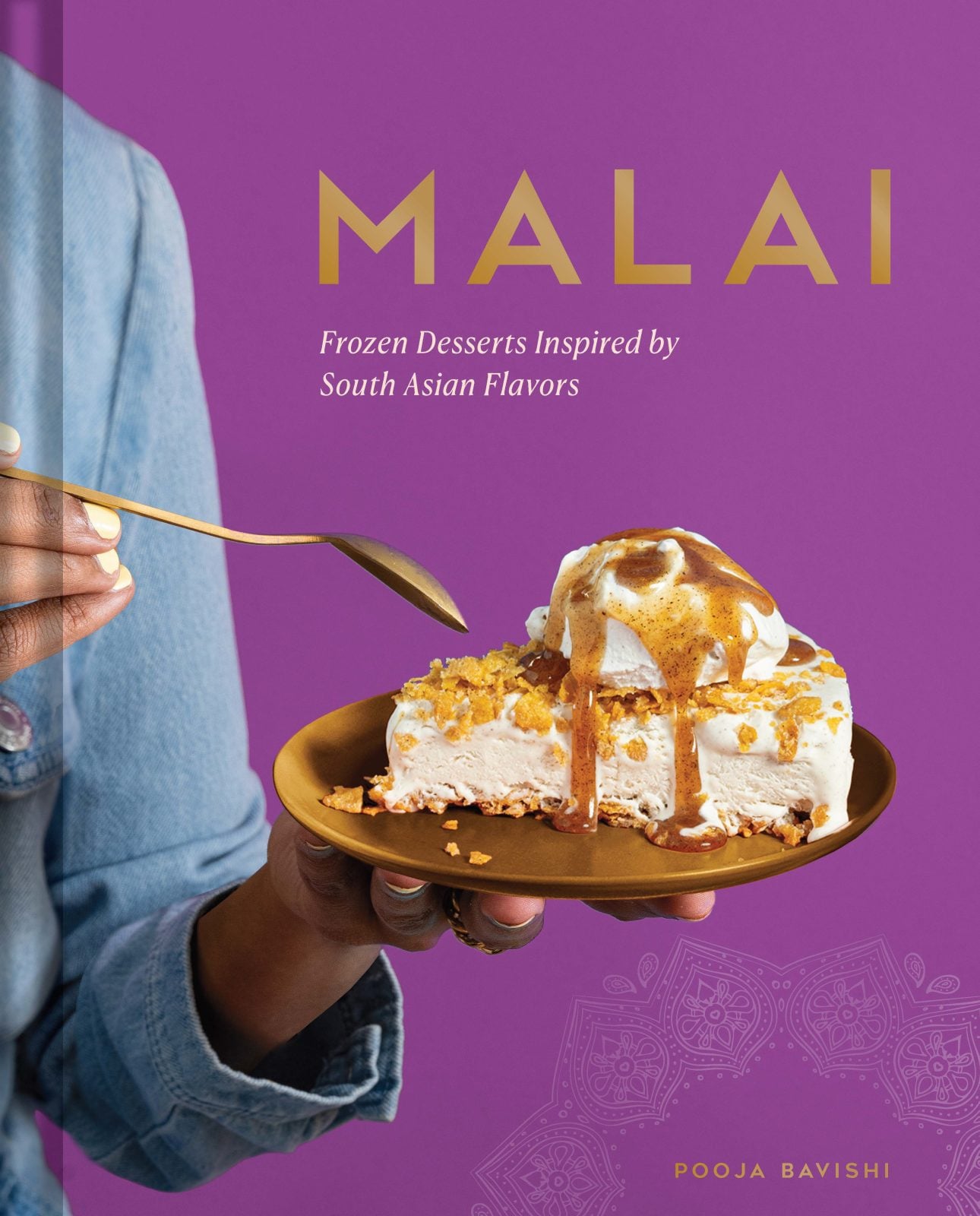
This month, Pooja published Malai: Frozen Desserts Inspired by South Asian Flavors, a book that includes not just ice cream (Jaggery Ice Cream, Spiced Peanut Crunch Ice Cream, Orange Fennel Ice Cream), but desserts like Cardamom Snickerdoodles, Butterscotch Fennel Loaf, and Melted Ice Cream Cake. I chatted with Pooja, about how she comes up with flavor combos; what she’s the most proud of, culinarily; and one of the concoctions she came up with that will never see the light of day. A condensed version of our conversation is below, and following that, recipes: for Cold Coffee Milkshake, for Crunchy Ice Cream Balls, and for Chocolate-Cardamom Sauce, all in Malai.
(By the way—I hadn’t tried Malai ice cream before I talked to Pooja, but now I have, and I can report that it’s heavenly. I’m a true believer—really. If you don’t have a Malai shop near you, you can get it on Goldbelly. So far, the Mango and Cream is my favorite, but I’m just getting started.)
Q: Okay, first off—your ice cream is all eggless. Why?
Eggs have a flavor, and so when you put egg yolks in ice cream, especially when you have so few ingredients—milk, cream, sugar—they’re taking up space, they’re taking up flavor.
A: Malai is all about celebrating South Asian flavors, my culture, my heritage; and my family comes from a part of India where the population is traditionally vegetarian, and don’t consider eggs to be vegetarian—including some of my own relatives and extended family. It was very important to me from the very beginning that people from my culture, or people who take inspiration from my culture, were able to try the ice cream that I was making. So it was really important to me that everything that comes out of Malai’s kitchen—the ice cream, of course, but also our ice cream cakes, our ice cream sandwiches, our toppings, our cones—be eggless.
The other reason is that eggs have a flavor, and so when you put egg yolks in ice cream, especially when you have so few ingredients—milk, cream, sugar—they’re taking up space, they’re taking up flavor. I really wanted the shining star to be the flavoring that we’re putting in there—the spice, the rosewater, whatever it might be.
Also, the type of ice cream that we’re making is American-style ice cream; egg yolk ice cream is actually European-style and eggless is American-style. We’re using a Philadelphia style; it’s a custom base, our own proprietary base—I tested out a lot of bases when I first started Malai—so we’re using cream cheese instead of egg yolks. It has a lusciousness to it, but also a cheesy quality and a little bit of salt, and it adds this nuance and rounded flavor to the ice cream, too.
Q: In the introduction to Malai, you write that when you started to make ice creams, “some part of me instinctively knew to combine Indian flavors and spices that did not traditionally go together—rose and cinnamon, saffron and black pepper, green mango and cardamom, cayenne and star anise—but that shine through so beautifully in butterfat and dairy.” I understand that it’s instinctual for you, but I’m curious about the process here. How does the experimentation work? Are you eyeballing lists of flavors and spices until you have an ‘a-ha’ moment?
I want to present something to the mainstream audience, these flavors are as American as they are South Asian; South Asian flavors should be in the lexicon of American flavors. It should be one and the same, because that’s what our country is.
A: I’ve always had this really deep curiosity about all things, but certainly about flavor, and how flavors work together; there’s so much nuance and so much complexity that goes into that. It’s pretty fascinating how different cultures use the same spices in so many different ways. It’s not necessarily that I’m looking for two different things and figuring out how they go together; I usually have a basic idea of what I want an ice cream flavor to be. I’ll use rose as an example, because our rose flavor is pretty unconventional in terms of flavor pairings. I grew up on rose ice cream; it was present at every single family function, it’s as ubiquitous to me as vanilla ice cream. And so I wanted to create a rose ice cream, but my intention with Malai has never been to copy ice cream flavors that exist. It’s really that we’re creating something new, because I want to present something to the mainstream audience, these flavors are as American as they are South Asian; South Asian flavors should be in the lexicon of American flavors. It should be one and the same, because that’s what our country is.
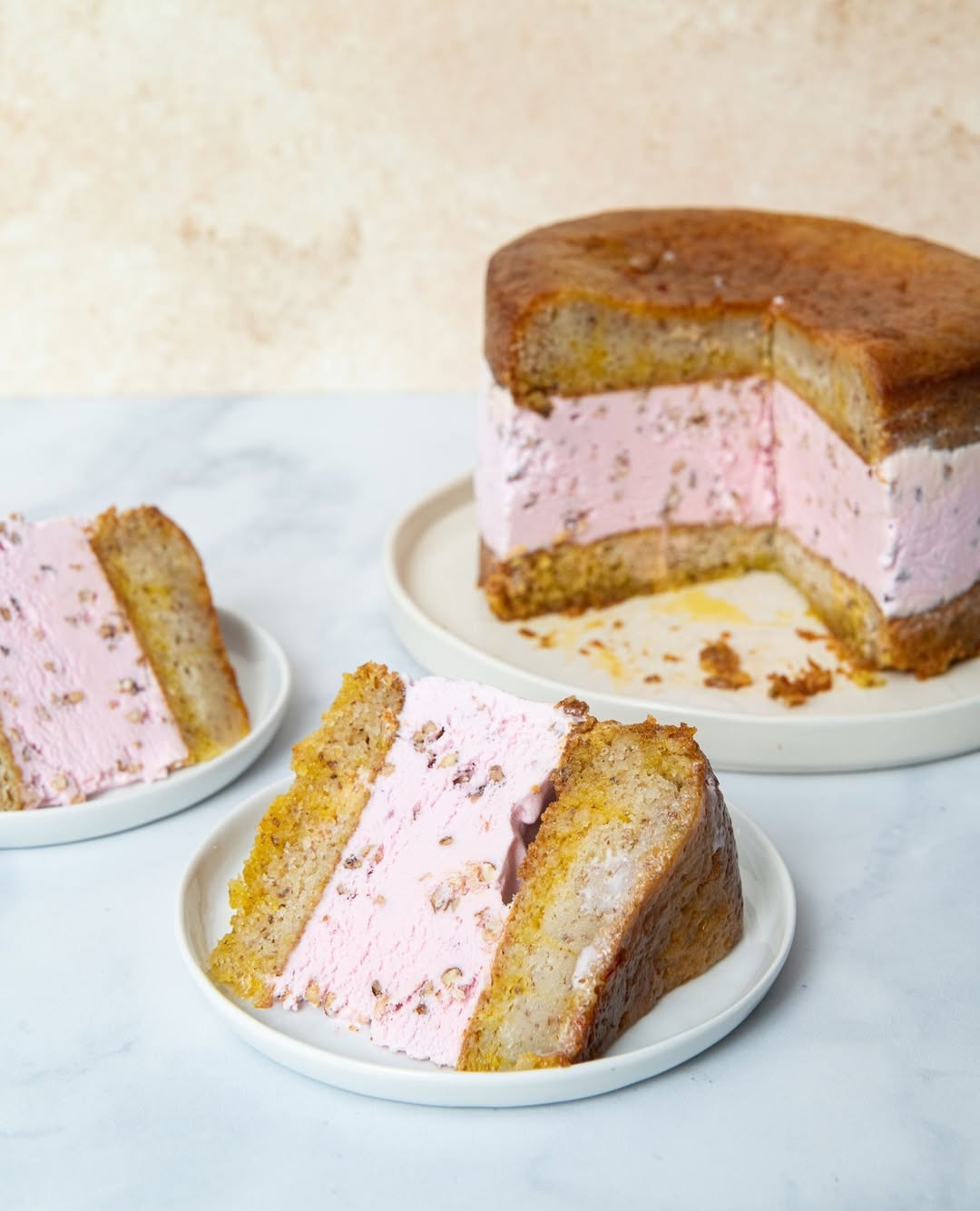
Rose is often paired with cardamom, it’s often paired with pistachios, but for my rose ice cream I wanted to see what else we could do to enhance the rose flavor and also highlight another spice. It’s not that I instinctively knew that cinnamon and rose pair well together, but not everyone grew up with rose as a flavor, so I wanted a word in there that everyone knew: vanilla, cinnamon, nutmeg. Mainstream flavors. I tested a lot of different things, and almost landed on a rose-vanilla-almond. But the cinnamon makes the rose a little sweeter, it takes the edge off the floralness of the rose. (I’m really geeking out.) And then roses and almonds are actually from the same family, so they pair really nicely together.
So there’s a lot of different inspiration coming from different points, but it also takes a little testing, a little research, to put these unknown flavor pairings together.
Q: Let’s talk about your most triumphant flavor combination, and one that just did not work.
My favorite flavor combination is actually not in one product; it’s the coffee cardamom and the orange fennel together. When we’re scooping those at the same time, and I’m there at the shops, I make people try both of them on one tasting spoon, because I think they’re so good together.
Very early on, there were a lot of flavor combinations that didn’t see the light of day. But these days, we figured out the testing enough so that if after three iterations we don’t feel like the ice cream is amazing, we just table it. We’re at a point where we want to be able to get what’s in my head into the ice cream within three tries. But I wasn’t like that at the beginning.
What’s really interesting is—so curry powder is not actually a spice that South Asians use. It’s a spice blend that was created during the colonization period. The British wanted something similar to what they were eating in India, and so they created this thing called curry powder. It’s very distinct; it doesn’t taste like anything you’ll find in Indian cuisine, but there is something kind of Indian about it—you taste the notes in there, like turmeric. So I had curry powder in my pantry, and I remember thinking it didn’t have a story behind it—all of our flavors have stories behind them, you can find them on the pint packaging and we want people to understand where the inspiration comes from—but I figured, let’s go ahead and try it, and it was terrible. We did a peanut butter curry, and it was truly bad. But I wasn’t giving up on it, and I tried to add some chocolate, and that made it worse. It honestly just wasn’t good ice cream. But it was very good that I went through that early on, within one of the first couple months of Malai, and I’ve never tested a flavor that I wasn’t excited about since then.
People don’t have to have grown up the same way I did to feel this connection, to form a community around this product, because everyone has this connection through food.
I was trying to fit into this box, like “this is Indian-inspired.” It was a learning moment for me—what does it mean to be Indian, what does it mean to be Indian-American, what does it mean to be inspired by Indian flavors? It means nothing if there isn’t something to root it to. Since then, it was really about ‘this is where I get my inspiration from for this flavor and why I’m creating this flavor,’ and I realized that that’s what people are connecting to as well. They don’t have to have grown up the same way I did to feel this connection, to form a community around this product, because everyone has this connection through food.
Q: With Malai, people have told you not that it’s the best “Indian ice cream” they’ve ever tasted, but that it’s the best ice cream they’ve ever tasted, period. Part of your goal with Malai has been to bring awareness of and enthusiasm for ingredients that have traditionally not been embraced in the US. If you had to pick one ingredient to tout, what would it be?
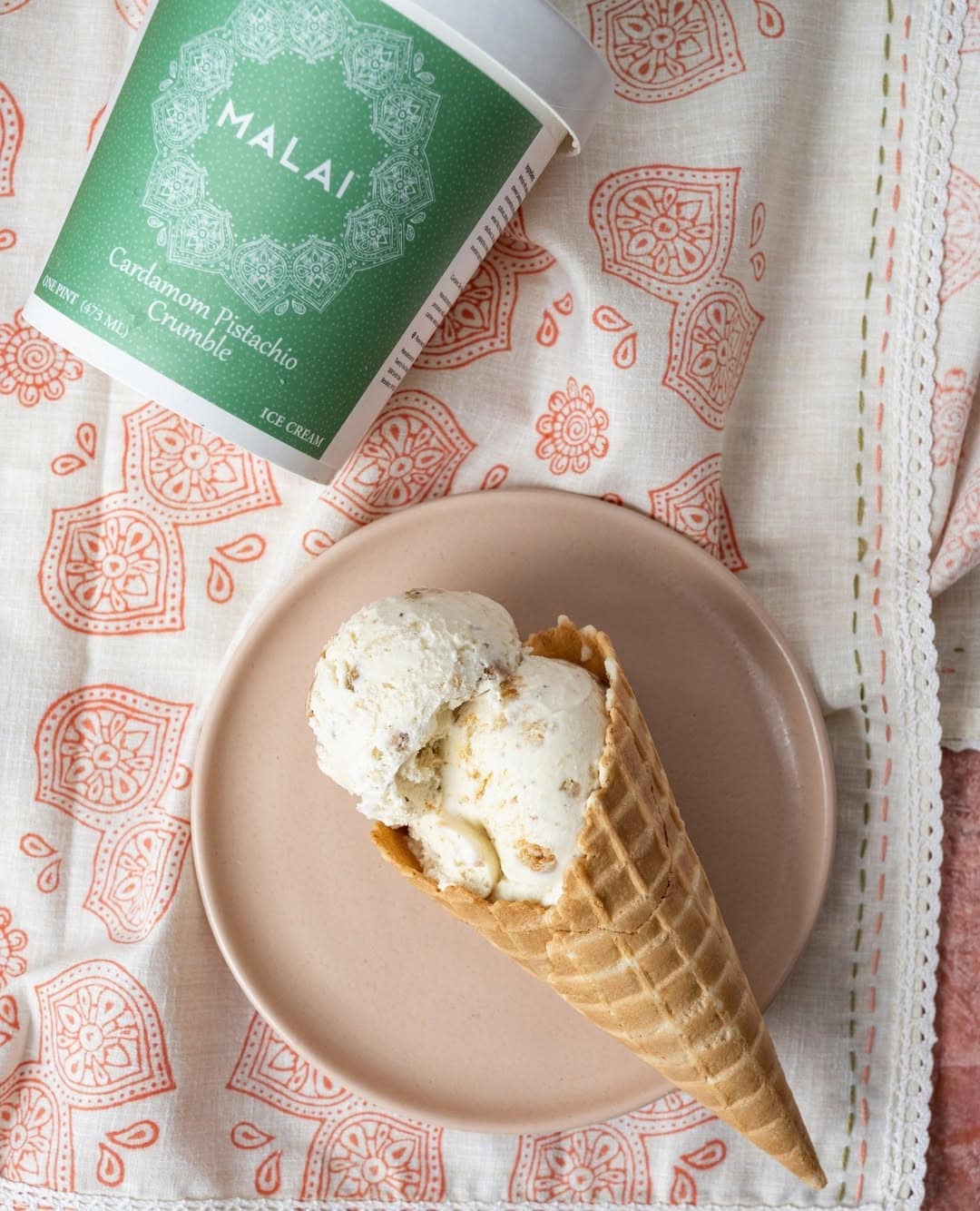
If Malai is the ice cream shop in your neighborhood, it’s not like anyone’s thinking, ‘There’s the Indian ice cream shop in our neighborhood.’ That’s the ice cream shop! And it’s really cool to think that the ice cream shop of these kids in DC or Philly or Brooklyn is Malai, and that their ice cream memories will be of apricot-mace and cardamom pistachio crumble, and that’s what they’ll remember and tell their kids about.
But if there is one spice that I’d be really excited for people to have in their pantry, it’d be fennel seeds. I love fennel seeds. They’re so versatile, they can be used for sweet and savory cooking, an unexpected bright note, a little bit of licorice. That’s what I want people to have in their pantries.
Q: What are a few recipes from Malai that you’re extra proud of?
We’re mainstreaming difference, but we’re doing it through community.
When I think about the recipes I’m most proud of, I go back to our weeklong photo shoot for the book. We rented these ridiculously large chest freezers, and we were making things all week long and filling these freezers. And at the end of the shoot, everyone just wanted everything. They wanted to divvy it all up. Everyone was just overjoyed to take it home to their families. So of course that included specific recipes—like the Fried Ice Cream Pie or the Icebox Cake—but there was so much chaos in this sharing and love that everyone has for each other, this back and forth between 12 people that wanted to take stuff home, and that, more than people wanting to create the perfect Fried Ice Cream Pie or following a recipe exactly, that feeling is exactly why Malai exists. We’re mainstreaming difference, but we’re doing it through community. And this book takes it full circle: I started Malai in my apartment, and this book takes it back to our homes and apartments and creates that same feeling of joy.
Cold Coffee Milkshake
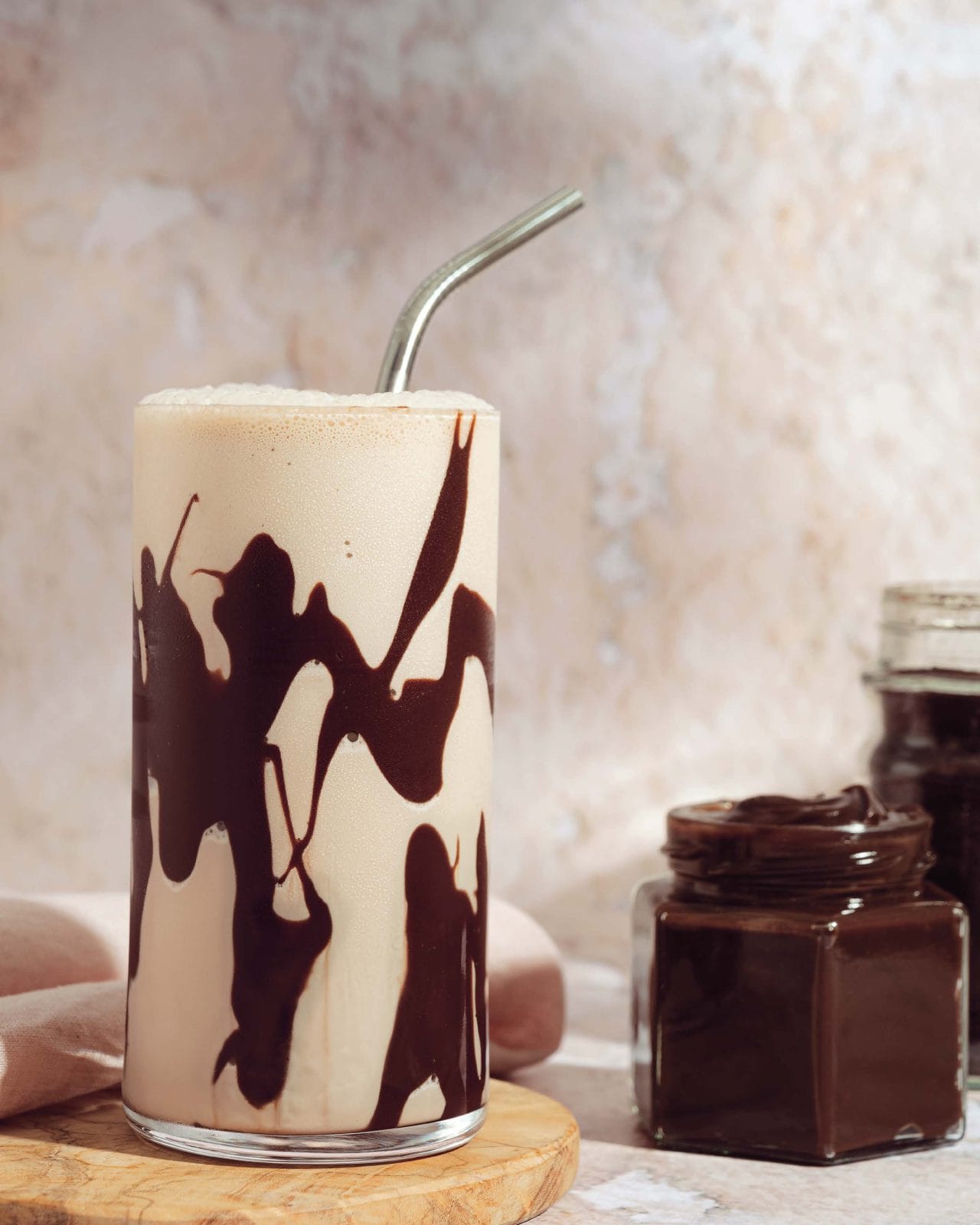
Cold coffee is its own culture in India. It’s a treat that you crave at night when you’re going for a drive as the warm day is just beginning to cool off. It’s a midmorning pick- me-up when you feel like having something indulgent; and it’s the ideal drink to treat unexpected guests. The version I grew up with has a milky sweet coffee flavor and the decadence of a milkshake. It’s easy to whip together, and it’s perfect every time.
Crunchy Ice Cream Balls
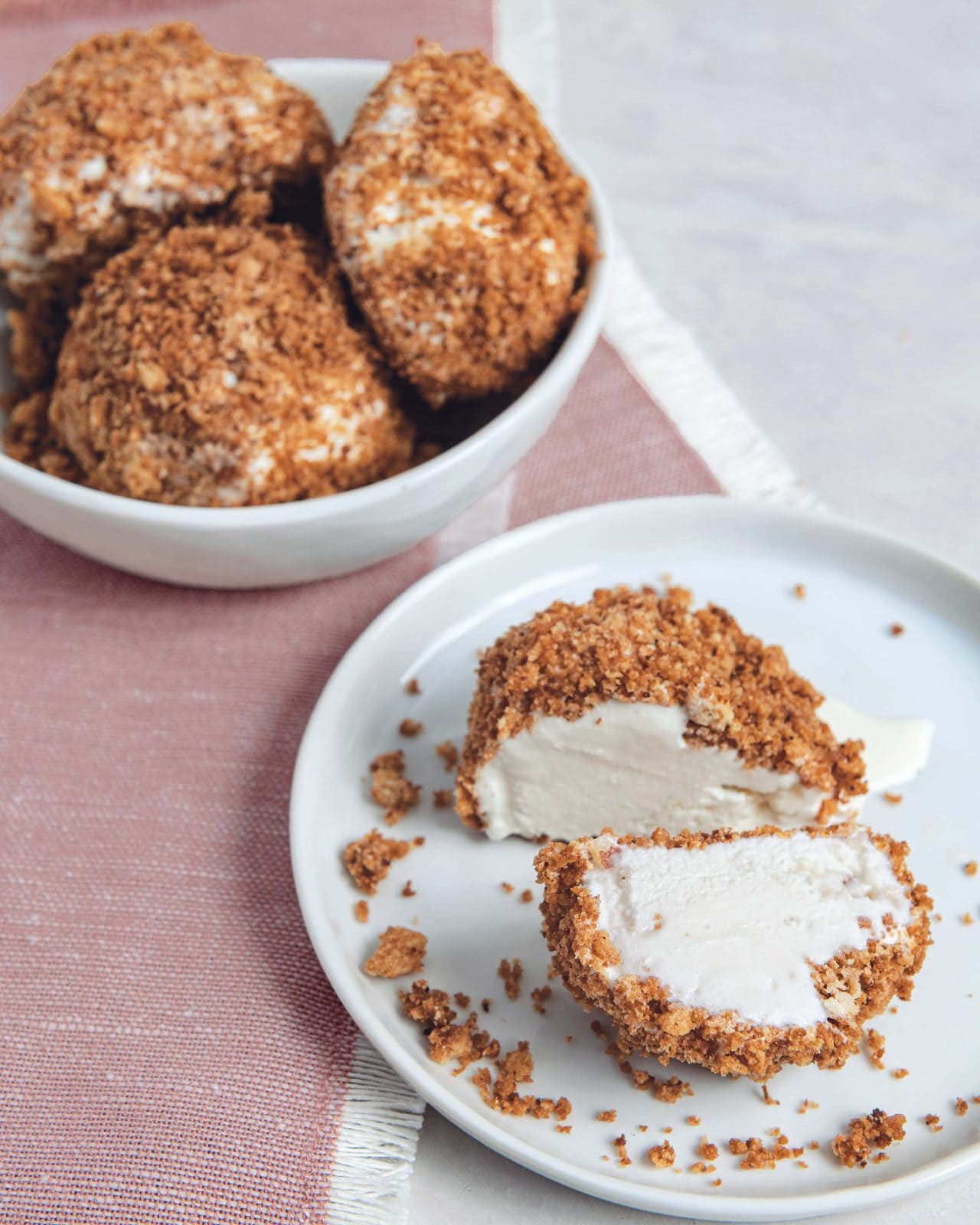
This recipe is your answer to the quickest and most delicious dessert for a dinner party or a solo craving for something sweet. It has fried ice cream vibes, ice cream sundae energy, and an ice cream sandwich aura. Once you make these crunchy ice cream balls for the first time, I’m almost certain that you’ll never stop.
Chocolate Cardamom Sauce
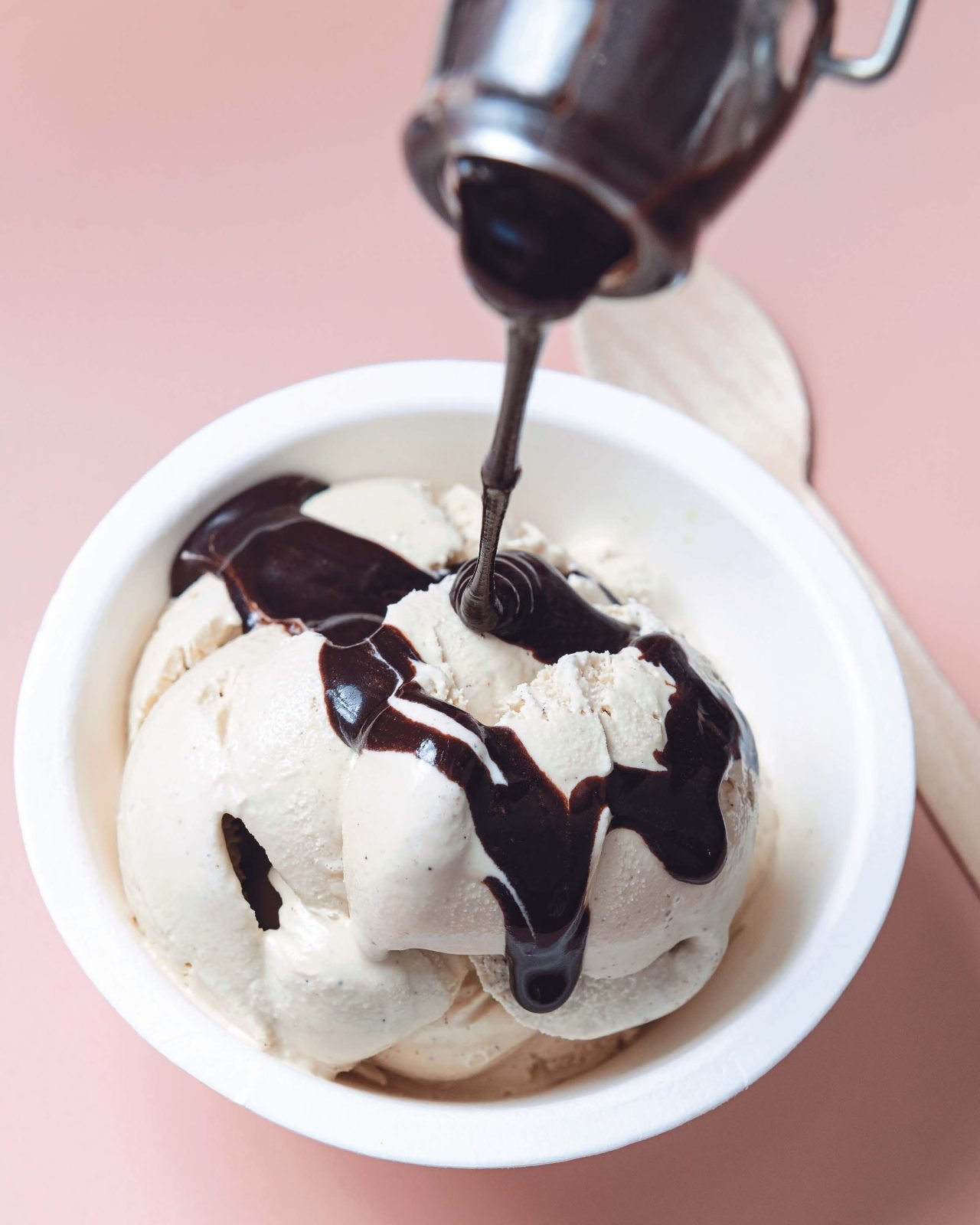
I will unequivocally say that the most delicious fast-food dessert is a McDonald’s hot fudge sundae. Rich, warm, gooey, decadent chocolate sauce cascading over a cool bowl of melting ice cream. Come on! There is nothing better. My sister (who also will never pass up this fast-food dessert) and I have discussed this at length—the thing that makes this over-the-top delicious is its satisfying thickness. That’s what I’ve recreated here—except, dare I say, better. It’s all the qualities of the fast-food sundae sauce but with the added nuance and depth of cardamom. This spooned over a scoop of my Orange Fennel Ice Cream is a dessert that McD’s cannot beat.
2 Comments