

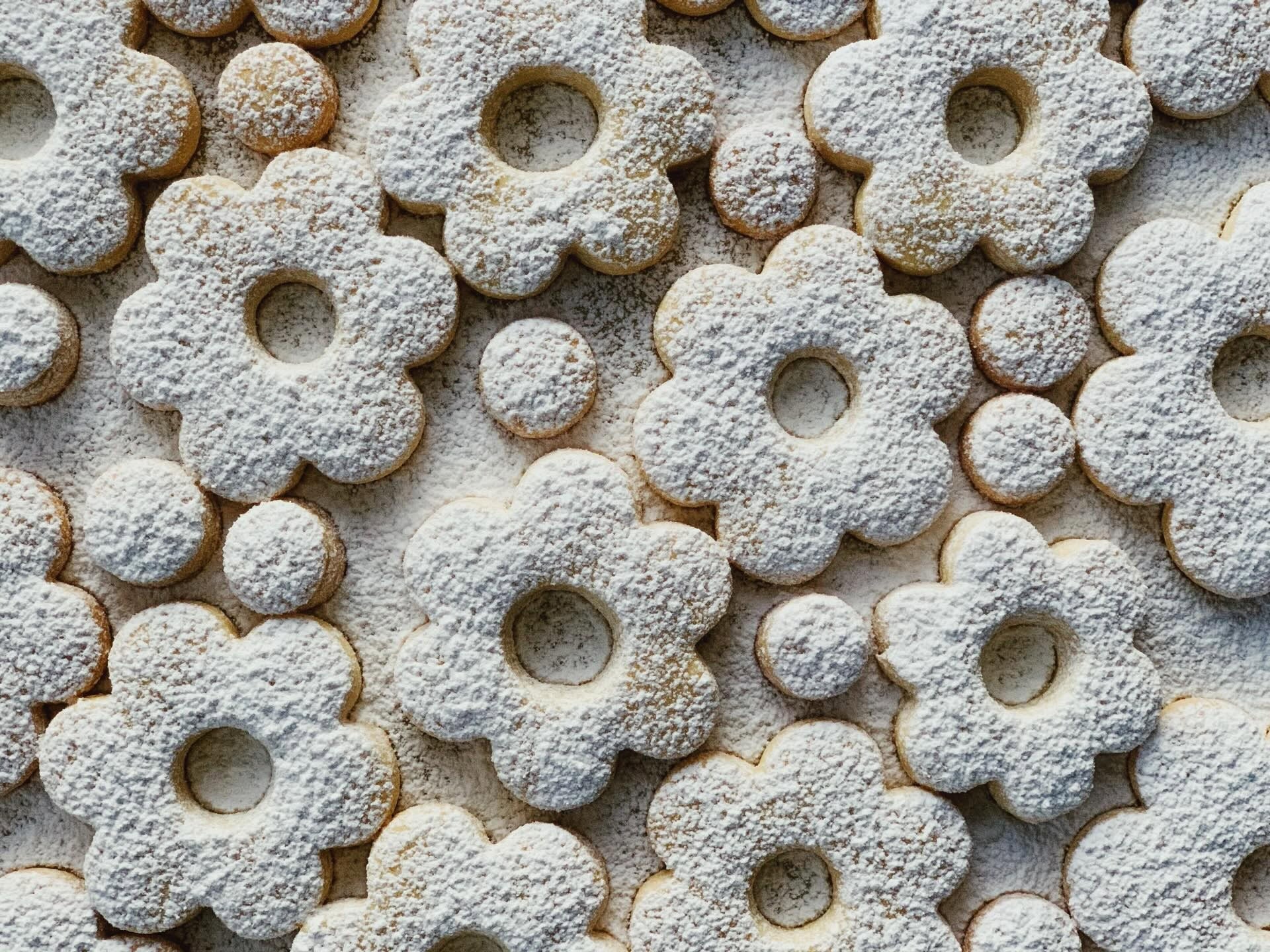
Italian Cookies came out in April, and in true Kate fashion, I’m just now writing about it — despite how much I love Italian cookies. I’m a fan of many types of biscotti; I’m a fan of the chocolate sandwich cookies with sprinkles; I’m a huge fan of pignoli cookies. I dream about cookies from Gencarelli’s in Bloomfield, NJ; my dear friend Stephen brought us a bunch a while back and I went to town on them.
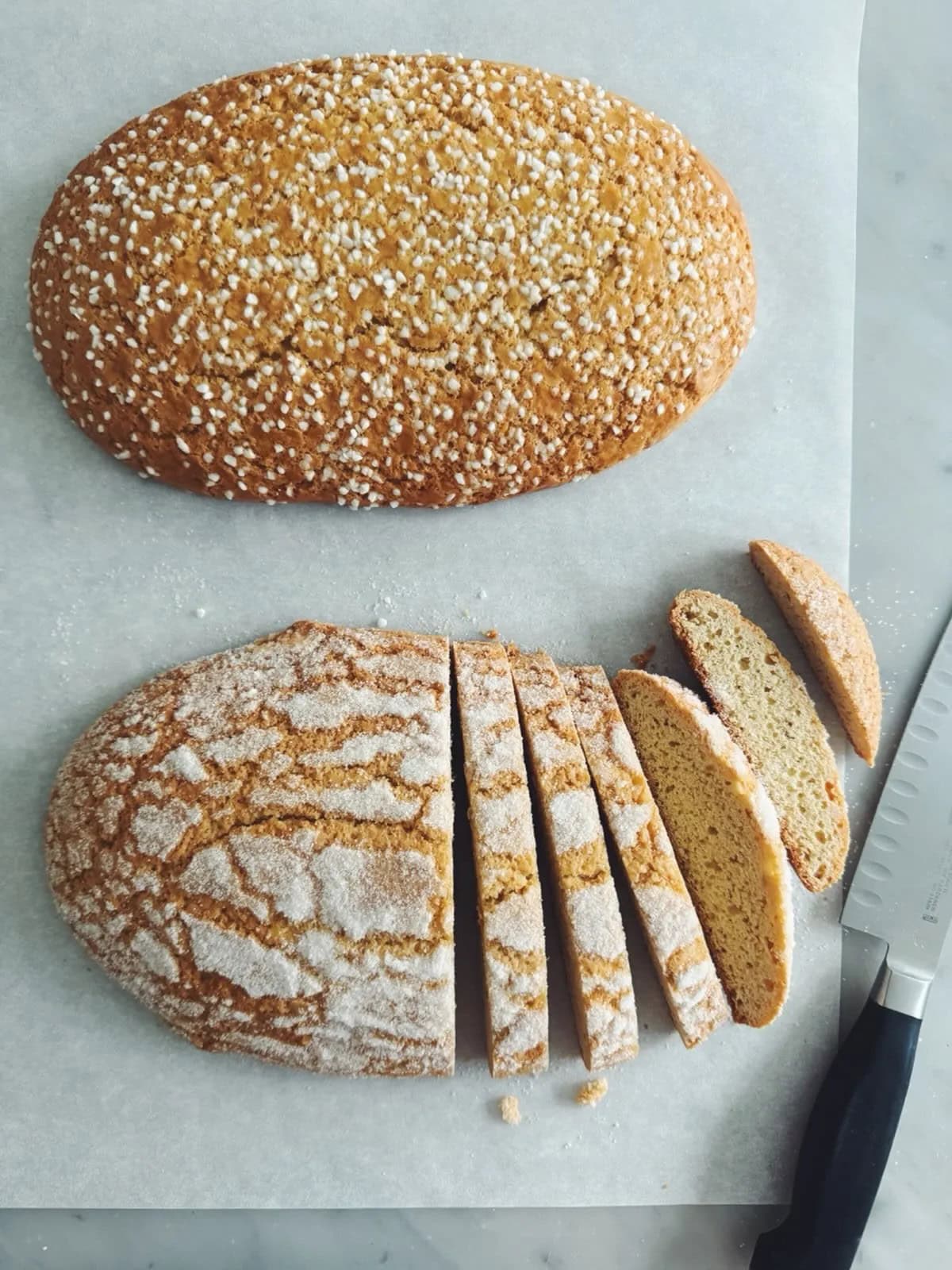
Food writer and recipe developer Domenica Marchetti is the author of Italian Cookies — her ninth book! — and I was the happy recipient of some of the many cookies she baked to promote the book. The Cantuccioni arrived in the mail looking like biscotti, but when I bit into them, they were tender and soft — such a sweet surprise.
We have that recipe, and a couple others from the book, because I had the pleasure of talking with Domenica about Italian cookies and how regional they can be — not unlike wine or Italian food in general — and baking with loved ones, and “cookie towns.”
My chat with Domenica is below, but I want to mention sourcing before we get started. She and I are both fans of Gustiamo, but it is pricey, so I wanted to hear about some other options, too.
Domenica says that if she’s making a cookie that has some nuts, she tends to use California almonds or gets some Marconas; but if she’s making a cookie that’s, say, 90% ground nuts, she splurges on Gustiamo’s almonds, hazelnuts, and pine nuts — and for pine nuts especially, she really leans on Mediterranean or Italian varieties because they’re longer in shape and a bit sweeter.
Domenica also recommends Giannetti Artisans, especially for their pistachio flour, and likes pistachios from nuts.com. If she buys candied orange peel, she does get it from Gustiamo, because they get it from Noto, Sicily, which is known for its citrus; but she says that making candied citrus peels is super easy and worth it. (I never would have suspected! I’m excited about that. There’s a recipe for candied orange peel in her book.) Okay. Here’s our chat.
Kate Bittman: You write that cookies are an important part of Italian food culture, but they often don’t get the same attention as breads, pastas, and desserts like tiramisu. Why do you think Italian cookies have been overlooked?
Domenica Marchetti: It’s a good question, and it’s something I thought about as I was writing the book. For one thing, I think Italian cookies tend to suffer from a reputation of being dry, or chock full of nuts, or they’ve got candied fruit in them, or they’re loaded with anise — all things I love, by the way.
In Italy, most children’s breakfast consists of a cookie dunked in coffee-stained milk.
And when they’re done properly, this is actually great. Look, anise is probably a divisive subject. You either love it or you don’t. But you’ve got these warm, toasty nuts and crunchy cookies that are so good for dipping. In Italy, most children’s breakfast consists of a cookie dunked in coffee-stained milk. So for Italian kids, that’s one of the most familiar tastes.
The funny thing about Italian cookies is, like Italian food, they’re very regional. And so, when my book came out, I heard from Italian friends who told me, “Oh, I had no idea this cookie existed” — because it was a cookie maybe from the north, and they were from Abruzzo, where my people are from. I think maybe I was trying to shed some light on the diversity of Italian cookies, and how interesting they are, and how many stories there are that go along with them that I think people aren’t familiar with.
KB: My favorite thing for someone to bring to my house if I’m making dinner for them is one of those big boxes of Italian cookies that you get by the pound. And I literally will hide them from my family.
DM: And they’re great because there’s a selection of them. One thing that Italians do if they’re going to someone’s house on a Sunday, they’ll stop at the pasticceria — the pasticcerias are open until about 1pm on Sundays, and then they close until Tuesday morning — and they’ll either pick up a tray of pastries or a cake or a tray of cookies. So all bakeries have just dozens of varieties of cookies. Some are regional, some are local — but there’s also classics that you’ll see, from the top of the boot to the heel.
It’s funny because I feel like in the US, if your dessert isn’t homemade, there’s, you know, “Oh, you should be ashamed.” But in Italy, there’s none of that.
KB: My dad and I interviewed Ben Mims, who wrote Crumbs, on the podcast, and he said that it was going to be a while before he could eat cookies again. What about you?
DM: That’s not me. So the book came out in April, and I’ve just felt that if I’m doing an event to promote it, I have to have cookies. You can’t do a cookie book event and not share cookies, right? So I’ve been baking a lot of cookies, and I’m headed to Milwaukee and Chicago this weekend, and I’m baking for those events.
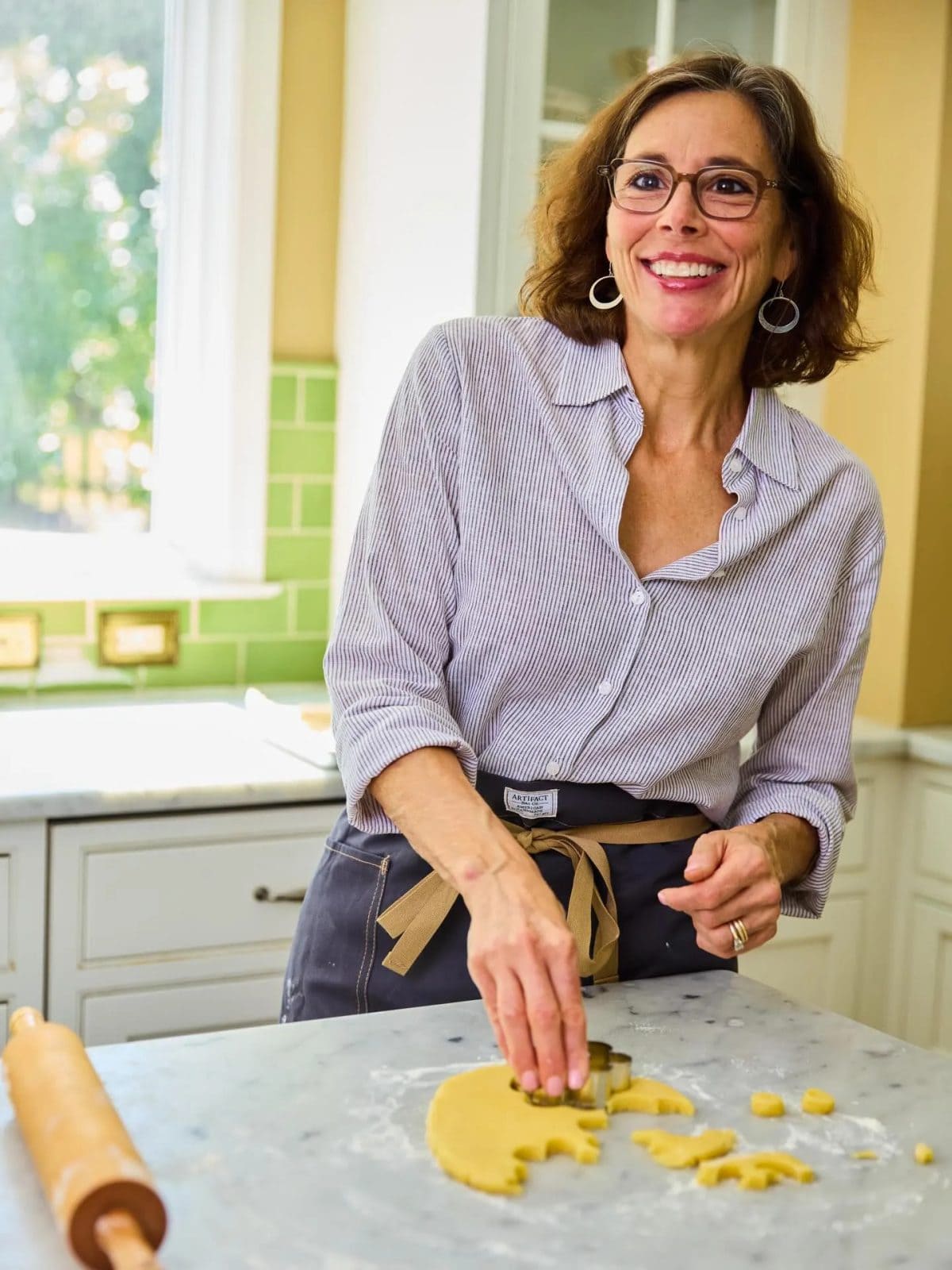
The nice thing about Italian cookies is a lot of them are pretty sturdy, and so they’ll be fine on a flight or on a train. So I’ve taken them all over the country. And, I’m not tired of it. There’s something so happy and joyful about cookies, and sharing cookies, and eating a cookie — I don’t think I’ll ever get tired of it.
KB: Tell me about baking with your mom and your sister when you were a kid.
DM: We baked Christmas cookies every December, and I still do it; and my daughter loves to bake, and so she does the baking with me now. But when my sister and I were growing up — my mom started us young. She put us at the kitchen table with two nutcrackers, and we had to crack all the nuts for all her cookies and Christmas sweets.
She always started with the whole nuts, which I didn’t understand when I was little, but now I get it: that they’re much fresher that way, and they’re also cheaper. So we’d sit there and just crack the walnuts and the hazelnuts and the almonds. I remember it so fondly now. I probably objected when I was little, but there are worse things than sitting at the kitchen table and just doing things like that.
It’s a very happy memory. And we would just stay up, baking, until the wee hours of the morning. And for years, these baking sessions always seemed to coincide with a week of Fred Astaire and Ginger Rogers movies on TV. I’m really dating myself — these were the days even before the VCR.
KB: This is gonna make me sound clueless, but I swear I never had a good almond until I tried almonds at Gustiamo — within the last 10 years. And I said to Beatrice [the owner of Gustiamo], ‘these taste like marzipan.’ And she said, ‘That’s what almonds are supposed to taste like.’ I had no idea.
DM: I didn’t either, for the longest time. When I was growing up in the ‘70s in New Jersey, my mom got supermarket almonds. She didn’t get fancy Sicilian almonds. The ones that Beatrice carries are from Noto in Sicily, under the brand Caffè Sicilia, which is a quite famous cafe and pasticceria in Noto.
Their almonds are the Romana variety, and if you bite into them and chew them, you understand what almond extract is, and what marzipan is, because they have that pronounced sweet and sort of bitter flavor. When you make cookies with them, you really don’t even need almond extract.
Some people buy expensive cars. I drive a thirteen-year-old Fiat 500, and I buy expensive almonds, you know?
They’re incredible, and they’re not cheap. But I think they’re worth the splurge — Beatrice’s almonds and her wonderful hazelnuts from Piemonte, too. I mean, some people buy expensive cars. I drive a thirteen-year-old Fiat 500, and I buy expensive almonds, you know?
I will say that for the recipes in the book, you can definitely make them with California almonds. California almonds have kind of an earthy flavor; they don’t have that pronounced almond flavor. But if you add a drop or two of pure almond extract, it goes a long way to getting that flavor.
KB: Let’s talk about the term ‘cookie town,’ because it’s so cute.
DM: Yeah, that’s a term that just popped into my head as I was starting the research for this book. So I grew up with Italian cookies, but I hadn’t really thought that much about them. And then some years ago, probably 2017 or 2018, I was in Genova, leading a small group tour. We were headed out somewhere on a van, and I dashed into a bakery to buy some snacks. I got this bag of flower-shaped butter cookies called Canestrelli, and I’d never heard of them before. I had a bite, and was so taken with this cookie. It just had this pure flavor.
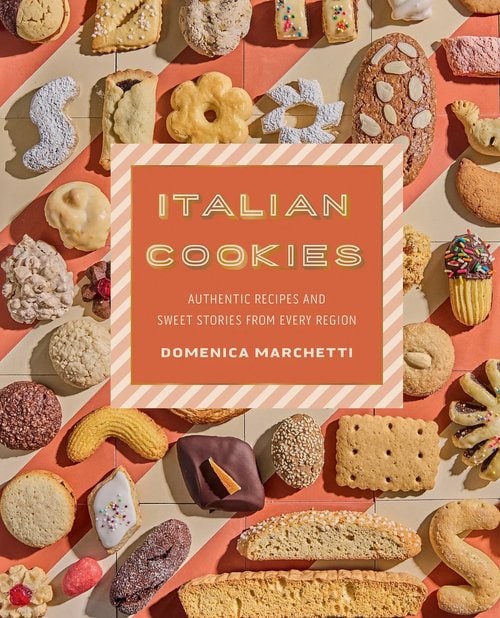
It was crumbly and tender and just dissolved in the mouth. It tasted like butter and fresh egg — there was no citrus, no lemon zest, no other flavorings, not even vanilla. And I just needed to know more about it because it was so good. It was, like, the best butter cookie I’d ever had.
So I looked on the back of the package and saw that the cookies were made in a town called Torriglia, which is in the hills beyond Genova. After the tour, I got into my car, and I drove to Torriglia, and I found out that the town has kind of revived this cookie that dates to the 15th century, and there are about eight bakeries in town that make it. They distribute it throughout the region of Liguria and throughout Genova. It’s a lovely town. It’s only about a kilometer long, and it’s got a couple thousand residents.
But every June, hundreds of people descend on this town. They have this festival that celebrates this Canestrelli di Torriglia. The town has really started marketing this cookie and used it to bring people to the town. So I told my friend Emanuela, who’s from Genova, about this, and she said, ‘Well, you should go to Gavi. My husband loves their Amaretti.’ So I went to Gavi, and I found these wonderful, lovely, soft almond Amaretti called Amaretti di Gavi.
And then, someone in Gavi told me, ‘Well, you should go down the road to Voltaggio. They also have Amaretti, but they’re a little bit different.’ So I went to Voltaggio, and then I went to Saronno, where they make the crunchy Amaretti di Saronno that we all know, really good for crumbling and putting in trifles or putting on top of ice cream.
It’s like cheese. You know, Gorgonzola is a town, Asiago is a town. So there are these cookies named after these towns, and I started to think of them as cookie towns.
And I just realized that there’s this swath of northern Italy that is populated with towns that produce cookies that are named after the towns. There’s Imperiali di Omegna, which are sort of like cat’s tongue cookies sandwiched with chocolate. I think they’re sort of like the original Milano cookies. Nocciolini di Chivasso, which are teeny tiny crunchy hazelnut buttons.
It’s like cheese. You know, Gorgonzola is a town, Asiago is a town. So there are these cookies named after these towns, and I started to think of them as cookie towns. And as I was researching, I found myself going to these towns that I would never otherwise have gone to in Italy, and it was really a great way to travel around the country and to see Italy off the beaten path.
KB: Traveling by cookie. I’m assuming that these cookies were created with ingredients that their home region is specifically known for, right? At least originally.
DM: Some of them, for sure, and that’s another discovery I made while working on this book. Much like Italian cooking itself and Italian wine, Italian cookies are quite regional. You see cookies made with butter in the north; in Piemonte, we have baci di dama, the little buttery button cookies that are sandwiched with chocolate. And those can be made either with ground almonds or ground hazelnuts. And of course, Torino is a chocolate city. They’ve been drinking chocolate and producing chocolate for centuries there. So that’s a very classic Piemontese cookie.
Then the farther south you get, you start to see olive oil introduced into the dough instead of butter, and then wine introduced into the dough. In the area around Rome and in Abruzzo, you’ll find simple ciambelline al vino — crunchy ring cookies, basically just sugar, flour, wine, and olive oil.
When you get down to Sicily and Sardinia, almost all their confections are based on almonds. Almonds finely ground, almond paste, marzipan. The cookies are more like confections, almost. You’ll see honey and citrus too, because those ingredients were brought over very early on in the history of Sicily.
So the ingredients really do reflect the territory — just like Italian cooking — which is really fascinating, and I think one of the reasons why the cookies are so good. You know, if you go down to Sicily and bite into an amaretto that has a little bit of orange zest in it, you’re really just tasting the flavors of the territory.
Occhi di Bue (Bulls-Eye Jam Cookies)
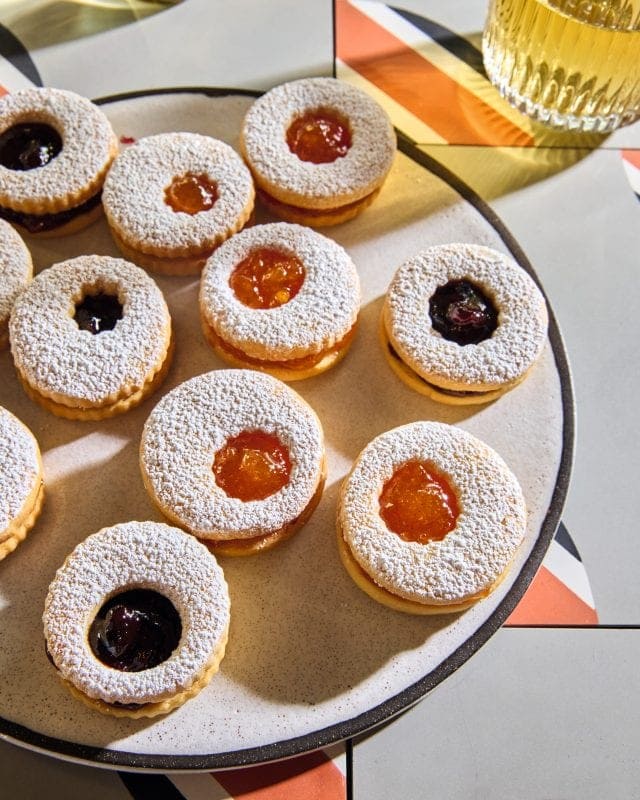
These classic jam-filled butter cookies are by no means exclusive to Italy. But they are ubiquitous in Italian pastry shops, especially in Alto Adige, where alpine butter is essential to baking. There, they are also known as Spitzbuben, a nod to the region’s bilingual status and its proximity to Austria. Be sure to use a good-quality jam—homemade if you have it. If you want to go all out, try filling them with Nutella or pistachio cream.
Pasticcini di Mandorla (Little Almond Cookies)
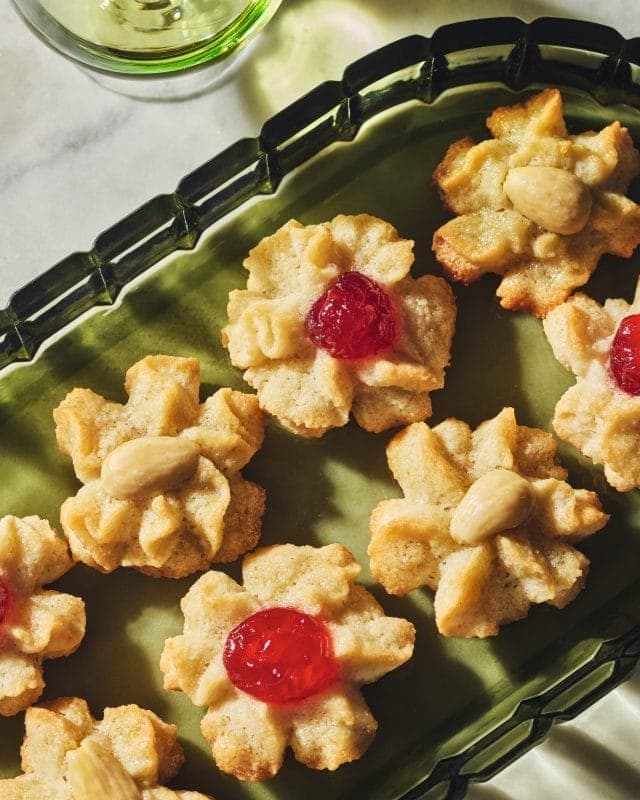
How I love these elegant little almond sweets. Their ingredients are similar to other almond-based cookies in this book. But it’s the pretty piping and finishing flourishes, plus a splash of amaretto liqueur, that elevate them beyond an everyday cookie. Pasticcini di mandorla are a classic of Sicilian pasticceria and every bakery sells them. They vary in character; some are more like little mouthfuls of marzipan, others are like cookies in texture, with a crispy exterior and tender center. Some are piped, others molded by hand into little rounds or misshapen nuggets. The typical decoration for these cookies is red and green glacé cherries, but you can stud them with almonds, if you prefer. I tend to do some of each. The final touch is a light brushing of honey once the cookies come out of the oven, which gives them an alluring shine.
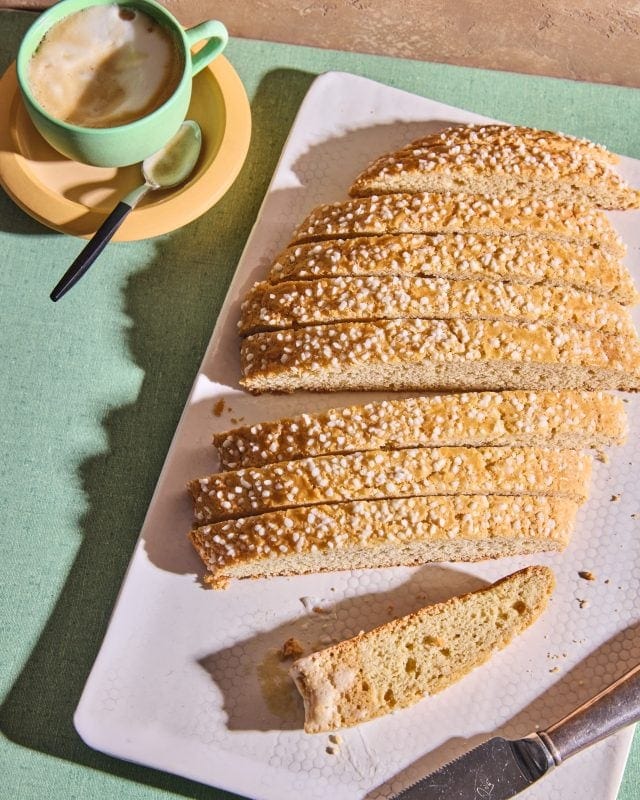
Cantuccioni (Oversized Soft Biscotti)
I spent a coffee-fueled morning looking for inspiration in the streets of Siena’s historic center, stopping in at every café and pasticceria I came across to down a shot of espresso and ogle and taste their selections of ricciarelli and other cookies.
At Panificio Il Magnifico I found an unexpected and delightful stand out: cantuccioni. The name means big cantucci, and these oversize sliced cookies do share some similarities with the famous crunchy twice-baked cantucci di Prato. But they are also entirely their own thing.
The sugar-coated cookies are first baked as small, fat loaves. Then they are cut into large, oblong slices, fitted back together, and packaged in cellophane bags tied with red raffia string. I bought a package, expecting something like classic crunchy coffeehouse biscotti. Instead, the cookies were soft, tender, and crumbly. I realized they had been baked just once, rather than twice like classic cantucci. They were so good dunked in cappuccino that I resolved to figure out how to make them at home. It took a few tries, but here they are.
By the way, these cookies make an artful holiday or hostess gift packaged in cellophane bags and tied with colorful string, the way Panificio Il Magnifico does it.
Comment