

Maybe you had (or have) a grandmother who shared the food and cooking techniques of her far-flung corner of the world: Ukraine, Afghanistan, China, Somalia.
If so, good on you — that’s awesome, and I’m both envious and happy for you. My own grandmas were born in the US and weren’t crazy about going outside their comfort zones — that is, matzoh ball soup, spaghetti and meatballs, salads with iceberg lettuce, and a side plate of melon (usually unripe).
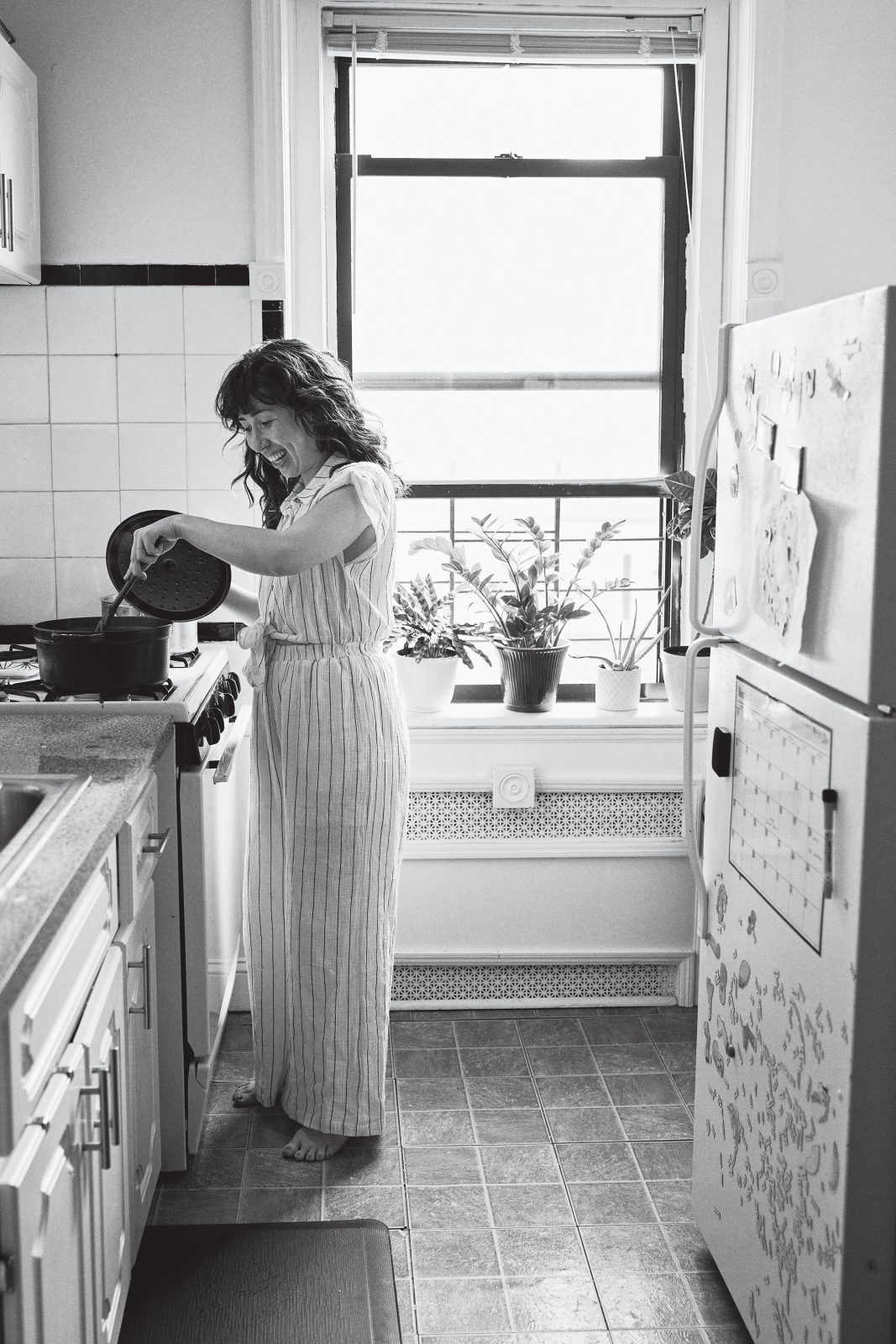
What if you had a grandma that was knee-deep in the foods of her culture but refused to involve you in the intricacies of cooking and nourishing? That was the case for Lisa Kyung Gross, the daughter of a Korean immigrant and Jewish New Yorker, who founded the League of Kitchens in 2014 — and who just published The League of Kitchens Cookbook: Brilliant Tips, Secret Methods & Favorite Family Recipes from Around the World. What could that prompt you to do?
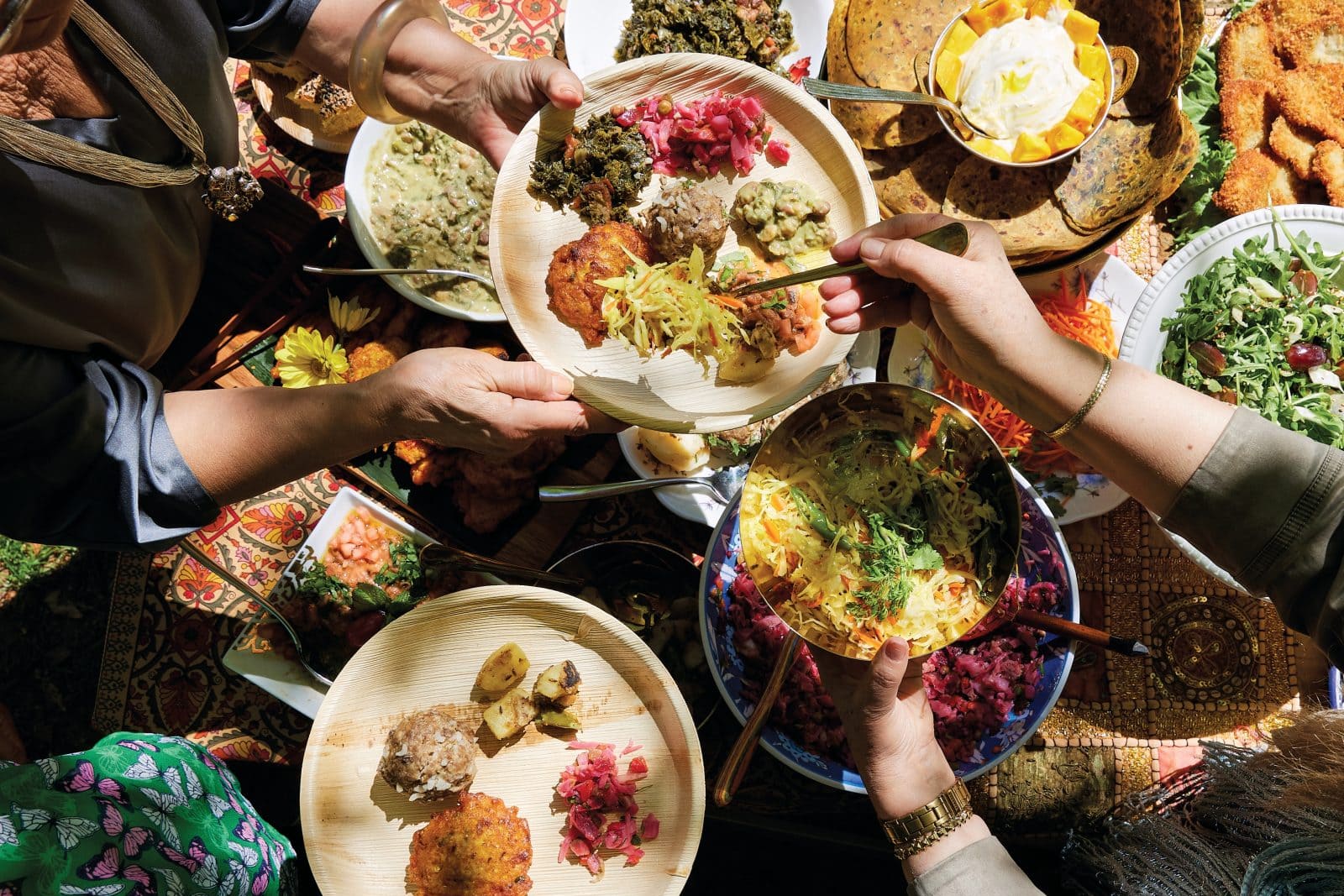
The League of Kitchens is a New York City-based organization of women instructors, all immigrants, all cooks, who welcome you into their homes – literally – and teach you their family recipes. You cook together, eat together, learn together, and share culture and stories. The countries represented by the League of Kitchen cooks (and classes), to name just a few: Burkina Faso, Mexico, Japan, Iran, and Greece.
Mark and I first heard about The League of Kitchens around 2017, and he attended an Uzbekistan lesson in Borough Park, Brooklyn with his partner Kathleen. He says it was astonishing: “It’s not so much that the food was so good — which it was — but that you were basically cooking with a grandma. I spent half of my career trying to do stories like that, and it was never easy — now, suddenly, thanks to League of Kitchens, you could just plug in.”
We talked to Lisa Kyung Gross about League of Kitchens and her new, fantastic book (recipes below!) of which, by the way, a very knowledgeable food person who will remain unnamed (not Mark) says, “this is the first cookbook i’ve really been excited about for a long time.” – Kate
Kate Bittman: Can you talk about how your grandmother’s NOT teaching you to cook was what inspired you to start the League of Kitchens?
[My grandmother] didn’t really value her own cooking skills, and she really wanted me to have educational and professional opportunities that she didn’t have and would have loved to have had. In her mind, cooking equaled being “stuck at home.”
Lisa Kyung Gross: My Korean grandmother lived with my family when I was growing up, and she was an excellent cook. She grew up at a time when everyone in Korea made their own soy sauce, kimchi, denjang, gochujang, and pretty much everything else, at home, and so she had a deep knowledge of Korean cooking. But every time I wanted to help my grandmother in the kitchen, she would say “Go study, studying is more important.” She didn’t really value her own cooking skills, and she really wanted me to have educational and professional opportunities that she didn’t have and would have loved to have had. In her mind, cooking equaled being “stuck at home.” So I never learned to cook from her. Neither did my mother — she’s the youngest of six, and my grandmother taught her older sisters, but by the time my mom was coming up, she told her the same thing she told me. Fast forward to after college when I was living on my own and needing to cook for myself. I fell in love with cooking and wanted to cook the Korean food that I grew up eating. But by that time my grandmother had passed away, so I tried to teach myself to cook Korean food from cookbooks and the internet. But nothing tasted as good as when my grandmother made it. And I had this fantasy of finding another Korean grandmother to cook with, who could teach me her family recipes, whom I could cook with in her kitchen. And that fantasy later developed into my idea for the LoK.
KB: How did you find the teachers for the League? And why did you decide that all of the teachers had to have been born outside of the United States?
LKG: We find our instructors in all different ways. Some of our instructors we connected with through the IRC (International Rescue Committee). Some of our instructors saw press about us and contacted us. Our Greek instructor is the mom of a friend of a friend. Our Argentinian instructor’s daughter saw our Craigslist post. But there’s always a feeling of synchronicity when we find the right person.
I knew I wanted our instructors to be born outside the United States because I wanted to find people who really knew traditional techniques, methods, and recipes and had grown up learning and using those within the country and culture where they originated.
KB: What was the logic behind deciding that all of the teaching would take place in the homes of the teachers?
Being a guest in someone’s home is a key part of the cultural immersion of the LoK experience. You get to see the instructor’s culturally specific cookware and tableware, and you get the full eating experience within the cultural context.
LKG: There are so many reasons. First off, our instructors are specifically “home cooks,” not restaurant chefs, and it feels right to have them teach their recipes in that home context. And being a guest in someone’s home is also a key part of the cultural immersion of the LoK experience. You get to see the instructor’s culturally specific cookware and tableware, and you get the full eating experience within the cultural context. I also knew that I wanted these workshops to feel intimate and transportive, and being welcomed into a stranger’s home and experiencing the incredible hospitality of our instructors makes such an emotionally connective and memorable experience.
KB: When I hear someone say that the secret ingredient in their cooking is “love,” I always think that it’s a cop-out, a kind of meaningless phrase to explain something they don’t really understand. But when you talk about it in the introduction to the book, it makes sense to me. Can you talk about when you mean when you say “cooking with love”?
LKG: I’ve thought about this a lot because ALL of our instructors, regardless of where they’re from, say that “love” is the most important ingredient. I think that “love” means cooking with intention and attention. It means putting care into your food and your menu and making the food that your loved ones enjoy, and really making an effort to make the food delicious so that it will make your loved ones happy. It means cooking food as an expression of love, as a gift, and when you put in that much effort and care, the food is bound to come out better!
KB: How do the recipes in this book differ from those in most cookbooks or food magazines, and why did you choose to write them in this fashion?
What makes our instructors’ food so incredible is often the small details and nuances, so it was really important for us to capture and convey those small tips and tricks that can make a huge difference.
LKG: Our recipes are very long and detailed with meticulous measurements. Which is ironic, in a way, because our instructors don’t measure anything! But I want the people who are following the recipes from the cookbook to make food that’s as delicious as our instructors’ food, and since the readers of this cookbook won’t have spent 40 years cooking all 14 cuisines, they won’t necessarily have the instincts to cook these recipes and have them turn out well if they give more general directions. Also, what makes our instructors’ food so incredible is often the small details and nuances, so it was really important for us to capture and convey those small tips and tricks that can make a huge difference.
KB: How many different cuisines are the recipe in the book drawn from?
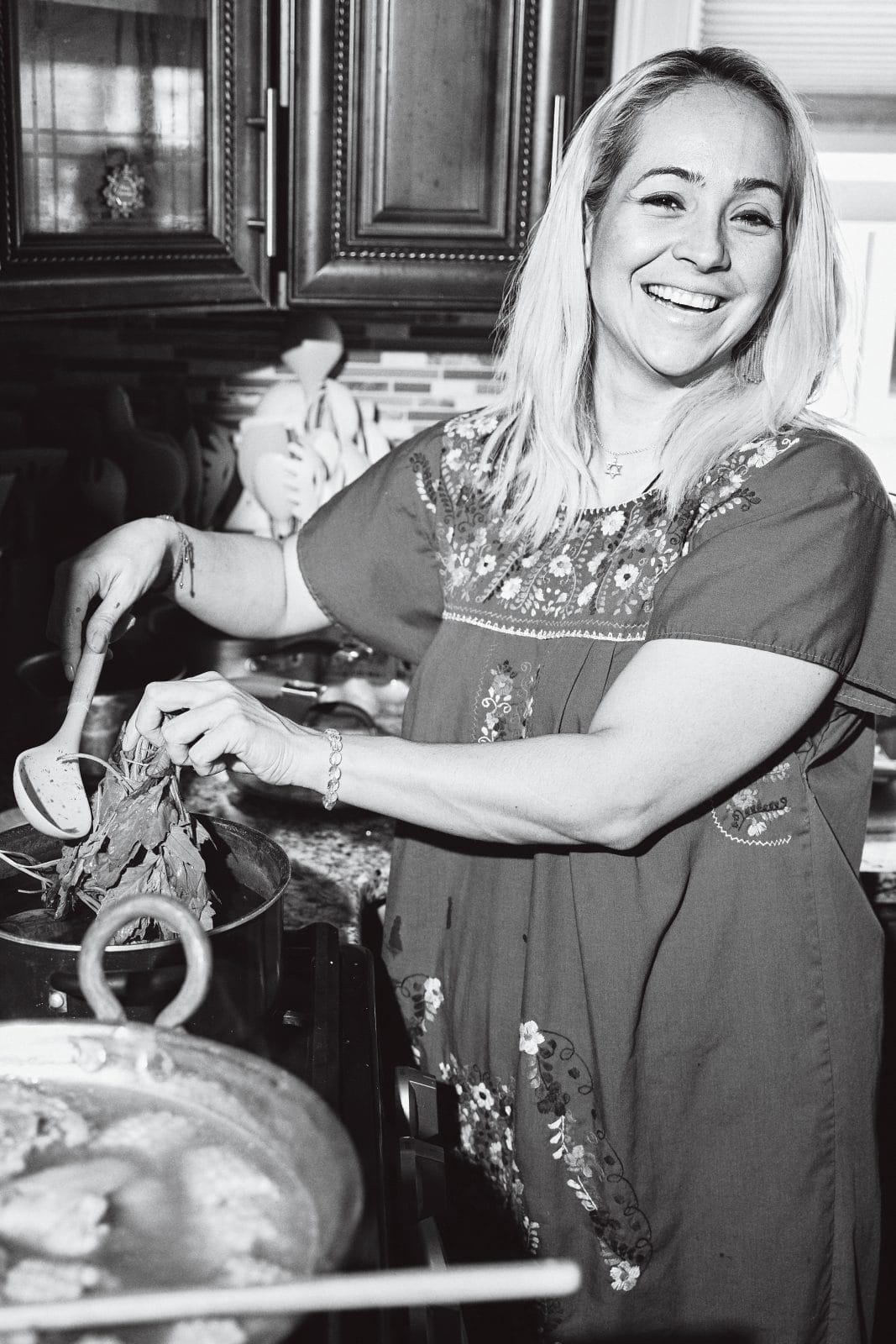
LKG: 14 cuisines. Our instructors are from the following countries: Mexico, Indonesia, Bangladesh, Burkina Faso, Ukraine, Greece, Afghanistan, India, Argentina, Japan, Uzbekistan, Lebanon, India and Nepal.
KB: Where do you see the League going in the future? Any plans to expand the idea, maybe to other cities?
LKG: I would love to keep adding instructors/cuisines. I would love to create more books. I would love to do a TV show. And if there’s a lot of interest, I’m also open to expanding to other cities. But I’m also just really open to seeing how things develop and unfold!
Mexican Ground Beef and Potatoes (Picadillo de Carne Molida)
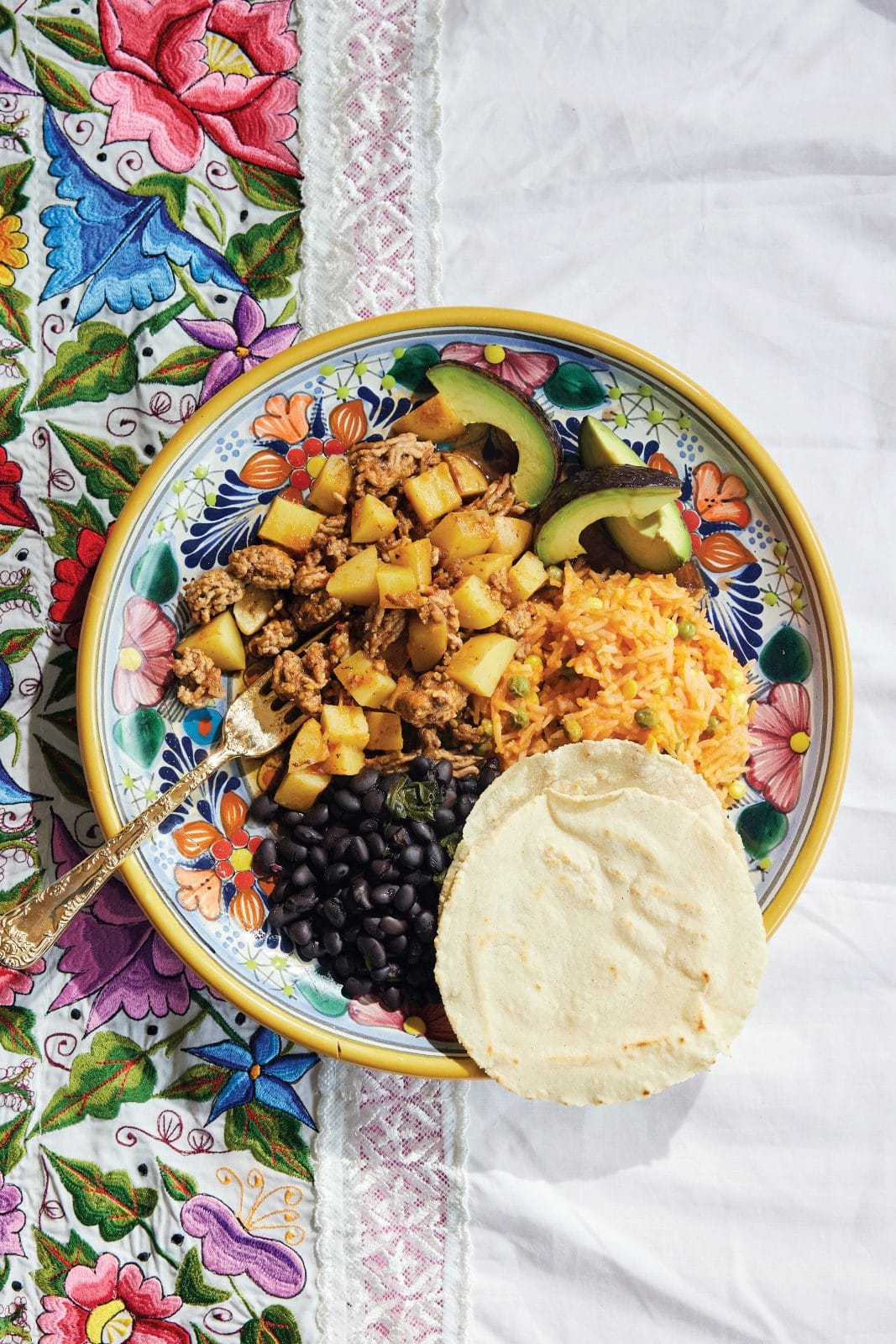
When Angie Vargas was growing up, her mother would sometimes roll her homemade flour tortillas around picadillo to make little tacos, and then give them to Angie and her sister to sell at recess. They would steam as they traveled to school and get even more delicious, says Angie — and they would always sell out.
That is really the best way to serve picadillo as a taco — no other toppings at all, just the richly seasoned ground meat and potatoes wrapped inside a warm flour tortilla.
Greek Roasted Chicken and Potatoes with Lemon and Oregano (Kotopoulo Me Patates Sto Fourno)
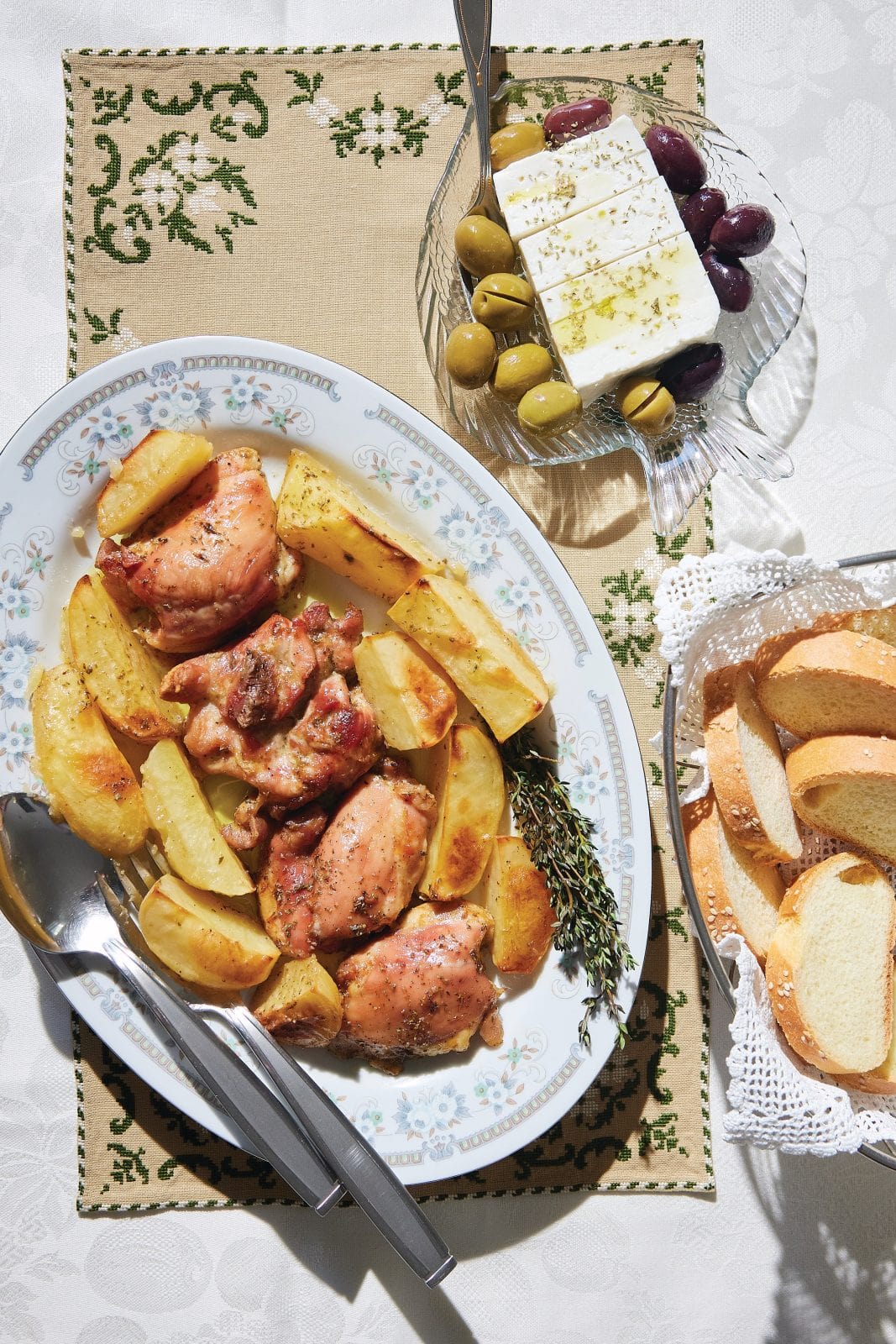
When Despina Economou was growing up in Greece, this was always considered a Sunday dish, partly because you saved meat for the weekends, and partly because everyone in town had to do their roasting in the ovens at the local bakery. By 10 o’clock in the morning on Sundays, the bakery would have fifty dishes lined up for roasting, says Despina — so many that the bakers would have to take Polaroid photos to keep track of which was whose. Made in your own kitchen, these simply dressed bone-in chicken thighs are perfect for anytime— they’re so simple but so homey and satisfying. Despina always uses the best-quality wild oregano and extra-virgin olive oil — both always Greek. If you can do the same, it will really make this extra delicious.
1 Comment