



This week’s guest on Food with Mark Bittman, Andre Fowles, grew up in a tenement yard in Kingston, Jamaica, learning to cook from his grandmother Mama Cherry. Her spirit of warmth is at the center of everything Andre does, from his years cooking at Miss Lily’s in New York, to winning Chopped, to becoming a private chef for Bruce Springsteen and his wife Patti, to writing his debut cookbook My Jamaican Table. In our conversation, Andre talks about what Mama Cherry taught him that culinary school couldn’t, why Jamaican food deserves a seat at the same table as French and Japanese cuisine, and what it means to go back to Kingston and open a space right across the street from his uncle’s decades-old porridge stand.
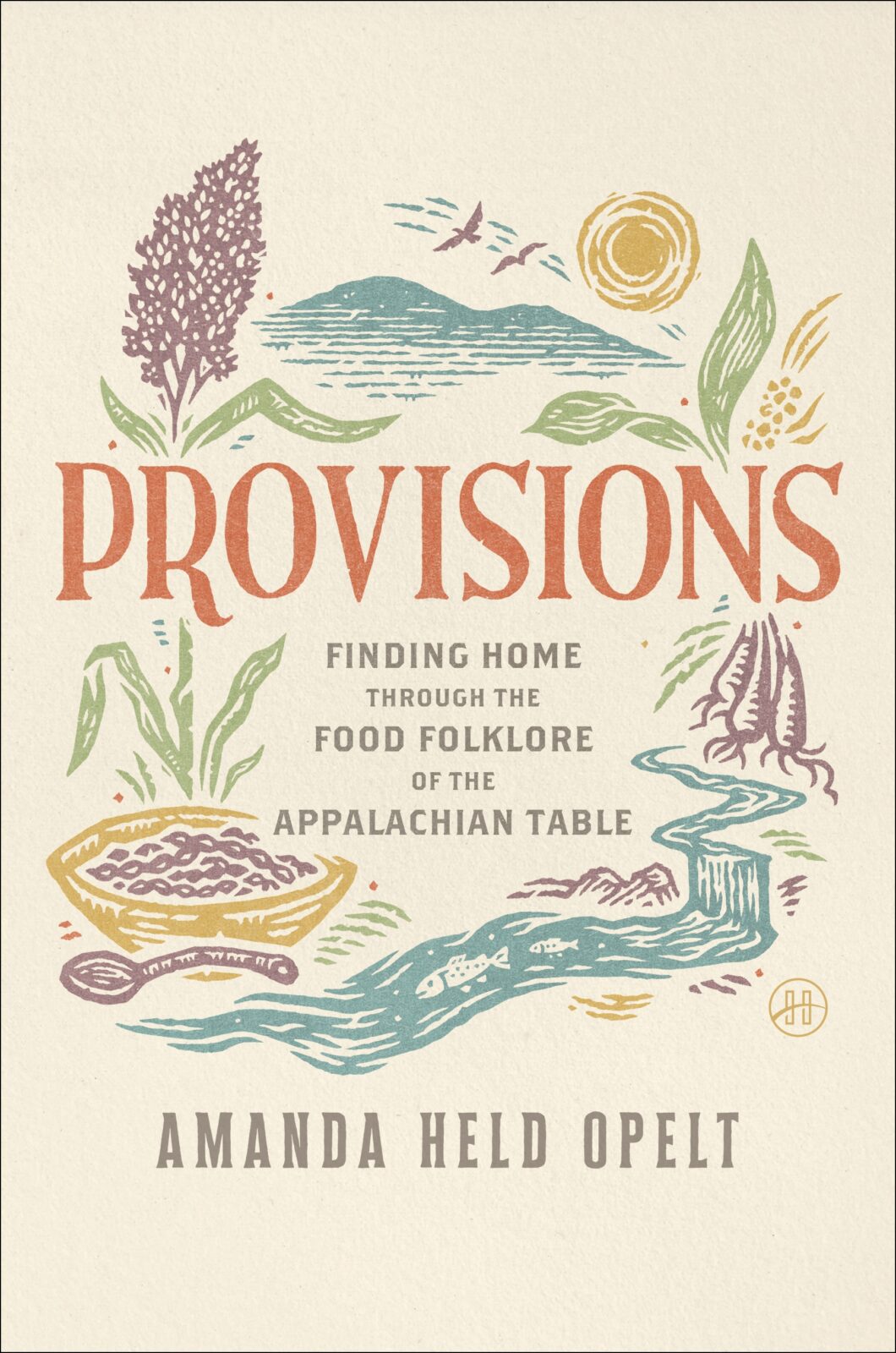
For some reason, when I started reading Provisions: Finding Home Through the Food Folklore of the Appalachian Table, by the writer Amanda Held Opelt, I thought it was going to be a cookbook centered around the food of Appalachia. I was wrong, which was a good thing, because what I ended up reading was more interesting than that: a memoir that’s centered around Appalachian foodways, but also about the intricacies of family, the ties — racist, colonialist, familial, religious — that bind us, the immense pressure that a woman (and many women) puts on her body, and, most surprisingly to me, about a young person’s faith in God.
Having not done my research around Amanda Held Opelt’s writing before I picked up the book — that’s how I like to read, most of the time, without any bias or preconceived notion — I was unaware that she was a woman of faith. I’m rarely around people who are, at least openly, religious. (Not as a conscious choice — that’s just the way it’s played out so far.) So when I was reading Provisions and saw quotes from the Bible, I have to admit I was taken aback. Was this a one off? It was a particularly good quote, so maybe that was the case. But no: there are many references to the scriptures, and after a while, I acclimated, even enjoyed it.
I’m so caught up in my own ways of being that when I’m presented with anything that feels unusual to me, I can easily be taken aback, which is what happened here. I’m not proud of that, but I’m happy to admit it. I stayed the course with Provisions, and even better, I loved reading it. Once I got over my initial astonishment over a woman in the general vicinity of my age range having true faith — really, I should be so lucky — I realized that we had a lot in common. The below excerpt from Provisions is on the longer side, so I won’t get deeper into that, but I think many people will empathize with it.
(And by the way, for you recipe addicts out there, the book does have a handful of them.) – Kate
The following is an excerpt from Provisions, by Amanda Held Opelt.
I don’t know when it first began, when I first believed the notion that in order to be happy and good, my body had to look a specific way. I don’t know who, exactly, started it. Maybe it was the middle school teacher who, though she was extremely slim and by all standards attractive, complained repeatedly to us (her students) that she wanted to lose five pounds. Maybe it was the high school crush who never paid attention to me but flirted endlessly with my friend who was two sizes smaller than me. Maybe it was my mother who, though she never spoke with insecurity about her appearance, was always on (or off) a diet. Maybe it was being congratulated for looking so skinny after I’d recovered from a life-threatening illness in the hospital in my teens. Maybe it was the doctor who, upon consultation regarding chronic pain I was suffering from, told me I should just lose five pounds. Maybe it was my grandmother who once told me it was a shame I hadn’t inherited Granny’s great pair of legs. (To be honest, I hadn’t ever noticed her legs.) Maybe it was the time someone told me how great I looked after losing fifteen pounds while a loved one was dying.
Grief must look good on me . . . I remember thinking.
Perhaps it was the parade of images that began to march before my frame of view: the willowy young female actresses, musicians, and models who were celebrated by the media both for their beauty and their discipline. It was seeing thick-bodied women cast in movies and television shows only as comic-relief characters, or worse, villains. It was the onslaught of “extreme makeover” shows where contestants would compete by submitting themselves to a grueling regimen of food deprivation and rigorous exercise. It was the rise in popularity of sparse and skintight clothing, a style that left all my flaws feeling achingly exposed. It was the constant inundation of products designed to help me lose weight every time I walked into a grocery store, turned on the television, and eventually (once we got dial-up), opened my internet browser.
With a few exceptions, most concerns about diet prior to the eighteenth century were whether or not you had enough food, and bodily evidence that you had enough was beautiful.
But of course, the idolization of thinness really began a long time ago. Pressure to achieve a certain kind of physical ideal dates as far back as the gymnasiums of ancient Rome and Greece. The preferred body type has changed over time and in various cultures. For much of human history, heavier bodies signified elegance and desirability; fat was a sign of affluence, an indication that one had the means to feed oneself and (if you were a woman) successfully bear children. With a few exceptions, most concerns about diet prior to the eighteenth century were whether or not you had enough food, and bodily evidence that you had enough was beautiful.
All this changed in the Western world as the era of the Enlightenment marked a stabilization of the food supply and a rising white middle class. Relief and gratefulness to have a sufficient amount of food was quickly overshadowed by a fear of overindulgence—and a fear of fat.
Early fad diets of the nineteenth century had more to do with theories about improving health and avoiding “dyspepsia” (indigestion). The Presbyterian minister Sylvester Graham (of the famed graham cracker) began a temperance movement in the 1830s that shunned alcohol, meat, and sexual promiscuity as a pathway to vitality. Decades later, the physician John Harvey Kellogg, the inventor of cornflakes and a proponent of eugenics, directed a popular and extremely influential medical spa in Michigan that promoted vegetarianism, abstinence, and colon cleanses. The food faddist Horace Fletcher, known as “the Great Masticator,” devised a form of dieting that involved the incessant chewing of food until it was liquified in your mouth as a way of avoiding weight gain and stomach pain. “Nature will castigate those who don’t masticate” was a popular saying of the early twentieth century.
But concerns about appearance and fashion quickly became the driving force behind most diet trends. Many popular practices for slimming down—like swallowing tapeworms, taking arsenic pills, or forced purging—were indeed counteractive to good health. Corsets that promised to achieve the coveted sixteen-inch waistlines in women were known to damage internal organs and even lead to miscarriage.
“Diet math” began in earnest at the turn of the century as doctors and nutritionists across the country embraced the concept of calories to measure food intake. A few decades later, health insurance companies began using charts noting height, age, and weight to determine the price of their plans. The body mass index (BMI) was developed initially as a way of studying the average body size of French and Scottish soldiers but was later haphazardly applied by insurers and physicians as a way of determining who in the general population had a weight worth taking a risk on and who did not.
As families began to turn to the ready-made fashions of clothing catalogs rather than home or tailor-made clothing, sizing standards were established. People now had a fixed way by which they could compare their body size to others. Penny scales began to appear in pharmacies, train stations, movie theaters, and banks across the country at the turn of the century. By the 1920s, bathroom scales designed for daily use—and self-scrutiny in the privacy of your own home—became an increasingly popular purchase. Wrote one journalist in 1925, “Reducing has become a national pastime . . . a craze, a national fanaticism, a frenzy. People now converse in pounds, ounces, and calories.”
While men are conversant on the topic, it is women who have been taught to speak the language of dieting as if it was their mother tongue.
It is a discussion that has continued across the decades, and while men are conversant on the topic, it is women who have been taught to speak the language of dieting as if it was their mother tongue. The particulars of the perfect body have varied slightly over the years. The voluptuous beauty icons of the Victorian theater were soon usurped by the hourglass figures of the popular Gibson girl illustrations. The boyish slimness of the 1920s flapper era gave way to the slightly rounder curves of the post–World War II era. The Twiggy generation of the 1960s and ’70s was followed by the busty supermodels of the 1980s—a trend made possible by the mainstreaming of plastic surgeries, including breast augmentation. Regardless of the exact measurements, since the late nineteenth century, slim has been in.

I came of age during a time when “heroin chic” was on trend. Tall, waifish, and pale with dark under-eye circles, these disheveled beauties embodied the truly insidious nature of a culture that valued thinness so much that it venerated the ravages of addiction as voguish. As a short, thick-thighed, and olive-skinned girl, I tried every diet in the book to achieve this look that was clearly impossible for me. From SlimFast shakes to grapefruit, from the Paleo diet to Atkins, there were months when I reduced my daily food intake to less than a thousand calories and took up rigorous exercise routines.
My body, exhausted and starved for nourishment, resisted and, much to my despair, defiantly held on to its God-given shape. In refusing to succumb to physical trends, my body became my first advocate, an insubordinate activist, screaming her hunger until I had to pay attention.
Excerpted from Provisions by Amanda Held Opelt and reprinted with permission from HarperOne, an imprint of HarperCollins Publishers. Copyright 2026.
Comment